
Unbelievable How People Feast on the Stigma of Mental Illness
A convenient truth after a stabbing spree
On 3 January French police shot dead a man near Paris after he went on a rampage with a knife in a park, killing one person and wounding two more.
Before I move on to the main theme of this story, I want to ask — what were your first thoughts on reading that paragraph?
My immediate reaction was the perpetrator was a terrorist.
Was that yours too?
The media reinforce prejudice
I cannot deny that ISIS came to mind. Though I attest I do not equate Islam with terrorism.
We’ve dined on that narrative too often for it not to infiltrate our cognitive bias. I’m no innocent.
“Religious documents including a copy of the Koran were found among the man’s belongings, but there was no evidence he had been influenced by radical Islamists.”
That statement clears the air yet I question if it was necessary.
What if he were carrying a Bible or the Torah or Vedic scriptures? Does the reporter include that information or discard it as irrelevant?
Mental health is not exempt from prejudice either.
What triggered my anger?
This comment by a spokesman for the prosecutors lit my fire:
“The attacker had a history of mental illness, had been admitted to hospital a few months ago, and was undergoing a course of psychiatric treatment.”
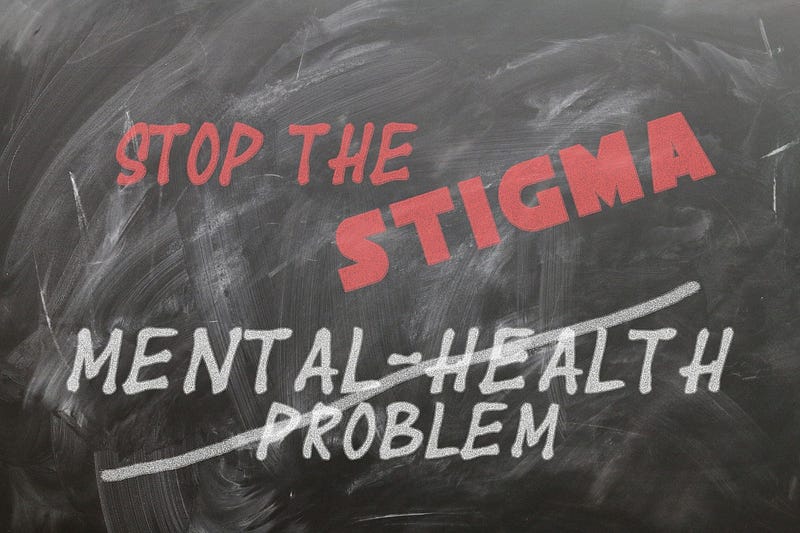
After working our butts off to end the stigma, here is a report sending a strong message that mentally ill people are dangerous.
The article doesn’t specify his ailment but I guarantee many readers
BE AFRAID
More scary stories
Although mass shootings in the US are tragic, a mental disorder being the cause reinforces the rhetoric.
Giffords Law Center says,
“Even though federal law prohibits the sale of firearms to certain individuals with a history of mental illness, history has shown that it’s still too easy for dangerous people experiencing a mental health crisis to obtain firearms.”
Note the words I highlighted.
Those who lack knowledge on mental problems would focus on the first part of that sentence and forget the rest — the point made that the person’s nature is often violent before mental health enters the fray.
A study in Sweden revealed 19 out of every 20 violent crime convictions were by someone who did not have a mental illness.
Most brutal crimes including homicide, assault with guns or knives, and domestic violence, take place under the influence of alcohol — a legal substance.
In the US, FADD (Fathers Against Drunk Driving) report that
- Over 50% of fatal highway crashes involving two or more cars are alcohol related.
- Over 65% of fatal single car crashes are alcohol related.
- Over 36% percent of adult pedestrian accidents are alcohol related.
In South Africa, SADD (South Africans Against Drunk Driving) cite over 46% of drivers killed in collisions were over the legal limit.
Alcohol abuse doesn’t make headline news.
Nobody reports
“The culprit had a history of drunken behavior.”
Mention mental illness and ears prick up.
Must we continue to hide?
When I next go shopping, I should roam around the mall and waylay strangers announcing
“I’m mentally ill.”
Will they send a SWOT team to disarm me? Or flee screaming in panic?
My arms don’t pack a punch nor am I brandishing a knife or gun.
Are handbags dangerous?
I lost a lucrative full-time job opportunity 20 years ago because the boss discovered I’d spent seven weeks in a psychiatric clinic before joining the company as a part-timer. In the blink of any eye they disowned and discharged me.
You can read the story here:
Mental health diagnoses cover a wide range of conditions that affect mood, thinking and behavior. Only extreme cases, such as psychotic or personality disorders, may precipitate violence.
Except for those who have experienced or been in contact with people with a psychological disorder, surveys of the general population in Canada, the US, Europe and elsewhere show the popular perception is mental illness and violence are inseparable.
Stop spreading this pack of lies.
“Out of suffering have emerged the strongest souls; the most massive characters are seared with scars.” — Kahlil Gibran
Time for a Divorce
Let’s dissolve this bitter marriage — it won’t hurt anyone; separate truth and fiction; chuck this load of rubbish in the garbage where it belongs.
In October 2019, the World Health Organisation (WHO) reported
“Mental or neurological disorders will affect one in four people at some point in their lives. Around 450 million people currently suffer from such conditions, placing mental disorders among the leading causes of ill-health and disability worldwide.”
Please stop stereotyping and blaming us for the violence in the world.
“Not until we are lost, do we begin to understand ourselves.” — Henry David Thoreau
We’re too busy making peace with ourselves; gentle souls figuring out who we are and learning to love and accept ourselves. Many people have no access to health care and are more likely to be victims than generators of violence.
We are more of a danger to ourselves than to others.
Starve the stigma
No more convenience foods of falsehoods for the befuddled masses to feast on.
I chose these lyrics by Shonelle from the song Impossible. They relate to a broken heart, but I’ve adopted them to break the spell:
“Shout it out from the rooftops Write it on the skyline”
WE ARE NOT DANGEROUS!
Why not put that in your headline next time?
Thank you for reading and spreading the truth.


