
Another Shot Within 12 Months? Or Every 12 Months?
That may all depend on people’s behavior.
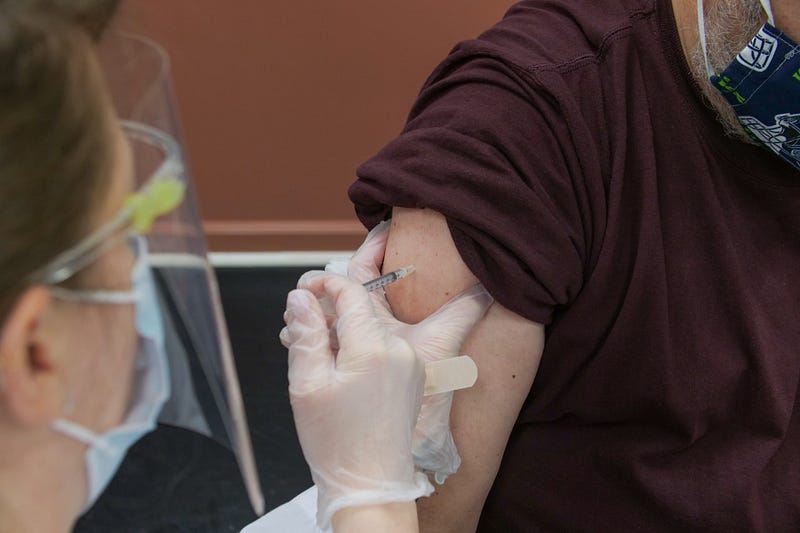
It’s been over a year since the world locked down from the COVID-19 pandemic. We are still not free of the hubris that has caused so many spikes in cases as regions insisted they were smarter than the scientists, or that they're right to live freely mattered more than the harm that might be caused on themselves or the community.
Months and months of resisting basic distancing and masking guidelines has granted the virus ample opportunity to mutate into various strains as it continues to spread through the population.
Here we are now with multiple vaccines available, and people are throwing caution to the wind once more. States have fully opened as though everything is fine, and people continue to want to throw parties and host large gatherings.
While the vaccines are proving effective in preventing severe disease, there seems to be groups that are hesitant, or even passionately against any of the vaccines against COVID-19.
How Did We Get Here?
We can certainly blame the internet and the spread of misinformation for some of it. And the fact that we just had a president whose brand was centered around undermining experts and science can have something to do with the fact that just under half of Republicans will not get a vaccine.
But there are people who have a genuine distrust in the medical community, corporations, and the government — all of which trace back to documented events or their own personal experience.
For example, there are decades of mistreatment and abuse of the black community, as well as a disturbing trend of doctors dismissing claims by women patients as them just being dramatic.
Not to mention all the times corporations, including pharmaceutical companies, have ignored ethics and best practices to improve their bottom line.
Now You Need a Booster?
Recently, Pfizer announced that you will probably need a booster shot for the COVID vaccine within six to twelve months of the first two doses. This comes after Moderna has announced that they are working on a booster, and the Johnson & Johnson vaccine has been pulled back to investigate potential safety concerns.
These bits of information seem to have added some tension to already uneasy members of the public. Why should they trust these vaccines? Why should they get the vaccine, or the booster later?
We’ve known for a long time now that vaccinations work, as long as enough people get them. We’ve all but eradicated diseases like polio and smallpox in the past. The problem is convincing people that this is in their best interest, as well as the greater good. While there seems to be a lot of talk about the high survival rate of COVID patients, not enough people are talking about long-term effects and potential system failure months after infection.
How Do We Fix This?
One primary factor must be addressing the ease that misinformation spreads. While the Johnson & Johnson vaccine may have caused these women’s blood clots, the numbers currently lay at six cases in almost 7,000,000. Yet it is a talking point for conspiracies and anti-vaccination propaganda. It is definitely the right thing to do to hold on to the vaccination and investigate for cases that may have been missed, but it is important to note that the risk for severe blood clots from the disease is almost ten times higher than the current numbers for Johnson & Johnson or AstraZeneca (which is not authorized for use in the United States).
Aside from that, we need to repair the relationship between the medical community, the pharmaceutical community, and the rest of the country. It would behoove the government to tighten up lax oversight and hold large industries accountable for their actions. Knowing that the government has our best interests at heart, and will keep others on track too, is a great way to restore trust in institutions. Medical institutions should also strongly consider improving bias training on licensed physicians, not just those still in school.
But how do we fix it so we don’t need to keep getting a COVID shot every year?
All of those previous examples are a starting point, but it really depends on our behavior.
What About Behavior?
With new variants constantly springing up and spreading across the globe, the likelihood of needing a tweaked vaccine increases. Cases are continuing to increase because of cutting back on restrictions and precautions, which allows the disease to mutate.
Behavior also applies to our level of selfishness versus selflessness. These actions of refusing masks or distancing are selfish. They hurt the international effort to get the disease under control so we can all go back to a normal life. But our reluctance to share the vaccinations equitably across the globe is part of our behavior problem too.
As wealthier nations readily vaccinate as much of their population as is willing, we are neglecting our fellow citizens of the world. This practice is also counterintuitive and antithetical to eradicating a disease. The longer we take to vaccinate the world, the more we reset the stage and change the rules of the game.
If we really want to be selfish and take care of ourselves, we need to be selfless and take care of others too. Otherwise, we might need to keep getting boosters every year, like the flu shot, until we can mass-distribute a universal vaccine for all variants.
*More Information About the COVID-19 Pandemic*
More from the author:


