avatarAdam Deitsch

Free AI web copilot to create summaries, insights and extended knowledge, download it at here

3314

Abstract

<b>slow, deep breathing</b></a>. Burke Lennihan, RN teaches meditation at the University of Harvard Center for Wellness and recommends including things to help you focus, like candles, fresh flowers, or incense in a <a href="https://www.health.harvard.edu/staying-healthy/what-meditation-can-do-for-your-mind-mood-and-health-.">Harvard Health newsletter</a>.</p><figure id="8706"><img src="https://cdn-images-1.readmedium.com/v2/resize:fit:800/1*jUBuck7U_0vJwZsFSed0HA.jpeg"><figcaption>Photo by <a href="https://unsplash.com/@lejo?utm_source=unsplash&amp;utm_medium=referral&amp;utm_content=creditCopyText">Elly Johnson</a> on <a href="/s/photos/diffuser?utm_source=unsplash&amp;utm_medium=referral&amp;utm_content=creditCopyText">Unsplash</a></figcaption></figure><h1 id="9a07">What about aromatherapy?</h1><p id="548b"><b>Aromatherapy</b>, <a href="https://www.nccih.nih.gov/health/aromatherapy">as defined by the NIH</a>, is “the use of essential oils from plants (flowers, herbs, or trees) as a complementary health approach”. <b>Essential oils</b> have been a booming business for years, with racks of them in stores like Whole Foods and Walmart, to international multi-level marketing companies, such as Young Living, using social media to reach customers. With something becoming so big and mainstream, and with little documented research for or against the claims of essential oils, scientists are studying them with some frequency. While studies have not found sufficient evidence for aromatherapy with essential oils to treat specific conditions, there is evidence that the sense of smell can affect mood or behavior.</p><p id="3fc0">As for the power of <b>the sense of smell</b>, there has been extensive research. A research article written by <a href="https://vivo.brown.edu/display/rherz">Dr. Rachel S. Herz</a> of the Department of Psychiatry and Human Behavior at Brown University Medical School goes into extensive detail about <a href="https://www.ncbi.nlm.nih.gov/pmc/articles/PMC5039451/">how smell can play an important role in psychological and physical health</a>. While the conclusion found that odors could generate emotional and physiological responses that can benefit health and well-being, there were a few caveats.</p><p id="4349">These responses were typically only repeated because of the <a href="https://dictionary.apa.org/proust-phenomenon">“Proust phenomenon.”</a> These health benefits only occurred when the scent in question prompted a meaningful memory of the past. However, positive memories triggered by the sense of smell were found to reduce heart rate and relax the body. This relaxation correlated to slow, deep breathing, which can help lower stress.</p><p id="1669">While the article says that these findings are not proof of aromatherapy’s efficacy, it cannot acknowledge that one practicing aromatherapy could choose a scent or scents one knows to trigger a positive, nostalgic memory. As Dr. Herz says in her conclusions:</p><blockquote id="d343"><p>Any odor that for a given individual evokes a happy autobiographical memory has the potential to increase positive emotions, decrease negative moods, disrupt cravings, lower stress and decrease inflammatory immune responses, and thereby have a generally beneficial effect on psychological and physiological well

Options

being.</p></blockquote><figure id="f55f"><img src="https://cdn-images-1.readmedium.com/v2/resize:fit:800/1*ssqoJr91HltLNUvP-BeUoQ.jpeg"><figcaption>Photo by <a href="https://unsplash.com/@sharonmccutcheon?utm_source=unsplash&amp;utm_medium=referral&amp;utm_content=creditCopyText">Sharon McCutcheon</a> on <a href="/s/photos/sugar-pill?utm_source=unsplash&amp;utm_medium=referral&amp;utm_content=creditCopyText">Unsplash</a></figcaption></figure><h1 id="7433">Is it just a placebo?</h1><p id="6756">Should it be the case that the benefits of essential oils and aromatherapy regarding relaxing the mind and body are nothing but <b>the placebo effect</b>, that is no reason to rule out or discredit the use of them. In a 2017, Harvard Medical School published an article addressing the placebo effect which explained that, <a href="https://www.health.harvard.edu/mental-health/the-power-of-the-placebo-effect.">under the right conditions, a placebo can be just as effective as a traditional treatment</a>. <a href="https://ghsm.hms.harvard.edu/faculty-staff/ted-jack-kaptchuk">Professor Ted Kaptchuk</a> of Beth Israel Deaconess Medical Center is quoted in this article as saying the placebo effect is about “creating a stronger connection between the brain and body and how they work together.”</p><p id="c607">The article continues to describe Kaptchuk’s research, which found that a placebo could be 50% as effective as real migraine medicine, and concludes with a powerful quote from Kaptchuk:</p><blockquote id="a577"><p>People associate the ritual of taking medicine as a positive healing effect. Even though they know it’s not medicine, the action itself can stimulate the brain into thinking the body is being healed.</p></blockquote><p id="0a3c">ending on the note that routines of healthy living, such as daily meditation, can provide their own placebo effect, where their benefits are directly related to the effort and focus you put into them.</p><h1 id="e9d4">Where do we go from here?</h1><p id="1e72">Meditation and aromatherapy have been <a href="https://www.psychologytoday.com/us/blog/meditation-modern-life/201307/overview-meditation-its-origins-and-traditions">used for generations across the globe</a>. The understanding and mechanisms of how they benefit the mind and body are still under scrutiny. There is, however, evidence that benefits may be gained from techniques involved in focusing your thoughts and your breathing to relieve tension and stress — whether it is all in the mind — and adding scents like essential oils to your meditation environment can trigger nostalgic memories and emotions which may improve the productivity of the ritual. Why not give it a shot?</p><p id="54b0">About the author:</p><div id="373b" class="link-block"> <a href="https://readmedium.com/about-me-adam-deitsch-b32c027539b6"> <div> <div> <h2>About Me — Adam Deitsch</h2> <div><h3>A who, what, and why about the author</h3></div> <div><p>medium.com</p></div> </div> <div> <div style="background-image: url(https://miro.readmedium.com/v2/resize:fit:320/1*nx0wi1-OFHHZvDmZJ6jr8g.jpeg)"></div> </div> </div> </a> </div></article></body>

Relaxing the Mind and Body

Engaging in Emotional and Physical Wellness Through Meditation and Aromatherapy

Photo by Natalie Grainger on Unsplash

As our brains control the rest of our bodies, it is arguable that emotional wellness is one of the most important aspects of self-care. To quote Morpheus from The Matrix, “The body cannot live without the mind.”

Health, as defined by the World Health Organization in 1948, is not simply the absence of illness, but a state of complete physical, mental and social wellbeing. That state is achieved through actively engaging in habits and behaviors that address different aspects of our lives. These aspects of wellbeing — creative, cultural, emotional, environmental, financial, intellectual, occupational, physical, social, and spiritual — are the ten dimensions of wellness.

How you feel directly affects how you can function throughout any moment and be able to effectively navigate through stresses in our everyday lives is a sign of our emotional wellness. Two factors listed in the Emotional Wellness Toolkit from the National Institutes of Health (NIH) which can promote emotional wellness and stress reduction are a positive mindset and relaxation methods such as meditation.
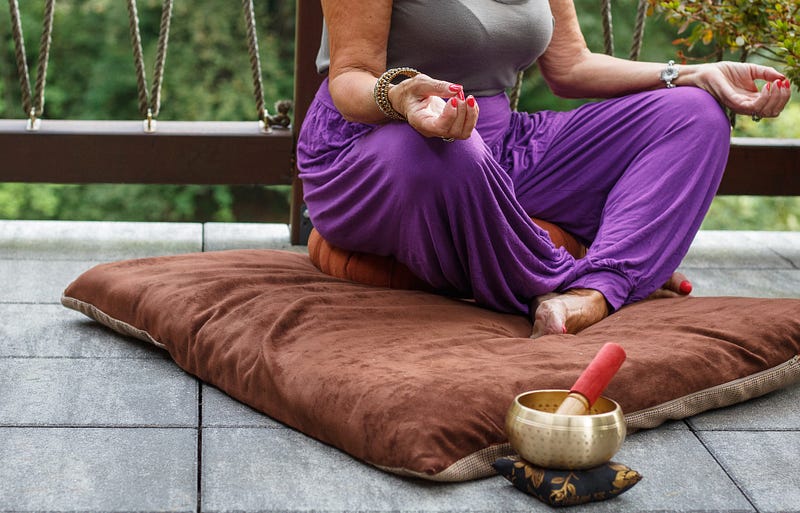
Photo by Susanna Marsiglia on Unsplash

What is meditation?

There are several mediations. From repeating a mantra to synchronizing your breathing with your footsteps as you walk, to simply focusing on the present (e.g., your surroundings and your breathing), you can minimize the effects of stress on your body. While meditation is often viewed as a spiritual event, you could notice a change in your mood and stress levels after only one to two weeks of daily mediation. The NIH also talks about various conditions that may be helped by meditation, including high blood pressure, pain, and psychological issues such as anxiety.

A technique for mindfulness and relaxation that is very common is slow, deep breathing. Burke Lennihan, RN teaches meditation at the University of Harvard Center for Wellness and recommends including things to help you focus, like candles, fresh flowers, or incense in a Harvard Health newsletter.
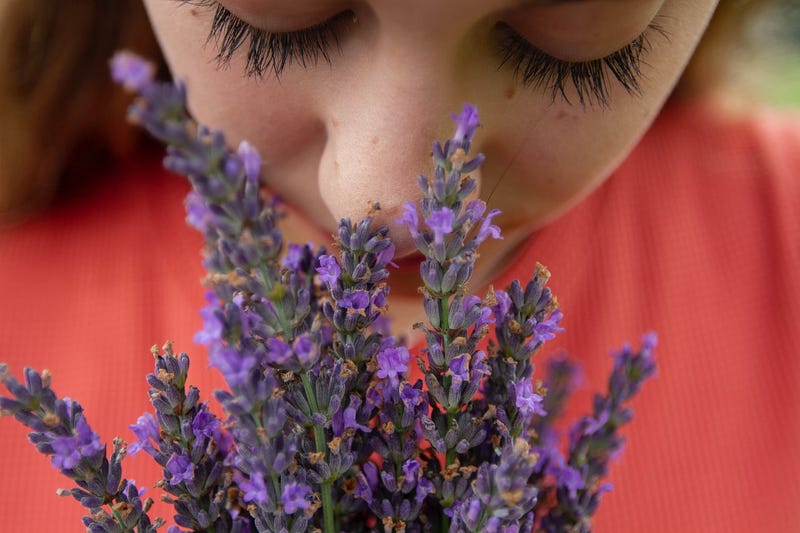
Photo by Elly Johnson on Unsplash

What about aromatherapy?

Aromatherapy, as defined by the NIH, is “the use of essential oils from plants (flowers, herbs, or trees) as a complementary health approach”. Essential oils have been a booming business for years, with racks of them in stores like Whole Foods and Walmart, to international multi-level marketing companies, such as Young Living, using social media to reach customers. With something becoming so big and mainstream, and with little documented research for or against the claims of essential oils, scientists are studying them with some frequency. While studies have not found sufficient evidence for aromatherapy with essential oils to treat specific conditions, there is evidence that the sense of smell can affect mood or behavior.

As for the power of the sense of smell, there has been extensive research. A research article written by Dr. Rachel S. Herz of the Department of Psychiatry and Human Behavior at Brown University Medical School goes into extensive detail about how smell can play an important role in psychological and physical health. While the conclusion found that odors could generate emotional and physiological responses that can benefit health and well-being, there were a few caveats.

These responses were typically only repeated because of the “Proust phenomenon.” These health benefits only occurred when the scent in question prompted a meaningful memory of the past. However, positive memories triggered by the sense of smell were found to reduce heart rate and relax the body. This relaxation correlated to slow, deep breathing, which can help lower stress.

While the article says that these findings are not proof of aromatherapy’s efficacy, it cannot acknowledge that one practicing aromatherapy could choose a scent or scents one knows to trigger a positive, nostalgic memory. As Dr. Herz says in her conclusions:

Any odor that for a given individual evokes a happy autobiographical memory has the potential to increase positive emotions, decrease negative moods, disrupt cravings, lower stress and decrease inflammatory immune responses, and thereby have a generally beneficial effect on psychological and physiological wellbeing.

Photo by Sharon McCutcheon on Unsplash

Is it just a placebo?

Should it be the case that the benefits of essential oils and aromatherapy regarding relaxing the mind and body are nothing but the placebo effect, that is no reason to rule out or discredit the use of them. In a 2017, Harvard Medical School published an article addressing the placebo effect which explained that, under the right conditions, a placebo can be just as effective as a traditional treatment. Professor Ted Kaptchuk of Beth Israel Deaconess Medical Center is quoted in this article as saying the placebo effect is about “creating a stronger connection between the brain and body and how they work together.”

The article continues to describe Kaptchuk’s research, which found that a placebo could be 50% as effective as real migraine medicine, and concludes with a powerful quote from Kaptchuk:

People associate the ritual of taking medicine as a positive healing effect. Even though they know it’s not medicine, the action itself can stimulate the brain into thinking the body is being healed.

ending on the note that routines of healthy living, such as daily meditation, can provide their own placebo effect, where their benefits are directly related to the effort and focus you put into them.

Where do we go from here?

Meditation and aromatherapy have been used for generations across the globe. The understanding and mechanisms of how they benefit the mind and body are still under scrutiny. There is, however, evidence that benefits may be gained from techniques involved in focusing your thoughts and your breathing to relieve tension and stress — whether it is all in the mind — and adding scents like essential oils to your meditation environment can trigger nostalgic memories and emotions which may improve the productivity of the ritual. Why not give it a shot?

About the author:

Meditation
Aromatherapy
Wellness
Self Improvement
Science
Recommended from ReadMedium