avatarRebecca Ruth Gould, PhD

Free AI web copilot to create summaries, insights and extended knowledge, download it at here

2715

Abstract

ico’s topography than to seek literary fame.</p><p id="9a26">Through Tarn’s hybrid epic, which incorporates Tarn’s own translations of Hölderlin’s poems, the poet invites readers to find ecstasy in the loneliness of the human condition and to reexamine our thinking about language, mortality, space, and time.</p><figure id="a6f9"><img src="https://cdn-images-1.readmedium.com/v2/resize:fit:800/1*0qHMsghjz7XBwx-KGNCfUw.png"><figcaption>cover of <i>The Hölderliniae (New Directions, 2021)</i></figcaption></figure><p id="20d6">The book opens with a prose introduction to Hölderlin, whom Tarn calls “the First Modern Poet to many cultures in the twentieth century and beyond” (11).</p><figure id="5dee"><img src="https://cdn-images-1.readmedium.com/v2/resize:fit:800/1*4Ko_RBpRs86edt6b1faAGQ.png"><figcaption>Tarn’s biographical note detailing the poet’s mental illness (pp. 10–11).</figcaption></figure><p id="5dcb">Like Hölderlin’s famously challenging hymns, which pushed German in new directions while speaking from another time, Tarn disrupts English prosody and inverts syntax to evoke a world that is at once distant and hauntingly familiar. The thirty Hölderliniae that comprise the book oscillate between poetry and prose as they channel Hölderlin’s voice from beyond the grave.</p><p id="a20c">This work reveals to us Tarn, who taught anthropology and then literature until his early retirement in 1985, an ethnographer of the past whose fieldwork is located in the realm of the imagination. With Hölderlin as his guide, yet speaking in an idiom reminiscent of Walt Whitman, Tarn pursues the</p><blockquote id="744d"><p>meeting place between yourself and the attempted tasks</p></blockquote><blockquote id="c0b7"><p>that must be done right there and nowhere else</p></blockquote><figure id="24ed"><img src="https://cdn-images-1.readmedium.com/v2/resize:fit:800/1*xxvMpO_5IuwlQQJ7Q-uzOg.png"><figcaption><a href="https://amzn.to/3guCOZA"><i>Hölderliniae</i></a><i> no. 19, from where the above quote is taken</i></figcaption></figure><p id="e421">Tarn’s bibliography attests to the work that went into crafting this recasting of German Romanticism’s most abstruse poet in contemporary English. This small miracle of verse obsesses over the singularity of the moment, which is also the singularity of human existence. Every stanza insists — and ultimately persuades us — that “Death has a thousand cards to play. Life only one” (16).</p><figure id="b3c9"><img src="https://cdn-images-1.readmedium.com/v2/resize:fit:800/1*koi8exNTPqeuvjc4tI-34A.png"><figcaption><a href="https://amzn.to/3guCOZA"><i>Hölderliniae</i></a><i> no. 1</i></figcaption></figure><p id="8b78">If you’d like to learn more about Tarn, who

Options

has done more to connect poetry and anthropology than possibly any other living poet writing in English, you might want to begin with this interview Tarn conducted in 2012:</p> <figure id="4440"> <div> <div> <img class="ratio" src="http://placehold.it/16x9"> <iframe class="" src="https://cdn.embedly.com/widgets/media.html?src=https%3A%2F%2Fwww.youtube.com%2Fembed%2Fo7rAyoqiYzI%3Ffeature%3Doembed&amp;display_name=YouTube&amp;url=https%3A%2F%2Fwww.youtube.com%2Fwatch%3Fv%3Do7rAyoqiYzI&amp;image=https%3A%2F%2Fi.ytimg.com%2Fvi%2Fo7rAyoqiYzI%2Fhqdefault.jpg&amp;key=a19fcc184b9711e1b4764040d3dc5c07&amp;type=text%2Fhtml&amp;schema=youtube" allowfullscreen="" frameborder="0" height="480" width="854"> </div> </div> </figure></iframe></div></div></figure><p id="35a2">And here is my <a href="https://youtu.be/sNhByTZI2ow"><b>video review</b></a> of this book.</p><p id="58fa">To learn more about Hölderlin’s revolutionary approach to poetry and language see:</p><div id="b04c" class="link-block"> <a href="https://readmedium.com/translation-is-more-than-communication-bbbb4ffd5cf9"> <div> <div> <h2>Translation is More than Communication</h2> <div><h3>From interlinear translation to Google Translate</h3></div> <div><p>medium.com</p></div> </div> <div> <div style="background-image: url(https://miro.readmedium.com/v2/resize:fit:320/1*Vinamr8fmB3t60X0mgfHFQ.png)"></div> </div> </div> </a> </div><p id="29c3">And here is another in my series of reviews of recent poetry books:</p><div id="1da8" class="link-block"> <a href="https://readmedium.com/how-to-belong-to-others-without-losing-oneself-9d98b0b0702c"> <div> <div> <h2>How to belong to others without losing oneself</h2> <div><h3>Threa Almontaser’s The Wild Fox of Yemen (2021)</h3></div> <div><p>medium.com</p></div> </div> <div> <div style="background-image: url(https://miro.readmedium.com/v2/resize:fit:320/1*hxoWGyvhSemGrSvI2VP-3A.png)"></div> </div> </div> </a> </div><p id="046c">You can sign up for my newsletter on translation, activism, and more, <a href="https://www.getrevue.co/profile/rrgould"><i>here</i></a>.</p><p id="164b"><i>A shorter version of this review first appeared <a href="https://www.poetryfoundation.org/harriet-books/reviews/155753/the-holderliniae">here</a>.</i></p></article></body>

An Anthropology of Madness

A review of poet Nathaniel Tarn’s The Hölderliniae (2021)
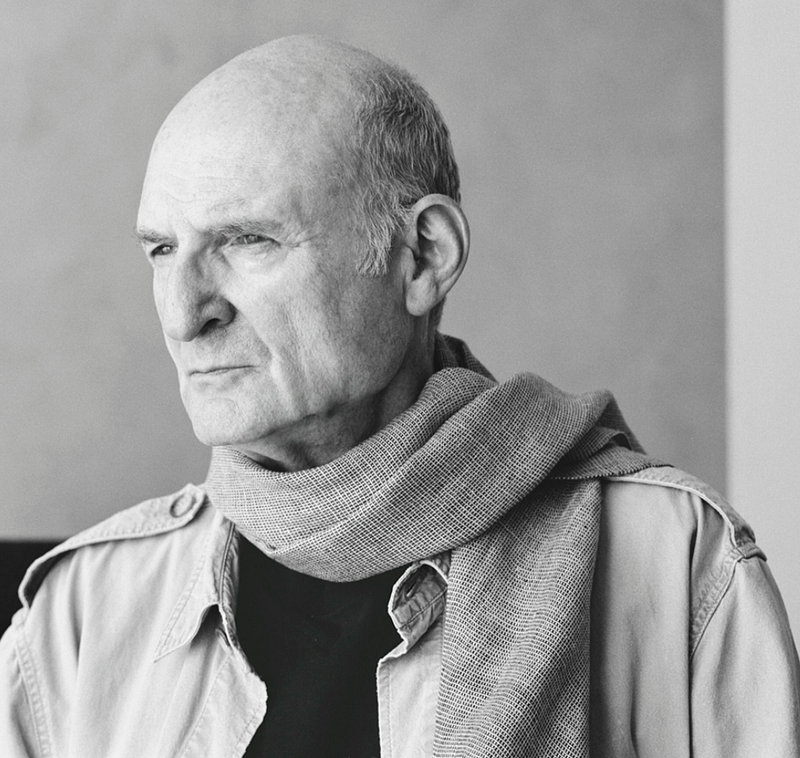
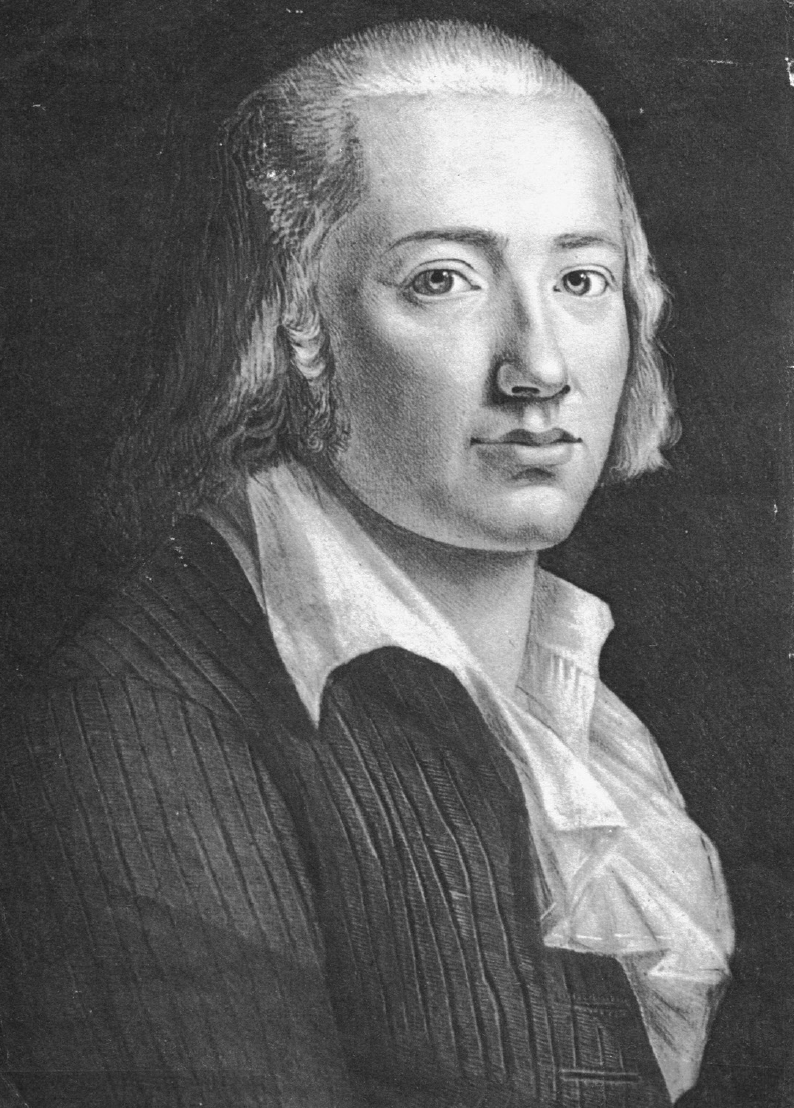
Left: Nathaniel Tarn (photo by Nina Subin, via New Directions website); Right: Friedrich Hölderlin (Franz Karl Hiemer, Marbach, Schiller-Nationalmuseum)

The tortured verse and tragic life of the German Romantic poet Friedrich Hölderlin (1770–1843) are the inspiration for Nathaniel Tarn’s latest work, The Hölderliniae. For Tarn, Hölderlin is a poet who was “slowly murdered,” who “lived and died among the dying,” while suffering from debilitating mental illness during the final, tragic decades of his life. As Tarn recounts, Hölderlin fell into a deep depression after the death of his beloved, Suzette Gontard, in 1802. He was forced by his mother to live briefly in an insane asylum in Tübingen, as no one in his family was willing to care for him while he was ill.

After his release, Hölderlin passed the final decades of his life in the home of a carpenter who respected his literary genius. By this point, however, Hölderlin had ceased composing poetry, or indeed communicating at all. He lived in almost total isolation from the word, in a tower facing the river Neckar.
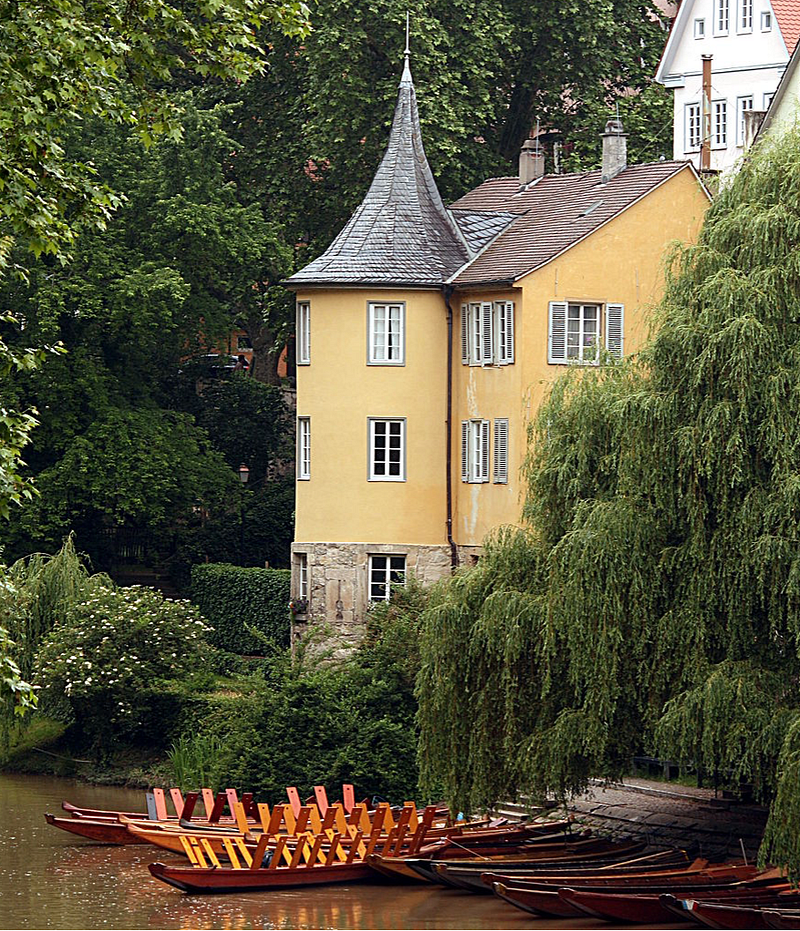
Tübingen, Neckar, Hölderlinturm via Wikimedia Commons

It is not difficult to understand why a poet such as Tarn would be attracted to a figure like Hölderlin. Both poets preferred a life at odds with the world, neither at home in academic or in conventional literary circles. While Tarn, who was born in Paris in 1928 and now lives in New Mexico, led a much happier existence than Hölderlin, he too was trained for a career that did not match the life he chose.

Trained as an anthropologist, Tarn quit his teaching job in 1967 to become an editor and full-time poet. Although he later returned to teaching, Tarn has effectively kept out of the limelight, preferring to become a recluse immersed in New Mexico’s topography than to seek literary fame.

Through Tarn’s hybrid epic, which incorporates Tarn’s own translations of Hölderlin’s poems, the poet invites readers to find ecstasy in the loneliness of the human condition and to reexamine our thinking about language, mortality, space, and time.
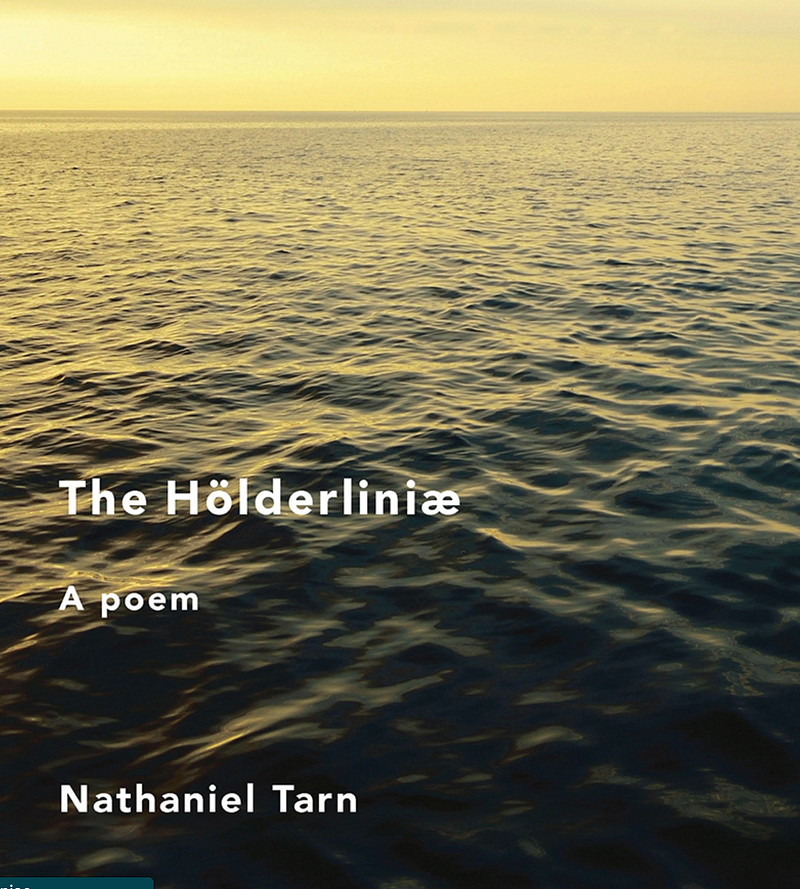
cover of The Hölderliniae (New Directions, 2021)

The book opens with a prose introduction to Hölderlin, whom Tarn calls “the First Modern Poet to many cultures in the twentieth century and beyond” (11).
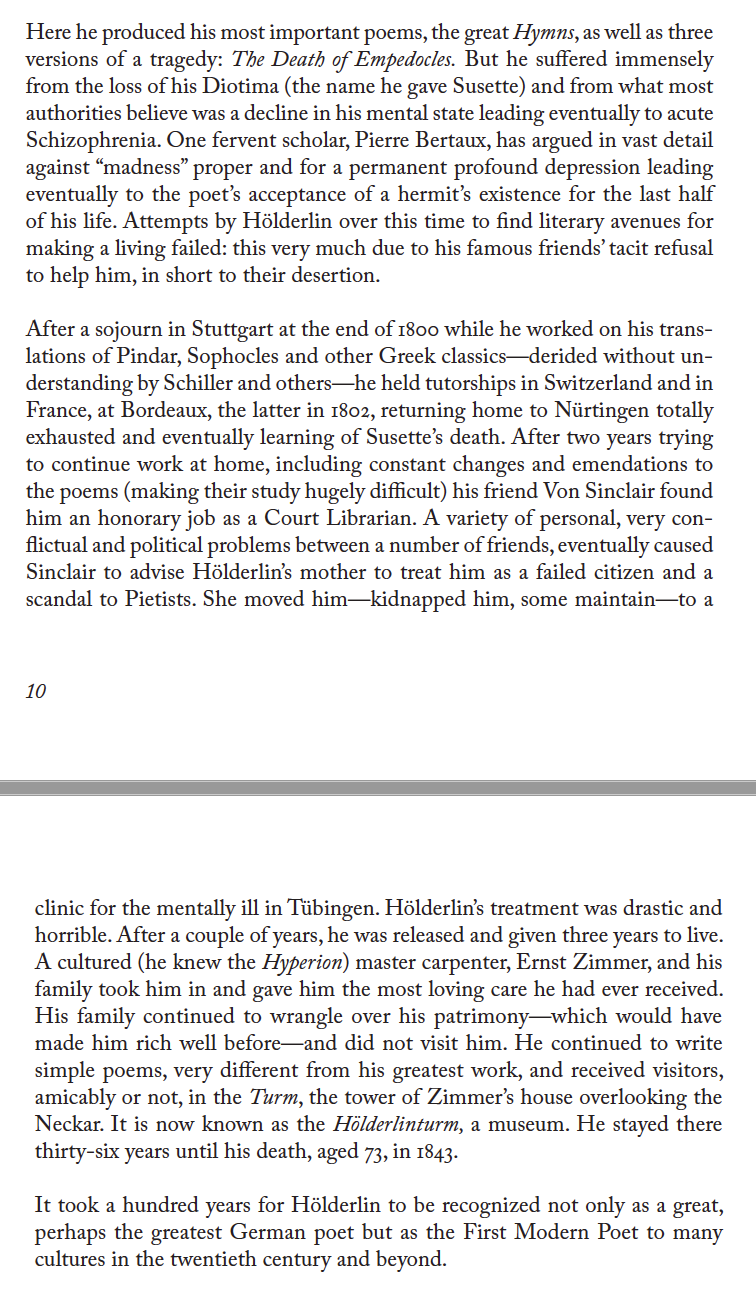
Tarn’s biographical note detailing the poet’s mental illness (pp. 10–11).

Like Hölderlin’s famously challenging hymns, which pushed German in new directions while speaking from another time, Tarn disrupts English prosody and inverts syntax to evoke a world that is at once distant and hauntingly familiar. The thirty Hölderliniae that comprise the book oscillate between poetry and prose as they channel Hölderlin’s voice from beyond the grave.

This work reveals to us Tarn, who taught anthropology and then literature until his early retirement in 1985, an ethnographer of the past whose fieldwork is located in the realm of the imagination. With Hölderlin as his guide, yet speaking in an idiom reminiscent of Walt Whitman, Tarn pursues the

meeting place between yourself and the attempted tasks

that must be done right there and nowhere else
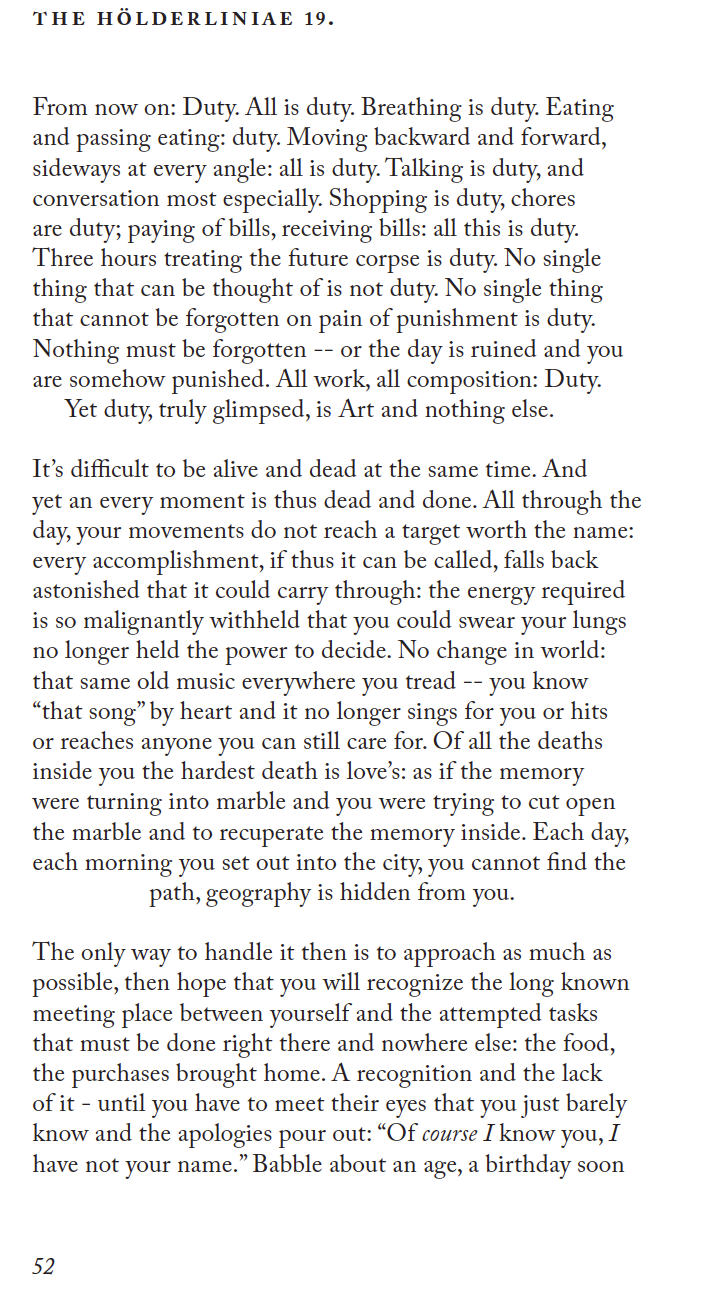
Hölderliniae no. 19, from where the above quote is taken

Tarn’s bibliography attests to the work that went into crafting this recasting of German Romanticism’s most abstruse poet in contemporary English. This small miracle of verse obsesses over the singularity of the moment, which is also the singularity of human existence. Every stanza insists — and ultimately persuades us — that “Death has a thousand cards to play. Life only one” (16).
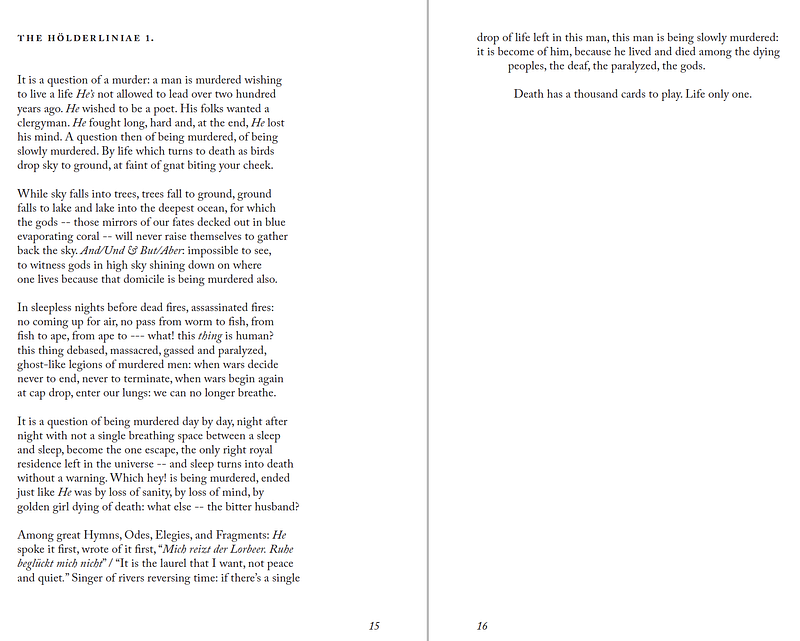
Hölderliniae no. 1

If you’d like to learn more about Tarn, who has done more to connect poetry and anthropology than possibly any other living poet writing in English, you might want to begin with this interview Tarn conducted in 2012:

And here is my video review of this book.

To learn more about Hölderlin’s revolutionary approach to poetry and language see:

And here is another in my series of reviews of recent poetry books:

You can sign up for my newsletter on translation, activism, and more, here.

A shorter version of this review first appeared here.

From The Library
Poetry
Anthropology
Books
Mental Illness
Recommended from ReadMedium