
How to Belong to Others Without Losing Oneself
Introducing Yemeni poet Threa Almontaser’s The Wild Fox of Yemen (2021)
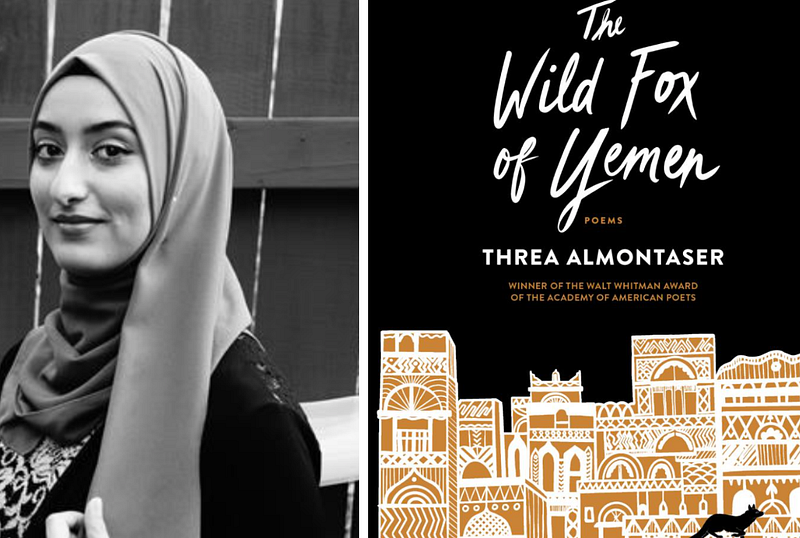
The publication of Threa Almontaser’s landmark The Wild Fox of Yemen, Graywolf Press (2021), which won the Walt Whitman award from the Academy of American Poets, marks a new way of writing poetry in English. Other poets, such as Solmaz Sharif and Aria Aber, have experimented with incorporating their native languages into their English poems; Almontaser takes this practice to a new level by incorporating the Arabic script into her poems, and leaving her Arabic collocations untranslated. Some of the poems are straight translations from the Yemeni poet Abdullah al-Baradouni (d. 1999), with the Arabic alternating after every English verse. Others are styled after contemporary poets, such as Natalie Diaz, Danez Smith, and Marwa Helal.
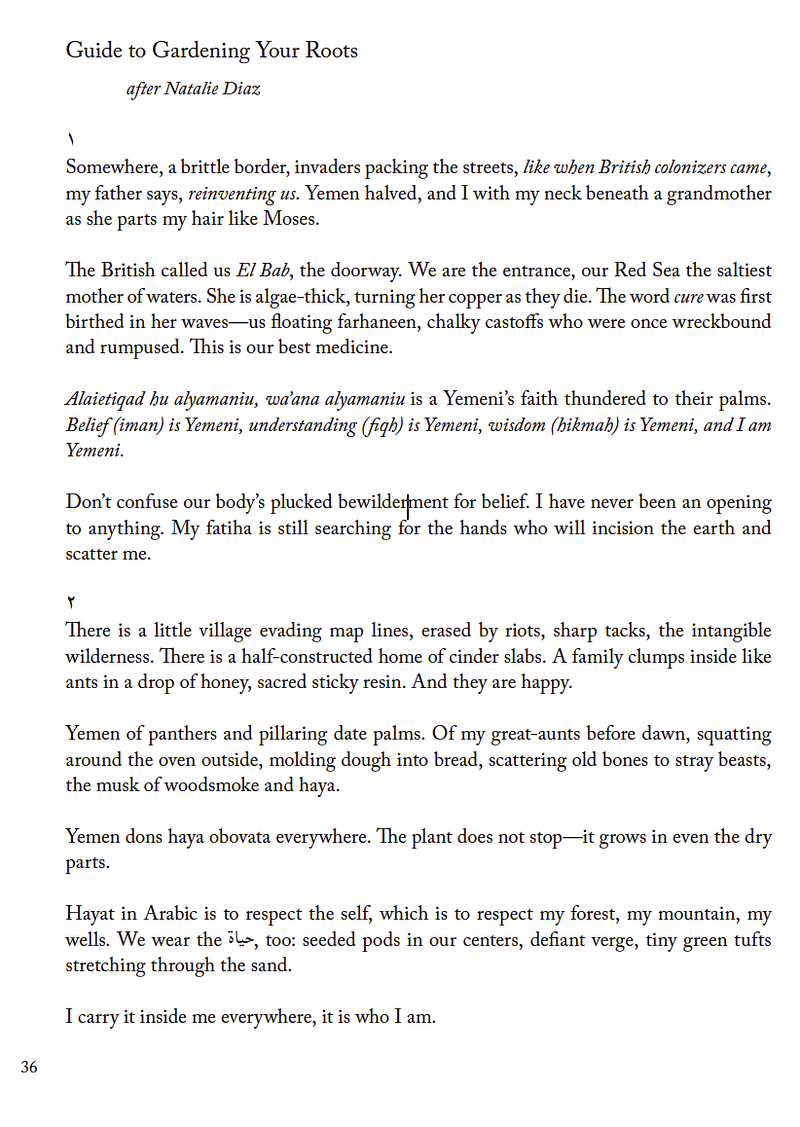
Almontaser’s poetics celebrates her foreign roots. Her commentary on hayat (حياة, as the book renders it in the Arabic script), an Arabic word that means “life,” is central to this aesthetic. “Hayat in Arabic is to respect the self” — the poet declares in “Guide to Gardening Your Roots” — “which is to respect my forest, my mountain, my wells” (36). Although Almontaser’s poems are suffused by Arabic and Yemeni cultural references, their idiom is unmistakably American.
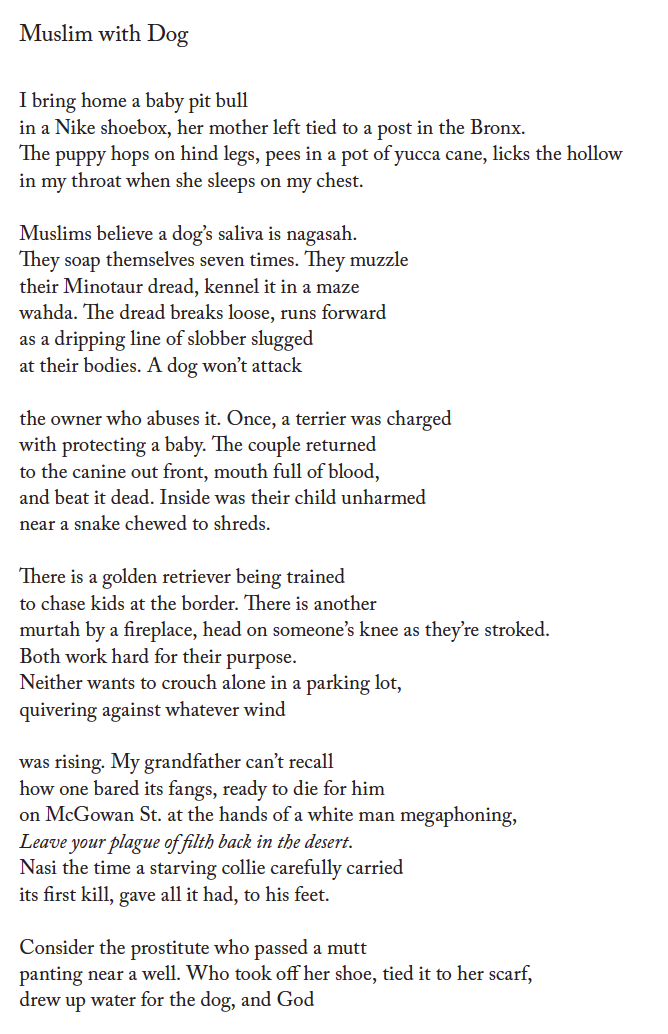
One of the best poems in the collection, “Muslim with Dog,” stages a memorable encounter between east and west through depictions of Muslims and their dogs. In the background is the fact that dogs are considered polluted in Islam. “There is another/ murtah by a fireplace, head on someone’s knee as they’re stroked” (18) the poet offers, amid scenes that reflect the intimacy between humans and dogs. Murtah is the colloquial rendering of murtad, the Arabic term for apostate. The denomination situates the dog as an infidel within Islamic theology, even as his tenderness is revealed throughout the poem. As ironies proliferate, the subject of the poem becomes as dear to us as the poem itself.
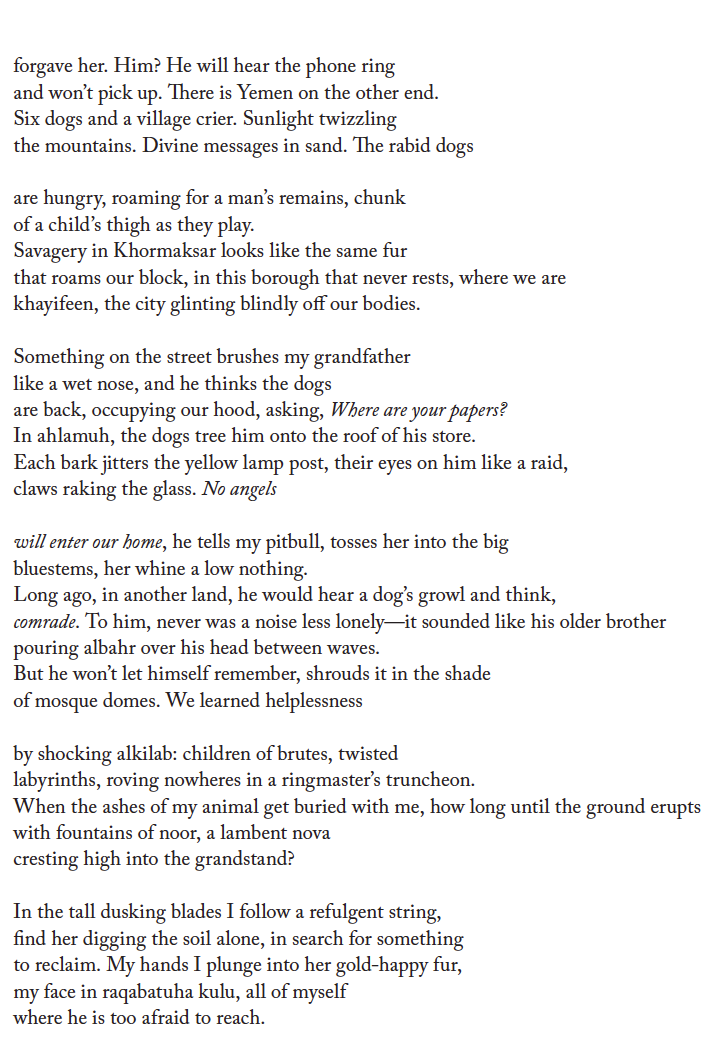
While Almontaser’s hybrid poetics enriches this work immensely, the visual feast of scripts, languages, and cultures generated by these poems yields a reading experience that is at once more political and more personal. Readers will connect with the young woman at the center of this collection, who wears her “city’s hatred as hijab” and later eulogizes “the massacred Muslims at Christchurch mosque in New Zealand.”
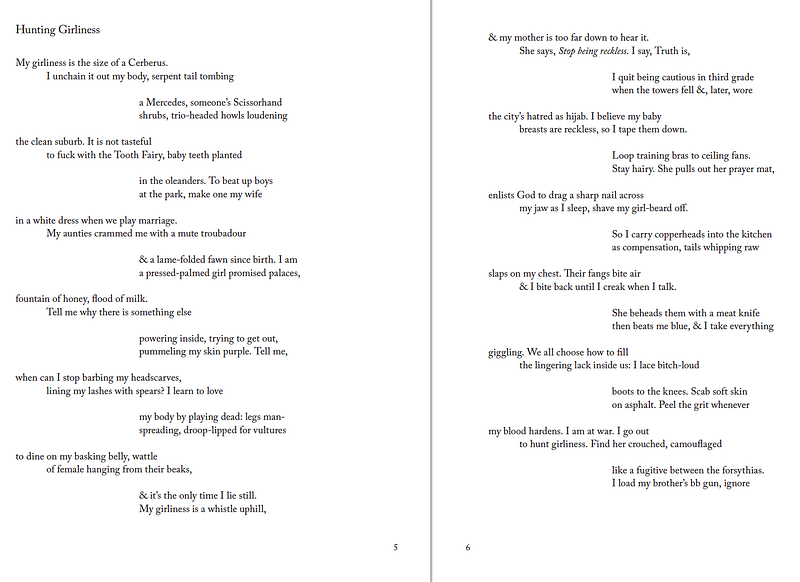
In the words of Harryette Mullen, who selected Almontaser’s poems for the Walt Whitman award, these poems “ask how to belong to others without losing oneself, how to be faithful to oneself without forsaking others.
This review first appeared in abbreviated form in The Poetry Foundation’s Harriet Books here. I have created an expanded video review of this book here (where I will be adding more reviews in the future):
For more reviews of awesome books about the Middle East, see