avatarTech Gumptions

Summary

The website provides an overview of Natural Language Processing (NLP), detailing its definition, applications, and the NLP pipeline stages, including pre-processing, feature extraction, and modeling, to help readers understand and retain AI concepts.

Abstract

The "AI Cheat Sheet 2: Natural Language Processing (NLP)" is a comprehensive guide designed to simplify the understanding of NLP within AI. It introduces NLP as a crucial AI component that enables machines to understand and manipulate human language, whether structured or unstructured. The guide illustrates various applications of NLP, such as chatbots, sentiment analysis, and language translation. emphasizing its widespread use in modern technology. The NLP pipeline is broken down into three main stages: pre-processing, which involves cleaning and preparing text data; feature extraction, which focuses on identifying important elements within the text; and modeling, where statistical or machine learning models are created to interpret new data. The article aims to make learning about AI and NLP engaging and memorable, providing a colorful and informative resource to help knowledge stick.

Opinions

  • The author suggests that keeping up with AI advancements can be challenging and overwhelming, likening the process to a race against time.
  • The article emphasizes the importance of accessible learning tools, positioning the "AI Cheat Sheet" series as a fun and easy way to grasp complex AI concepts.
  • It acknowledges the common issue of information retention, proposing the cheat sheet as a solution to the "hide and seek" nature of recalling AI knowledge.
  • The author expresses a commitment to making AI education enjoyable and effective, with the belief that learning should not be a tedious task.
  • The guide is presented as a superhero-like resource, ready to assist and enhance the reader's understanding of AI and NLP at a moment's notice.

AI Cheat Sheet 2: Natural Language Processing (NLP)
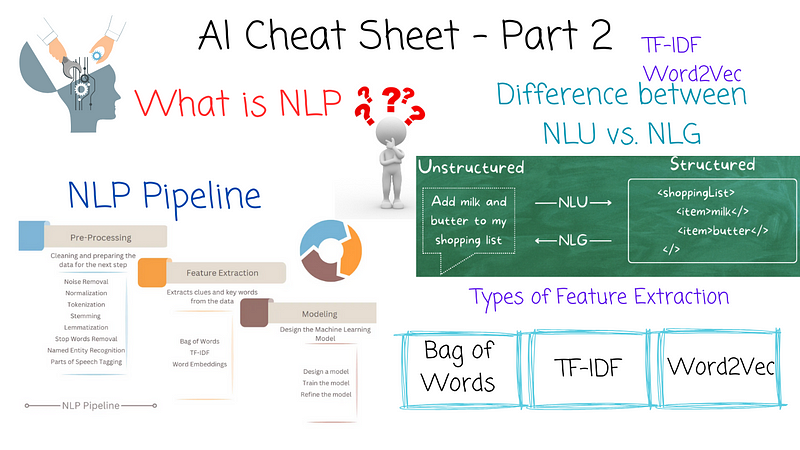
Check out the AI Cheat Sheet 1: AI Fundamentals here.

The world’s on fast-forward thanks to AI, and who wouldn’t feel a little pressure to keep up? We chug down articles, podcasts, and videos to stay in the loop. But keeping up with AI feels like racing against time — we want to learn, improve, and make progress. We spend hours reading, listening, and watching to soak in all the smart stuff. But, here’s the tricky part: when we need that knowledge, it often plays hide and seek in our brains because our brains can’t store too many thoughts at once.

That’s where the “AI Cheat Sheet” blog post series swoops in like a superhero! Think of it as your go-to guide, a brain boost in a colorful, picture-packed format that makes those tricky AI concepts stick like glue. No more struggling to remember what an algorithm is or why robots are learning to write poetry (seriously!).

So, the next time your brain feels like a sieve for AI knowledge, don’t panic! Just head over to this “AI Cheat Sheet” and give your memory a juicy boost. You’ll be talking AI lingo like a pro in no time!

Remember, keeping up with AI shouldn’t be a chore. We’re here to make it fun, easy, and oh-so-memorable. Now go forth and conquer the world of AI, one colorful cheat sheet at a time!

Let’s get started.

What is NLP?
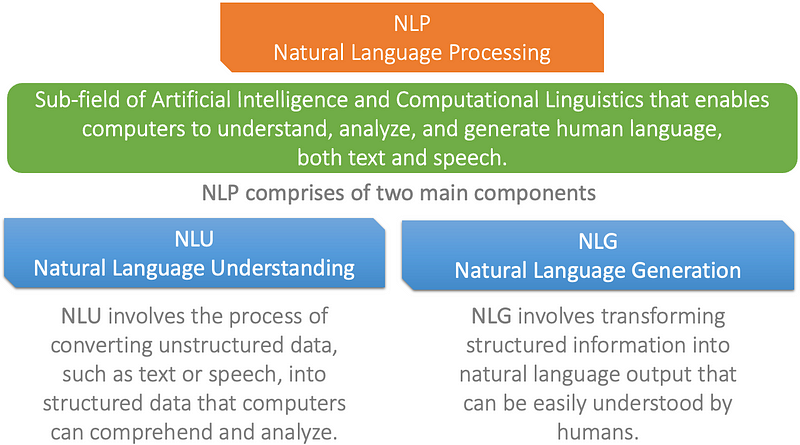
What is NLP?
Unstructured vs. Structured

Where is NLP used?

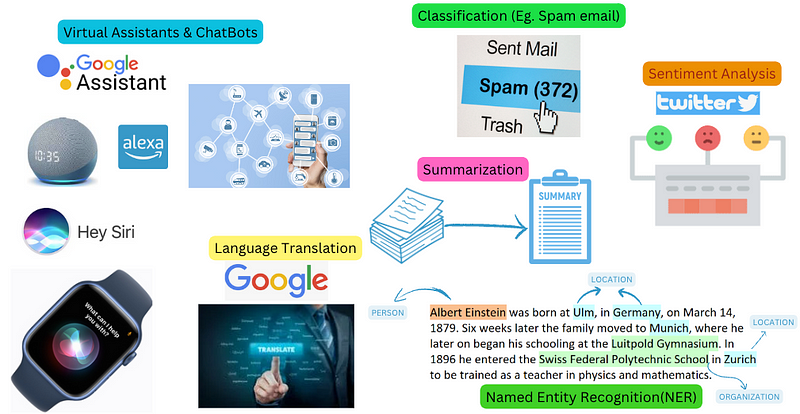
Where is NLP used?

NLP Pipeline

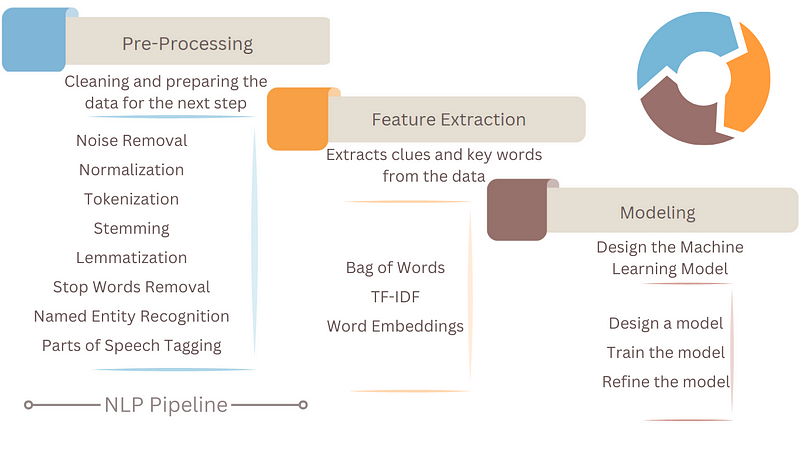
3 main stages in NLP pipeline: Pre-Processing, Feature Extraction, and Modeling

Preprocessing refers to the series of steps taken to clean and transform raw data before it is used for natural language processing (NLP) tasks.
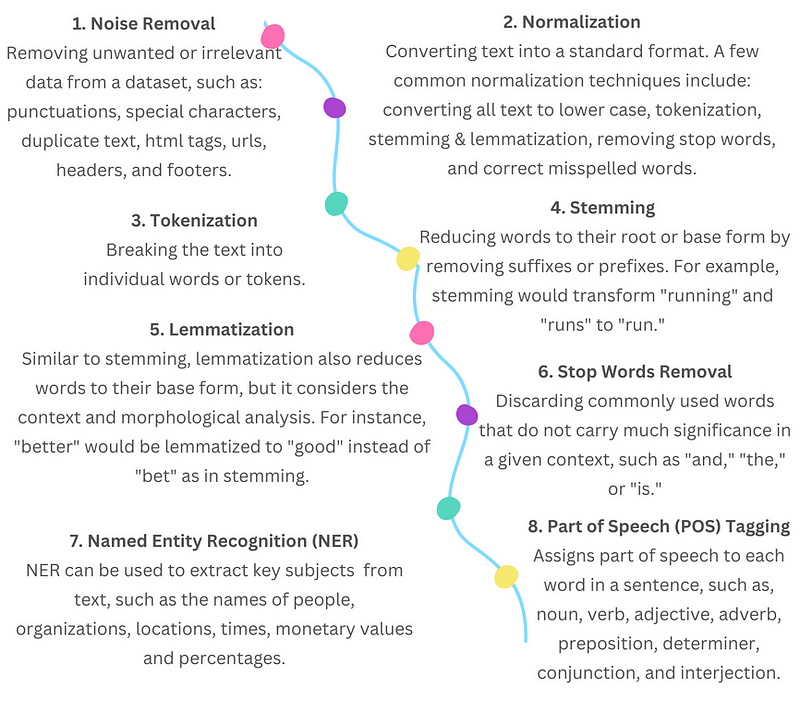
NLP Pre-Processing Steps

Feature extraction is responsible for extracting clues or keywords from the text.

Imagine you have a big pile of toys. There are cars, trucks, dolls, blocks, and all sorts of other things. How would you find a specific toy, like a red fire truck? You could look through all the toys one by one, but that would take a long time.

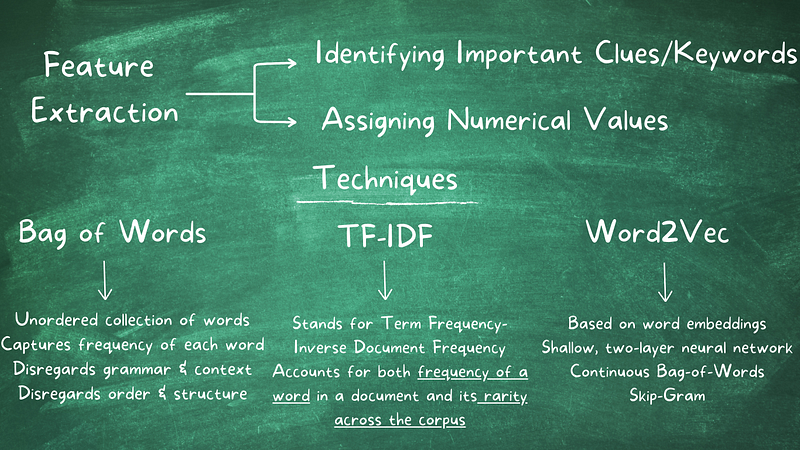
Feature Extraction Techniques

For details on Feature Extraction Techniques, refer here.

Modeling is the final step in the NLP pipeline, where we create a statistical or machine learning model. We design this model to learn from training data and make predictions about new, unseen data.

Once you have a working model, you can deploy it as a web app, mobile app, or integrate it with other products and services. The possibilities are endless!

AI Cheat Sheet 3: LLM Fundamentals

Artificial Intelligence
AI
NLP
Machine Learning
Software Development
Recommended from ReadMedium
avatarChelsea Zou
Maximum Likelihood Estimation

6 min read