
AI Cheat Sheet 1: AI Fundamentals
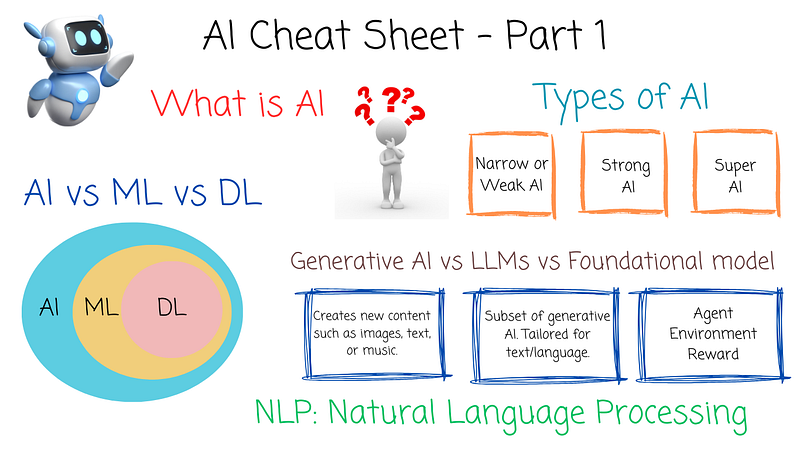
The world’s on fast-forward thanks to AI, and who wouldn’t feel a little pressure to keep up? We chug down articles, podcasts, and videos to stay in the loop. But keeping up with AI feels like racing against time — we want to learn, improve, and make progress. We spend hours reading, listening, and watching to soak in all the smart stuff. But, here’s the tricky part: when we need that knowledge, it often plays hide and seek in our brains because our brains can’t store too many thoughts at once.
That’s where the “AI Cheat Sheet” blog post series swoops in like a superhero! Think of it as your go-to guide, a brain boost in a colorful, picture-packed format that makes those tricky AI concepts stick like glue. No more struggling to remember what an algorithm is or why robots are learning to write poetry (seriously!).
So, the next time your brain feels like a sieve for AI knowledge, don’t panic! Just head over to this “AI Cheat Sheet” and give your memory a juicy boost. You’ll be talking AI lingo like a pro in no time!
Remember, keeping up with AI shouldn’t be a chore. We’re here to make it fun, easy, and oh-so-memorable. Now go forth and conquer the world of AI, one colorful cheat sheet at a time!
Let’s get started.
Breaking down the jargon
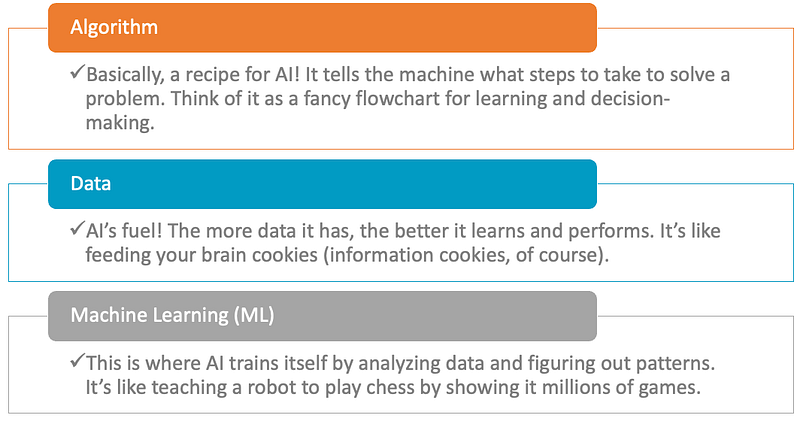
AI can throw around some intimidating terms, so let’s break down a few key ones.
Types of AI
The distinctions among different types of artificial intelligence (AI) are often categorized based on their capabilities and levels of autonomy. The three main types are narrow AI, strong AI, and super intelligence:
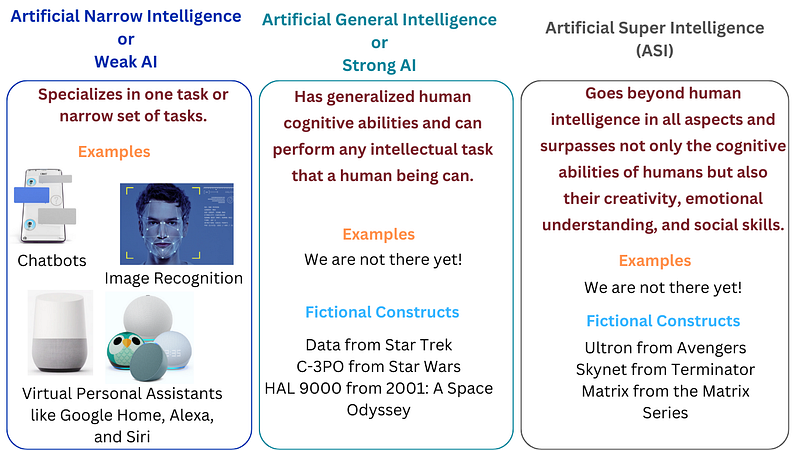
Note that Chat-GPT is not categorized as Strong AI or ASI. GPT-4 is an advanced example of Narrow or Weak AI. If you have doubts, feel free to ask ChatGPT directly!
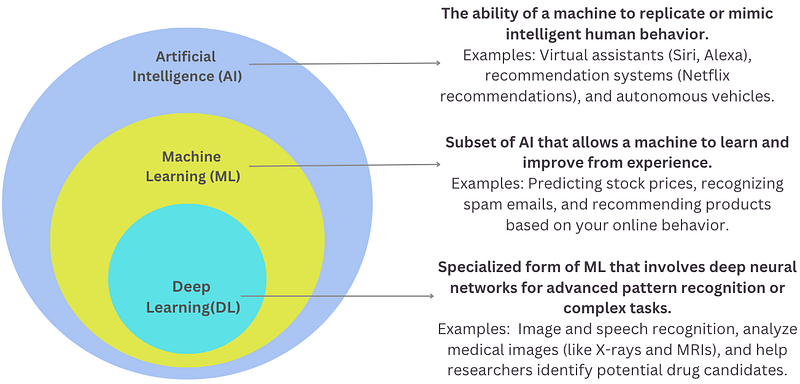
AI vs. ML vs. DL
What is a Neural Network?
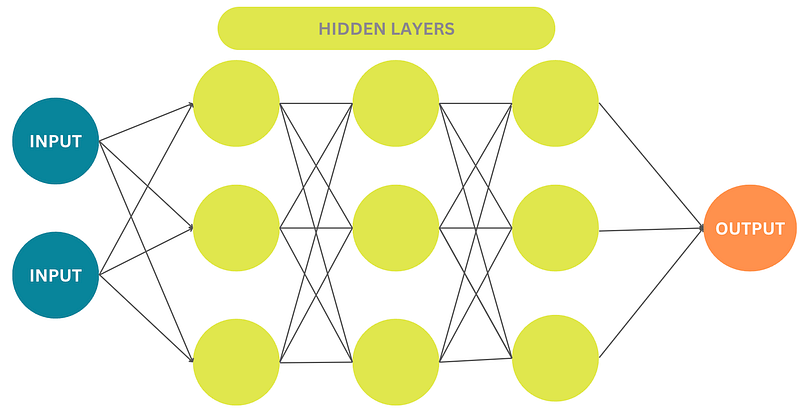
In the preceding diagram, we highlighted that Deep Learning employs neural networks. But what is a neural network?
Think of an artificial neural network as a digital system inspired by the workings of the human brain.
Imagine you have a bunch of tiny decision-makers (like computerized brain cells) that work together to solve a problem. These decision-makers are arranged in layers, with an input layer taking in information, hidden layers figuring things out, and an output layer giving you the final answer.
More about neural networks in the upcoming cheat sheets.
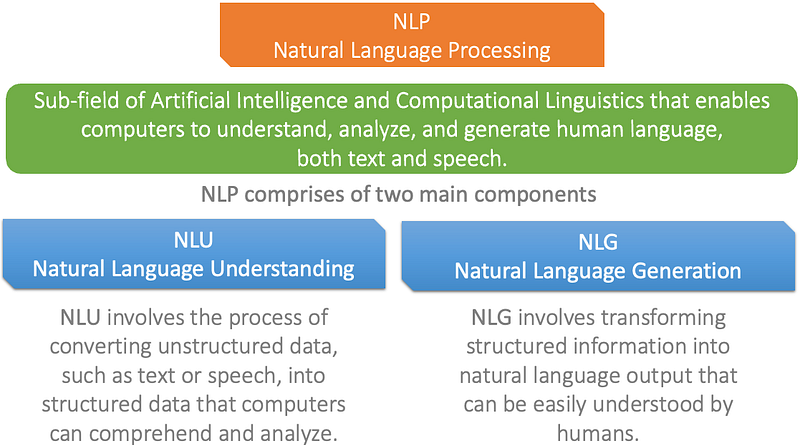
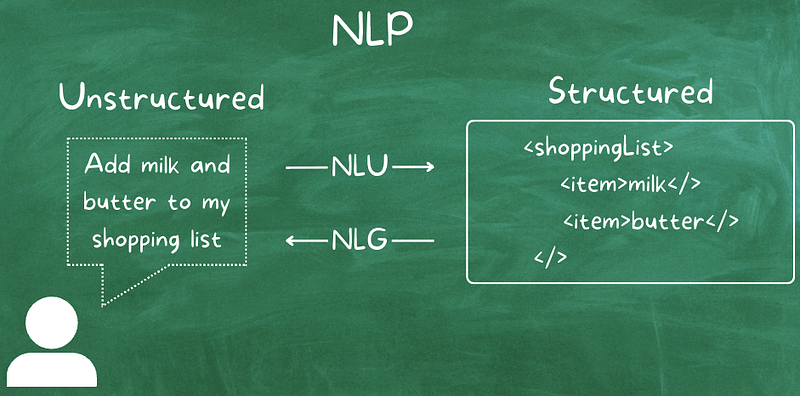
What is NLP?
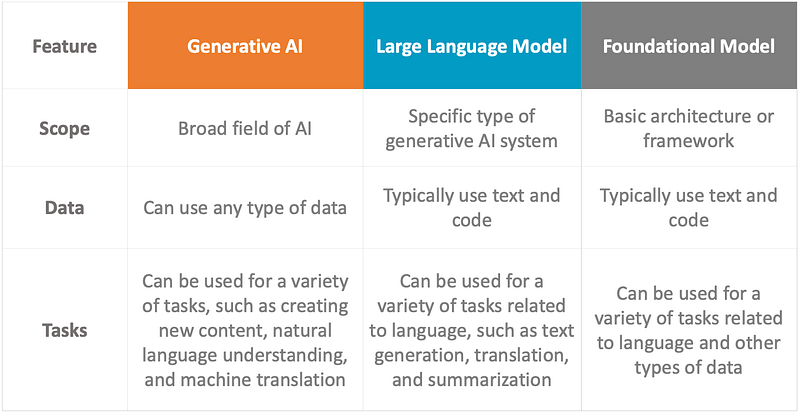
Generative AI vs. LLMs vs. Foundational Models
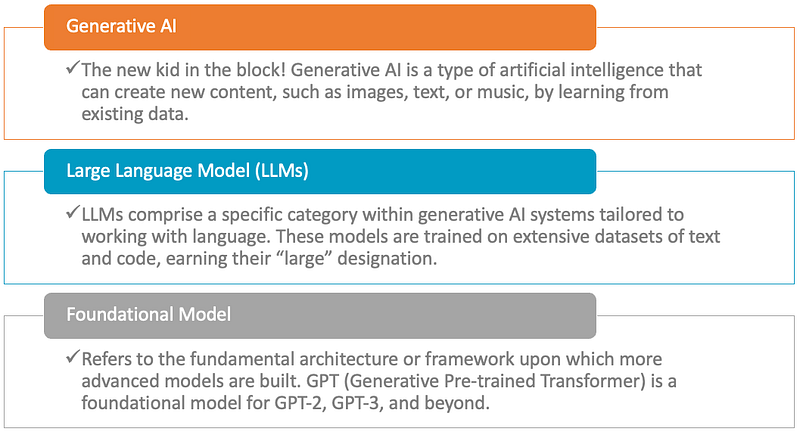
Generative AI is a type of artificial intelligence that can create new content, such as images, text, or music, by learning from existing data.
Imagine you have a big box of Legos. You can use the Legos to build anything you want, like a house, a car, or a robot. Generative AI is like a big box of Legos, but instead of Legos, it has data. The data can be anything, like pictures, text, or music. Generative AI can use the data to create new things, just like you can use Legos to build new things.
Large language models (LLMs) comprise a specific category within generative AI systems tailored to working with language. These models are trained on extensive datasets of text and code, earning their “large” designation.
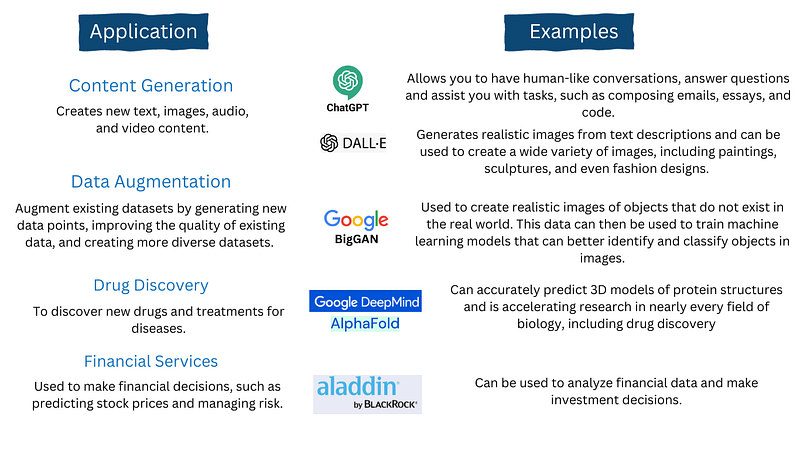
Where is Generative AI being used?
Generative AI is a rapidly growing field, and it is being used in a variety of applications.
Next Cheat Sheet: Natural Language Learning Fundamentals.


