
A Writer Unbroken by Auschwitz
She escaped during a forced march and later translated books by Saul Bellow, Philip Roth, and other titans
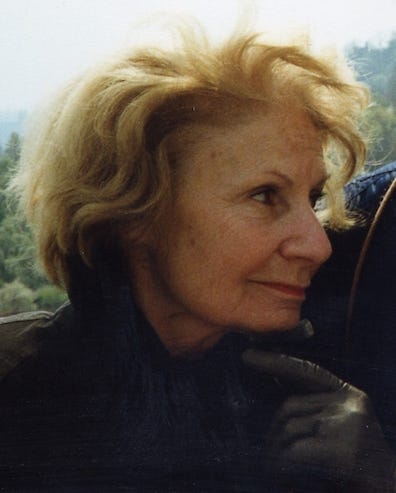
At Auschwitz, Heda Kovály and other prisoners were forced to watch as guards broke the arms and legs of a girl who had tried to escape, then dragged her off to a gas chamber.
Kovály nonetheless made a bold and successful attempt to escape during a forced march to Bergen-Belsen. Then came a desperate house-to-house search for shelter in Prague as old friends turned her away for fear of SS reprisals.
After the war, Kovály suffered further persecution under Joseph Stalin. Enraged but undaunted, she became a leading translator of literary fiction in her native Czechoslovakia, known for her renditions of the novels of Saul Bellow, Philip Roth, Muriel Spark, and other major writers.
Kovály also wrote an acclaimed memoir, Under a Cruel Star, a too-little-known classic of 20th-century totalitarianism. Perhaps her greatest achievement is describing her horrific experiences during and after World War II with a self-respect that her Nazi and Stalinist oppressors tried again and again to crush. In reviewing the first edition of the book the eminent critic Alfred Kazin said:
“This is an extraordinary memoir, so heartbreaking that I have reread it for months, unable to rise to the business of ‘reviewing’ less a book than a life repeatedly outraged by the worst totalitarians in Europe.”
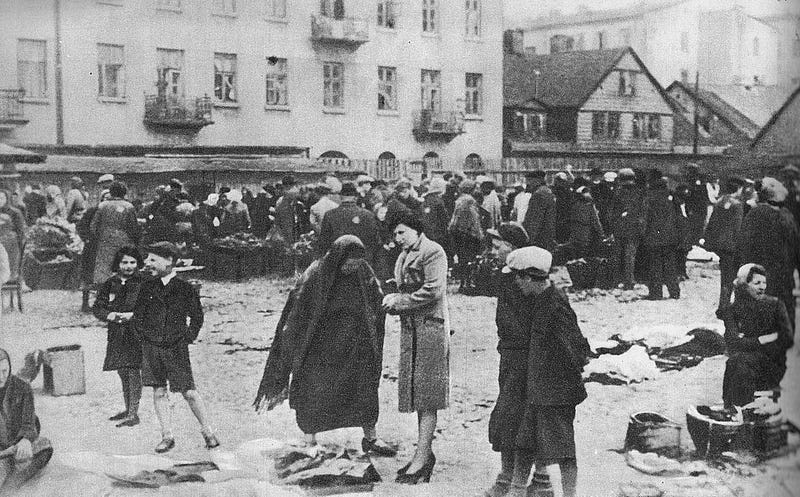
A family sent to the Lodz ghetto
Kovály was born to well-off Czech parents and lived a comfortable life in Prague until 1941. Then she and her family, including her husband, Rudolf Margolius, were deported to the Lodz ghetto in Poland, a slum without sewage, “walled off with a board fence and barbed wire.” It was the first of a series of internments, each more barbarous than the last.
In 1944, the Nazis deported Kovály and her family to Auschwitz, where her parents were sent to the gas chambers on their arrival. Kovály was moved
to the Christianstadt forced labor camp, where she worked in a secret munitions factory and elsewhere until she escaped from a line of prisoners being transferred to Bergen-Belsen the next year.
After the war, Kovály and Margolius had a son, and Rudolf accepted under official pressure a high post in the ministry of foreign trade in newly Communist Czechoslovakia. Later the party falsely accused him of treason.
Her husband was hanged after a show trial
Kovály’s New York Times obituary described what happened after Rudolf was denounced as an enemy of the state:
“In 1952, Mr. Margolius and 13 other government officials, including the former general secretary of the Czechoslovak Communist Party, Rudolf Slansky, were arrested and charged with conspiring against the state. All but two were Jewish, and all were found guilty in one of the era’s most notorious show trials.
“On Dec. 3, 1952, Mr. Margolius was hanged. His wife and their 4-year-old son, Ivan, were hounded by the state and shunned by society. Denied employment and thrown out of her apartment, she eked out a living doing translations under assumed names. In 1968, after the Soviet invasion of Czechoslovakia, she fled to Britain and then emigrated to the United States.
“Mr. Margolius was officially, although secretly, rehabilitated in 1963. When filling out a form for the Ministry of Justice that asked her to report any losses inflicted by her husband’s arrest and execution, Ms. Kovaly drew up a list that included ‘loss of honor,’ ‘loss of health’ and ‘loss of faith in the Party and in justice.’ Only at the end of her 10-item list did she write ‘loss of property.’ ”
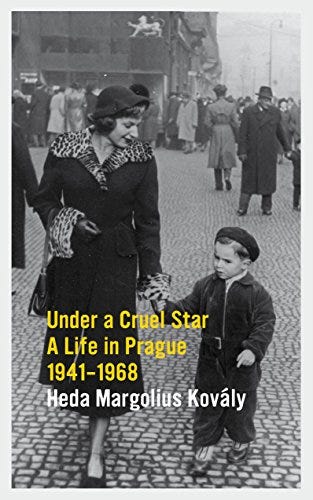
She fled Czechoslovakia as Soviet tanks rolled in
Kovály married Pavel Kovály, a philosophy lecturer, in 1955, and did admired translations of German, British, and American fiction into Czech. She fled Czechoslovakia as Soviet tanks arrived to crush the pro-democracy movement in 1968 and emigrated to the United States.
Those scant facts don’t begin to suggest the physical and psychological suffering Kovály endured. From the start of World War II until she arrived in the United States, she seems rarely to have had a day when she wasn’t cold, sick, hungry, homeless, or shunned for the unjust charges against her husband, who was exonerated during the process of de-Stalinization under Nikita Khrushchev.
Along with life-threatening hardships, Kovály faced countless smaller humiliations. In Under a Cruel Star she writes that when she or other survivors of Dachau or Auschwitz spoke of their experiences after the war, their more fortunate friends responded with comments such as, “Oh, yes, we too have suffered, how often there was not even margarine to spread on our bread …”
Observed key Cold War events at close range
Kovály focuses in her memoir on her own experiences and appears never to pad her story with accounts by historians, which makes her book read like a swift-moving dystopian novel narrated by a wise and clear-eyed storyteller appropriately outraged by what she sees.
By dint of Rudolf Margolius’ work, she observed at close range the actions of the powerful, including the Communist party leaders who made scapegoats of him and others. That proximity to officialdom allows her to invest her memoir with a rare combination of poignant domestic scenes and telling observations about signal events of the Cold War.
Under a Cruel Star has much in common with Gerda Weissmann Klein’s classic Holocaust memoir, All But My Life, adapted for the Academy Award–winning short film One Writer Remembers.
Yet Kovály’s book is less well known than that and other exemplary books about the Nazi atrocities, perhaps partly because it has appeared in different translations and under several titles that may have diluted its name recognition. It was published in England as Prague Farewell and in an earlier American edition as The Victors and The Vanquished.
That its its author did not spend her entire postwar life in the United States may also have affected its visibility in America.
In 1996 Pavel and Heda Kovály returned to Prague, where he died in 2006. Kovály died there at the age of 91 in 2010, and her son said her message to the world was: “I loved you! Live on!”
Partial list of sources:
Kovály, Heda Margolius. Under a Cruel Star: A Life in Prague, 1941–1968. Translated by Helen Epstein. New York: Holmes & Meier Publishers, 1997.
William Grimes, “Heda Kovaly, Czech Who Wrote of Totalitarianism, Is Dead at 91,” The New York Times, December 9, 2010.
Ivan Margolius, “Heda Margolius Kovály Obituary,” The Guardian, December 13, 2010.
“Ivan Margolius — Heda Margolius Kovály — Rudolf Margolius,” margolius.co.uk
Klein, Gerda Weissmann. All But My Life. New York: Hill & Wang, 1995.
@janiceharayda is an award-winning journalist who has been the book critic for Ohio’s largest newspaper and a vice-president of the National Book Critics Circle. On Medium she is a Top Writer in Books, Reading, Journalism, and Feminism.
You might also enjoy these stories about other inspiring women:
If you liked these stories and would like to read more like them, you can read three per month for free or join Medium and read all of them:


