avatarSam Newbound

Free AI web copilot to create summaries, insights and extended knowledge, download it at here

1888

Abstract

other.</p><p id="cd00">And in fact, they were. When I mentioned the persistent beeping to a local friend, he explained Cairo’s unique “car-honk” language. Drivers in Cairo use a series of beeping patterns, almost like Morse code, to communicate with each other and navigate the city’s chaotic roads.</p><p id="b187">As explained in a <i>Culture Trip</i> <a href="https://theculturetrip.com/africa/egypt/articles/this-secret-language-connects-strangers-in-cairo">article</a>,</p><p id="485a" type="7">“In Cairo’s car-honk language, “thank you” is a series of two short beeps. Two other commonly used phrases, “take care” (one long honk) and “I love you” (four short beeps followed by one long beep), are used to wish fellow drivers well.</p><p id="e372" type="7">… To the untrained ear, a series of three short beeps followed by two long beeps is just ambient noise in the chaos of Cairo’s never-ending gridlocks, but this commonly used phrase — translated as “fuck you” — can rile up some wild road rage.”</p><p id="c0e0">The language developed decades ago with the city’s explosion in population. Like much of Cairo, the roads are crowded and a bit manic, and I can understand how some form of communication would be necessary to navigate them.</p><figure id="b50b"><img src="https://cdn-images-1.readmedium.com/v2/resize:fit:800/1*ecTMjctInYxQBlFx2TzCfA.jpeg"><figcaption>Photo by <a href="https://samnewbound.medium.com/">author</a></figcaption></figure><p id="f237">Given the city’s honking habits and the fact that the sign was located in Zamalek, a slightly quieter area of Cairo full of embassies, consulates, and foreign diplomats, I imagine the sign’s purpose was to discourage the usual honking that might disturb residents expecting some semblance of silence.</p><p id="94cd">When I look back through old Cairo photos, the picture of this sign always brings back the persistent

Options

buzz of noisy Cairo — people shouting, packs of stray dogs barking, and and the chatter of honking car horns. It was a lively, chaotic hum that I grew strangely fond of in my time there.</p><figure id="a6fe"><img src="https://cdn-images-1.readmedium.com/v2/resize:fit:800/1*aVkdiDt8ZkNkqi8hHT_kHg.jpeg"><figcaption>Cairo sunset | Photo by <a href="https://samnewbound.medium.com/">author</a></figcaption></figure><p id="d053"><i>Here’s another response to the Globetrotters January prompt — Signs — that I enjoyed by <a href="undefined">Anne Bonfert</a>:</i></p><div id="198a" class="link-block"> <a href="https://readmedium.com/signs-to-get-around-the-world-405cb232a1d9"> <div> <div> <h2>Signs to Get Around the World</h2> <div><h3>Boards and other sign markers I found on my travels</h3></div> <div><p>medium.com</p></div> </div> <div> <div style="background-image: url(https://miro.readmedium.com/v2/resize:fit:320/1*YBqPCFTlNkgGt7e4Aw4CNA.jpeg)"></div> </div> </div> </a> </div><p id="1381"><i>And some more great writing on Egypt by <a href="undefined">Brad Yonaka</a>:</i></p><div id="2979" class="link-block"> <a href="https://readmedium.com/steel-thyself-traveler-for-egypt-eb2540513854"> <div> <div> <h2>Steel Thyself, Traveler, for Egypt</h2> <div><h3>You may not be ready for Egypt, but Egypt is always ready for YOU</h3></div> <div><p>medium.com</p></div> </div> <div> <div style="background-image: url(https://miro.readmedium.com/v2/resize:fit:320/1*bpUWiFioxnJUBjRL8_LTYA.jpeg)"></div> </div> </div> </a> </div></article></body>

A Sign that Epitomized the Chaotic Energy of Cairo

And the city’s secret Morse code
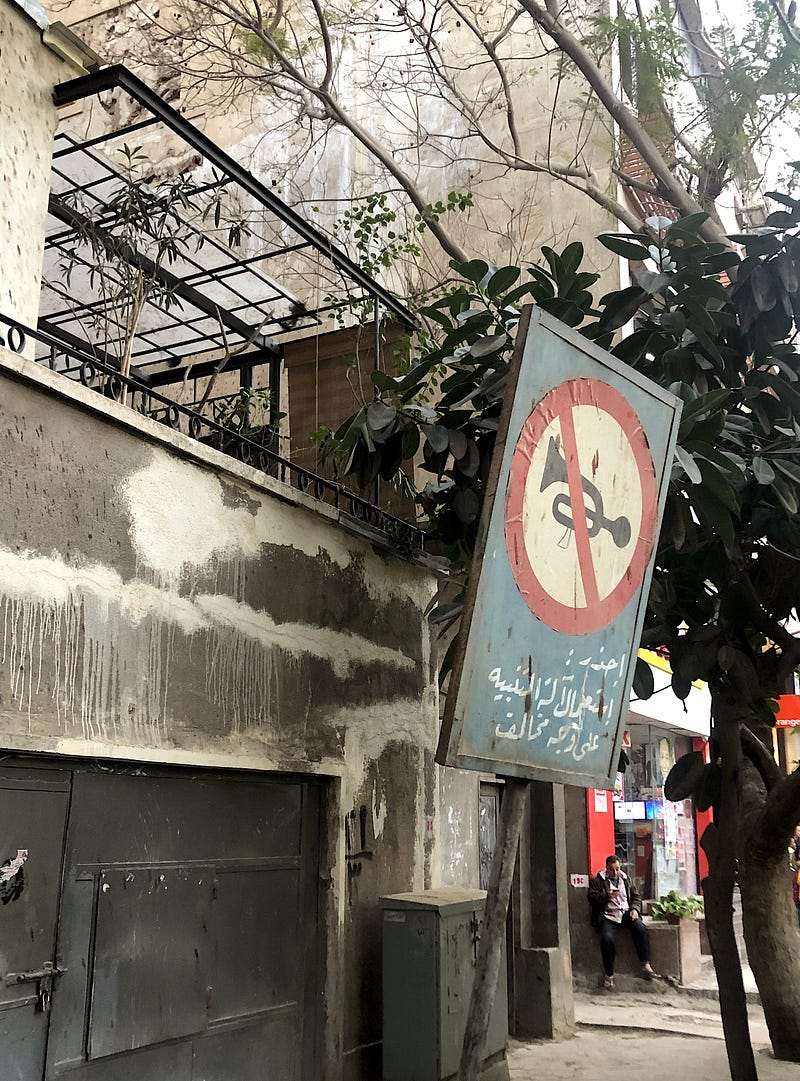
Taken in Zamalek, Cairo | Photo by author

Dust and exhaust fumes hung in the warm air, scattering the early evening light and creating an orange haze that I’d grown familiar with after more than six months in Cairo. We had just finished an early dinner at a Korean barbecue restaurant in Zamalek, an affluent area of Cairo located on a man-made island in the middle of the Nile. The cuisine had made a refreshing change from the usual (but mouthwatering) falafel stands and Lebanese cafes that peppered the streets where we lived in downtown Cairo.

As we wandered toward one of Zamalek’s many art galleries, I saw a sign that made me chuckle to myself and stop to take a photo. I couldn’t quite make out the words in the sign’s faded, hand-painted Arabic script but I could guess exactly what it meant.

The unusual sign donned a red circle with a cross through it over a black trumpet. If I’d never been to Cairo, my first thought might have been that the sign was forbidding orchestra students from practising their instruments in the streets or warning musicians against busking. Far from what might have been my initial harebrained thoughts, I’m fairly certain the sign was referring to car horns.

One of the first things that caught my attention in Cairo was the constant cacophony of car horns. It didn’t sound like the typical rage-beeping I would expect in Detroit or London. It felt more like the constant buzz of chatter you might hear in a busy bar — as if the cars were speaking with each other.

And in fact, they were. When I mentioned the persistent beeping to a local friend, he explained Cairo’s unique “car-honk” language. Drivers in Cairo use a series of beeping patterns, almost like Morse code, to communicate with each other and navigate the city’s chaotic roads.

As explained in a Culture Trip article,

“In Cairo’s car-honk language, “thank you” is a series of two short beeps. Two other commonly used phrases, “take care” (one long honk) and “I love you” (four short beeps followed by one long beep), are used to wish fellow drivers well.

… To the untrained ear, a series of three short beeps followed by two long beeps is just ambient noise in the chaos of Cairo’s never-ending gridlocks, but this commonly used phrase — translated as “fuck you” — can rile up some wild road rage.”

The language developed decades ago with the city’s explosion in population. Like much of Cairo, the roads are crowded and a bit manic, and I can understand how some form of communication would be necessary to navigate them.
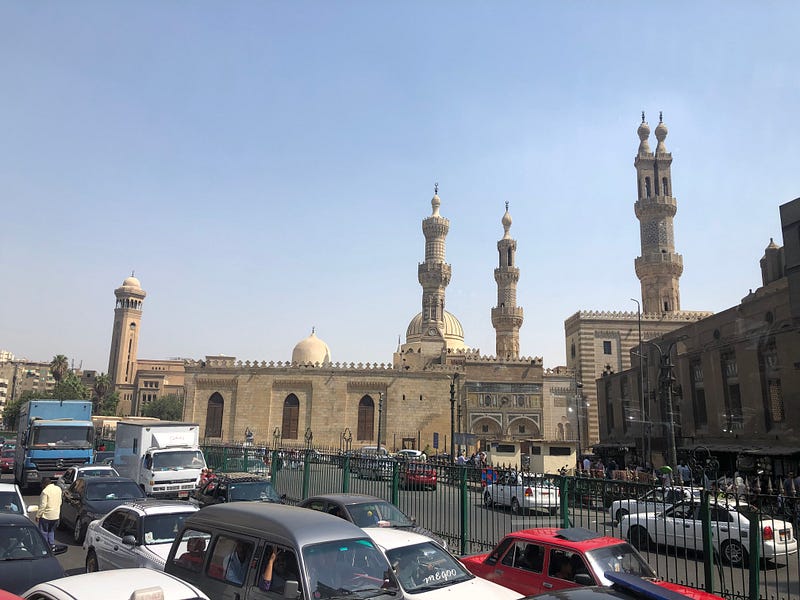
Photo by author

Given the city’s honking habits and the fact that the sign was located in Zamalek, a slightly quieter area of Cairo full of embassies, consulates, and foreign diplomats, I imagine the sign’s purpose was to discourage the usual honking that might disturb residents expecting some semblance of silence.

When I look back through old Cairo photos, the picture of this sign always brings back the persistent buzz of noisy Cairo — people shouting, packs of stray dogs barking, and and the chatter of honking car horns. It was a lively, chaotic hum that I grew strangely fond of in my time there.
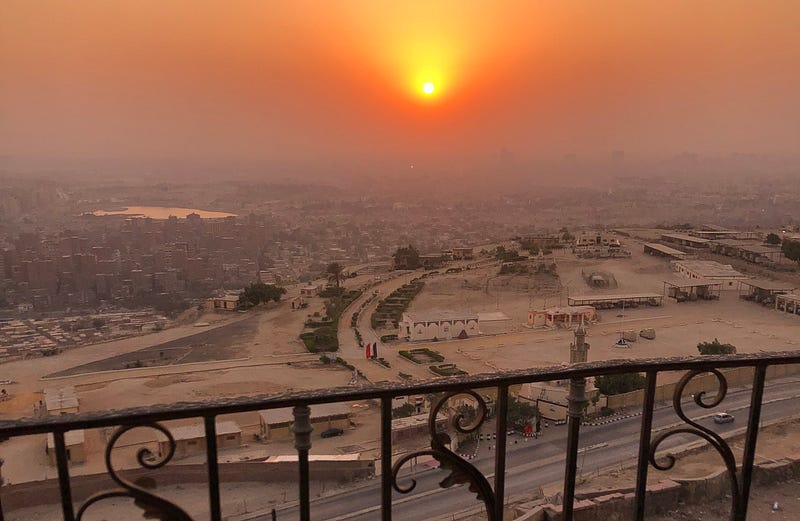
Cairo sunset | Photo by author

Here’s another response to the Globetrotters January prompt — Signs — that I enjoyed by Anne Bonfert:

And some more great writing on Egypt by Brad Yonaka:

Monthly Challenge
Signs
Travel
Egypt
Travel Writing
Recommended from ReadMedium