
A Shoutout to the Gingers Dancing in My Garden
Ornamental or Culinary — I love you all
Shortly after I began gardening, I walked into a friend’s kitchen — and into a cloud of floral fragrance. I find bottled floral perfumes overpoweringly sweet. But when a flower gives off that fragrance — whether honeysuckle, gardenia, or jasmine — I love it.
My friend pointed to a bunch of white lily-like blooms in a vase on her kitchen counter. The flowers were called “Sugandhi,” — which in Sanskrit means “aromatic” or “perfumed.” It is also known as the Butterfly Flower.
“It’s an ornamental ginger,” my friend said.
That surprised me. The only ginger I knew of then was the gingerroot I used in cooking.
Gardening with Gingers…
My friend dug up some sugandhi rhizomes for me.
The plant did well in my garden. So I got another variant. The blooms on the new plant were smaller and less fragrant. But their coloring was an exquisite shade of coral.
Eventually, I had to take both out plants because they ran rampant over the flower beds. But sugandhi was the beginning of my love affair with the ginger family.
Zingiberaceae, the “ginger family,” is a family of flowering plants consisting of aromatic perennial plants with creeping horizontal or tuberous rhizomes. A rhizome is a horizontal stem usually found underground, often sending out roots and shoots from its nodes.
Siam Tulips — not tulips at all…
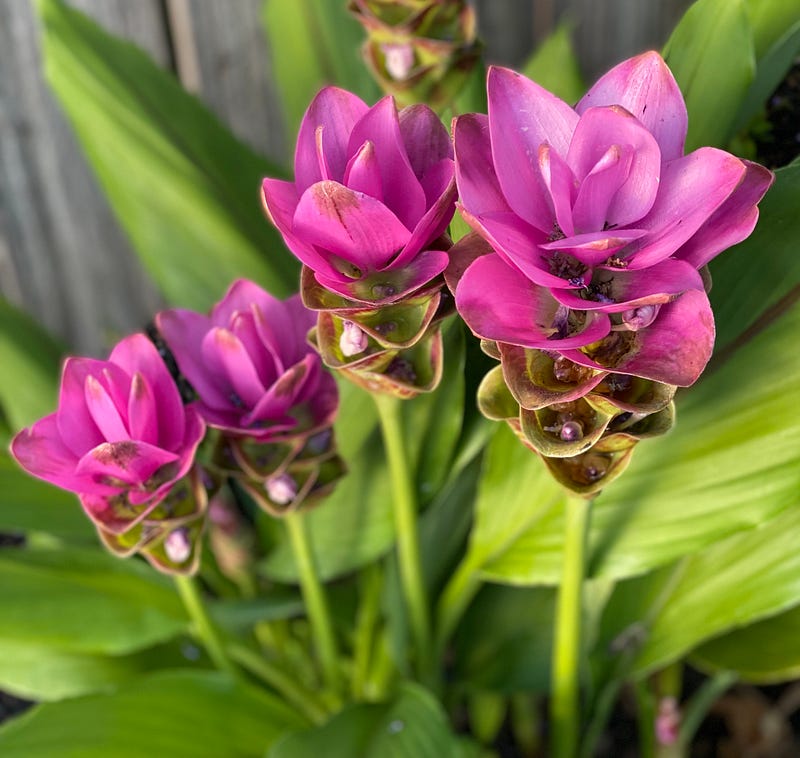
The plant with the showy, magenta blooms in the lead picture is called a Siam Tulip. It is not a tulip at all, but rather an ornamental ginger.
Below is a light-pink variant of the same flower.
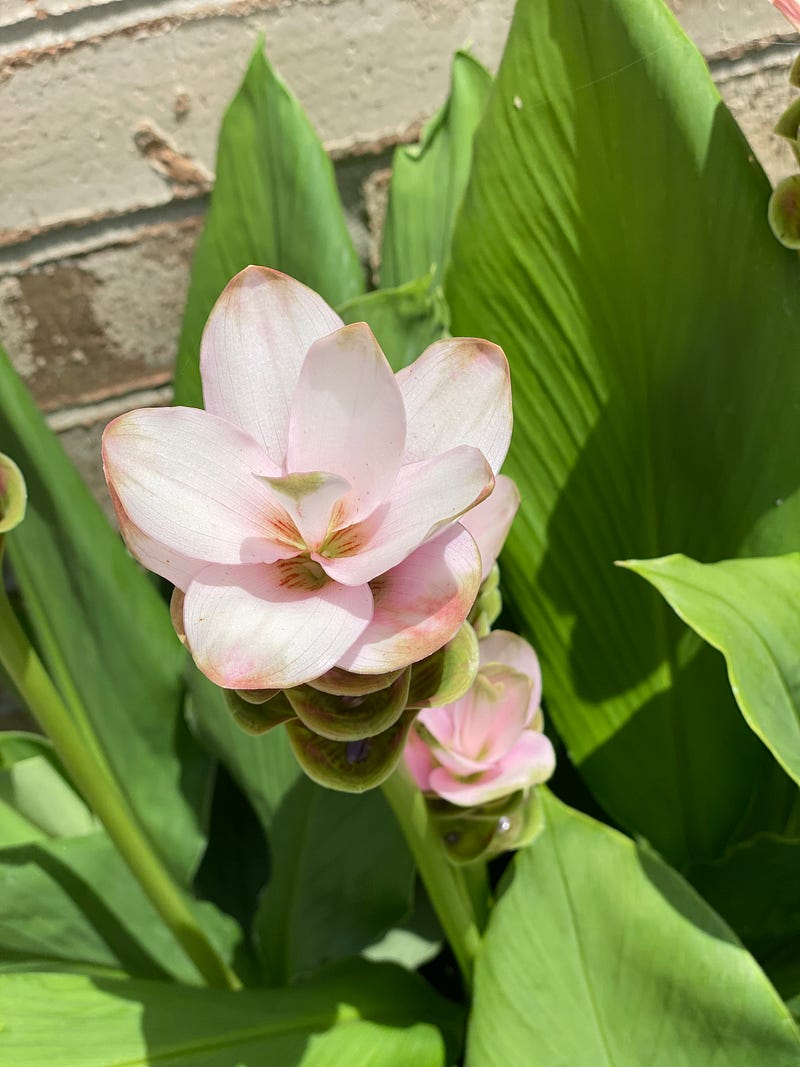
The purple points of color inside the bracts are miniature flowers — gilding the “tulip,” as it were.
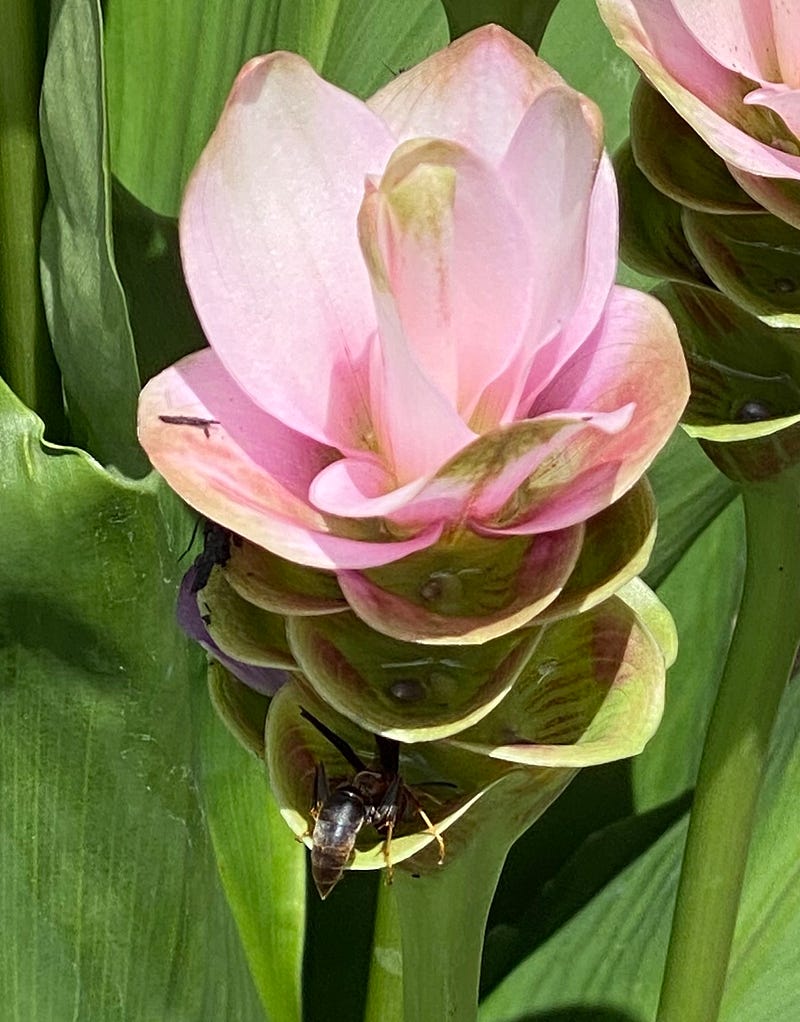
Rainwater puddles in the bracts. Wasps come along to drink.
I canna do without Cannas in my garden…
Canna lilies are not lilies. They belong to the order of Zingiberales which include ginger. So, cannas are cousins to ginger.
I love rich, vibrant colors in my garden. And what’s more colorful than cannas? I have four.
These fiery blooms light up my front yard.
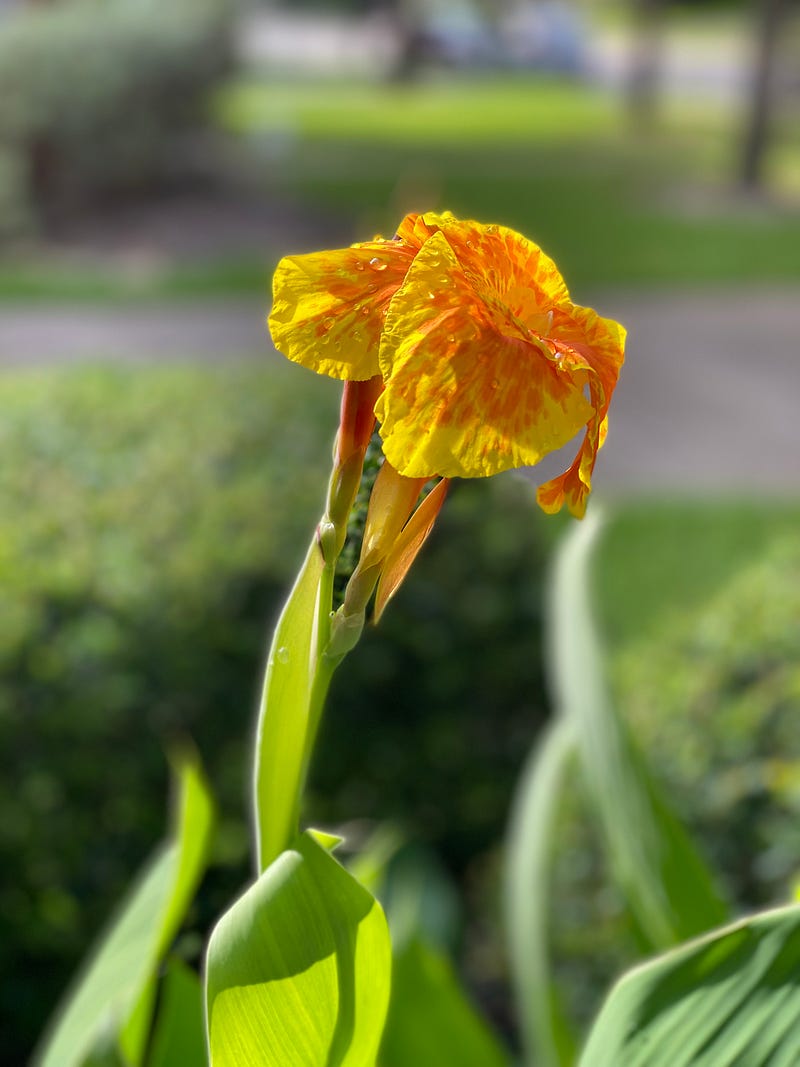
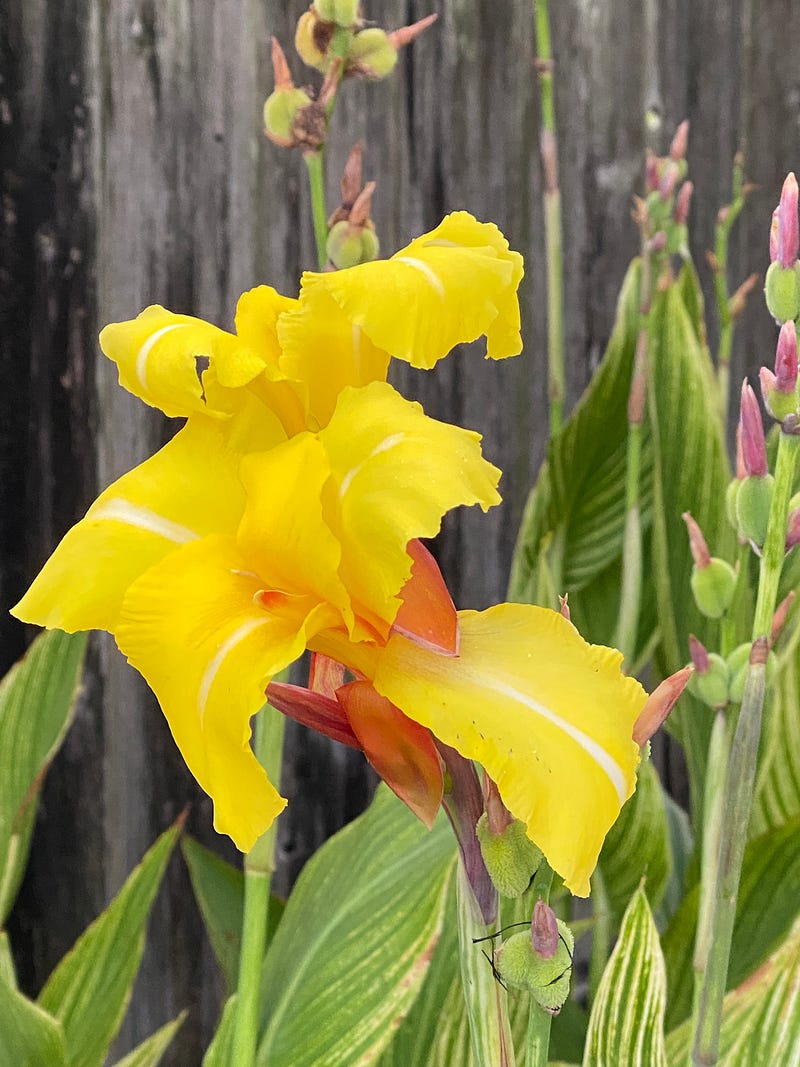
I chose the one below for its pure yellow blooms and variegated leaves.
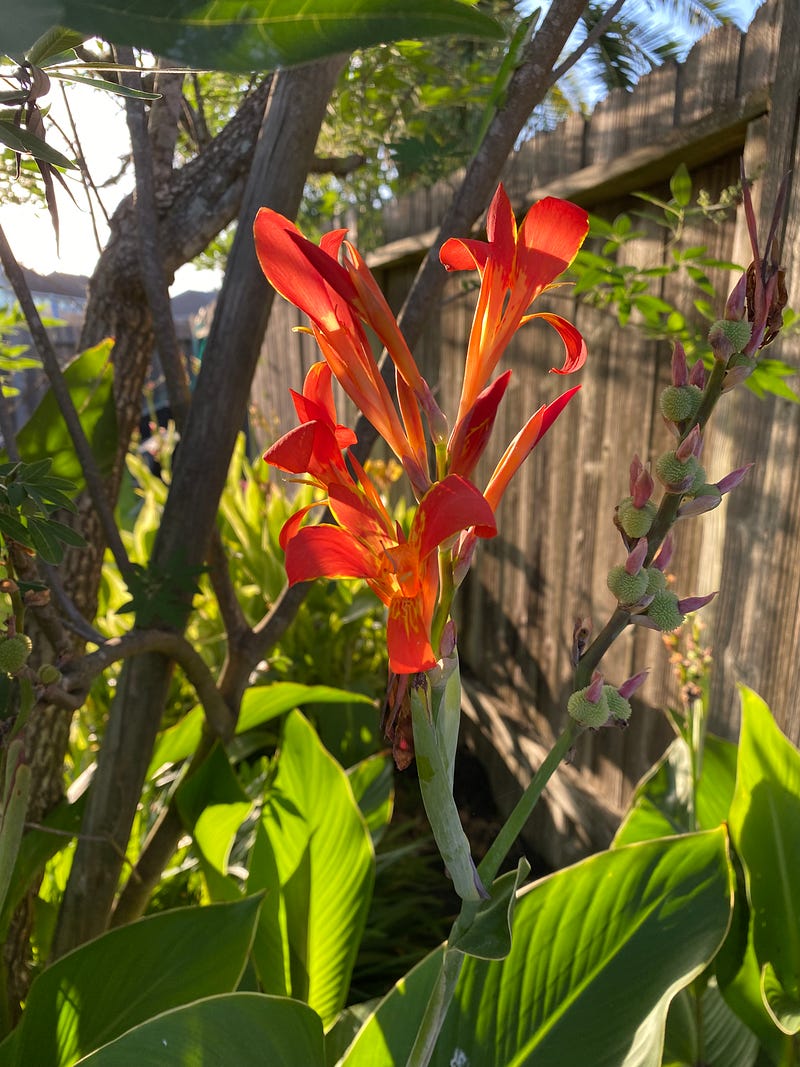
This orange-red beauty peeks out from behind my Vitex tree. When the vitex is in full purple summertime bloom, the red canna flowers present a striking counterpoint.
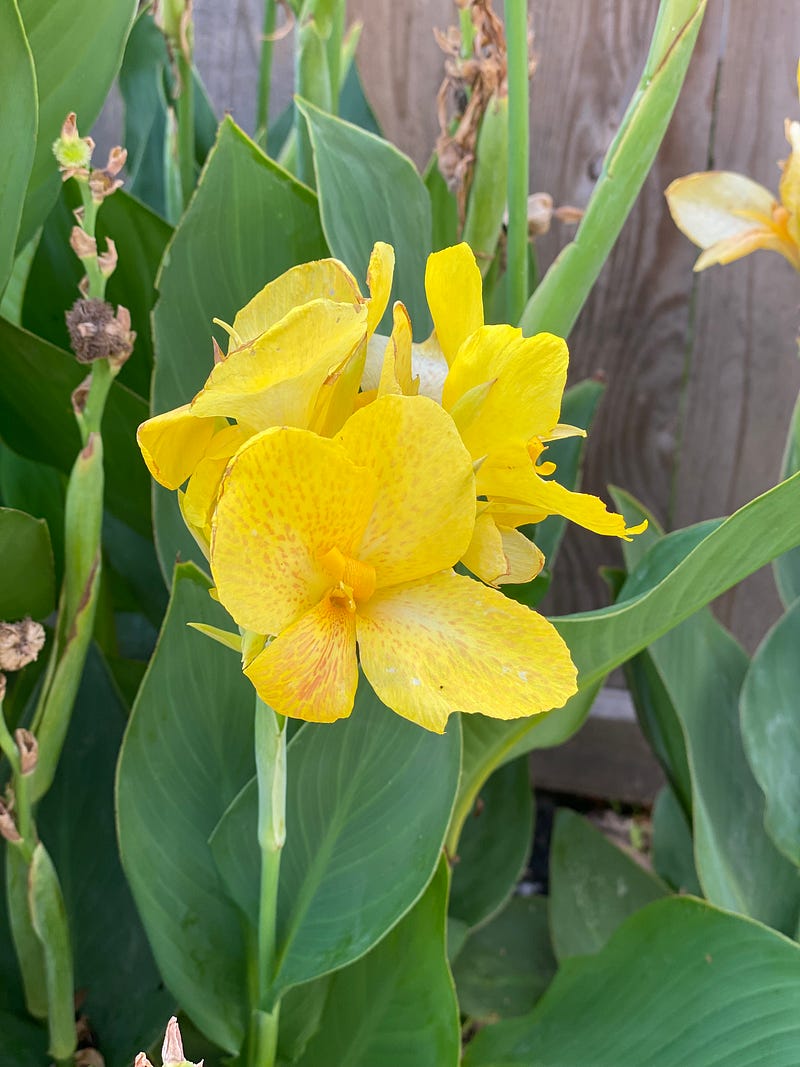
I wanted more sunny splashes of color. What’s sunnier and splashier than a yellow canna?
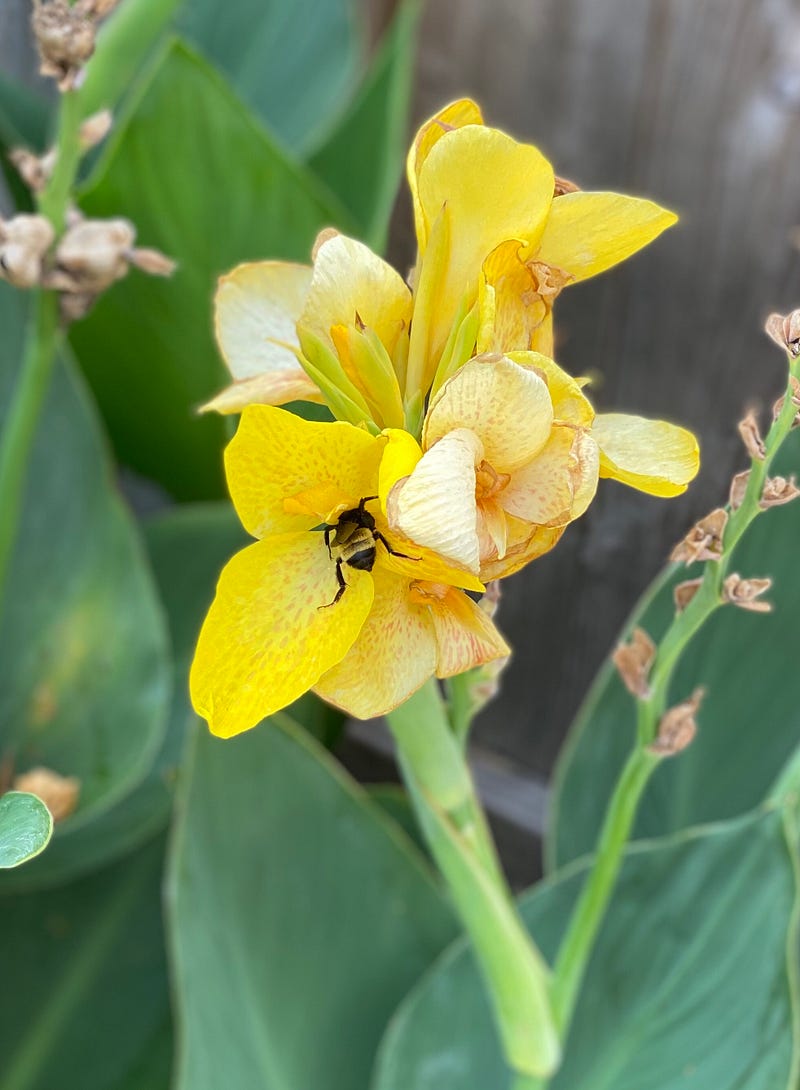
Here’s someone else who also likes yellow cannas. Or maybe she just likes being color-coordinated.
The other day, I was out walking in my neighborhood. I stopped under a live oak to listen to certain bird going chick-a-dee-dee. Right by the oak was a plant with look-at-me foliage.
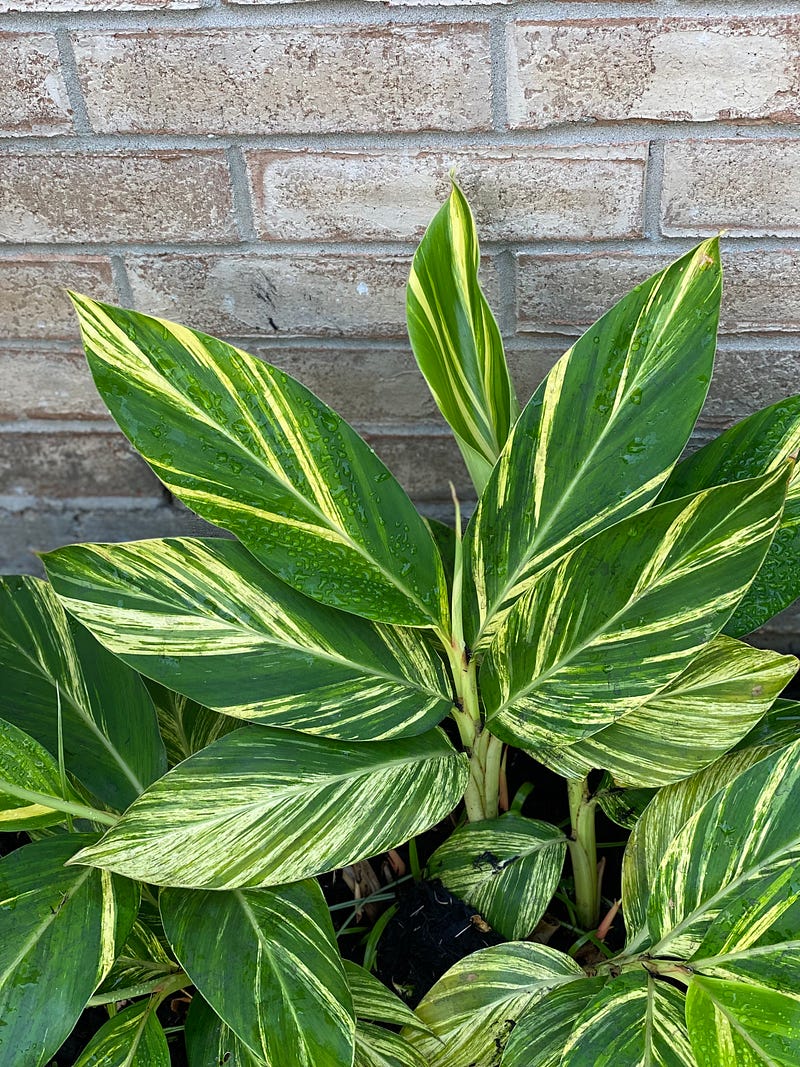
I texted my sugandhi friend a photo, and asked: Is this a ginger?
Her answer: Variegated Shell Ginger.
I was lucky to find the plant in the gardening center the next day.
My edible ginger…
Gingerroot, galangal, turmeric, and cardamom are edible (culinary) gingers.
This is the culinary ginger in my garden — Turmeric.
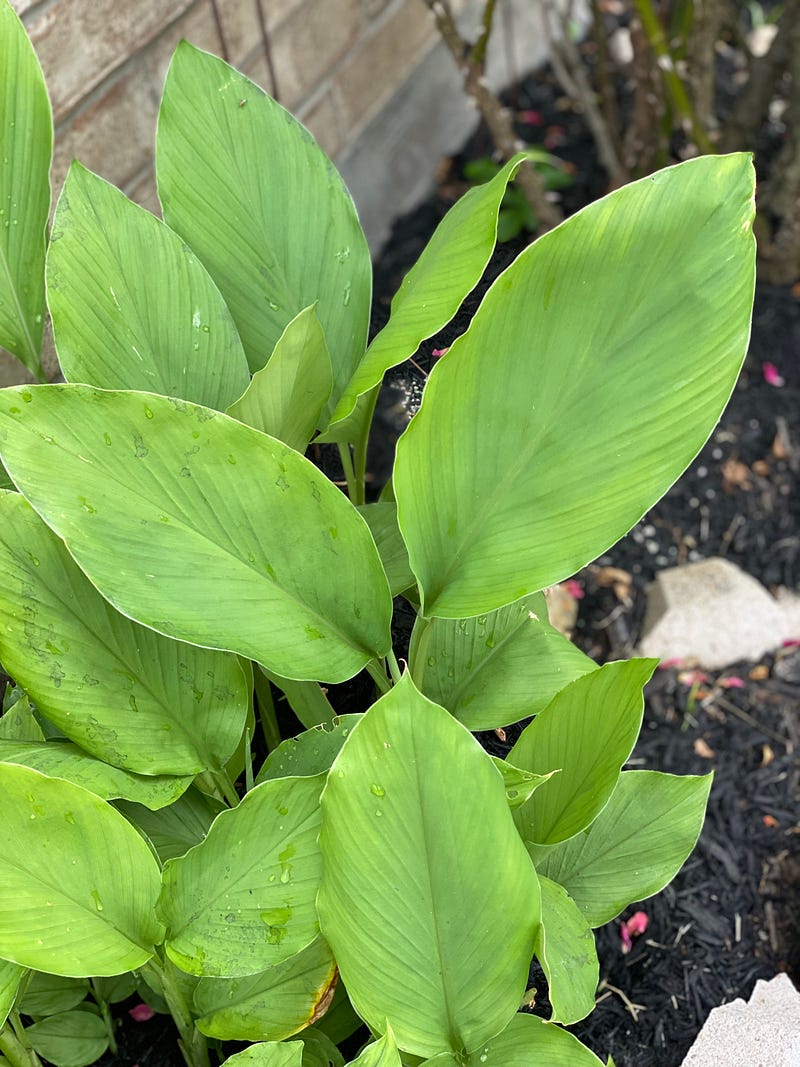
Although my plant puts out large and healthy leaves, it has never flowered in the seven years I have had it. It hasn’t put out anything that looks even suspiciously like a bloom. Not that it matters because I only use the leaves.
Slugs n’ snails…
The only problem I have with the cannas and shell ginger is that slugs and snails love snacking on the leaves.
At first, I scattered crushed eggshells around the roots to discourage the slugs. But we don’t eat a lot of eggs.
So I came up with another solution. When I prune my roses, I arrange the thorny branches around the roots of my cannas and shell ginger. It effectively fences off the plants and keeps away the slugs.
Final thoughts…
Gingers are undemanding and easy to grow. Winters in our part of Texas are mild. But every year, we get sub-zero temps that hang around long enough to kill off the tender perennials.
Gingers are tough perennials.
Two of my hibiscus plants and my Esperanza didn’t make it through the winter. But the gingers came roaring back. They defied even the infamous 2021 ice storm.
I’ll say this: These Gingers — and their cousins — will be dancing in my garden for a very long time.
Thanks for reading! 🌷
Thank you Dennett for publishing my story.
Some of this author’s other stories: