avatarAlexander Verbeek

Free AI web copilot to create summaries, insights and extended knowledge, download it at here

3295

Abstract

is spot.</p><figure id="316d"><img src="https://cdn-images-1.readmedium.com/v2/resize:fit:800/1*nXW7AIS509CozOXfi_huGA.jpeg"><figcaption>Where the Gatineau River flows into the Ottawa River, note the St. François de Sales Church (photo: Alexander Verbeek)</figcaption></figure><p id="2117">I took this photo in Ontario, just north of the capital, but what you see is Gatineau in Quebec. It is the fourth city of the province, and what you see in this picture is Pointe Gatineau, a village a bit to the north that has become part of the city. A likely explanation for the origins of the town’s name is the historical connection to a fur dealing clerk named Nicolas Gastineau. His name appeared first in New France in 1648. Gastineau, a native of Paris, worked for the “Compagnie des Cent Associés in Trois-Rivières”. The Gatineau River was part of a long-used fur-trading route, but historians have not been able to find evidence that Gastineau actually traveled down the Gatineau. The best indication of a connection between him and the city’s naming is the discovery in notarial records that his sons have been in the Pointe-Gatineau area in the late 17th century.</p><p id="728b">A side note: I failed to find out why no expert suggests that this spot is simply named after one of the sons (or both of them) instead of the father. After all, if you can’t find proof that the father of Amerigo Vespucci ever sailed along the shores of Brazil, it becomes more likely that America is named after his son. (Note that his father had a different first name: Nastagio Vespucci, which would have altered history in many ways if he had sailed to the west, including the naming of the U.S.A, a country that would then have been known as U.S.N).</p><h1 id="8fac">Timber rafts</h1><p id="a80b">I love to watch the landscape at this spot where these rivers converge. Imagine that already, for thousands of years, people have paddled these rivers. Or think of the 1800s when vast timber rafts floated down these rivers all the way to Quebec City. For years people had speculated that this couldn’t be done. But in 1806, Philemon Wright, the founder of Hull, launched a raft of 700 squared logs from the far shore. For two months, he and his crew battled the wild rapids of the Ottawa and St. Lawrence rivers to get the wood to market. His triumphant arrival in Quebec City began a century of timber rafting on the Ottawa.</p><figure id="129d"><img src="https://cdn-images-1.readmedium.com/v2/resize:fit:800/1*H2OWaDJVBDIupBK-DHc0RQ.jpeg"><figcaption>Not far from the same spot: looking to the East</figcaption></figure><p id="b570">Ninety years later, in 1896, Lady Aberdeen, the wife of Canada’s governor-general, nearly drowned on the same far shore where Wright started his journey. She had taken the ferry for a spring outing from about the spot where I took the first photo. But her ponies slipped, overturning her carriage into the icy Gatineau river. The ponies were swept away, but Lady Aberdeen held on until help came. Then, in thanks for her rescue, she donated a bell to St. François de Sales Church. The bell is still there today, and you can see the church in this picture. You can also see the dark clouds; I walked home just in time before it started to rain.</p><p id="46bc"><b>If you find

Options

articles like this valuable and want to support my work, consider <a href="/@Alex_Verbeek/membership">signing up to Medium</a>. It’s $5 a month, giving you unlimited access to all my articles AND all stories on Medium.</b></p><p id="dfca"><b>If you sign up using <a href="/@Alex_Verbeek/membership">my link</a>, I’ll earn a small commission, at no additional cost to you.</b></p><div id="e2d9" class="link-block"> <a href="https://medium.com/@Alex_Verbeek/membership"> <div> <div> <h2>Join Medium with my referral link - Alexander Verbeek</h2> <div><h3>As a Medium member, a portion of your membership fee goes to writers you read, and you get full access to every story…</h3></div> <div><p>medium.com</p></div> </div> <div> <div style="background-image: url(https://miro.readmedium.com/v2/resize:fit:320/0*jUwIcjghXD1H8bfi)"></div> </div> </div> </a> </div><div id="8649" class="link-block"> <a href="https://readmedium.com/a-fast-track-to-climate-disaster-five-takeaways-of-the-ipcc-report-you-should-know-d15830ae06d5"> <div> <div> <h2>A fast track to climate disaster: five takeaways of the IPCC report you should know</h2> <div><h3>“We are on a fast track to climate disaster.” UN Secretary-General António Guterres said of the latest IPCC report in a…</h3></div> <div><p>medium.com</p></div> </div> <div> <div style="background-image: url(https://miro.readmedium.com/v2/resize:fit:320/1*jJ4Pu8MqIF8J6M6AhY-ZwQ.jpeg)"></div> </div> </div> </a> </div><div id="0489" class="link-block"> <a href="https://readmedium.com/how-the-joyful-sounds-and-colorful-flowers-of-spring-will-make-you-happy-f415b2961902"> <div> <div> <h2>How the joyful sounds and colorful flowers of spring will make you happy</h2> <div><h3>Springtime has arrived in Ottawa. Many readers will already have noticed that nature is waking up from winter. Some of…</h3></div> <div><p>medium.com</p></div> </div> <div> <div style="background-image: url(https://miro.readmedium.com/v2/resize:fit:320/1*B6vzX_8kOWuKO7mmTqnaZA.jpeg)"></div> </div> </div> </a> </div><div id="b643" class="link-block"> <a href="https://readmedium.com/why-you-should-be-worried-about-a-collapsing-ice-shelf-in-antarctica-29a5d818a6a3"> <div> <div> <h2>Why you should be worried about a collapsing ice shelf in Antarctica</h2> <div><h3>The breaking of ice shelves is a natural process, but glaciologists have noted that some large ice shelves have…</h3></div> <div><p>medium.com</p></div> </div> <div> <div style="background-image: url(https://miro.readmedium.com/v2/resize:fit:320/1*o59nIfPJ6yez2aFmEt-xDg.jpeg)"></div> </div> </div> </a> </div></article></body>

A shared moment of hope when Ramadan, Passover, and Easter all coincide
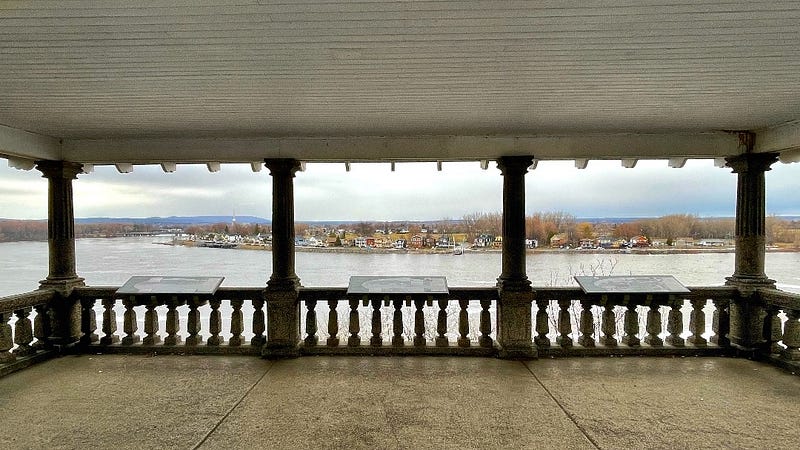
Looking at Pointe Gatineau (photo: Alexander Verbeek)

On this rainy day, I walked along the shore of the Ottawa River, enjoying a typically Canadian scene of water, forests, and hills. It’s a stark contrast with the island where I live in the Netherlands, where there are no hills and hardly any forests in the flat green fields behind the dunes and dikes. But there is the abundance of water that connects these two countries and lots of shared history that I wrote about when I visited some of the thousands of Canadian war graves in my country.

When Ramadan, Passover, and Easter all coincide

Water is vital in the identity of every country, as well as in every religion. Water and religion should unite people and not divide them, which I hope is the way more people see it at this particular moment when the world enjoys, under a full Pink Moon, the rare occasion that Ramadan, Passover, and Easter all coincide. The next time this will happen is in 2055, when you can be sure that the world will have dramatically changed, albeit in ways no one can predict.

Perhaps it will be a better world, where Muslims, Jews, and Christians will respect each other and celebrate together. Today, the world seems to have forgotten about the unique meaning of the Abrahamic faiths celebrating at the same time. It should be a shared moment of hope for a better future, but just look at the front page of your newspaper or the trending topics on your favorite social media. You will be reminded how far humanity has drifted from fundamental values like compassion, solidarity, and respect for each other that are common to all religions.

Where three great rivers meet

On this particular weekend, when three religions celebrate major holidays, I walked where three great rivers meet: the Gatineau, Rideau, and Ottawa rivers connect in Canada’s capital. Then, a bit further along the river, I read about the history of this particular spot where you can see the Gatineau and Ottawa Rivers converge. The point where the Rideau River flows into the Ottawa River is just a ten-minute walk further to the west. This confluence of rivers explains the capital region’s strategic importance long before there was even a city; three converging rivers make this an ideal spot for transport, trade, and even politics.

Ottawa is now connected to the Trans-Canada Highway, a transcontinental federal-provincial highway system that spans nearly 7,500 km (4,645 mi). But long before the first highways and cars were built, the water formed a similar connection across Canada. From this spot, you can paddle a chain of lakes and rivers that stretches over 8000 kilometers from the Atlantic, west to the Pacific, and north to the Arctic. Then, I realized I was looking at the original Trans-Canada Highway. To the east, it is 200 kilometers to Montréal, while it takes 7800 kilometers of travel to reach Betta Coola in British Columbia if you go west from this spot.
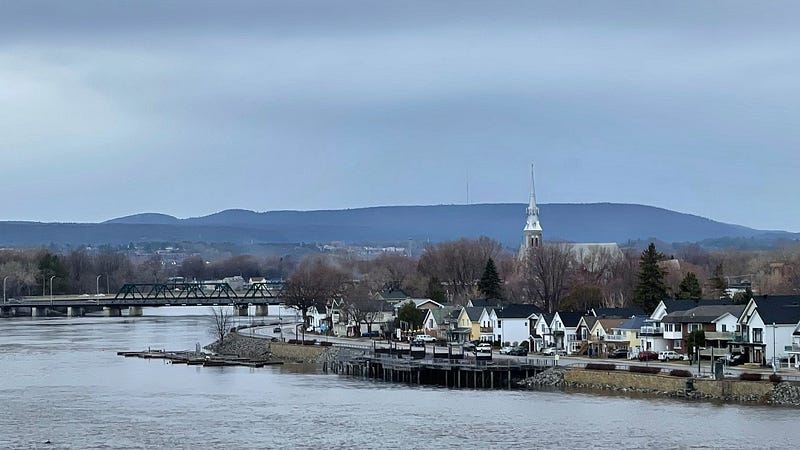
Where the Gatineau River flows into the Ottawa River, note the St. François de Sales Church (photo: Alexander Verbeek)

I took this photo in Ontario, just north of the capital, but what you see is Gatineau in Quebec. It is the fourth city of the province, and what you see in this picture is Pointe Gatineau, a village a bit to the north that has become part of the city. A likely explanation for the origins of the town’s name is the historical connection to a fur dealing clerk named Nicolas Gastineau. His name appeared first in New France in 1648. Gastineau, a native of Paris, worked for the “Compagnie des Cent Associés in Trois-Rivières”. The Gatineau River was part of a long-used fur-trading route, but historians have not been able to find evidence that Gastineau actually traveled down the Gatineau. The best indication of a connection between him and the city’s naming is the discovery in notarial records that his sons have been in the Pointe-Gatineau area in the late 17th century.

A side note: I failed to find out why no expert suggests that this spot is simply named after one of the sons (or both of them) instead of the father. After all, if you can’t find proof that the father of Amerigo Vespucci ever sailed along the shores of Brazil, it becomes more likely that America is named after his son. (Note that his father had a different first name: Nastagio Vespucci, which would have altered history in many ways if he had sailed to the west, including the naming of the U.S.A, a country that would then have been known as U.S.N).

Timber rafts

I love to watch the landscape at this spot where these rivers converge. Imagine that already, for thousands of years, people have paddled these rivers. Or think of the 1800s when vast timber rafts floated down these rivers all the way to Quebec City. For years people had speculated that this couldn’t be done. But in 1806, Philemon Wright, the founder of Hull, launched a raft of 700 squared logs from the far shore. For two months, he and his crew battled the wild rapids of the Ottawa and St. Lawrence rivers to get the wood to market. His triumphant arrival in Quebec City began a century of timber rafting on the Ottawa.
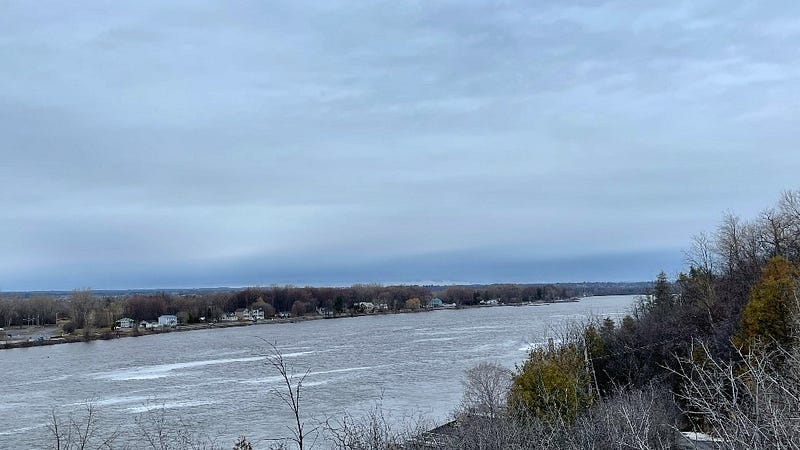
Not far from the same spot: looking to the East

Ninety years later, in 1896, Lady Aberdeen, the wife of Canada’s governor-general, nearly drowned on the same far shore where Wright started his journey. She had taken the ferry for a spring outing from about the spot where I took the first photo. But her ponies slipped, overturning her carriage into the icy Gatineau river. The ponies were swept away, but Lady Aberdeen held on until help came. Then, in thanks for her rescue, she donated a bell to St. François de Sales Church. The bell is still there today, and you can see the church in this picture. You can also see the dark clouds; I walked home just in time before it started to rain.

If you find articles like this valuable and want to support my work, consider signing up to Medium. It’s $5 a month, giving you unlimited access to all my articles AND all stories on Medium.

If you sign up using my link, I’ll earn a small commission, at no additional cost to you.

Storytelling
Religion
Hope
History
Life Lessons
Recommended from ReadMedium