
A Recession Is Looming
Hindsight is 20/20
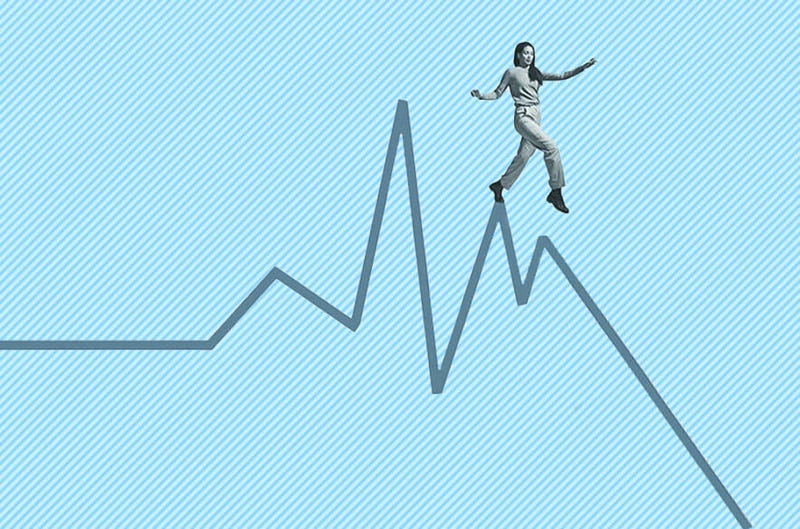
Everyone is concerned about the impending recession. At this point, it’s more a question of “when” and not “if.”
More than 60 percent of CEOs globally expect a recession in the next 12 to 18 months.
In hindsight, it doesn’t take an economics degree to recognize that the Federal Reserve artificially stimulated the economy over the last two years. Now they need to reverse course, which could get painful. We were blinded by the good times.
In March, two popular recession indicators were alarming us about what was coming. The yield curve inverted and energy prices were soaring. Three months later, energy prices are still surging and the yield curve got oh so close to inverting again this past week.
There are a few other indicators to look at that can help guide us through the timing of a recession.
Unemployment Rate
Below is a chart of the unemployment rate in the United States. The gray bars indicate a recession.
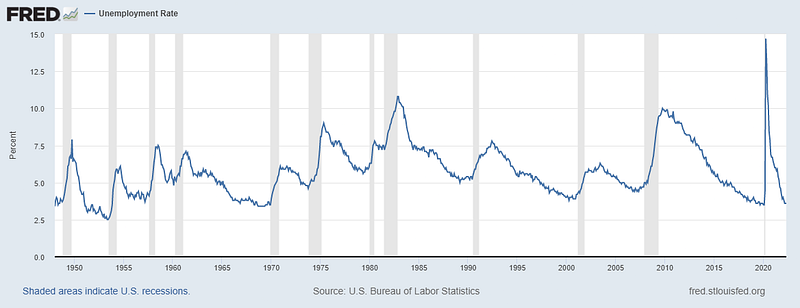
It’s clear to see,
- When we are in a recession, the unemployment rate increases.
- The unemployment rate is cyclical.
The most important takeaway from this graph is how low unemployment rates were before recessions.
The unemployment rate is not a consistent recession indicator because we can have a recession before the rate gets below 4%. But it can be an indicator that if we see unemployment below 4%, we should start worrying.
Of the twelve recessions, six occurred after the unemployment rate was below 4%, including two of the past three. The current unemployment rate in May was 3.6%.
If the unemployment rate gets too low, it is considered (by economists) bad for the economy. Too low of a rate can lead to inflation and reduced productivity.
Consumer Sentiment
Consumer sentiment is a monthly survey, published by the University of Michigan, of how consumers feel about the economy, personal finances, business conditions, and buying conditions.
It is at its lowest level in over a decade.
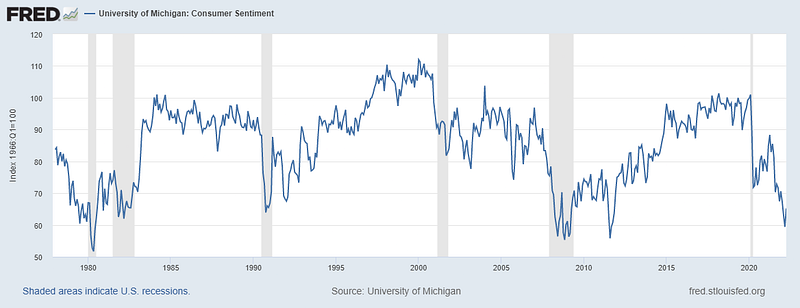
While there is no clear trend of consumer sentiment being a specific value to indicate when a recession will begin or end, there is one important takeaway. In most cases, the lowest consumer sentiment reading occurred in the middle of a recession.
This indicates that people believe the economy will improve before GDP numbers do, especially since GDP data lags.
If enough people believe something will improve or worsen, it actually might. The old “Speak it into Existence” idea.
52-Week Lows
I take no credit for this indicator. This is brought to you by John Gobins. His article from more than a year ago explains one of the best indicators — for when to invest in stocks.
I implore all to check out his article for further detail.
John’s such a stand-up guy that he even let me know this past week that there were more than 1,000 new 52-week lows. A sign to start deploying capital into the market.
This indicator may not help you navigate a recession in your everyday life, but it can be instrumental for knowing when to invest in stocks at the right price, which is the best part of a recession.
There are other cautionary tales people stress when we enter a recession — hoard cash and don’t switch jobs. That’s great advice, but sometimes you have to risk it — take that new job with a 20% salary increase or invest your last non-emergency dollar into a beaten-down stock you believe in — that’s how fortunes are made.
No fim, tudo dá certo. Se não deu, ainda não chegou ao fim.
Good luck out there.