
A Personal Journey in Coming to Love Math
Self-reflecting my world of math with the help of one teacher.
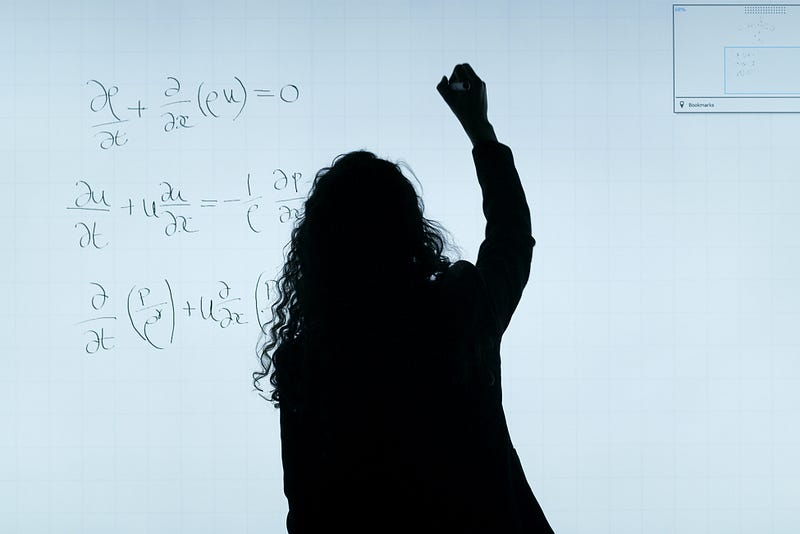
Like many, I grew up hating math because I was so bad at it.
In the third grade, I couldn’t memorize the multiplication tables.
My father saw my frustration and one day took a deck of cards and sat me down to play a game.
He would hold up one card, for example a ‘3 ❤️’ and would say any other card number I show you — multiply it by 3.
We would continue the game for other numbers as well, and it worked! I was able to memorize my multiplication tables!
Bless my dad, he tried, but I was still bad at math.
While I was a pro at multiplication tables, I couldn’t get to like math in any other way.
It was never fun to do anything related to math.
So then, how did I manage to get a degree in engineering? And then go on to teach math?
Well, it all came down to how one teacher taught me how to see math.
That One Math Teacher
My grade 10 math teacher was that math teacher that changed my relationship with math for the better.
Now the only thing this teacher was brilliant at was math. He was not particularly versed when it came to social skills and was not very well-liked by students outside the students he taught in his math classes.
You see, this teacher lived and breathed math. It was his world, and he would only want to interact with students who appreciated math the way he did.
He was kind to you if you were a math wizard like him. My older brother was a math wizard, but unfortunately, I was not.
So I would hear from time to time that math teacher say; “you can only get so far by riding your brother’s coat tails” or, “your brother’s an A student, but all you’ll ever be is B student”.
Those words bothered me, but never to the point that they made me want to leave his class because I saw something in the way he taught math that I had never seen before.
He spoke to me and some others in this harsh way to see if we cared about math and if we could handle his criticism and improve ourselves in getting better at math.
A Unique Approach
His approach was one that I had never seen stressed by other math teachers.
He would give us math tests that we couldn’t finish because, to him, the journey to getting questions done correctly mattered more than finishing the test.

Answers to math questions were the proof you knew where you were going.
He was the only math teacher I had that would give us a point for each of the steps we showed in getting to the answer.
He would take months to hand us back a test, and we soon learned why. He would go through every test question and then show you where you went wrong in finding your answer.
He also did this in the classroom because he made us take turns putting questions on the board so we could show our math language skills by explaining to the class how to solve questions using the correct math vocabulary.
I love learning languages, and so through his lessons, I learned to see math as a language.
You could never answer a geometry question, or really any question, without drawing a picture first.
On his tests, your answers to a geometry question were never complete without a picture, and he would stress this over and over again.
I love visual arts, and so through his constant requests for drawings, that’s how I learned to see math through art.
I finished my 10-year math class with honors and continued to have him as my math teacher for all other advanced math classes.
And I am happy to say that for 30-plus years, I have continued to have a loving relationship with math.
Math Made Me Famous
After high school, I entered university to study engineering. In my first year, we had at least two math classes each semester.
I remember one exam we had in my advanced Algebra class. The professor called out certain names he wanted to see after class, and my name was one of the names called out among 300 students.
Of course he didn’t tell those of us whose names were called out WHY he called them out in front of everybody, so you can imagine my anxiety levels rising as the end of the class approached.
When class ended, I, along with 5 other scared students, made our way to his office.
He called us in to simply congratulate each one of us and shake our hands for receiving a perfect score on his advanced Algebra exam.
Wow!

Then he asked us each two questions: what high school did we attend, and who was the math teacher?
When it was my turn, I answered, and my Algebra professor let out a big smile and shook his head up and down as we did to congratulate someone…as if he knew I had been taught by Yoda himself.
I learned from my university Algebra professor that my grade 10 math teacher had won awards for his teaching of math.
In the next class, our Algebra teacher brought us in front of the 300 students to congratulate us officially on receiving the perfect math scores.
My math skills had now made me famous.
Math and Self-Efficacy
When I began my career in education, I was a homeroom elementary school teacher, the “jack-of-all-trades” as they called us, since I taught all core subjects to my classroom.
I taught math and could see the same frustrations build in my students that I had with math growing up. They didn’t like math because they found it hard!
And it was just not with students. Other elementary teachers in my school showed similar frustrations with having to teach math.
While earning my B. Ed in education, one university professor in the department released a research study that showed most elementary math school teachers don’t have the self-efficacy they need when it comes to teaching math to students.
These teachers may then subconsciously project their doubts about their abilities in math onto their students.
In communicating my lessons in math, I was trying to always remain conscious of how I was teaching the math lesson so that I would not project any negative thoughts about topics in math onto my students.
One of the issues that is common in math classes is the embarrassment that is associated with making mistakes in answering or explaining questions in math.
Students don’t want to answer any math question that they find to be ‘hard’.
In tackling this major issue, I always tried to remind them that mistakes are opportunities to learn and that real mistake only comes from not learning from one’s mistakes.
Math is Fun
Throughout my time as a math teacher, I reminded myself of how my grade 10 math teacher taught me and tried to incorporate his methods in my classroom.
I taught math for about 10 years to elementary and middle school students. In my 8th year teaching math, I felt a little more adventurous and wanted to conduct my own little research as to how I could change how students felt towards math, so I attempted the following:
On the first day of a new semester in a grade eight classroom, I walked into a classroom and, without saying anything to the students, wrote the statement “Math is Fun” on the board and waited to see the responses of my students.
As you can imagine, the class began to share their thoughts, mostly negative, as to why this statement could never be true.
So I responded, “ “just give me a chance to show you how fun it could be”.
Over the course of the semester, I attempted to use what my math teacher taught me along with new approaches that I sensed of math — as a language, as an art, and as a science.
I would conduct lessons and say things like:
“Communicate using math vocabulary, and you’ll sound so much smarter — now, isn’t that fun?”
“Imagine a time when math is a board game that you designed— now let’s make it fun?”
“Conduct your own experiment where you can lower math anxiety and make it fun with one simple rule?”
Allowing students to see how math anxiety can stand in their way of learning is also an important part of teaching math.
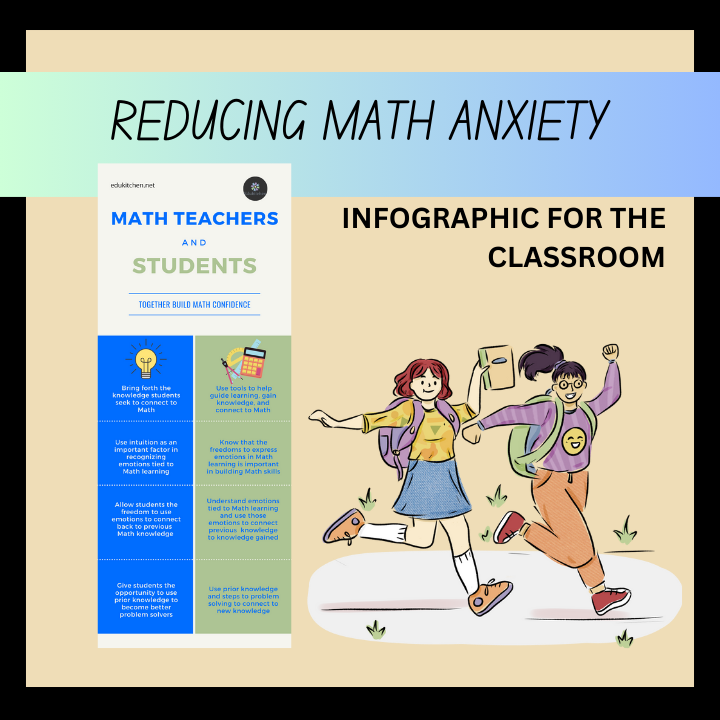
In a sense, I was trying to become a mini Yoda.
For some, it worked, as evidenced by one young student who, by the end of the semester, wrote me a letter I keep with me until this day.
In the letter, she told me how much better she sees math because of what I taught her this semester that no other teacher had taught her.
Final Thoughts…
My time spent teaching math taught me to always reflect inwards and to see the strength that can come out of self-relfection.
Math doesn’t have to scare us into looking away from what we are capable of accomplishing.
The passion my math teacher had for math showed how much he cared and was willing to help the students he knew cared.
He was so in tune with wanting his students to be in his class that he would throw chalk at a student he caught daydreaming — just to say to that student “get back in the room”.
We sitting in his classroom knew what he meant.
We both knew that while we were physically present, sometimes our minds would wander somewhere else, and he would want us to “get back in the room” mentally.
I’ve never met another teacher like him during my studies in school, but his methods (except the chalk throwing) have stayed with me throughout my teaching career.
I’d like this to be a thank you letter to my grade 10 math teacher.
If you enjoyed this article, take a look at my other math-related articles to see how I encourage my students to see math as how it should be seen!
Please note: images courtesy of the author in this article come from my teachers pay teachers store: The ETI Academy.


