
Memoir and Science
A New Allergy Research in “Science” Sparked My Childhood Memories
During a school holiday, I couldn’t resist buying my favorite roasted peanuts as gifts for my childhood friends living in a Mediterranean village and causing trouble to a friend.
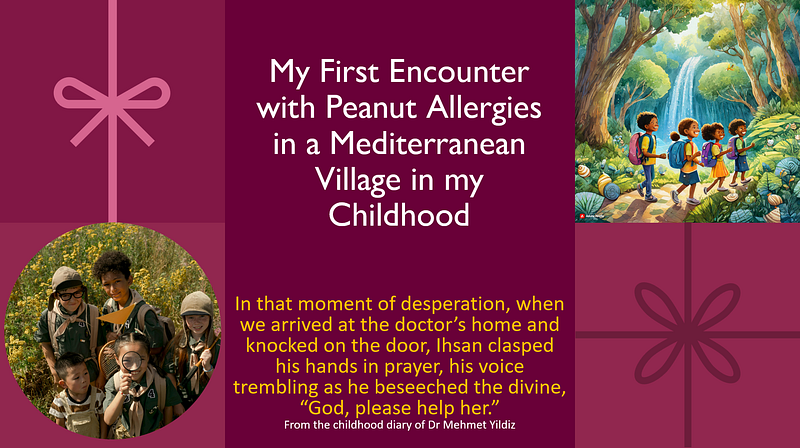
As I reminisced in my memoirs, one of the cherished pastimes of my childhood during school breaks involved visiting my grandparents. Together with my friends, we eagerly participated in snail-hunting adventures amidst the serene landscapes of their farm nestled in a Mediterranean village.
When I turned eight, we readied our suitcases and gathered plenty of gifts for my friends. I wanted to do some science experiments on the farm while playing with my friends. During my childhood, nuts ranked among my favorite foods, especially roasted and salted peanuts. Later, I learned that peanuts were really not nuts but legumes.
Peanuts held a special place in my heart. I could have indulged endlessly if my parents hadn’t intervened. On one occasion, I overindulged to the point of a dreadful stomach ache.
It taught me a valuable lesson about moderation, not only with peanuts but also with other beloved treats like chocolates and manuka honey, which also landed me in trouble a few times.
As peanuts were my absolute favorite, I had the brilliant idea of purchasing several kilograms to pack into small gift boxes for my friends on the farm to cheer them. I thought they would love it as much as I did.
My parents kindly gave me money to buy freshly roasted peanuts from a nearby nut shop. After purchasing them, I carefully packed them around 100 grams into my luggage.
When we reached the farm the next day, my friends arrived early to take me to our favorite snail-hunting spot, just like we had done the years before. I was bursting with excitement for the adventure. I packed my backpack and tucked away ten small packs of peanuts, one for each friend, as a surprise gift for them.
Once our snail-hunting expedition concluded, we all needed a break, thoroughly exhausted from the adventure. I mentioned that I had some snacks in my backpack, which instantly piqued my friends’ interest.
I handed each of them a pack, and they all enjoyed the taste. However, one of my friends began sneezing and gasping for air, her face turning red as she struggled to breathe and move. It was a distressing sight. She said she had never eaten peanuts before.
Being the fastest runners, my friend Ihsan (now an opera singer) and I dashed to the farmhouse to alert my grandma and grandpa.
Upon hearing the situation, my grandma and grandpa, who had worked in the healthcare industry for long before their retirement, instantly grasped the gravity of the situation.
As I was exhausted and gasping, my grandpa put me on his shoulder as a strong man and hurried to the neighbor’s house, a retired medical doctor who still provided assistance for emergencies in the village.
This remarkable physician was my favorite person in the village in those years because he listened to me like I was an adult and always answered my questions in a way that made sense to me. He died peacefully in his bed at the age of 103.
In that moment of desperation, when we arrived at the doctor’s home and knocked on the door, Ihsan clasped his hands in prayer, his voice trembling as he beseeched the divine, “God, please help her.”
Luckily, the doctor was at home and quickly grabbed his medical bag. With my grandparents' assistance, we swiftly reached the snail hunting spot. We attended to my friend, who was experiencing a peanut allergy, a condition I was unaware of until then.
It was my first encounter with the term epinephrine (adrenalin), which I later examined during my postgraduate studies for cognitive health.
As a biology enthusiast with a deep curiosity about medications in my childhood, I eagerly asked the caring doctor how epinephrine works to treat allergies.
He smiled beautifully, put his arm on my shoulder with Mediterranean warmth, and kindly explained it to me in simple terms, which I promptly recorded in my diary and later shared with my classmates as part of my exciting biology assignment.
Teachers loved that assignment, which got an A+ and inspired me to learn more about health and well-being. Below is a summary of what I learned. Epinephrine helps during an allergic reaction in five important ways:
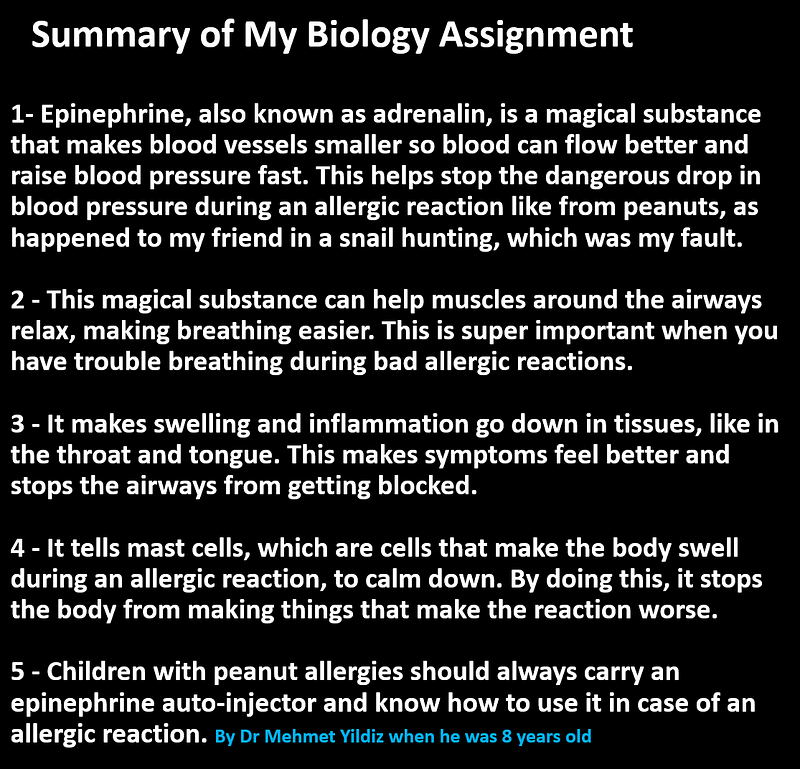
It was a valuable life lesson that stuck with me forever. As I grew older, I encountered many more people with severe peanut allergies, and I learned to be extra cautious and considerate around them.
Later, I learned that in addition to epinephrine, the primary medication for treating severe allergic reactions like those triggered by peanut allergies, other drugs may be prescribed to manage symptoms and prevent allergic reactions.
Some of them are antihistamines like diphenhydramine or cetirizine to alleviate mild reactions, corticosteroids like prednisone to reduce inflammation, bronchodilators like albuterol for respiratory symptoms, and immunomodulators like omalizumab to decrease the frequency and severity of allergic reactions in severe cases.
What is peanut allergy, and why does it matter?
As documented in this NIH book chapter, “Peanut is one of the most frequent food allergens and can cause fatal reactions when ingested. A reaction to peanuts will typically occur in the first few years of life. Peanut allergy is usually lifelong and potentially fatal.”
The book states that while avoiding peanuts can solve the problem, the ubiquitous presence of trace amounts of peanuts in food can make complete avoidance impossible, especially in children.
A peanut allergy is an adverse immune response triggered by the consumption or exposure to peanuts. It is a type of food allergy where the immune system mistakenly identifies proteins found in peanuts as harmful invaders, leading to an allergic reaction.
Peanut allergies are a significant concern because they can cause severe and potentially life-threatening reactions, known as anaphylaxis.
What is anaphylaxis?
As documented in another NIH book chapter, “anaphylaxis is an acute, life-threatening hypersensitivity disorder, defined as a generalized, rapidly evolving, multi-systemic allergic reaction. Anaphylactic reactions were classified as IgE-mediated responses, while anaphylactoid reactions as IgE-independent events.”
“Physical presentations of anaphylaxis range from mild skin flushing and pruritus to severe respiratory symptoms. This activity describes the evaluation and treatment of anaphylaxis and explains the role of the interprofessional team in managing patients with this condition.”
From my reviews and observations, anaphylaxis can result in difficulty breathing, a drop in blood pressure, loss of consciousness, and even death if not promptly treated with epinephrine and other medical interventions.
Peanut allergies often develop in childhood and tend to persist into adulthood, posing ongoing challenges and risks for affected individuals and their families. The impact of peanut allergies extends beyond individual health concerns to affect daily life, social activities, and dietary choices.
People with peanut allergies must diligently avoid peanuts and peanut products, carefully read food labels, and be prepared to respond to allergic reactions with emergency medication.
Due to the severity of allergic reactions and the prevalence of peanuts and peanut-derived ingredients in many foods, peanut allergies are a significant public health issue that requires awareness, education, and effective management strategies to ensure the safety and well-being of individuals with allergies.
Insights from the New Research
I recently read an important research paper in Science (Translational Medicine) published on 7 February 2024, giving us clues about the causes of peanut allergies, which sparked my childhood memories of the neighboring doctor who taught me about immunology in simple words.
I’d like to briefly summarize this paper as this research sheds light on the underlying mechanisms of peanut allergies, particularly in children, which could have significant implications for public health and treatment strategies.
In peanut allergies among children, a particular group of memory B cells have a role in producing immunoglobulin E (IgE) antibodies, which are responsible for allergic reactions.
These memory B cells, marked by CD23 and IgG1 proteins, are part of the body’s response to specific immune triggers.
These researchers found that the level of these memory B cells corresponds to the amount of IgE antibodies in the bloodstream of children with peanut allergies.
Through genetic analysis, these researchers discovered that these memory B cells have specific characteristics and mutations that make them highly responsive to peanut allergens.
Essentially, these cells seem to play a crucial role in the persistence of peanut allergies, as they can produce potent IgE antibodies upon activation, leading to allergic reactions.
Understanding the role of memory B cells and their production of IgE antibodies in response to peanut allergens provides valuable insights into the development and persistence of peanut allergies.
By identifying specific populations of memory B cells associated with allergic reactions, researchers can target these cells more effectively in developing allergy treatments and therapies.
Ultimately, this research has the potential to improve the management and treatment of peanut allergies, offering hope for better outcomes and quality of life for individuals affected by this common food allergy.
Conclusions and Takeaways
The journey through peanut allergy research resonates deeply with me, stirring up a whirlwind of emotions and memories from childhood.
From the innocent delight of sharing roasted peanuts with friends to the heart-wrenching moments of witnessing a friend’s allergic reaction, each memory etches itself into the fabric of my being, leaving an unmistakable imprint.
These experiences, woven with poignant life lessons, have deepened my understanding of health and nurtured empathy and resilience within me.
Peanut allergies, pervasive and daunting, cast a shadow of uncertainty, particularly over the lives of children. The looming threat of severe reactions is a stark reminder of the importance of vigilance, education, and proactive measures.
As I have witnessed firsthand multiple times in adulthood as a parent and educator, allergic reactions can spiral out of control in the blink of an eye, highlighting the urgent need for swift action and access to life-saving epinephrine auto-injectors.
To parents, children, teachers, and all who walk this path, here are six heartfelt guidelines to navigate the labyrinth of peanut allergies:
1 — Educate yourself and others about the telltale signs and symptoms of peanut allergies, ensuring swift recognition and response in times of crisis.
2 — Nurture an environment of open communication and boundless empathy towards people grappling with peanut allergies, enabling understanding and support.
3 — Diligently pore over food labels with unwavering attention, steering clear of products laced with peanuts or their derivatives to avert inadvertent exposure.
4 — Develop an allergy action plan with healthcare professionals, charting clear-cut emergency protocols and the judicious administration of epinephrine and other medications.
5 — Empower children bearing the burden of peanut allergies to amplify their voices for safety and articulate their needs confidently across diverse settings, from classrooms to communal gatherings.
6 — Adcovate a culture of vigilance and readiness within communities, creating awareness initiatives, hands-on training sessions, and educative resources to harden allergy management and support systems.
I only focussed on peanut allergies in this story, but some other food allergies can cause serious health issues. We need awareness, compassion, and timely professional support for food safety.
If you find this story helpful, you may also check out this educative piece titled Your Peanuts Are NOT More Important Than Someone Else’s Life by Suzanne E.
Thank you for reading my perspectives. I wish you a healthy and happy life.
To inform my new readers, I wrote numerous articles that might inform and inspire you. My topics include brain and cognitive function, significant health conditions, longevity, nutrition/food, valuable nutrients, ketogenic lifestyle, self-healing, weight management, writing/reading, and humor.
I publish my health and wellness stories on EUPHORIA. My posts do not include professional or health advice. I only document my reviews, observations, experiences, and perspectives to provide information and create awareness. 100+ Insightful Life Lessons from My Circles for the Last 50+ Years
If you are a writer, you are welcome to join my publications by sending a request via this link. I support 27K+ writers who contribute to my publications on this platform. I also have another profile to write and curate tech stories.
Importance and Value of Medium Friendship for Writers and Readers


