
A new gospel from Mary Magdalene was found in 1896
Let’s look at the ‘Gospel of Mary’—as more of it surfaces
In 1896, a German scholar named Carl Reinhardt was at a marketplace in Cairo and noticed an old book in the Coptic language. It had four texts from early Christianity — with one totally unknown to history.
Though pages were missing, more scenes from the life of Jesus were told by a female follower, Mary Magdalene herself. It was all pretty shocking.
I’m thinking about The Gospel According to Mary as two ‘new’ fragments have just been reported.
Delayed by two world wars, the text was published in 1955.
By then, two more fragments of the work had been found, both in Greek and from the 3rd century. The book found in the Cairo marketplace seemed to be from the 5th century. Otherwise, no dating was possible.
Christian history had no references to the text, even on the lists of ‘banned’ books. Yet it seemed to have circulated widely, in at least two languages.
It was all just a mystery.
To Christians of the 20th century, the ‘Gospel of Mary’ was a non-event.
Any text about Jesus that is outside the Bible is apocryphal, they say—apparently thinking this word means ‘fake’.
‘Apocryphal’ actually means ‘hidden’.
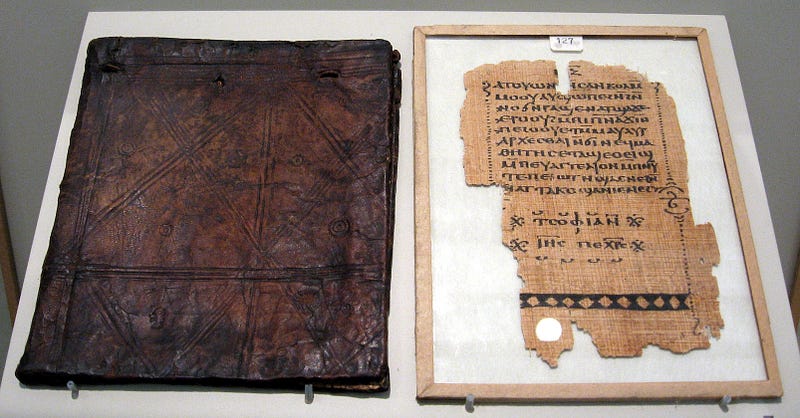
Bible scholars classified the text as “Gnostic.”
That was its own strange story. Christians had convinced themselves that one ‘Christianity’ was correct, and the many Christian traditions in the ancient world they did not embrace were some weird offshoot religion.
No one in the past had ever used the word ‘Gnosticism’, but it became something like a filing cabinet, or trash can, in which Christian scholars could place various discovered texts.
By the 1990s, later scholars were realizing that ‘Gnosticism’ was a very shaky category, but it had come to be associated with the “other” gospels dug up over time, often from the graves of monks in Egypt.
When I set out to learn more about the religion I was raised in, I went to take a look at these ‘other’ gospels, and read the Gospel of Mary in a book called The Gnostic Bible.
It read to me like an outtake from the New Testament.
I was fascinated to find a Jesus who seemed to be the same Jesus as in the Bible, but in scenes that Christianity didn’t recognize. Did that mean they were made up? It wasn’t so clear.
The first scene to survive finds Jesus returned from the dead, and giving final teachings to his followers before he returns to Heaven.
“The Son of Man is within you. Follow him. Those who seek him will find him. Go then and preach the gospel of the Kingdom. Do not lay down any rules beyond what I have appointed for you, and do not give a law like the law-giver, lest you be constrained by it.”
One would have to pause and wonder…
What, for example, does it mean to have the “Son of Man” be within you?
The “son of man” is a Hebrew expression that just means ‘human child’. Jesus is basically saying: The Child is within you.
The scholar Christopher Tuckett thinks the phrase must refer to “the true humanity which is attainable by all who recognize their origins and their true destiny.”
Is that something the ‘real’ Jesus would say? If he did, I was pretty sure, it wouldn’t be anything Christianity would like.
As the scene continues, the surprises keep coming.
As Jesus leaves (the text just says “he left”), his followers are devastated. Despite the instructions, they had no idea what to do, or where to begin. They worry that they will be punished just as Jesus was.
Then Mary Magdalene stands and says:
“Do not weep and do not grieve, nor be irresolute, for his grace will be wholly with you and will protect you. But rather let us praise his greatness, for he has prepared us and made us into human beings.”
With that, the male disciples seem to recover, and they all begin to discuss what Jesus had said to them. They remember that Jesus was talking with Mary privately, and they ask her what was said.
She retells a specific scene in which she had seen Jesus in a vision.
Then she asked him about it in life, and he seemed to suggest the vision was real, and that this was how he could be encountered.
The text breaks off, and picks up as she’s now talking about Jesus telling her about a spiritual journey taken by “the soul.” It passes, he says, through many negatives states — Darkness, Desire, Ignorance, and Wrath — on the path to the Light.
Is that something the ‘real’ Mary Magdalene would say?
She had always confused Christianity.
She’s seen in the gospel narratives, close to Jesus—but the later religion didn’t see why any woman would have such prominence.
By the 6th century, the religion had decided on a role for her. Since Mary Magdalene didn’t seem to be married, and might be the unnamed ‘sinful woman’ of Luke 7, Christians thought: she must be a prostitute.
In many presentations, then, Mary seemed like a woman in rehab for sex addiction. She goes around with Jesus and the disciples as if trying to learn their wonderful sexual morality.
When thinking about Christians evaluating the Gospel of Mary, we’re thinking about a religion whose ideas of her were very low—as they really just wanted her to be a subject of religiously-authorized porn.
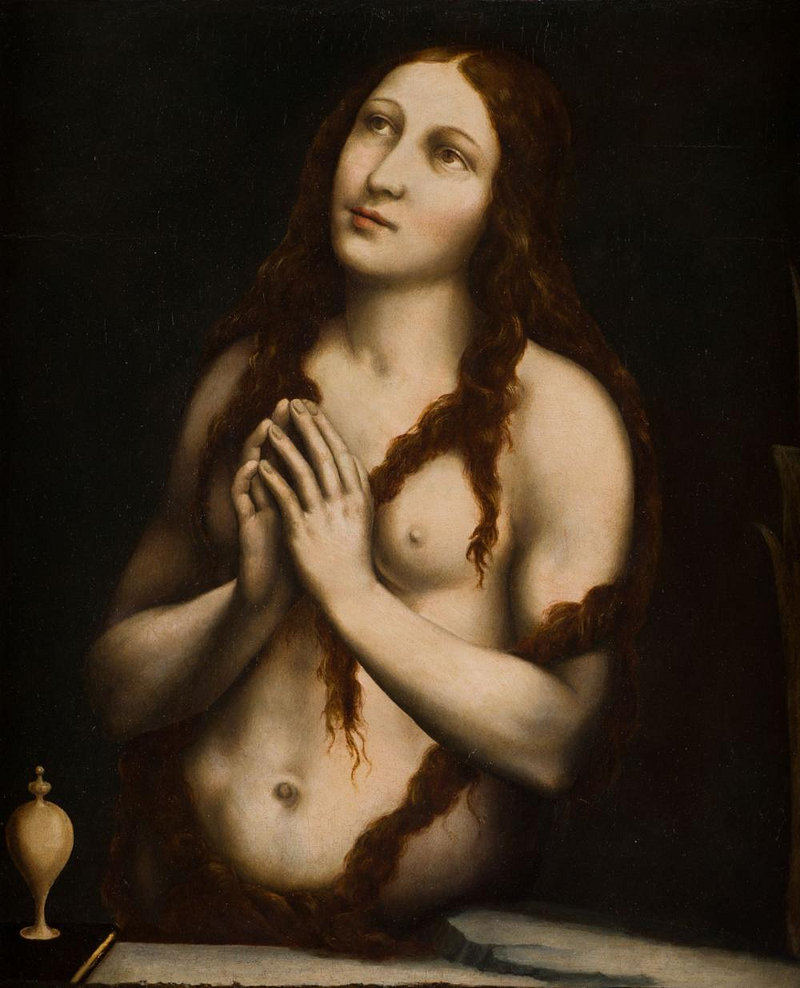
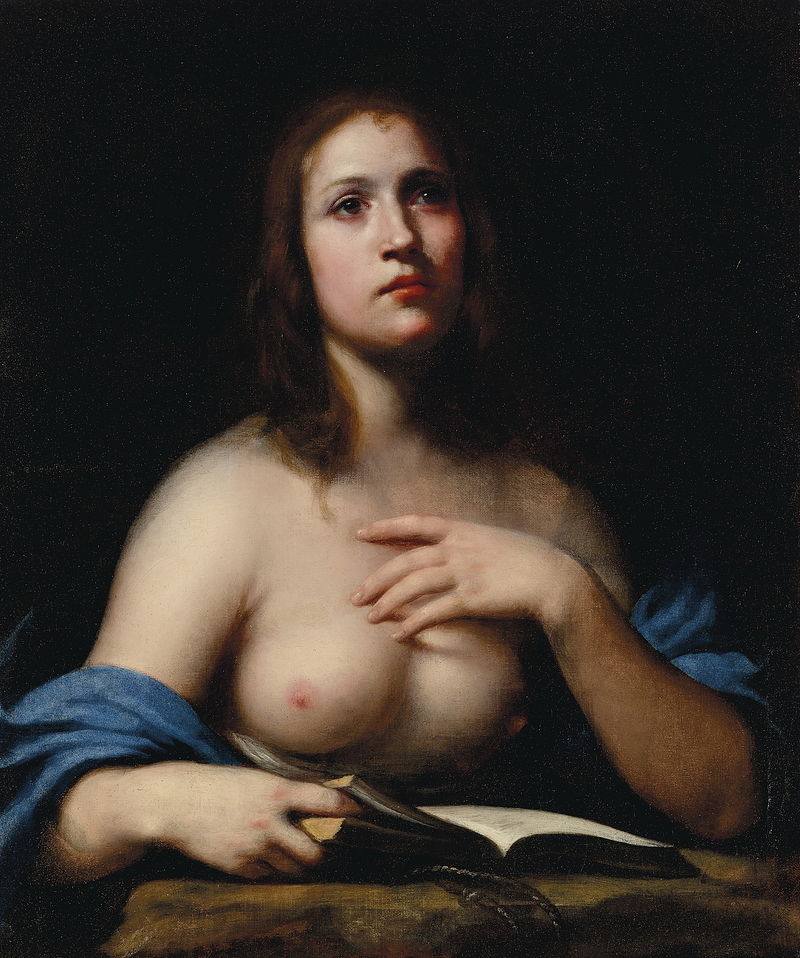
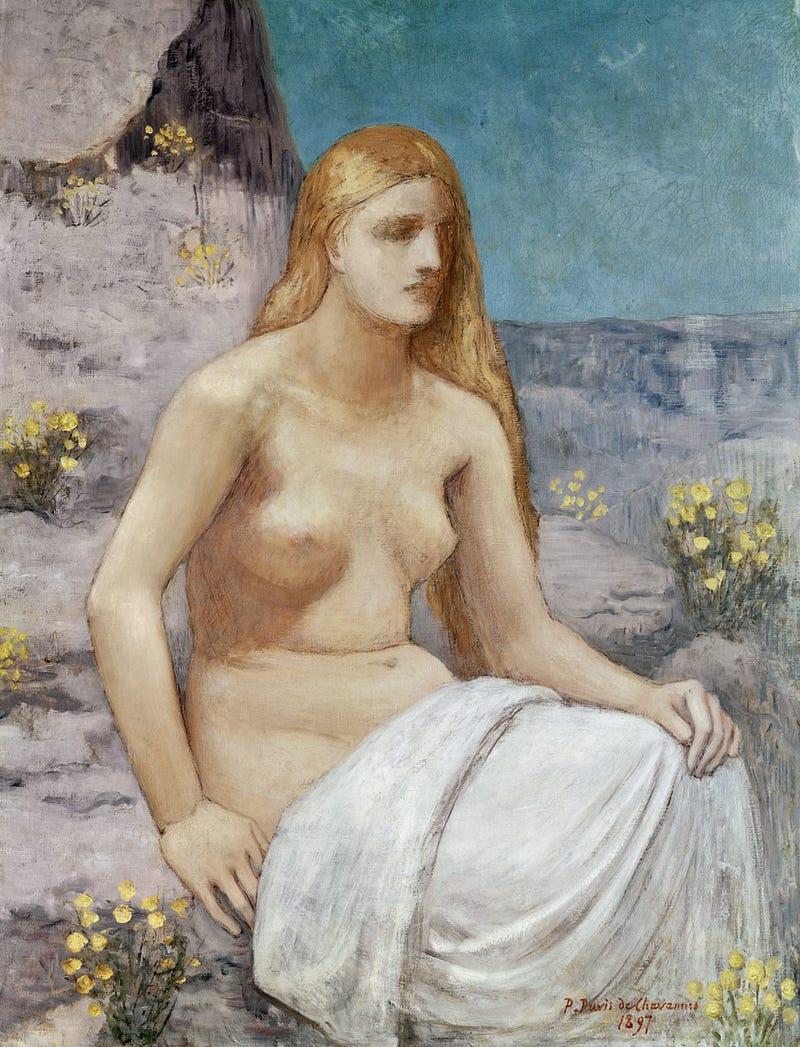
By the 1970s, feminist Christians were interested in the ‘Gospel of Mary’.
But the most popular use of the text proved to be by men. A series of books from the 1980s on weaved various forged documents and ‘Gnostic’ texts into a male fantasy, creating a story about Mary Magdalene as Jesus’ wife.
This is not indicated in the Gospel of Mary. But the idea was produced by Christian imagination of Mary. To put a very sexual woman in the midst with Jesus—her role left unexplained—was just too tempting.
From the book Holy Blood, Holy Grail in 1982 to The DaVinci Code in 2003, a popular idea of Mary Magdalene as Jesus’ wife took hold.
The story the ‘Gospel of Mary’ tells is that she was a very spiritual woman who is Jesus’ key student.
As she finishes speaking about the journey of “the soul,” the male disciples erupt in jealousy. They are seriously offended at the idea of Jesus’ giving her teachings not given to them. Peter, in particular, is irate.
“Did he prefer her to us?”
Is that the ‘real’ Peter? A Christian might not like it, but the ‘canonical’ gospels can leave the impression that might be. The disciples of Jesus thought he would be a military leader. They became followers because they saw themselves as becoming leaders under him, like generals for Jesus.
When that didn’t happen, they weren’t too happy.
But Jesus was unhappy with them.
He is so often chiding them, as the male disciples mostly just seem obtuse, endlessly wrangling and angling for power (cf. Mark 10:35–45, etc.).
As the scholar Leif E. Vaage puts it, Jesus has “a growing sense of frustration at their unflagging failure to grasp what he embodies and displays before them.”
But this remains a subtext that many Christian readers miss. They like that story about white guys as heroes. They keep telling it, year after year.
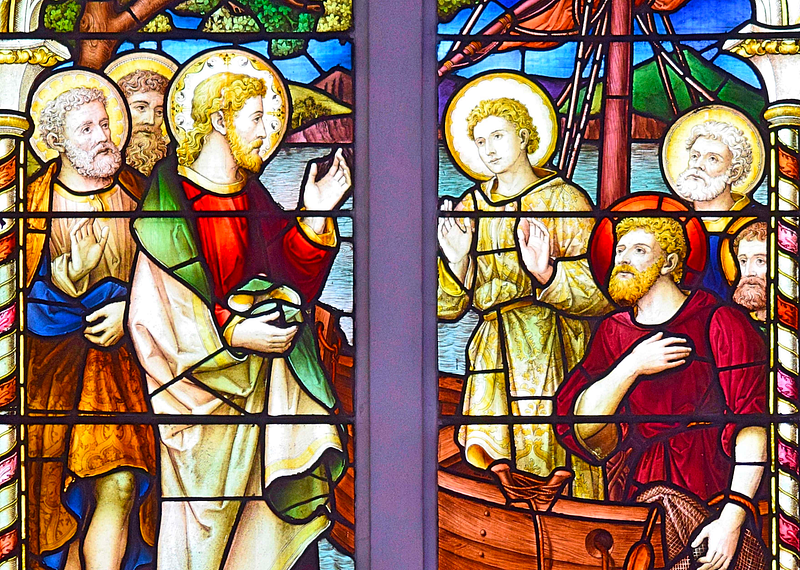
But was Christianity re-writing the story?
Over the years, copies of ‘canonical’ gospels have been found that have oddly different text. A copy of the gospels with a longer version of Mark 16:14, known as the ‘Freer Logion’, finds Jesus returning in a resurrected state, and questioning why the male disciples had not believed the women who’d reported his return.
The male disciples tear into Jesus in a very shocking way, protesting that they couldn’t be expected to see more than they had.
As the scholar Calogero A. Miceli notes:
“From the Freer Logion, it is clear that the apostles are not believers and that they are disgruntled with what has transpired thus far after Jesus’ death.”
Christians might dismiss that — but there’s more.
In the Bezae Codex, a copy of the New Testament that surfaced in 1581, a quite different version of gospel of Luke and Acts is found. And the male disciples here seem oddly different. They seem…human?
As the scholar Jenny Read-Heimerdinger puts it, in the Bezae Codex, the male disciples seem like “fallible human beings who only gradually come to grasp the full extent of the radical nature of Jesus’ message.”
Was Mary Magdalene’s part…rewritten?
That has been a subject of recent Bible scholarship, as problems have been noticed. The career of the young Bible scholar Elizabeth Schrader Polczer has been particularly startling. She was a singer-songwriter, playing the club circuit throughout American, when she says the Virgin Mary gave her a message. It was: “Follow Mary Magdalene.”
She went to seminary and started to crank out astonishing scholarly papers about how Mary Magdalene’s character fluctuates oddly in early manuscripts of the gospels. And early Christian writers refer to storylines about Mary not found in copies of the gospels the religion kept.
Familiar scenes in the gospels became weirdly unstable.
In John 20:16, Mary Magdalene encounters the resurrected Jesus, and she calls him “Teacher.” That was taken to be an indication she still thought he was human. She hadn’t seen his true nature.
But many early Christians had recorded Mary calling Jesus “My Lord” in this scene, which was to recognize his divinity.
There is more text from the scene found in some copies: “And she ran to touch him.” And there was vague talk, early on, of Mary being seen as Jesus’ “consort” or “twin.”
Reading Elizabeth Schrader Polczer’s papers, I had to think about what was going on. The word ‘Lord’, κύριε or kýrie, is a very reverential word, but not not necessarily mean ‘deity’. It could refer to marriage (cf. 1 Pt 3:6).
Even Mary’s name seems to have been misunderstood.
Mary wasn’t from a town called ‘Magdala’, as so often said. Such a town didn’t even exist. Jesus gave nicknames to followers. Her nickname, ‘the Magdalene’, meant “the Tower.”
The spiritual seeker of the Gospel of Mary began to look less and less “Gnostic”—and more like a secret the religion had planned to keep.
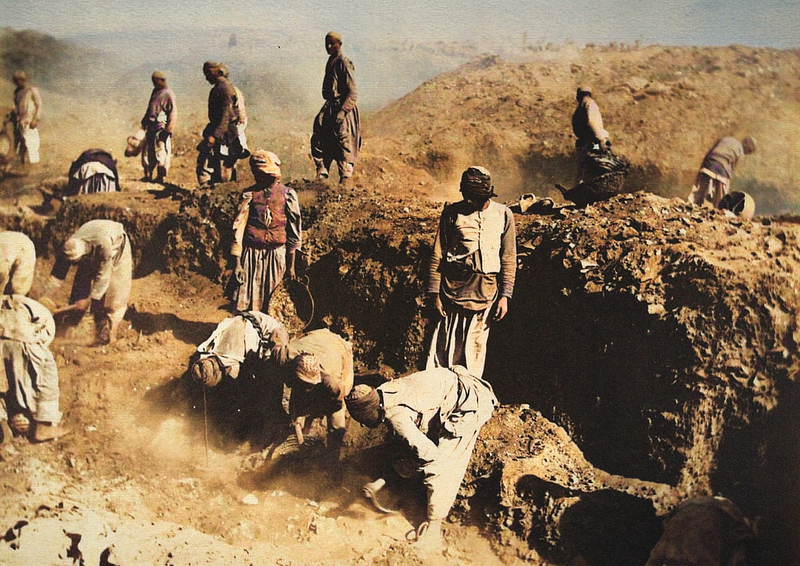
The ‘new’ fragment was actually found over a century ago in Oxyrhynchus, Egypt.
A pile of ancient trash was found, and taken to England to be sifted through over the next centuries. This is known as the ‘Oxyrhynchus Papyri’.
Many biblical texts have been found, and in unexpected versions. A new fragment was reported last year. There is no way to be certain it is from the Gospel of Mary, but it contains a clear suggestion of the text.
The fragment, called P.Oxy.5577, has not been published yet in scholarly literature, but two papers will shortly appear, one by Elizabeth Schrader Polczer and another by Sarah Parkhouse.
Both Parkhouse and Polczer have given podcast interviews, and I’m getting the following information from them.
In one side of the fragment, Jesus explains who he really is.
The text is elliptical, but seems to find the resurrected Jesus revealing his divine nature and cosmic history to Mary.
“Therefore I say Mary, I was manifested as artificial mind in flesh, filled with the word of the incorruptible Father, awakening through my goodness the hidden life of the Father.”
To be ‘incorruptible’ means that something doesn’t decay. We are now physical bodies which decay, but God is made of spirit, which doesn’t.
On the other side of the fragment, Jesus gets into his special mission for Mary.
The terms are complex and enigmatic, but we might make some headway. Here is the full text, then let’s discuss it.
“…will fall on the earth. John said, ‘I wash you with water, but a man will come and will wash you with fire and spirit.’ Therefore, I say to you, Mary, seek to combine water and fire. You will no longer appear as an image of flesh, but as an image of the eternal, incorruptible light, bringing together from two intertwined. . . elements. …intellectual … …Mary…”
Jesus gives her a path toward becoming divine.
An ‘image’ refers to a type of body. An ‘image of flesh’ is a mortal human body, as is created for humans in Genesis 1:26.
Jesus is saying that if Mary does what he suggests, she will take on a different kind of body, a spiritual one, made of ‘eternal, incorruptible light’.
Somehow this involves a merging of two elements that should be opposites: fire and water. What does this mean?
Our current human body is largely made of water. I have to wonder if the ‘baptism of water’ is human birth from a watery womb—or a ritual meant to replay that experience?
To be ‘washed with fire’ is an idea in the gospels.
In Matthew 3:11, John the Baptist tells followers that Jesus “will baptize you with the Holy Spirit and fire” (cf. Acts 1:4–5). What that means—is hazy.
If Mary emerges from this baptism, she will be made of light. But this evolution requires spiritual practice during her mortal life. I take the suggestion to be that she must spend her life preparing to die, and then be reborn into another state.
Will Christians be talking about the new text of the ‘Gospel of Mary’?
I doubt that, but the new fragment does suggest that it was even more widely known than previously thought.
Elizabeth Schrader Polczer offers: “I think there was something considered very dangerous about this text.”
Indeed, I’m struck by by the possibility that the journey Mary describes through negatives states—Darkness, Desire, Ignorance, and Wrath—was always the “religious” practice that Jesus had intended for humans.
We go daily into each of these states. The spiritual adept—comes out. 🔶


