
A ‘new’ Bible fragment shocks the Christian story
The strange tale of ‘P.Oxy. 87.5575'
In 1896, two British archaeologists were digging in Oxyrhynchus, Egypt, and came upon garbage dumped from the 3rd through 7th centuries.
The dump included biblical manuscripts that had been thrown out by some local Christians. Thousands of boxes of ancient trash were taken back to England, to be sorted out over the next centuries. This would become known as the ‘Oxyrhynchus Papyri’.
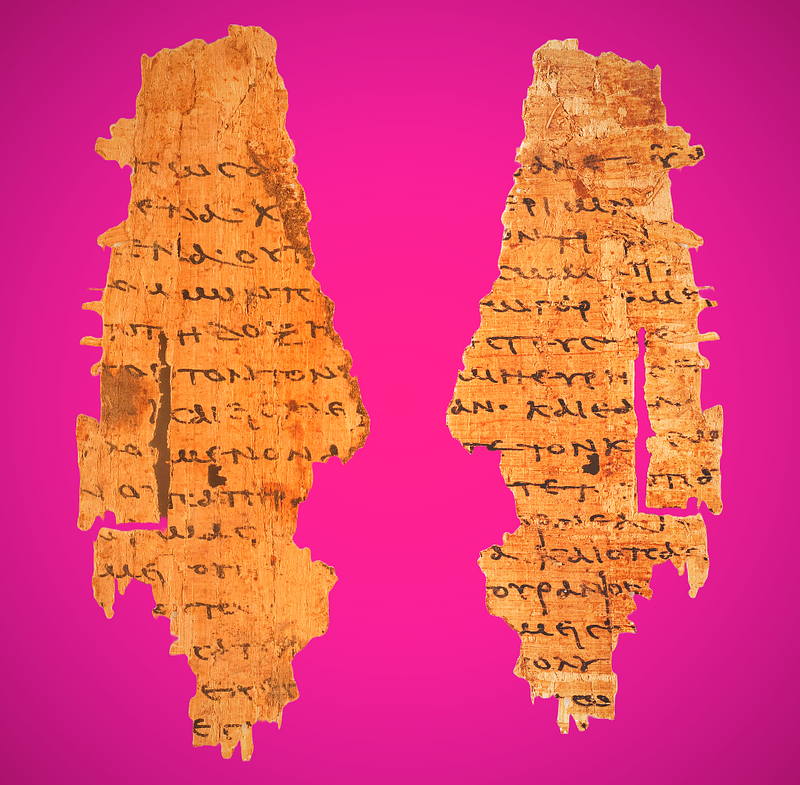
Two weeks ago a fragment was published that was ‘biblical’ but didn’t seem at all “Christian.” I’m going over the scholarly commentary, which is a mix of confusion and wonder.
Biblical evidence is never just found and published.
Rather, a discovery is usually the beginning of a long saga full of intrigue and weirdness. That the biblical evidence survives to emerge into public seems really a miracle. That was the case with ‘P.Oxy. 87.5575’.
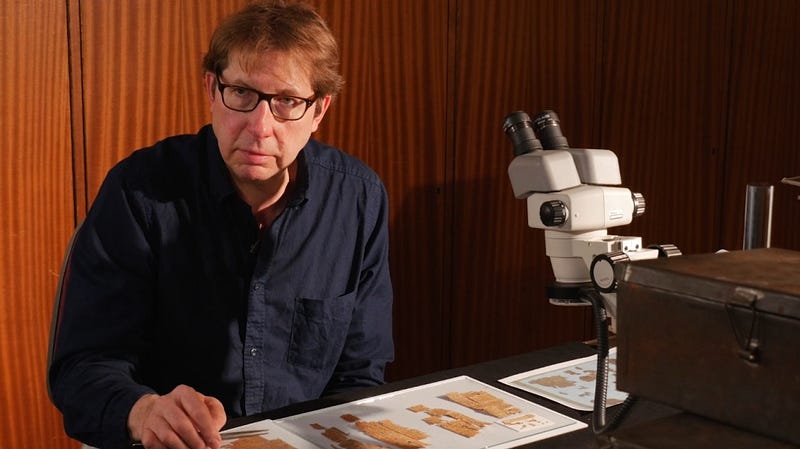
It sat in a box at Oxford University for a century, to be looked at eventually by an American scholar named Dirk Obbink. He was widely proclaimed a genius at resurrecting old texts. But he’d decided that instead of studying manuscripts he would prefer to sell them.
A new museum was being built in Washington D.C. by the Evangelicals who owned the Hobby Lobby chain of craft stores, and for the ‘Museum of the Bible’ they wanted to buy artifacts that told the Christian story.
That’s quite a challenge, since Christianity had thrown everything out.
But Obbink had access to the Oxyrhynchus trash. He acted as the expert dating the fragments he was selling, and said they were from copies of the canonical New Testament gospels, including some from the 1st century.
He was vague about where he’d gotten the fragments. For my money, the Evangelicals knew it was all stolen.
The museum paid out $7 million dollars.
It was a bargain! It was priceless to be able to tell Christians of copies of canonical gospels going back to the 1st century. This would be a profound relief to a religion that has no early manuscripts of its sacred texts.
Between 2010 and 2013, Obbink sold the museum 32 fragments from Oxyrhynchus. By the time his employer realized what was going on, in 2019, an additional 81 biblical fragments were apparently sold to other buyers, and Obbink wouldn’t say who they were.
For awhile, the 32 fragments were in America.
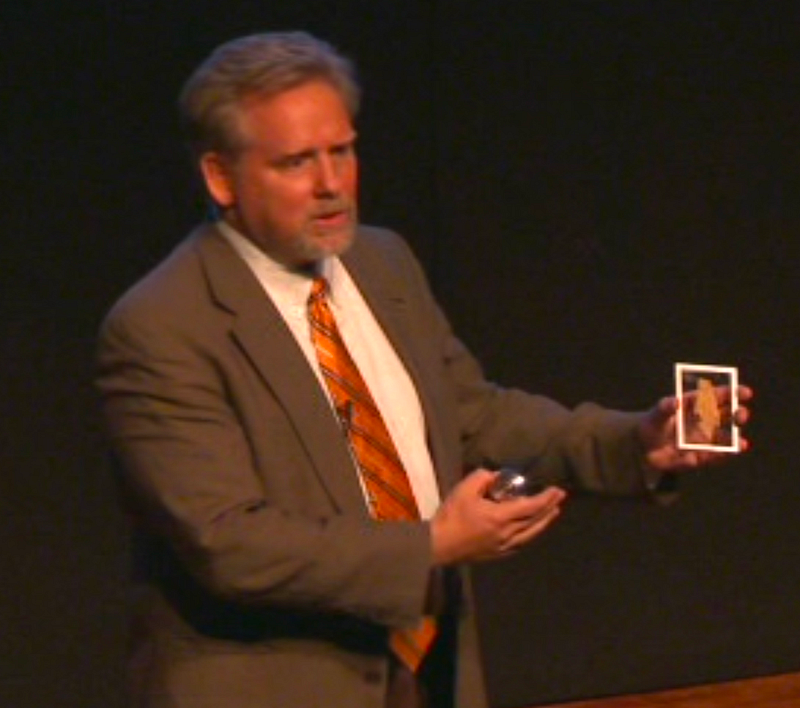
In 2011, a scholar employed by the museum, named Jerry Pattengale, was giving a speech in Oklahoma City. He reached into his pocket and pulled out P.Oxy. 87.5575, encased in glass, and waved it around.
It was, he said, the earliest known fragment of the gospel of Matthew, dated to somewhere around 140 to 160 A.D. It was a Christian miracle. There in Greek letters, Pattengale said, was Matthew 6:25–27.
“My friends, this is 200 years earlier than a lot of the texts that are much in the sensational news today,” he said. “This is part of that list that supports the canon.”
In fact, the fragment did not ‘support’ the ‘canonical’ text—and Pattengale had known it. Indeed, in retrospect, the Museum of the Bible had been in a funny position. The only evidence they could find of the history of the Bible did not tell the Christian story.
The 32 fragments were returned, as the Museum of the Bible was out $7 million.
The museum sued Obbink, but he seems to have disappeared. And so finally—some 120 years after being found—P.Oxy. 87.5575 was published.
The fragment had text known from the gospel of Matthew…possibly the gospel of Luke…and the gospel of Thomas—with a few ‘new’ words thrown in. (Here is a chart with the breakdown of the distribution.)
The scholar Brent Nongbri tries to sort out the matter:
“In other words, it’s a non-canonical text about Jesus, which, if the dating is correct (and that’s a significant ‘if’), is earlier than almost all surviving copies of anything in the New Testament.”
The inclusion of material from the gospel of Thomas was a bit of a problem.
This text was known about in early Christianity but then “disappeared”—which probably meant trashed. It was found in some other Egyptian trash in the mid-1940s, and had Jesus in a series of mystical sayings.
Christianity didn’t know what to do with the gospel of Thomas, so dismissed it as a later concoction, like Jesus fan fiction. But the new fragment had some further suggestion that, early on, material from the gospel of Thomas was as ‘canonical’ as material from Matthew and Luke.
I’m amused to see which passage from the gospel of Thomas is indicated in the fragment. Year after year, it seems to be the same Christian story:
“Jesus said: There was a rich man who had much money. He said: ‘I will use my money so that I may sow and reap and plant and fill my storehouses with produce, so that I lack nothing.’ This was what he thought in his heart. And that night he died.”
The fragment is small, and suggestive.
As the religion tries to ignore it, scholars are puzzling over how to understand the text—perhaps a ‘new’ gospel. How does it relate to the other gospels? Did this ‘new’ text mix the gospels that had been written?
Or was it the source for them? It’s just unknown.
The questions continue to evolve. Does the fragment suggest that the gospel of Thomas material was written much earlier than usually thought? That seems possible.
What seems more clear is that the Christian story is not anything Christianity would know…or admit. 🔶
Added: commenter Steve Senatori helpfully frames the issues.
“Someday, we may eventually reconstruct ancient Christianity’s true nature and its lost elements with or without the help of archeologists sifting through trash dumps but either from stumbling upon some carefully preserved archive or, more likely, gradually collectively reconstituting it ourselves.
What I see from most of these papyri is a heavier emphasis on, or repetition of, Christ’s ministry, especially the Sermon on the Mount.”


