
Did Christianity slash Mary Magdalene’s part in the Bible?
Scholars lay out a shocking case
In 2010, a singer-songwriter named Libbie Schrader went to a Catholic church garden in Brooklyn to pray. It wasn’t unusual for her to feel there’d be an answer.
But that day, as she found herself praying to the Virgin Mary for guidance, the message was unexpected.
It was: “Follow Mary Magdalene.”
Being a singer-songwriter, Schrader’s course seemed clear.
She wrote a song. The 2011 track “Magdalene” narrates the scene. There’s the garden, the prayer, and the Virgin’s answer:
“There she came to me in a state of grace Bearing things to reveal in this earthly place Secret songs of the flesh like a holy hymn Oh I asked for the wisdom of the Magdalene”
That didn’t seem to be enough. She enrolled in Bible college.

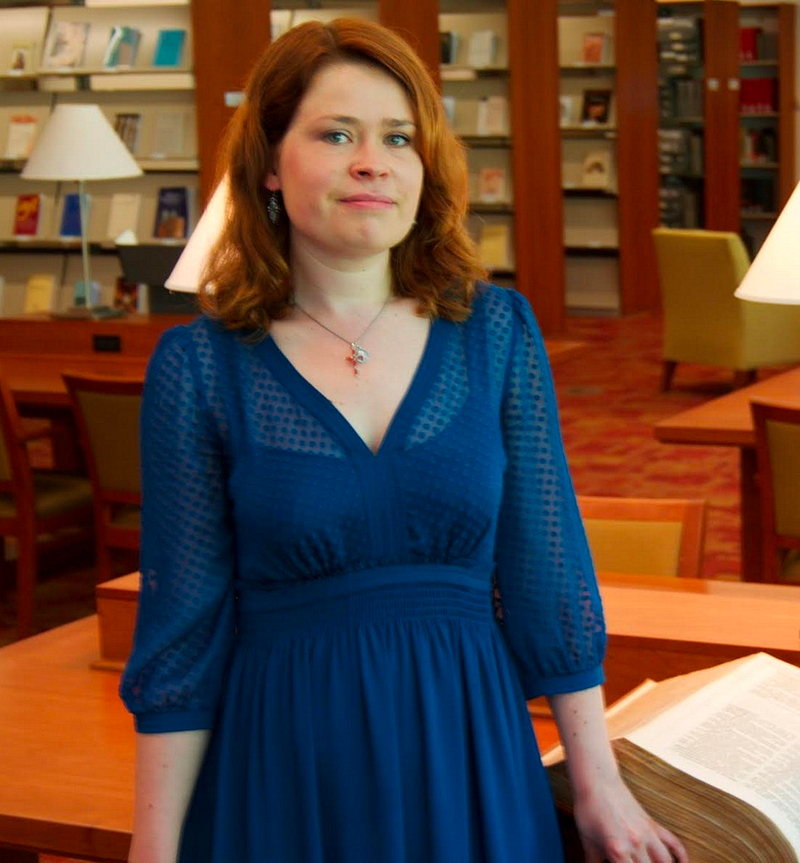
She learned Greek and was studying Bible passages about Mary Magdalene.
The textual issues are complex. There are, first of all, many women in the gospels named Mary. As I worked through in “10 Fun Facts About Mary Magdalene,” the two figures ‘Mary of Bethany’ and ‘Mary Magdalene’ seem to be the same person.
She seems not to have a been a prostitute, as often supposed. And Mary Magdalene can seem bizarrely important. When she anoints Jesus’ feet in the famous scene of John 12, as the scholar Richard Bauckham put it, “she might have been seen in the role of a prophet…”
She appears also to be the ‘Mary’ who weeps at Jesus’ tomb, and recognizes him when he’s resurrected.
Her name ‘Magdalene’ seems not to be a city, though tradition assigned her to one called ‘Magdala’. The word ‘Magdalene’, rather, seems just to be the Aramaic word ‘tower’. She is…Mary the Tower?
A woman Christianity never knew.
Schrader was going deeper.
She found herself looking over the passages about Mary in the original manuscripts—like ‘Papyrus 66’ or P⁶⁶, the earliest known copy of the gospel of John, found in Egypt in 1952.
But she was puzzled. At John 11, she saw a rash of corrections. And the resulting text didn’t read as expected. At John 11:1, she expected this:
“Now a man named Lazarus was sick. He was from Bethany, the village of Mary and her sister Martha.” (NIV)
But instead, she found this:
“Now, a certain man was ill, Lazarus of Bethany, at the village of Mary and his sister, Mary.”
The bizarre wording had been noticed before.
For scribes to copy long manuscripts wasn’t easy, and they often made errors. But Schrader wasn’t so sure this scribe was just having a bad day.
Verse after verse in Papyrus 66 was strange. At John 11:3, we expect this:
“So the sisters sent word to Jesus, ‘Lord, the one you love is sick.’”
But in Papyrus 66, only one “sister”—singular—sent word to Jesus. That was crossed out, as “sisters” was written in.
The story being told is Lazarus getting sick as his sisters Mary and Martha watch him die, despite having called Jesus to heal him. Except, it was oddly unclear there were two sisters—plural.
Many manuscripts had been “corrected.”
Schrader found that in range of early copies of the gospels, John 11:3 had Mary Magdalene, then “her” was corrected to “them.”
It persists nearly into the modern day. The Tyndale Bible had a singular sister in John 11:3, and so did the first printing of the King James Version in 1611.
Then, she disappeared.
The phrase “Lazarus and his sister” — singular — had floated around in Christian history. Some early Christians referred to a Mary and Lazarus as if they were the only two siblings. Ambrose of Milan, who lived from 339-c. 397, had written: “In short, Jesus loved Lazarus and Mary…”
Martha is familiar from the gospel of Luke.
We seem to see her over in Luke 10:38–42, where Jesus visits Martha and Mary’s home. The religion had put the references all together, and knew the story of these ‘sisters’…didn’t it?
Schrader had an idea. Maybe the scribe of Papyrus 66 had manuscripts that told different stories, and tried to ‘harmonize’ them—with messy results.

Why does the whole chapter of John 11 read so oddly?
As one continues to read even the ‘canonical’ version as marketed by Christianity, there’s cause for concern. In v.21, Mary says to Jesus, “Lord, if you had been here, my brother would not have died.”
In v.32, for no apparent reason, she repeats the same line.
In the ‘canonical’ version of John, this stuttering Mary Magdalene seems to fade, as Martha steps forward with the important moment. Martha tells Jesus:
“I believe that you are the Messiah, the Son of God, who is to come into the world.”
But puzzlingly, Tertullian, the third century Christian writer, had assigned that line to Mary Magdalene. He wrote: “Mary, confessing him, Jesus, to be the Son of God…”
Schrader took up the matter for her Master’s thesis, discussing the ‘instability’ around John 11. She offered what she saw as the best reconstruction of 11:3—with no Martha:
“Therefore Mary sent to him saying, ‘Lord, behold, the one you love is sick…’”
Were both Mary and Martha at the Last Supper?
That’s how the story in John 12 seems to read, but in several early manuscripts—and as understood by the Christian writer Origen—only Mary was there.
It was beginning to seem unclear that Martha was actually seen in the gospel of John at all. Was it possible later editors had inserted her?
Was it clear two sisters in Luke 10 were the same ‘Mary and Martha’? Though the locations of Jesus’s adventures can be hazy, he seems to have been in Galilee at the time, where Bethany seems to be in Judea.
Elizabeth Schrader ended her Master’s thesis on such questions. She got a surprise call. The Harvard Theological Review asked her to write it up as a paper. She did, and “Was Martha of Bethany Added to the Fourth Gospel in the Second Century?” appeared in the July 2017 issue.
And the Nestle-Aland Translation Committee, which puts together the Greek text of the New Testament used throughout the Christian world, flew her to Germany to present her evidence to them.
Why would Martha have been inserted into John’s gospel?
That key question remained unanswered. But Diana Butler Bass, the well-known Bible scholar, had an idea when talking with Elizabeth Schrader. She recalls the moment in a recent sermon:
“…we were sitting in a Starbucks in Alexandria, Virginia. I started to cry and I couldn’t stop. She had just told me a story that I always intuited existed.”
The reason for inserting Martha might be quite clear, Bass thought. Maybe the effort was to disrupt Mary Magdalene’s character arc—to disrupt the narrative flow that focuses on her.
When Martha, at the tomb of Lazarus, recognizes Jesus as divine, the moment largely passes without much notice. Martha is little-defined in the gospel narratives. She appears only briefly.
What if Mary Magdalene had recognized Jesus?
A reader might have really noticed that. Mary would clearly be very special.
A reader might even think of Matthew 16:16, where Peter says almost exactly the same thing: “You are the Messiah, the Son of the living God.”
Jesus seems pleased. He replied: “I tell you that you are Peter, and on this rock I will build my church…”
That verse seems to establish Peter as the leader of the Christian religion going forward. Even, for many, the first pope!
If Mary Magdalene had a nearly identical moment—after which she was renamed ‘the Tower’, it might seem an eerie parallel.
As it was, Mary faded from view.
The Christian reader often even isn’t clear who she is, as the various “Mary” figures seem hazily defined. To put her story together, however, we might see a story of a god and his female prophet.
She anoints Jesus. When he resurrects, only she recognizes him, when Peter does not. Mary might have been seen as the leader of the faith, the one closest to Jesus, the one who sees the most.
Mary tell the men that Jesus is back. They disbelieve her. As we read in Luke 24:11, “they did not believe the women, because their words seemed to them like nonsense.”
Was the real Bible is coming into view?
Diana Butler Bass thought so. As she puts it, “Mary is indeed the tower of faith… She has been hidden from us and she been taken away from us for nearly 2,000 years.”
It’s a story, as well, about the women who came along later, able to see what the religion had done. 🔶


