
Nature Photography, Hummingbirds
A Little Bird with a Big Attitude
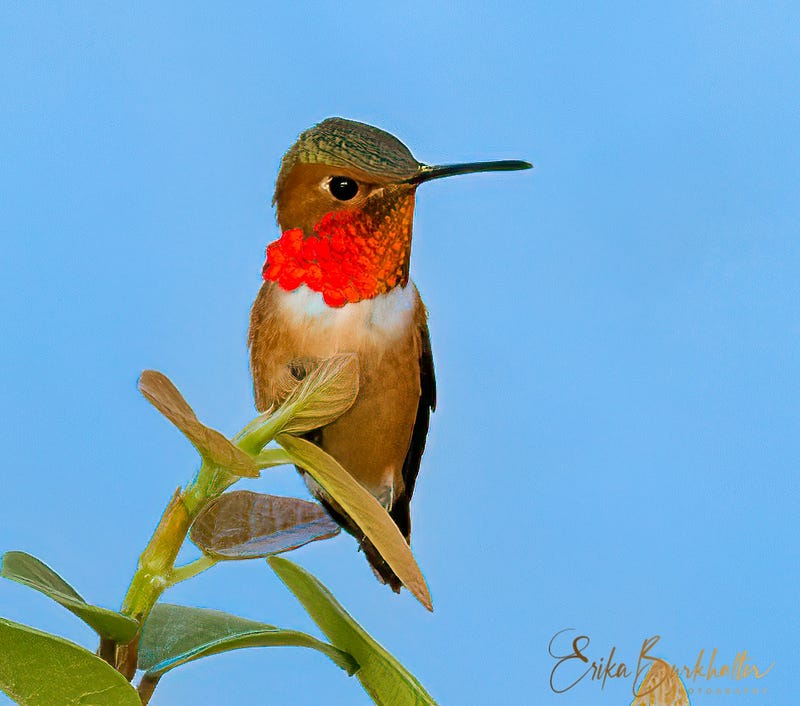
A little peek at “Big Red,” my backyard Allen’s Hummingbird, through the lens of my new Nikon Z9 and through a Nikon D500.
“Big Red,” named for his glorious gorget of shimmering chin feathers, spends most of his day on high alert, waiting and watching for rival hummingbirds, like his nemesis, Einstein, to swoop in and try to bathe in the water fountain or to drink from the feeder which Big Red clearly views as his, and his alone.
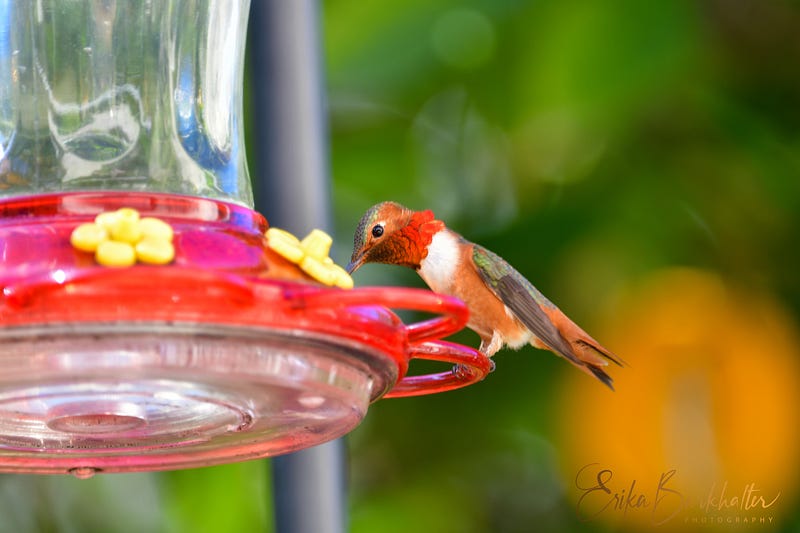
He does share with the ladies, but, in his mind, any other males are to be driven away, over and over and over again.
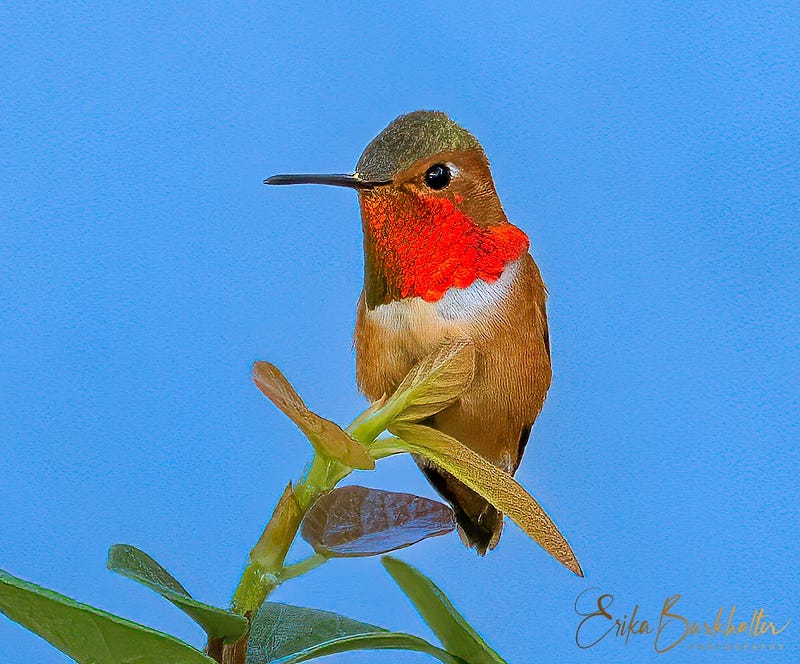
His little head swivels back and forth as he follows the buzzes and screeches of other males practicing their mating “dive bomb.” While performing this acrobatic U-shaped dive, the males climb high into the sky, then, like they’re riding a roller coaster, they race towards the earth at up to 20 meters a second.
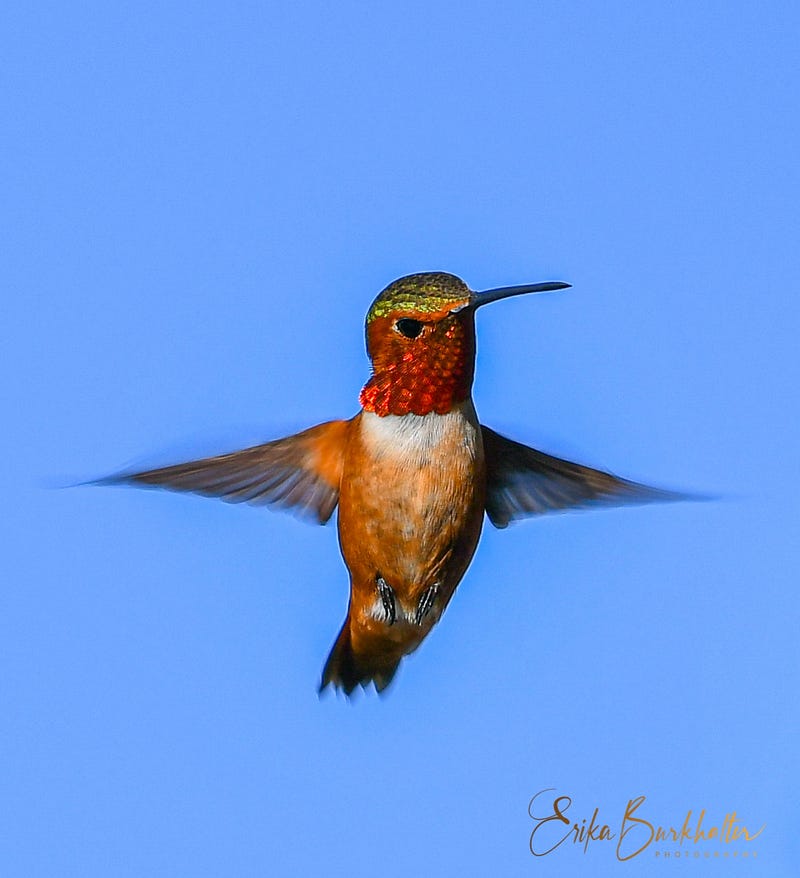
The Allen’s Hummingbirds are somewhat unique in that they have two sets of tail feathers, which whistle different notes.
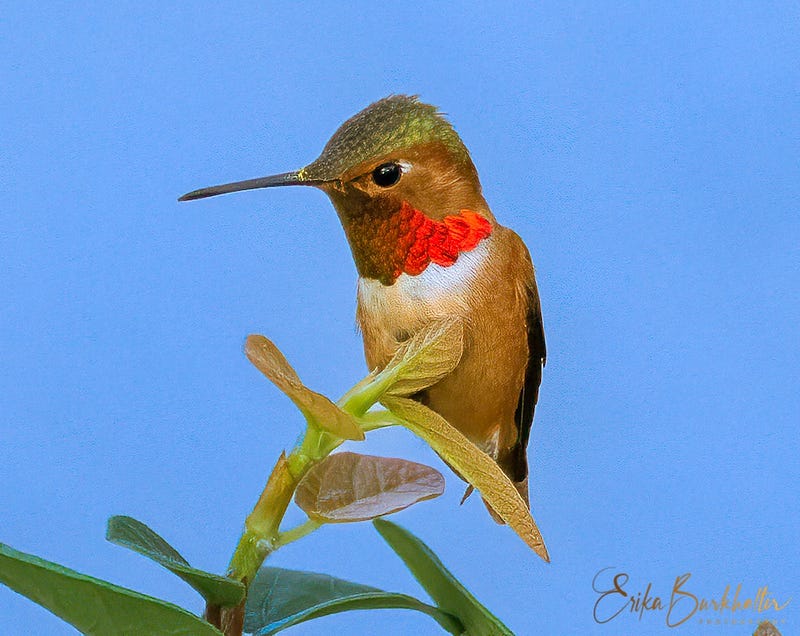
Big Red will often sit atop the orange or lemon tree in my back yard and wait for either a rival or a potential mate to show up. At the slightest sound, he will rise up with a quick wing flutter, which might be enough to scare the other birds away.
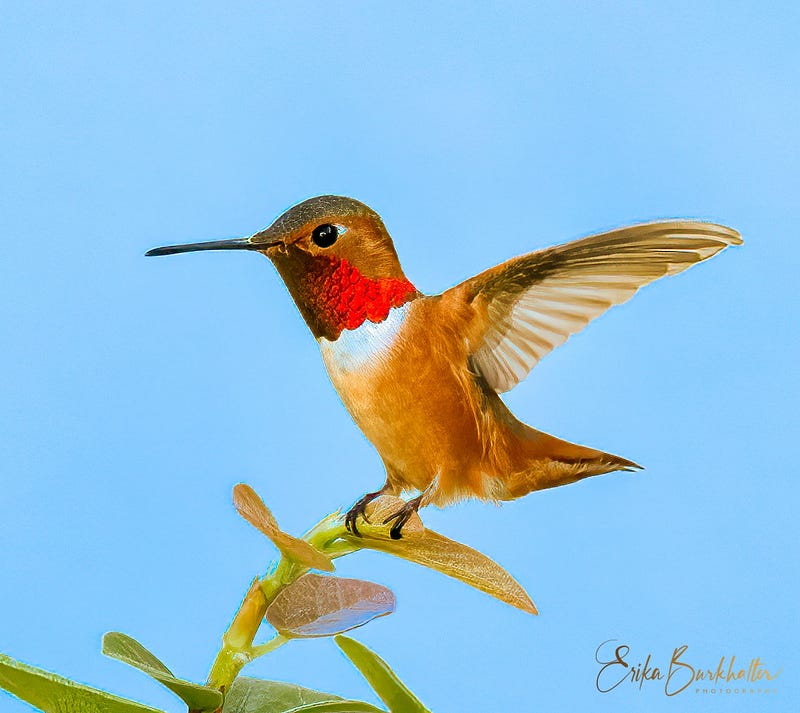
But, if it seems like the threat has dissipated, he will just settle back down, back on “alert-status.”
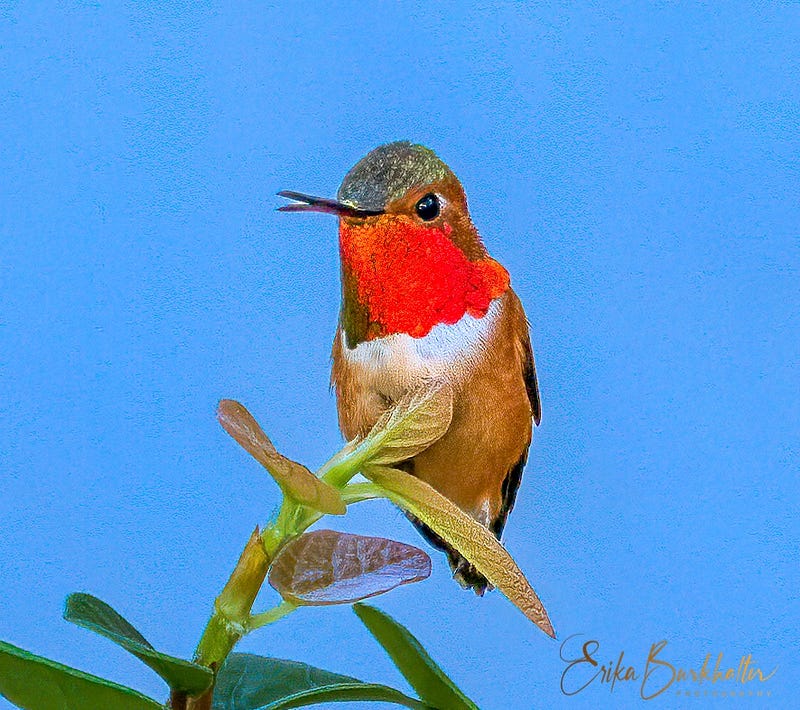
Photographers’ note — as you can see, most of these were shot with the brand new Nikon Z9 mirrorless camera with the new 100–400mm f/4.5–5.6 VR S lens. But a couple of these were taken with my old D500 and a “fixed” 500 mm ƒ5.6 lens.
For years, the D500 was considered the “gold standard” for wildlife photography. But the new Z9 has been receiving extraordinary reviews, mainly because of the new “animal- tracking” auto-focus feature.
I love my 500 mm lens, because I can zoom in so tightly. The shots with that 500 mm are almost always crystal clear. But the ability to go from 100 to 400 mm (or from 150–600 if you set the sensor for DX rather than FX, which I did for these photos) gives you so much more flexibility.
I was at least twenty feet away from “Big Red” while taking these photos with the Z9, and I took them “hand-held,” rather than with a tripod. I was quite delighted with the results. I really like the new focusing system. It is a definite improvement over the D500 and the z7II (which I also own). I’ve only had the Z9 for a few weeks and I am really looking forward to seeing what it can do.
Erika Burkhalter is a yogi, neurophilosopher, cat-mom, photographer, and lover of travel and nature, spreading her love and amazement for Mother Earth’s glories, one photo, poem or story at a time. (MS Neuropsychology, MA Yoga Studies).
You might also enjoy:
If you’re interested in keeping up with my poems, photos and musings, you might consider subscribing to my stories.
While I do normally post my stories with free “friends” links on social media, if you enjoy reading on medium, you can help the many talented writers here by joining. It helps to support the arts and to keep us writing!
And, because I’ve had a few people asking lately, if you’re ever interested in purchasing a photo, just leave me a note. I’m working on a limited edition of bird prints on metallic paper right now and I am quite excited about how they are turning out.
Story and photos ©Erika Burkhalter. All rights reserved.