
A FILM TO REMEMBER: “WHO FRAMED ROGER RABBIT” (1988)
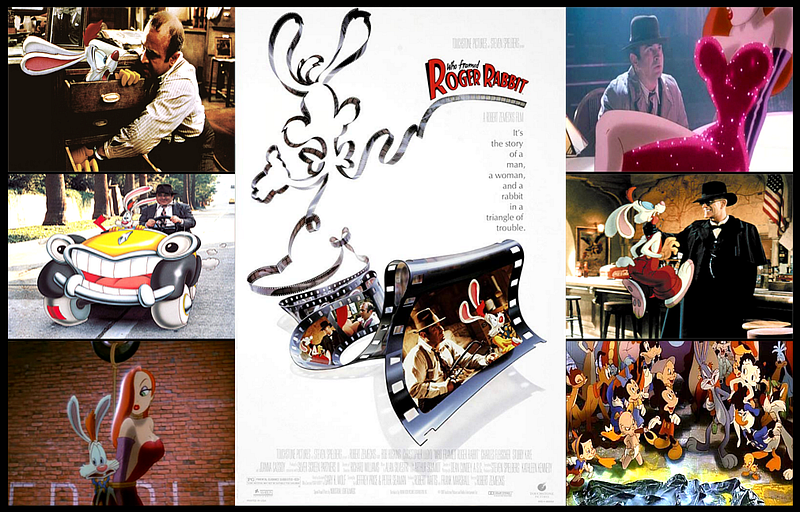
Before I get into this, I want to make mention “A FILM TO REMEMBER” will be a series about films that have reached a milestone anniversary since their origin in being culturally, historically, or aesthetically significant. The articles will contain the film’s plot outline, director, cast, a compilation of trivialities, various photos, movie trailer, critical reception and more. So, let’s start:
We are here to mark the celebration of the 30th Anniversary of Robert Zemeckis’ “Who Framed Roger Rabbit”. Let’s take an inside look at the film:
PLOT OUTLINE:
Toon star, Roger Rabbit, is worried that his wife Jessica Rabbit is playing patty cake with someone else, so the studio hires detective Eddie Valiant, who happens to hate toons, to snoop on her. But the stakes are quickly raised when Marvin Acme is found dead and Roger is the prime suspect with only the detective Valiant being his only hope to prove his innocence.
STUDIO:
Buena Vista Pictures
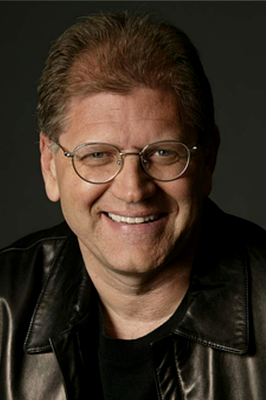
DIRECTOR:
Robert Zemeckis
CAST:
- Bob Hoskins … Eddie Valiant
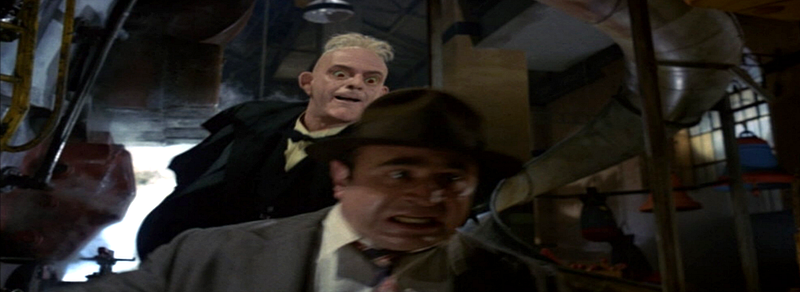
- Christopher Lloyd … Judge Doom
- Joanna Cassidy … Dolores
- Charles Fleischer … Roger Rabbit / Benny The Cab / Greasy / Psycho (voice)
- Stubby Kaye … Marvin Acme
- Alan Tilvern … R.K. Maroon
- Richard LeParmentier … Lt. Santino
- Lou Hirsch … Baby Herman (voice)
- Betsy Brantley … Jessica’s Performance Model
- Joel Silver … Raoul
- Paul Springer … Augie
- Richard Ridings … Angelo
- Edwin Craig … Arthritic Cowboy
- Lindsay Holiday … Soldier
- Mike Edmonds … Stretch
- Morgan Deare … Editor / Gorilla
- Danny Capri … Kid #1
- Christopher Hollosy … Kid #2
- John-Paul Sipla … Kid #3
- Laura Frances … Blonde Starlet
- Joel Cutrara … Forensic #1
- Billy J. Mitchell … Forensic #2
- Ed Herlihy … Newscaster
- Eugene Gutierrez … Teddy Valiant
- April Winchell … Mrs. Herman (voice)
- Mae Questel … Betty Boop (voice)
- Mel Blanc … Daffy Duck / Tweety Bird / Bugs Bunny / Sylvester / Porky Pig (voice)
- Tony Anselmo … Donald Duck (voice)
- Mary T. Radford … Hippo (voice)
- Joe Alaskey … Yosemite Sam / Foghorn Leghorn (voice)
- David L. Lander … Smart Ass (voice)
- Fred Newman … Stupid (voice)
- June Foray … Wheezy / Lena Hyena (voice)
- Russi Taylor … Birds / Minnie Mouse (voice)
- Les Perkins … Toad (voice)
- Richard Williams … Droopy (voice)
- Wayne Allwine … Mickey Mouse (voice)
- Pat Buttram … Bullet #1 (voice)
- Jim Cummings … Bullet #2 (voice)
- Jim Gallant … Bullet #3 (voice)
- Frank Sinatra … Singing Sword (voice) (archive sound)
- Tony Pope … Goofy / Wolf (voice)
- Peter Westy … Pinocchio (voice)
- Cherry Davis … Woody Woodpecker (voice)
- Jeff Arbaugh … Mime (uncredited)
- Nancy Cartwright … Dipped Shoe (voice) (uncredited)
- Bill Farmer … Goofy (voice) (uncredited)
- Derek Lyons … Drunk in Bar (uncredited)
- Mickie McGowan … Mooing Cow / Flying Witch (voice) (uncredited)
- Clarence Nash … Donald Duck (voice) (archive sound) (uncredited)
- Philip O’Brien … Earl (uncredited)
- Mikul Robins … Cloverleaf Billboard Raiser (uncredited)
- Peter Ross-Murray … Studio Hand (uncredited)
- Kathleen Turner … Jessica Rabbit (voice) (uncredited)
- Frank Welker … Dumbo / Additional Voices (voice) (uncredited)
GENRE(S):
Animation | Adventure | Comedy | Crime | Family | Fantasy | Mystery
TAGLINE:
It’s the story of a man, a woman, and a rabbit in a triangle of trouble.
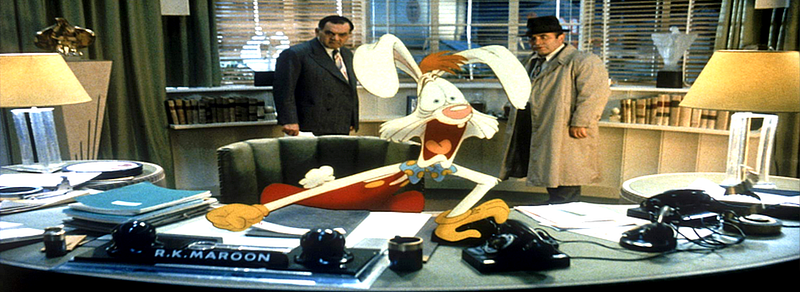
The film is known for being a result from unprecedented cooperation between Warner Bros. and Disney of a murder mystery turned on its very long rabbit ears per se, and a spirited tribute to the magic of animation and laughter. The feats performed by director Robert Zemeckis and director of animation Richard Williams is an ingenious blend of hand-drawn animation and live action, spliced with humor that’s by turns madcap, surreal and violent, all the while, demonstrating that its possible to push the technical boundaries while still cooking up a befitting set of characters and plots. The film is based from Gary K. Wolf’s novel “Who Censored Roger Rabbit?”, it was a critical blockbuster success as it brought in a renewed interest in the Golden Age of American animation, spearheading modern American animation and the Disney Renaissance from this landmark cinematic film.
Here’s what some of the critical receptions have been for the film over the years:
Christy Lemire from ChristyLemire.com says: “What Zemeckis did in blending animated characters in a live-action setting was seamless and super high-tech, and it set the stage for the groundbreaking visual effects that would become his trademark in ambitious films like ‘Forrest Gump’ and ‘The Polar Express.’”
Richard Corliss from TIME Magazine says: “The opening cartoon upstages the movie that emerges from it.”
Carrie Rickey from Philadelphia Inquirer says: “Imagine watching cartoon characters and relating to them as if they were flesh-and-blood instead of paint-and-ink. This is the slap-happy effect of ‘Who Framed Roger Rabbit,’ and — please — a 24-carrot salute to director Robert Zemeckis.”
Gene Siskel from Chicago Tribune says: “This is a movie that demands to be seen twice. The first time, one is likely to be dazzled to the point of exhaustion; the second time, one can appreciate the artistry and good humor more easily.”
Desson Howe from Washington Post says: “A definitive collaboration of pure talent. Zemeckis had Walt Disney Pictures’ enthusiastic backing, producer Steven Spielberg’s pull, Warner Bros.’s blessing, Canadian animator Richard Williams’ ink and paint, Mel Blanc’s voice, Jeffrey Price and Peter S. Seaman’s witty, frenetic screenplay, George Lucas’ Industrial Light and Magic, and Bob Hoskins’ comical performance as the burliest, shaggiest private eye.”
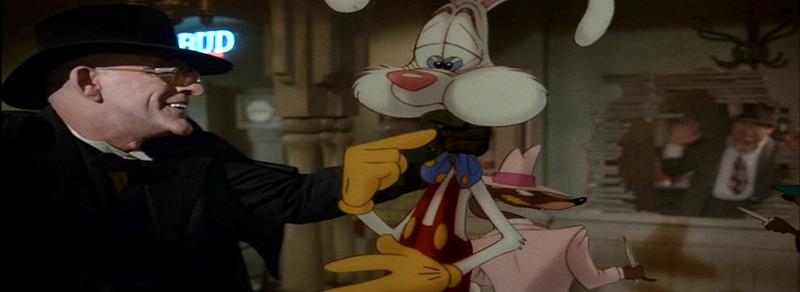
As you can tell by the critical reactions, the film was consensually widely praised despite a few pundits finding themselves annoyed with by the homages to the Golden Age of American animation including animation legend Chuck Jones accused Zemeckis of robbing Williams of any creative input and ruining the piano duel that both Williams and he storyboarded. However, the film has been marked as technical marvel and a definitive collaboration of pure talents in this combination detective noir story, with slightly adult humor, crazy toon characters from both Warner Bros. & Disney’s vaults in a one-off which is unlikely to ever repeat and an overall technical wizardry that yielded a film which set a benchmark precedent in the annals of cinema. But I’ll let you decide…
So, to get a better look at the film, here’s a link to the movie trailer of Robert Zemeckis’ “Who Framed Roger Rabbit”:
Here I have provided 12 interesting and intriguing trivia facts (I wanted to keep it limited) about “Who Framed Roger Rabbit”:
- Walt Disney Productions purchased the film rights to Gary K. Wolf’s novel “Who Censored Roger Rabbit?” shortly after its publication in 1981. Ron W. Miller, president of Disney at the time, saw it as a perfect opportunity to produce a blockbuster. Jeffrey Price and Peter S. Seaman were hired to write the script, penning two drafts. Robert Zemeckis offered his services as director in 1982, but Disney declined as his two previous films “I Wanna Hold Your Hand” and “Used Cars” had been box-office bombs. Between 1981 and 1983 Disney developed test footage with Darrell Van Citters as animation director, Paul Reubens voicing Roger Rabbit, Peter Renaday as Eddie Valiant, and Russi Taylor as Jessica Rabbit. The project was revamped in 1985 by Michael Eisner, the then-new CEO of Disney. Amblin Entertainment, which consisted of Steven Spielberg, Frank Marshall and Kathleen Kennedy, were approached to produce “Who Framed Roger Rabbit” alongside Disney. The original budget was projected at $50 million, which Disney felt was too expensive. The film was finally green-lit when the budget decreased to $30 million, which at the time still made it the most expensive animated film ever green-lit.
- After the film was green-lit, Walt Disney Studios chairman Jeffrey Katzenberg argued that the hybrid of live action and animation would “save” Disney’s animation department. Steven Spielberg’s contract included an extensive amount of creative control and a large percentage of the box-office profits. Disney kept all merchandising rights. Spielberg convinced Warner Bros., Fleischer Studios, King Features Syndicate, Felix the Cat Productions, Turner Entertainment, and Universal Pictures/Walter Lantz Productions to “lend” their characters to appear in the film with (in some cases) stipulations on how those characters were portrayed; for example, Disney’s Donald Duck and Warner’s Daffy Duck appear as equally talented dueling pianists, and Mickey Mouse and Bugs Bunny also share a scene. Apart from this agreement, Warner Bros. and the various other companies were not involved in the production of the film. Additionally, the producers were unable to acquire the rights to use of Popeye, Tom and Jerry, Little Lulu, Casper the Friendly Ghost, or the Terrytoons for appearances from their respective owners (King Features, Turner, Western Publishing, Harvey Comics, and Viacom).
- Terry Gilliam was offered the chance to direct, but he found the project too technically challenging. Gilliam later admitted saying, “Pure laziness on my part. I completely regret that decision.” Robert Zemeckis was hired to direct in 1985, based on the success of “Romancing the Stone” and “Back to the Future.” Disney executives were continuing to suggest Darrell Van Citters to direct the animated sequences, but Spielberg and Zemeckis decided against it. Richard Williams was eventually hired to direct the animation. Zemeckis wanted the film to imbue “Disney’s high quality of animation, Warner Bros.’ characterization, and Tex Avery humor”.
- This film marked the only time cartoon characters from Walt Disney and Warner Brothers appeared together on-screen.
- The three ingredients of the dip that kills toons (turpentine, acetone, and benzene) are all paint thinners, which are used to remove animation from cels.
- Harrison Ford was Spielberg’s original choice to play Eddie Valiant, but Ford’s price was too high. Bill Murray was also considered for the part, but due to his idiosyncratic method of receiving offers for roles, Murray missed out on it. Eddie Murphy reportedly turned down the role of Eddie, which he later came to regret. Several other actors were also considered for the role of Eddie Valiant, including Chevy Chase, Robert Redford, Jack Nicholson, Sylvester Stallone, Wallace Shawn, Ed Harris, Charles Grodin, and Don Lane. Bob Hoskins would win out in the end.
- To facilitate Hoskins’ performance, Charles Fleischer dressed in a Roger bunny suit and “stood in” behind camera for most scenes. Animation director Williams explained Roger Rabbit was a combination of “Tex Avery’s cashew nut-shaped head, the swatch of red hair…like Droopy’s, Goofy’s overalls, Porky Pig’s bow tie, Mickey Mouse’s gloves, and Bugs Bunny-like cheeks and ears.”
- Animation director Richard Williams admitted he was “openly disdainful of the Disney bureaucracy” and refused to work in Los Angeles. To accommodate him and his animators, production was moved to Elstree Studios in Hertfordshire, England. Disney and Spielberg also told Williams that in return for doing the film, they would help distribute his uncompleted film “The Thief and the Cobbler.” Supervising animators included Dale Baer, James Baxter, David Bowers, Andreas Deja, Chris Jenkins, Phil Nibbelink, Nik Ranieri, and Simon Wells. The animation production, headed by associate producer Don Hahn, was split between Richard Williams’ London studio and a specialized unit in Los Angeles, set up by Walt Disney Feature Animation and supervised by Dale Baer. The production budget continued to escalate, while the shooting schedule lapsed longer than expected. When the budget reached $40 million, Disney president Michael Eisner seriously considered shutting down production, but Jeffrey Katzenberg talked him out of it. Despite the budget escalating to over $50 million, Disney moved forward on production because they were enthusiastic to work with Spielberg.
- VistaVision cameras installed with motion-control technology were used for the photography of the live-action scenes which would be composited with animation. Rubber mannequins of Roger Rabbit, Baby Herman, and the weasels would portray the animated characters during rehearsals to teach the actors where to look when acting with “open air and imaginative cartoon characters”. Many of the live-action props held by cartoon characters were shot on set with either robotic arms holding the props or the props were manipulated by strings, similar to a marionette. The actor who played the voice of Roger, Charles Fleischer, insisted on wearing a Roger Rabbit costume while on the set, to get into character. Filming began on December 2, 1986, and lasted for seven months at Elstree Studios, with an additional month in Los Angeles and at Industrial Light & Magic (ILM) for blue screen effects of Toontown. The entrance of Desilu Studios served as the fictional Maroon Cartoon Studio lot.
- Post-Production lasted for 14 months. Because the film was made before computer animation and digital compositing were widely used, all the animation was done using cels and optical compositing. First, the animators and lay-out artists were given black-and-white printouts of the live-action scenes (known as “photo stats”), and they placed their animation paper on top of them. The artists then drew the animated characters in relationship to the live-action footage. Due to Zemeckis’ dynamic camera moves, the animators had to confront the challenge of ensuring the characters were not “slipping and slipping all over the place.” After rough animation was complete, it was run through the normal process of traditional animation until the cels were shot on the rostrum camera with no background. The animated footage was then sent to ILM for compositing, where technicians animated three lighting layers (shadows, highlights, and tone mattes) separately, to make the cartoon characters look three-dimensional and give the illusion of the characters being affected by the lighting on set. Finally, the lighting effects were optically composited on to the cartoon characters, who were, in turn, composited into the live-action footage. One of the most difficult effects in the film was Jessica’s dress in the nightclub scene, because it had flashing sequins, an effect accomplished by filtering light through a plastic bag scratched with steel wool.
- The first test audience was composed mostly of eighteen and nineteen-year-olds, who hated it. After nearly the entire audience walked out of the screening, Robert Zemeckis, who had final cut, said he wasn’t changing a thing.
- Bob Hoskins said that, for two weeks after seeing the movie, his young son wouldn’t talk to him. When finally asked why, his son said he couldn’t believe his father would work with cartoon characters such as Bugs Bunny and not let him meet them.
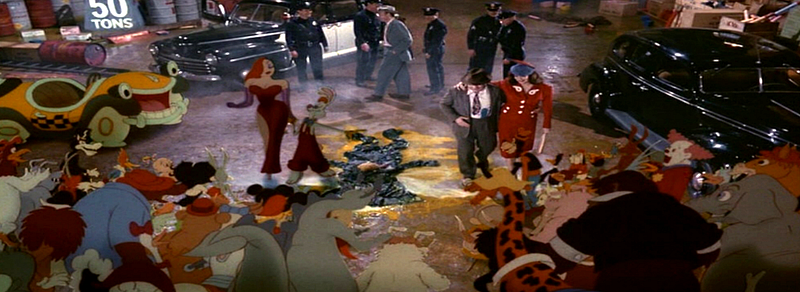
To conclude, Robert Zemeckis’ “Who Framed Roger Rabbit” is an unprecedented collaboration of filmmaking artistry between Warner Bros. & Disney that will unlikely ever happen again in this highly innovative and entertaining film that features a groundbreaking mix of live action and animation, with a touching and original story to boot. The film led an animation renaissance of a Golden Age era at Disney and in modern American animation overall from this high-concept ‘80s popcorn, wondrous blend of exuberantly humorous, brilliantly inventive, bracingly smart and surprisingly moving piece of whimsical ink-and-paint, flesh-and-blood, interacting, technological, cinematic tour de force milestone.
NOTE: The article contains sources from IMDb and Wikipedia.
Follow me and check out other articles of mine: