
A FILM TO REMEMBER: “SLUMDOG MILLIONAIRE” (2008)
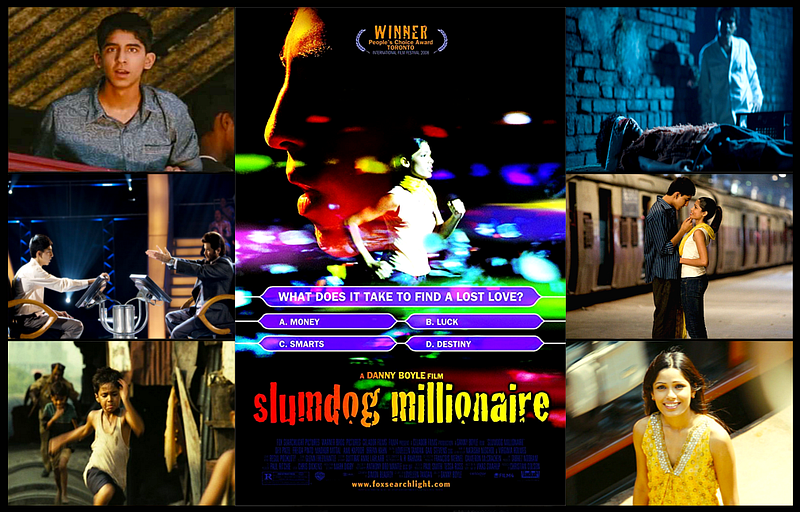
Before I get into this, I want to make mention “A FILM TO REMEMBER” will be a series about films that have reached a milestone anniversary since their origin in being culturally, historically, or aesthetically significant. The articles will contain the film’s plot outline, director, cast, a compilation of trivialities, various photos, movie trailer, critical reception and more. So, let’s start:
We are here to mark the celebration of the 10th Anniversary of Danny Boyle’s “Slumdog Millionaire”. Let’s take an inside look at the film:
PLOT OUTLINE:
A Mumbai teen reflects on his upbringing in the slums when he is accused of cheating on the Indian Version of “Who Wants to be a Millionaire?”

STUDIO:
Fox Searchlight Pictures
DIRECTOR:
Danny Boyle
CAST:
- Dev Patel … Jamal Malik
- Freida Pinto … Latika
- Ayush Mahesh Khedekar … Jamal Malik — Child
- Tanay Chheda … Jamal Malik — Teenager
- Rubina Ali … Latika — Child
- Tanvi Ganesh Lonkar … Latika — Teenager
- Madhur Mittal … Salim K. Malik
- Azharuddin Mohammed Ismail … Salim K. Malik — Child
- Ashutosh Lobo Gajiwala … Salim K. Malik — Teenager
- Anil Kapoor … Prem Kumar
- Irrfan Khan … Police Inspector
- Saurabh Shukla … Police Constable Srinivas
- Mahesh Manjrekar … Javed Khan
- Ankur Vikal … Maman
- Rajendranath Zutshi … Director
- Sanchita Choudhary … Jamal’s Mother
- Mia Drake Inderbitzin … Adele
- Siddhesh Patil … Arvind
- Chirag Parmar … Arvind — Young
- Arfi Lamba … Bardi
- Shruti S. Seth … Call Centre Instructor
GENRE(S):
Drama | Romance
TAGLINE:
What does it take to find a lost love? A. Money B. Luck C. Smarts D. Destiny

The film is known for being a compelling piece of a Bollywood-style masala, due to the way the film combines familiar raw ingredients of genres into a feverish masala and culminates in the romantic leads finding each other. It’s a story with a simple and schematic structure, yet, when the film progresses and the stakes get higher, director Danny Boyle cleverly works the built-in tension of the TV show into the drama of the unfolding narrative. It’s only benefited more from the soulful performances by Dev Patel and Freida Pinto star-crossed lovers. It’s their chemistry, as much as Boyle’s exuberance, that sells and brings it altogether dancing to a soulful, graceful, rhythmic cadence grounded in love and dedication. The film is based from a loose adaptation of the novel “Q & A” by Indian author and diplomat Vikas Swarup, it was a widely praised and critically acclaimed, however, it was also the subject of controversy, especially in India, due to its portrayal of Indian Society, of Hindus, the use of the word “Slumdog” in the title and perceived exploitation of some of the younger actors, among other issues.
Here’s what some of the critical receptions have been for the film over the years:
Dave Calhoun from Time Out says: “‘Slumdog Millionaire,’ a film so upbeat and colorful that, by the time you’re relaying its infectious air of optimism to friends, you could forget that it features orphans, slaughter, organized crime, poverty, enslavement and police brutality.”
Mick LaSalle from San Francisco Chronicle says: “Its fair to say that the movie ends so well that it will redeem the entire experience for many viewers. It all depends on how you feel about the sluggish 90 minutes that went before.”
Lisa Kennedy from Denver Post says: “Watching ‘Slumdog Millionaire,’ it’s easy to believe director Danny Boyle has been working toward this brilliantly woven masterwork with each entertaining and diverse tale he’s delivered.”
Rene Rodriguez from Miami Herald says: “From an early foot-chase in which the careening camera gives us a tour of the maze-like slums, to the ridiculously uplifting Bollywood dance number that plays over the end credits, ‘Slumdog Millionaire’ makes for kinetic, exhilarating entertainment.”
Claudia Puig from USA Today says: “The beautifully rendered and energetic tale celebrates resilience, the power of knowledge and the vitality of the human experience. Horrifying, humorous and life-affirming, it is, above all, unforgettable.”
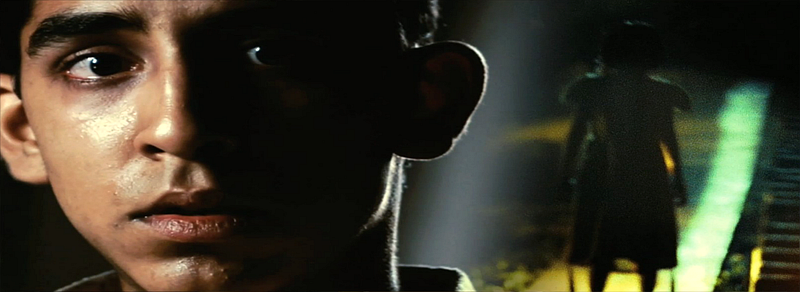
As you can tell by the critical reactions, there was more acclaim towards it then not, but the film had its share of criticism from various pundits for it’s gimmicky narrative strategy, it’s overly hyperkinetic style, it’s clichéd circumstances and so forth. However, it’s unapologetically entertaining as Boyle’s winking tale about fate is, it brings with it recognition of India’s worst social ills. Boyle’s florid command of the melodramatic film along with the inspired ensemble performances especially from Patel and Pinto, elevates it into a dazzling crowd-pleaser teeming with the sights, sounds and sensations of modern India that’s rich with character, emotion and pathos — as Boyle manages to nurse every ounce of it into the aspect of the story without overplaying this Bollywood-stylistic hyperactive rags-to-riches, bravura Hollywood showpiece. But I’ll let you decide…
So, to get a better look at the film, here’s a link to the movie trailer of Danny Boyle’s “Slumdog Millionaire”:
Here I have provided 12 interesting and intriguing trivia facts (I wanted to keep it limited) about “Slumdog Millionaire”:
- Director Danny Boyle placed the money to be paid to the 3 lead child actors in a trust that is to be released to them upon their completion of grade school at 16 years of age. The production company has set up for an auto-rikshaw driver to take the kids to school everyday until they are 16 years old.
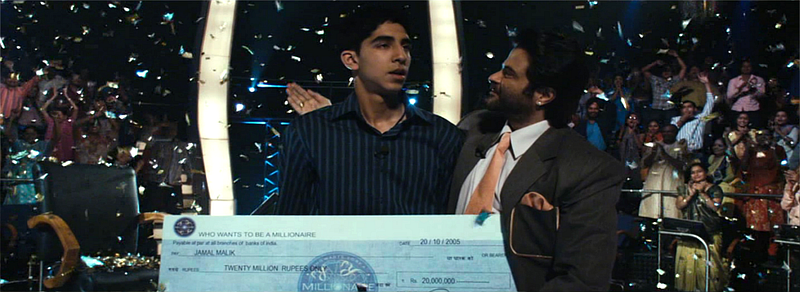
- Danny Boyle originally wanted Indian actor Shah Rukh Khan — who had hosted the final season of “Kaun Banega Crorepati?” (2000) (the Indian version of “Who Wants to Be a Millionaire” (1998)) — to play the game show host, but the actor was not available. The actor who plays the host, Anil Kapoor, was a guest on the show and won 5,000,000 Rupees.
- The pile of excreta that the young Jamal jumps into was made from a combination of peanut butter and chocolate.
- When viewers objected to the term “Slumdog” as racist-sounding, director Danny Boyle explained that it wasn’t; the word is a combination of Jamal’s twin standings as a “slum-dweller” and an “underdog”.
- Approximately 20% of the film’s dialog is in Hindi (with English subtitles).
- The film was originally intended to receive a PG-13 rating. In the end, it received an R rating because of its intense tone. With no time or money for appeals, the film was released with its given rating.
- Local Indian authorities decided to step in and move the children and their families from slums to new houses.
- Mercedes-Benz asked that its logos be removed in scenes taking place in the slums. The company, according to Danny Boyle, did not want to be associated with the poverty-stricken area, fearing that that might taint its image.
- Not only did Dev Patel and Freida Pinto play a couple onscreen, the two actors shared a real-life relationship until late 2014.
- The film has been subject to serious academic criticism. Mitu Sengupta (2009 and 2010) raises substantial doubts about both the realism of the film’s portrayal of urban poverty in India and whether the film will assist those arguing for the poor. Rather, Sengupta argues the film’s “reductive view” of such slums is likely to reinforce negative attitudes to those who live there. The film is therefore likely to support policies that have tended to further dispossess the slum dwellers in terms of material goods, power and dignity. The film, it is also suggested, celebrates characters and places that might be seen as symbolic of Western culture and models of development. However, there are others who point to the changing urban aspirations and prospects for mobility that can be seen in Indian cities such as Mumbai in which the film is set. The film is seen by D. Parthasarathy (2009) as reflecting a larger context of global cultural flows, which implicates issues of labour, status, ascription-achievement, and poverty in urban India. Parthasarathy (2009) argues for a better understanding of issues of dignity of labour and that the film should be interpreted in a more nuanced way as reflecting the role of market forces and India’s new service economy in transforming the caste and status determined opportunity structure in urban India. Academic criticism has also been extended to the underlying philosophy of the film, with its apparent ends-justify-means message. Many elements of the film, including the apparent redemption of Salim at the end of his life and the film’s subjugation of the suffering of peripheral characters to the romantic aspirations of Jamal, are characteristic, say such critics, of a naïve, Providence-based vision of reality.
- This is the first ‘de facto’ foreign film to win the Academy Award for Best Picture since “The Last Emperor” (1987) in 1988. Neither films were produced or supported by a major American film studio.
- Danny Boyle was initially reluctant to take on the film as he didn’t want to make a film about “Who Wants to Be a Millionaire” (1998). However, once he learned that the screenwriter was Simon Beaufoy, who had written “The Full Monty” (1997) which is one of Boyle’s favorite British films, he decided to look at the script again. Boyle was particularly impressed with how Beaufoy had managed to weave the multiple story lines from the novel into one narrative and he decided to accept the project.
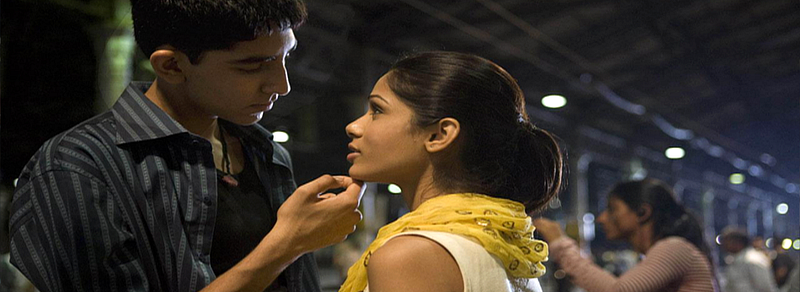
To conclude, Danny Boyle’s “Slumdog Millionaire” is equal parts Dickensian grotesquery, Horatio Alger striving, ’90s arthouse bustle, and Bollywood panache. While there is criticism for being little heavy on sentimentality and hyperkinetic dither, the film is an engaging and inspirational ride so upbeat and colorful that, by the time you’re relaying its infectious air of optimism, you could forget that it accentuates orphans, slaughter, organized crime, poverty, enslavement and police brutality in this spirited underdog fable marinated in modern India’s melting pot. Danny Boyle paints a vivid, energized and painful picture of various themes that soar on the strength of its inspirited ensemble cast and exotic setting in this kaleidoscope of a colorized splash, game show-esque, Hollywood-stylized Bollywood masala.
NOTE: The article contains sources from IMDb and Wikipedia.
Follow me and check out other articles of mine: