
A FILM TO REMEMBER: “TOUCH OF EVIL” (1958)
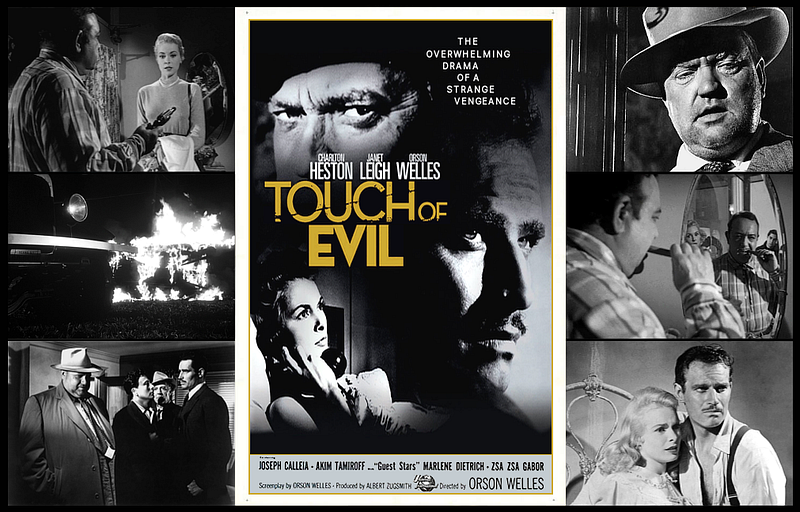
Before I get into this, I want to make mention “A FILM TO REMEMBER” will be a series about films that have reached a milestone anniversary since their origin in being culturally, historically, or aesthetically significant. The articles will contain the film’s plot outline, director, cast, a compilation of trivialities, various photos, movie trailer, critical reception and more. So, let’s start:
We are here to mark the celebration of the 60th Anniversary of Orson Welles’ “Touch of Evil”. Let’s take an inside look at the film:
PLOT OUTLINE:
A Mexican Narcotics officer and his Caucasian bride has to interrupt their honeymoon on the Mexican-US border when an American building contractor is killed after someone places a bomb in his car which leads to a stark, perverse story of murder, kidnapping, and police corruption in a Mexican border town.
STUDIO:
Universal Pictures
DIRECTOR:
Orson Welles
CAST:
- Charlton Heston … Ramon Miguel Vargas
- Janet Leigh … Susan Vargas
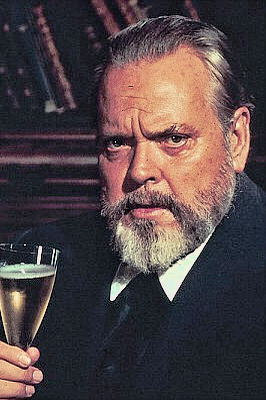
- Orson Welles … Police Captain Hank Quinlan
- Joseph Calleia … Pete Menzies
- Akim Tamiroff … Uncle Joe Grandi
- Joanna Cook Moore … Marcia Linnekar
- Ray Collins … District Attorney Adair
- Dennis Weaver … the Night Manager
- Val de Vargas … Pancho
- Mort Mills … Al Schwartz
- Victor Millan … Manolo Sanchez
- Lalo Rios … Risto
- Phil Harvey … Blaine
- Joi Lansing … Blonde
- Harry Shannon … Police Chief Pete Gould
- Rusty Wescoatt … Casey
- Wayne Taylor … a gang member
- Ken Miller … a gang member
- Raymond Rodriguez … a gang member
- Arlene McQuade … Ginnie
- Dan White … the Border Guard
- Zsa Zsa Gabor … the Strip Club owner
- Marlene Dietrich … Tanya
- Mercedes McCambridge … a hoodlum
- William Tannen … Howard Frantz
- Joseph Cotten (uncredited) … a coroner
GENRE(S):
Crime | Drama | Film-Noir | Thriller
TAGLINE:
The Strangest Vengeance Ever Planned!
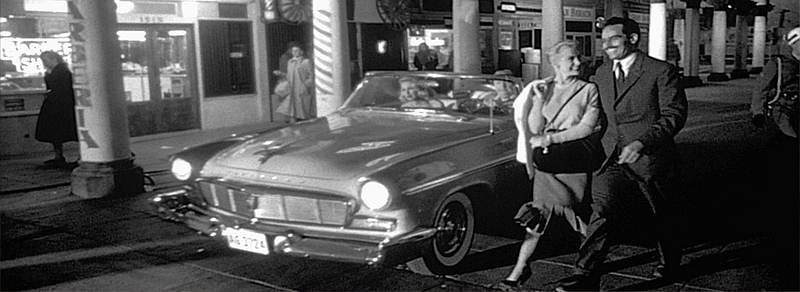
The film is known for being director Orson Welles’ last Hollywood film, and in it he makes transcendent use of the American technology his genius throve on; never again would his resources be so rich or his imagination so fiendishly baroque. It is a testament to Welles’ genius that he was able to turn a piece of pulp literature into such a disturbing, intriguing, sophisticated and, above all, entertaining study of depravity in one of a few monumental 1950s swan songs marking the end of the great epoch of traditional studio filmmaking. The film was loosely based from Whit Masterson’s “Badge of Evil” novel, it went on to become highly acclaimed consensually in being widely regarded as one of Welles’ best feature films and one of the masterwork classic-era film-noirs.
Here’s what some of the critical receptions have been for the film over the years:
Howard Thompson from New York Times says: “Where Mr. Welles soundly succeeds is in generating enough sinister electricity for three such yarns and in generally staging it like a wild, murky nightmare.”
Lisa Schwarzbaum from Entertainment Weekly says: “Indeed, just to see and hear the extraordinary 3 minute and 20 second opening sequence — a fluid tour de force tracking shot — without impediment of opening credits and street-sound-masking movie score is accomplishment enough.”
Peter Stack from San Francisco Chronicle says: “‘Touch of Evil’ is a savvy starter because Welles’ astonishing cinematic invention and his persuasive presence as star are prime noir at tractions.”
Stanley Kauffmann from The New Republic says: “It’s a flurry of pressure-cooker baroque, an extreme example of the exhibitionistic hijinks in which Welles could sometimes indulge, apparently intensified here because he wasn’t doing what he really wanted to be doing.’”
Michael Wilmington from Chicago Tribune says: “Having the ‘Touch of Evil’ envisioned by our most creative filmmaker, is a wondrous gift no movie lover should miss.”
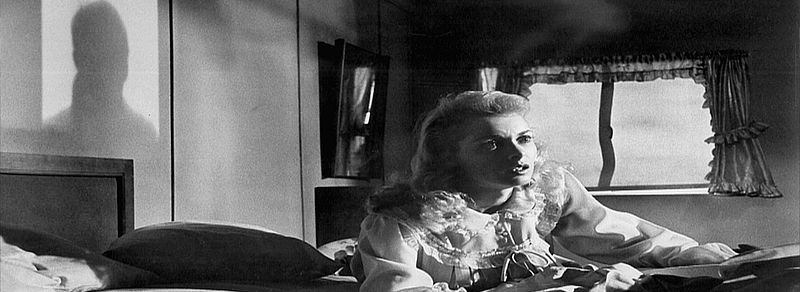
As you can tell by the critical reactions, it’s a film that embodies everything that is so exhilarating and maddening about Welles. While few may feel he flounders in the feature’s hijinks, however, the ingredients are all in place for pulp mayhem as the film’s sweaty thriller conundrum on characterization and corruption, justice and law, worship and betrayal, as it all plays havoc with moral ambiguities. Welles’ outlandish visual talent is on full display, putting film-noir conventions through the wringer and in creating one of the most terrifyingly seedy but yet an enthrallingly compelling films ever made. But I’ll let you decide…
So, to get a better look at the film, here’s a link to the movie trailer of Orson Welles’ “Touch of Evil”:
Here I have provided 12 interesting and intriguing trivia facts (I wanted to keep it limited) about “Touch of Evil”:
- Janet Leigh’s agent initially rejected her participation in this film due to the low salary offered without even consulting the actress. Orson Welles, anticipating this, sent a personal letter to the actress, telling her how much he looked forward to their working together. Leigh, furious, confronted her agent telling him that getting directed by Welles was more important than any paycheck.
- Despite popular speculation, Orson Welles is wearing make-up throughout the film. For hours every night, they’d add pounds and pounds onto him, and use prosthetics for his face. He once said that he was late going to a dinner party at his house during the filming, and arrived with his make-up still on. A famous actress approached him when he entered and in all seriousness said: “Orson! You look wonderful!” Of course, years later in life, Welles physically came to resemble his character.
- The opening scene took an entire night to get right, mainly because the actor playing the customs officer kept blowing his lines. It was beginning to get light on the horizon when Orson Welles made the final take of the night, saying to the cast, “All right, let’s try it one more time.” Then he looked at the actor and said, “If you forget your line this time, just move your lips and we’ll dub it in later, but please God do NOT say, ‘I’m sorry, Mr. Welles!’” This is the take seen in the film.
- Orson Welles said that this was the most fun he’d ever had filming a picture, unlike most of his Hollywood films, because he wasn’t troubled by studio interference (until after he completed the film, anyway), he was given a healthy budget and he was working with a crew of some of his favorite actors on a script that didn’t involve as much symbolism and all-out cinematic tricks as something like “Citizen Kane” (1941).
- Orson Welles was originally hired only to act in the film, but due to a misunderstanding, Charlton Heston thought that Welles was to be the director. To keep Heston happy, producer Albert Zugsmith allowed Welles to direct. Welles made major changes to the already-completed script, including changing Heston’s character from a white district attorney to a Mexican narcotics agent, changing Janet Leigh’s character from Mexican to American, and changing the setting of the movie from a small California town to a Mexican-American border town.
- Orson Welles stated that his goal with the film was to infuriate the audience with the plot, in much the same way that Howard Hawks did with “The Big Sleep” (1946). The story became even more confusing once the studio re-cut the picture.
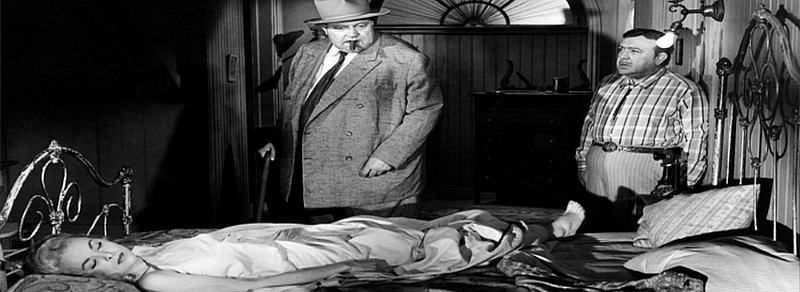
- Charlton Heston cited not doing a Hispanic accent for his Mexican narcotics officer Miguel ‘Mike’ Vargas as one of the biggest mistakes he ever made as an actor.
- Orson Welles wanted the credits to appear at the end of the film so as not to distract the audience from the long (and famous) initial tracking shot. He finally got his wish with the 1998 alternate version, dubbed “the directors’s cut”. However, as initially released theatrically in 1958, the credits appeared at the beginning of the film, superimposed over the now famous opening sequence.
- Marlene Dietrich and Zsa Zsa Gabor share a title card (“Guest Starring Marlene Dietrich, Zsa Zsa Gabor”). Gabor has a bit part; she is onscreen for 20 seconds at most. Dietrich has a pivotal role and appears in four crucial scenes including the finale. Interestingly enough, executives from Universal Pictures only found out that Marlene Dietrich was playing Tanya when they saw the rushes for that day’s shooting; she had filmed her part in one day as a personal favor to Orson Welles and he had not told anyone about it. She agreed to appear at minimum union wage, but when the studio execs decided to give her on-screen credit, they had to pay her more.
- The entire film was shot on real locations, apart from the infamous ten-minute take in the Mexican shoe store clerk’s apartment, which is actually a set. The studio wanted the entire film to be shot on sets, even going so far as to build numerous locations on its lots, but Orson Welles insisted on filming in a real city, settling for Venice, California, when he couldn’t get his initial choice of Tijuana.
- Janet Leigh recalled how Orson Welles asked for input from the actors in the cast: “It started with rehearsals. We rehearsed two weeks prior to shooting, which was unusual. We rewrote most of the dialogue, all of us, which was also unusual, and Mr. Welles always wanted our input. It was a collective effort, and there was such a surge of participation, of creativity, of energy. You could feel the pulse growing as we rehearsed. You felt you were inventing something as you went along. Mr. Welles wanted to seize every moment. He didn’t want one bland moment. He made you feel you were involved in a wonderful event that was happening before your eyes”.
- Orson Welles initially despised the title “Touch of Evil,” having had nothing to do with its conception. Over the years, however, he grew to like it, and eventually considered it the best title out of all his films.
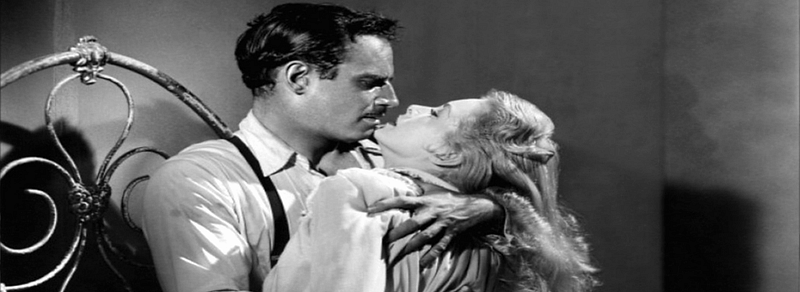
To conclude, Orson Welles’ “Touch of Evil” is one of the last examples of film-noir in the genre’s classic period. Orson Welles has artistically innovative a dark, complex, perverse, riveting pot-boiler, that’s sets up atmosphere, deepens the characters, touches on various themes, and of course, doing some avant-garde stylish camerawork that establishes expressionism in the extreme, filled with shadows, angles and cinematic flourishes, raising the usual brooding nightmarish ambiance of film-noir to a level few have ever attempted. Welles has made the film that virtually capped a style he had helped create you could say, in the spanning of film-noir starting with “Citizen Kane” and finishing with this film in making it as much about filmmaking, as it is about storytelling in this cinematically baroque masterpiece of bad juju.
NOTE: The article contains sources from IMDb and Wikipedia.
Follow me and check out other articles of mine:


