
A FILM TO REMEMBER: “SHANE” (1953)
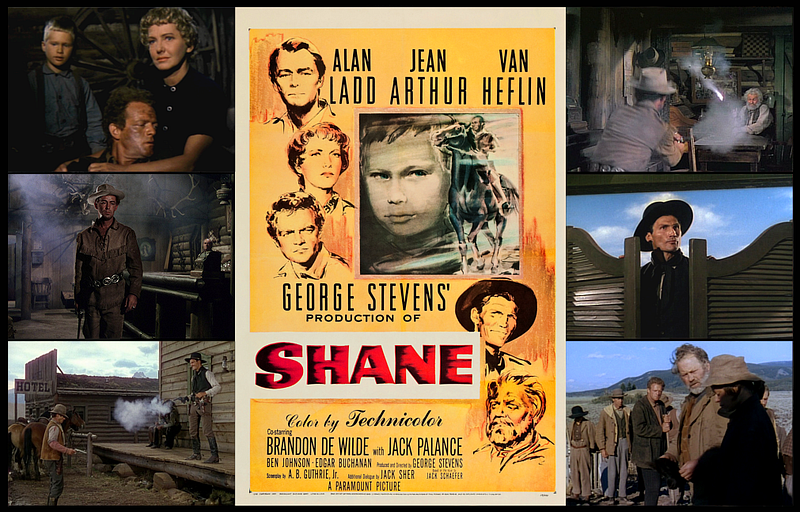
Before I get into this, I want to make mention “A FILM TO REMEMBER” will be a series about films that have reached a milestone anniversary since their origin in being culturally, historically, or aesthetically significant. The articles will contain the film’s plot outline, director, cast, a compilation of trivialities, various photos, movie trailer, critical reception and more. So, let’s start:
We are here to mark the celebration of the 65th Anniversary of George Stevens’ “Shane”. Let’s take an inside look at the film:
PLOT OUTLINE:
Enigmatic and weary gunslinger attempts to settle down with a homestead family, but a smoldering settler/rancher conflict forces him to act.
STUDIO:
Paramount Pictures
DIRECTOR:
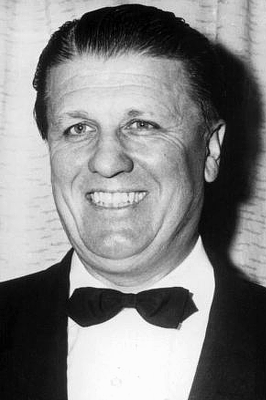
George Stevens
CAST:
- Alan Ladd … Shane
- Jean Arthur … Marian Starrett
- Van Heflin … Joe Starrett
- Brandon deWilde … Joey Starrett
- Jack Palance (credited as Walter Jack Palance) … Jack Wilson
- Ben Johnson … Chris Calloway
- Edgar Buchanan … Fred Lewis
- Emile Meyer … Rufus Ryker
- Elisha Cook, Jr … Frank “Stonewall” Torrey
- Douglas Spencer … Axel ‘Swede’ Shipstead
- John Dierkes … Morgan Ryker
- Ellen Corby … Mrs. Liz Torrey
- Paul McVey … Sam Grafton
- John Miller … Will Atkey
- Edith Evanson … Mrs. Shipstead
- Leonard Strong … Ernie Wright
- Nancy Kulp … Mrs. Howells
GENRE(S):
Drama | Western
TAGLINE:
There’s a Score to Settle…and This is it!
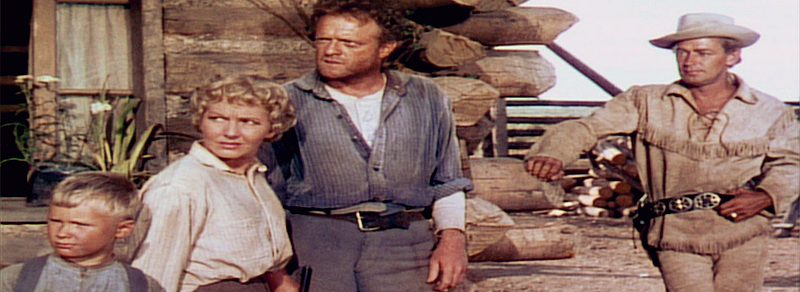
The film is known for being the indelible, mythic granddaddy of post-modern westerns as it isn’t just a western; it’s a masterwork in which every little detail seems to contribute to the intensity in the air and while it’s deliberately epic landscape photography is now a sine qua non of the genre. Director George Stevens helms in the grandest style, meticulously and subtly attending equally to all the elements while employing the good-guy/bad-guy stereotypes that characterize westerns but with a depth of intriguing complexity in narration and with characterization that’s stabled with a good cast and keenly restrained performances from Alan Ladd, Jean Arthur, Van Heflin, Jack Palance and Brandon deWilde in a sophisticatedly noble, gun-totting, scenic plains of a seminal exemplar. The film is based from Jack Schaefer’s novel of the same name, it was consensually well receipted and has become a self-consciously intended western classic.
Here’s what some of the critical receptions have been for the film over the years:
Bosley Crowther from New York Times says: “For ‘Shane’ contains something more than beauty and the grandeur of the mountains and plains, drenched by the brilliant Western sunshine and the violent, torrential, black-browed rains…”
Emanuel Levy from EmanuelLevy.com says: “The direction is deliberate, but the attention to detail is impressive, and the performances of Alan Ladd, Jean Arthur and Brandon deWilde are so good and restrained that they overcome the social-mythical types they’re playing.”
Geoff Andrew from Time Out says: “Stevens’ classic Western, with its inflated reputation, now looks as if it were self-consciously intended as a landmark film right from the start.”
Roger Ebert from Chicago Sun-Times says: “There are intriguing mysteries in ‘Shane,’ puzzles and challenges, not least in the title character and the way he is played by Alan Ladd.”
William Brogdon from Variety says: “Wyoming’s scenic splendors against which the story is filmed are breathtaking. Sunlight, the shadow of rain storms and the eerie lights of night play a realistic part in making the picture a visual treat.”
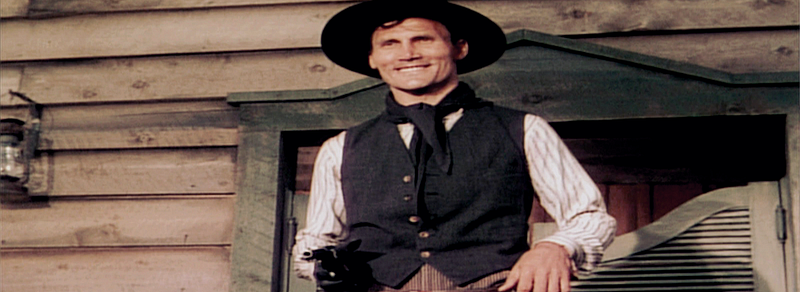
As you can tell by the critical reactions, it’s a film that continues to maintain its condition of an unscathed classic. The simple story, the legendary hero: this is the Western tradition. But in developing his narrative, Stevens employs an unusually sophisticated technique as it is a film that takes its own measured, deliberate time with the simple yet meaningful storyline, believable-looking sets, the beautiful natural setting and a worthy cast and fine performances by Ladd, Arthur, Heflin, Palance and deWilde in making this the quintessential of a great knight-samurai archetype in being a cinematic benchmark western. But I’ll let you decide…
So, to get a better look at the film, here’s a link to the movie trailer of George Stevens’ “Shane”:
Here I have provided 12 interesting and intriguing trivia facts (I wanted to keep it limited) about “Shane”:
- In the funeral scene, the dog consistently refused to look into the grave. Finally, director George Stevens had the dog’s trainer lie down in the bottom of the grave, and the dog played his part ably. The coffin (loaded with rocks for appropriate effect) was then lowered into the grave, but when the harmonica player began to play “Taps” spontaneously, the crew was so moved by the scene that they began shoveling dirt into the grave before remembering the dog’s trainer was still there.
- Jean Arthur, then aged 50, came out of semi-retirement to play Marian Starrett, largely as a favor to her friend, George Stevens. She would retire completely from the film business after this film.
- The film was completed in 1951 but George Stevens’ editing process was so rigorous that it wasn’t released until 1953. This drove up the costs of what should have been a simple, straightforward Western; in fact, they spiraled so much that Paramount approached Howard Hughes about taking on the property, but he declined. He changed his mind when he saw a rough cut and offered to buy the film on the spot. This made Paramount rethink its strategy — originally it was going to release it as a “B” picture but then decided it should be one of the studio’s flagship films of the year. This proved to be a good decision, as the film was a major success and easily recouped its inflated budget.
- George Stevens originally cast Montgomery Clift as Shane and William Holden as Joe Starrett. When both decided to do other films instead, “Shane” was nearly abandoned before Stevens asked studio head Y. Frank Freeman who was available. Upon seeing a list of actors under contract to the studio, Stevens cast Alan Ladd, Van Heflin and Jean Arthur within 3 minutes.
- Meticulous care was taken at all levels of production. All the physical props were true to the period, the buildings were built to the specifications of the time and the clothing was completely authentic. George Stevens even had somewhat scrawny-looking cattle imported from other areas, as the local herds looked too well-fed and healthy.
- Van Heflin and Alan Ladd became firm friends during the making of the film. In later years, Heflin’s wife said one of the very rare times she ever saw her husband cry was when he learned of Ladd’s premature death.
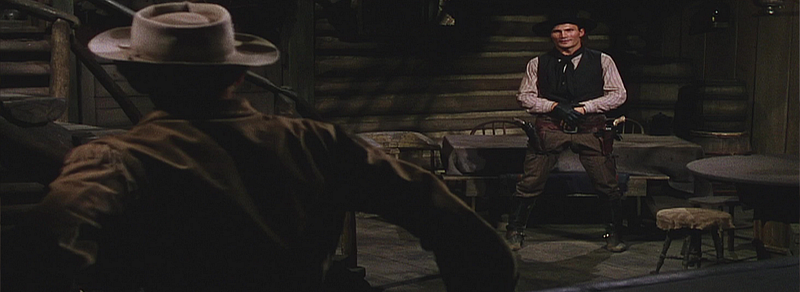
- Filmmaker Howard Hawks recommended that George Stevens hire Pulitzer Prize-winning author A.B. Guthrie, Jr., on whose novel Hawks’s film “The Big Sky” (1952) was based, to write the script, even though Guthrie had never before written a screenplay.
- The scene where Alan Ladd practices shooting in front of Brandon deWilde took 119 takes to complete.
- Jack Elam said in a 1987 interview with David Letterman that he turned down the role of Jack Wilson (played by Jack Palance), which he subsequently regarded as a mistake.
- Prior to this film, Jack Palance was better known as a theater actor and had no experience with horses and guns. When he arrived on set, the film was subject to delays so Palance spent all his spare time practicing getting on and off horses and improving his ability with pistols. By the time filming resumed, he had become highly proficient at both.
- Ray Milland was considered for the role of Shane.
- The final scene, in which the wounded Shane (played by Alan Ladd) explained to the distraught Joey (played by Brandon deWilde) why he had to leave, was moving moment for the entire cast and crew except Brandon deWilde. Every time Alan Ladd spoke his lines of farewell, deWilde crossed his eyes and stuck out his tongue. Finally, Ladd called to the boy’s father, “Make that kid stop or I’ll beat him over the head with a brick.” deWilde behaved after that.
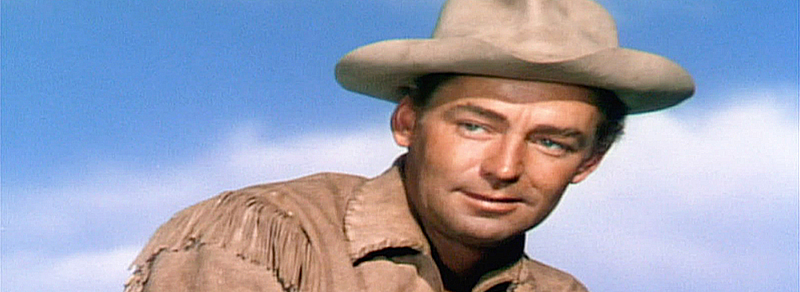
To conclude, George Stevens’ “Shane” transformed the American cowboy saga, introducing psychological facets into the usual gunplay foray of its genre. George Stevens’ directs with a craftsmanship of a warmth feeling and subtle handling in the emotional and moral complexities in this western stylized Arthurian narrative, that’s flawlessly cast with estimable performances by Alan Ladd, Jean Arthur, Van Heflin, Jack Palance and Brandon deWilde which they overcome the social-mythical types they’re playing, making it an undeniably picturesque, small and intimate with westernly action, drama and emotion as the film stands securely as one of the most celebrated westerns of its era and genre in making it a deliberate, gunslinging and grandeur western poetic landmark.
NOTE: The article contains sources from IMDb and Wikipedia.
Follow me and check out other articles of mine:


