avatarScott Anthony

Free AI web copilot to create summaries, insights and extended knowledge, download it at here

4362

Abstract

re id="28ab"><img src="https://cdn-images-1.readmedium.com/v2/resize:fit:800/1*xTDGfleyCEceYlpPm6F1xw.png"><figcaption>Still image of Lars Hanson, Lillian Gish and William Orlamond (right) in “The Wind”.</figcaption></figure><p id="8e15">As you can tell by the critical reactions, the film garnered a mixed reception with criticism from various pundits being that it was laborious and harmed with a coerced mirthful conclusion but many critics perceive it as one of, if not, certainly the best silent film — that’s been revived in recent years by producer/director Kevin Brownlow with a Carl Davis score. Sjöström’s approach was probably the first “Western” that tried for truth as well as dramatic poetry, treating it with considerable realism and detail, that dealt with human suffering but one of its masterstrokes was led by its cast of performers in Hanson and most remarkably, Gish given much leeway as possible to develop her turn which delves into the hallucination of terror in this cyclone of a subtle, dramatic, boisterous and a thrillingly hallucinative tour de force of silent cinema. But I’ll let you decide…</p><p id="f3f8">So, to get a better look at the film, here’s a link to the movie trailer of Victor Seastrom’s “The Wind”:</p><p id="d405">(<i>NOTE: The trailer has no audio of any kind since the feature is a silent film.</i>)</p> <figure id="81ab"> <div> <div> <img class="ratio" src="http://placehold.it/16x9"> <iframe class="" src="https://cdn.embedly.com/widgets/media.html?src=https%3A%2F%2Fwww.youtube.com%2Fembed%2FViZDewxaJ8s%3Ffeature%3Doembed&amp;url=http%3A%2F%2Fwww.youtube.com%2Fwatch%3Fv%3DViZDewxaJ8s&amp;image=https%3A%2F%2Fi.ytimg.com%2Fvi%2FViZDewxaJ8s%2Fhqdefault.jpg&amp;key=a19fcc184b9711e1b4764040d3dc5c07&amp;type=text%2Fhtml&amp;schema=youtube" allowfullscreen="" frameborder="0" height="480" width="640"> </div> </div> </figure></iframe></div></div></figure><p id="9a75">Here I have provided 12 interesting and intriguing trivia facts (<i>I wanted to keep it limited</i>) about “The Wind”:</p><ul><li>In the original novel, the heroine is driven mad when the wind uncovers the corpse of the man she has killed. She then wanders off into a windstorm to die. According to Lillian Gish and popular legend, the original ending intended for the film was the unhappy ending, but it was changed due to the studio’s powerful Eastern office decreeing that a more upbeat ending be shot. It is rumored that this tampering caused Seastrom to move back to Sweden. MGM executive Louis B. Mayer’s biographer rejects this on account that the “sad ending” is not known to exist in any form, written or filmed. Regardless of whether an unhappy ending was originally intended, in the resulting film the “happy” ending replaced the original ending against the wishes of both Gish and Seastrom.</li><li>In the 1920s, Victor Sjöström accepted an offer from Louis B. Mayer to work in the United States. In Sweden, he had acted in his own films as well as in those for others, but in Hollywood he devoted himself solely to directing and in 1924, used an anglicized name, Victor Seastrom, which is the name displayed in the credits in the film.</li><li>The wind in the film was created by the propellers of eight aircraft stationed on location in the Mojave Desert.</li><li>During filming, high temperatures made life miserable for both cast and crew. The intense heat caused the film stock to warp, and it had to be packed in ice to remain intact. Lillian Gish claimed that she touched an outside door handle, and was so severely burned that a small part of her palm’s flesh was scalded off.</li><li>Lillian Gish stated that the film’s happy ending was insisted upon by the studio after test audiences balked at the original ending, where the insane Letty wanders into the desert, certain to die. However, this is not borne out by the original shooting scripts, which contain only the happy ending.</li><li>The airplane propellers blowing hot air, sand and smoke were so dangerous that crew members were forced to wear long-sleeved clothing, eye goggles, bandannas around their necks and greasepaint on their faces whenever the machines were being run.</li></ul><figure id="6f2b"><img src="https://cdn-images-1.readmedium.com/v2/resize:fit

Options

:800/1*cr8uDxVDXVdAfTfpD6evzA.png"><figcaption>Still image of Montagu Love and Lillian Gish in “The Wind”.</figcaption></figure><ul><li>While it is popularly believed that the film was made in over 120-degree temperatures, this is not true. The average temperature for the location and season where the movie was filmed is between 90–105 and the record highs are around 115 degrees Fahrenheit.</li><li>“The Wind,” is Lillian Gish’s favorite film of her MGM career.</li><li>Lillian Gish came up with the idea of making a film adaptation of the novel of the same name. Producer Irving Thalberg immediately gave her permission to do so. Gish recalled wanting Lars Hanson as her leading man after seeing him in a Swedish film with Greta Garbo. She also assigned Victor Sjöström as the director herself. Sjöström directed Gish before in the film “The Scarlet Letter” (1926).</li><li>The film was shot partially near Bakersfield and the Mojave Desert, California.</li><li>Although the film does not visually depict it, the original novel is explicit that Wirt Roddy<i> (</i>played by Montagu Love) raped Letty Mason (played by Lillian Gish).</li><li>Lillian Gish’s work was respected artistically more than ever after doing “The Wind,” and MGM pressed her with offers to appear in the new medium of sound pictures.</li></ul><figure id="578f"><img src="https://cdn-images-1.readmedium.com/v2/resize:fit:800/1*-d3UcFZuphScG9eYjpsbhQ.png"><figcaption>Still image of Lillian Gish and Lars Hanson in “The Wind”.</figcaption></figure><p id="c3be">To conclude, Victor Sjöström’s “The Wind” is such an eloquent coda to it’s dying medium, its distillation of its art forms to the simplest, most elemental form: there are no frills. Victor Sjöström is at his best as a visual poet of natural forces impinging on the human dramatics of natural forces to convey drama and control human destiny, that’s driven by its stellar cast’s display from Lars Hanson and more specifically, Lillian Gish, who’s superficially fragile and innocent, could plumb the depths of her steely soul and find the will to prevail in this prowess endowment of a romantically dramatic, thrillingly adventuresome and a stirringly westward climactic confluence that offers a quintessential cinematic moment of the rarest and most transcendentally authentic artistry of a definitive silent masterpiece.</p><p id="ed22"><i>NOTE: The article contains sources from IMDb and Wikipedia.</i></p><p id="b5e5"><b>Follow me and check out other articles of mine:</b></p><div id="62ea" class="link-block"> <a href="https://readmedium.com/a-film-to-remember-touch-of-evil-1958-276f72b5ae83"> <div> <div> <h2>A FILM TO REMEMBER: “TOUCH OF EVIL” (1958)</h2> <div><h3>The 60th Anniversary of Orson Welles’ “Touch of Evil”.</h3></div> <div><p>medium.com</p></div> </div> <div> <div style="background-image: url(https://miro.readmedium.com/v2/resize:fit:320/1*SOHp931i-1vyWajYddnYEg.png)"></div> </div> </div> </a> </div><div id="c442" class="link-block"> <a href="https://readmedium.com/a-film-to-remember-serpico-1973-d3a7e3a35b1e"> <div> <div> <h2>A FILM TO REMEMBER: “SERPICO” (1973)</h2> <div><h3>The 45th Anniversary of Sidney Lumet’s “Serpico”.</h3></div> <div><p>medium.com</p></div> </div> <div> <div style="background-image: url(https://miro.readmedium.com/v2/resize:fit:320/1*uojxj-l4lIcnx0Up9Krsfg.png)"></div> </div> </div> </a> </div><div id="1b61" class="link-block"> <a href="https://readmedium.com/a-film-to-remember-the-odd-couple-1968-7f979dc68a1e"> <div> <div> <h2>A FILM TO REMEMBER: “THE ODD COUPLE” (1968)</h2> <div><h3>The 50th Anniversary of Gene Saks’ “The Odd Couple”.</h3></div> <div><p>medium.com</p></div> </div> <div> <div style="background-image: url(https://miro.readmedium.com/v2/resize:fit:320/1*n6tfBZ3fOM9b4rW7f58kKA.png)"></div> </div> </div> </a> </div></article></body>

A FILM TO REMEMBER: “THE WIND” (1928)
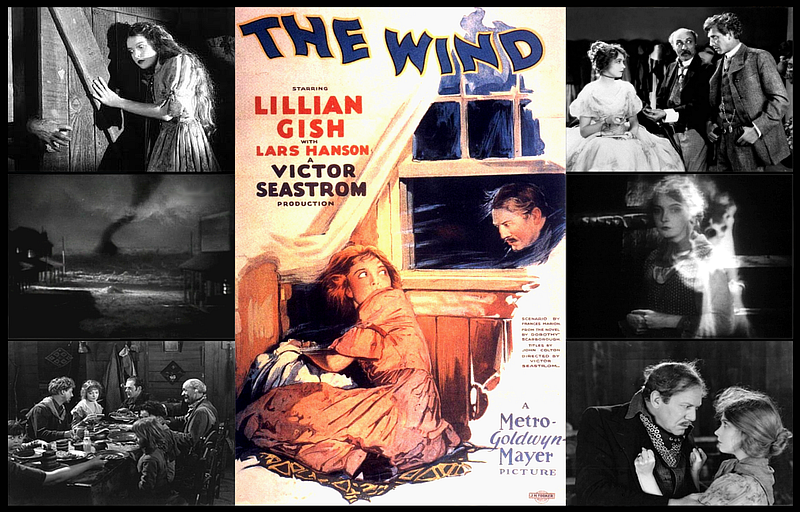
Photograph of film poster with a display of scene images from “The Wind”.

Before I get into this, I want to make mention “A FILM TO REMEMBER” will be a series about films that have reached a milestone anniversary since their origin in being culturally, historically, or aesthetically significant. The articles will contain the film’s plot outline, director, cast, a compilation of trivialities, various photos, movie trailer, critical reception and more. So, let’s start:

We are here to mark the celebration of the 90th Anniversary of Victor Seastrom’s “The Wind”. Let’s take an inside look at the film:

PLOT OUTLINE:

A frail young woman from the East moves in with her cousin in the West, where she causes tension within the family and is slowly driven mad.
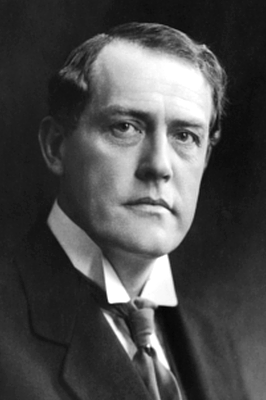
Still image of filmmaker Victor Sjöström (as Victor Seastrom).

STUDIO:

Metro-Goldwyn-Mayor (MGM)

DIRECTOR:

Victor Sjöström (as Victor Seastrom)

CAST:

  • Lillian Gish … Letty Mason
  • Lars Hanson … Lige Hightower
  • Montagu Love … Wirt Roddy
  • Dorothy Cumming … Cora
  • Edward Earle … Beverly
  • William Orlamond … Sourdough

GENRE(S):

Drama | Romance | Western

TAGLINE:

N/A
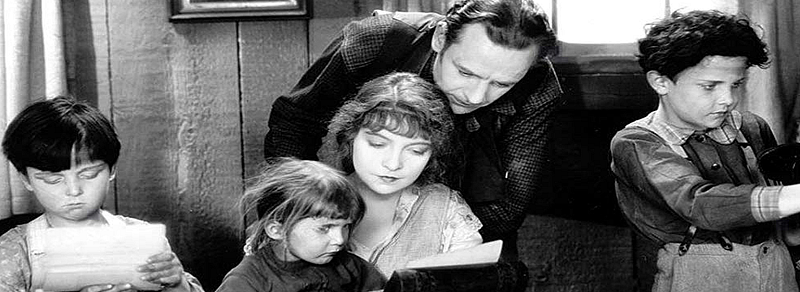
Still image of Billy Kent Schaefer (left), Edward Earle (middle; top), Lillian Gish (middle), Carmencita Johnson (middle; bottom) and Leon Janney (right) in “The Wind”.

The film is known for being among the greatest classic exemplary films of the silent era, being one of the last major silent films ever created just at the dawn of the sound era. Director Victor Sjöström shows a fine example of the creation of dramatic mood and atmospheric visuals, and without the benefit of a sound track, that’s anchored by the subtly refined performances from Lars Hanson and especially, Lillian Gish in one of her finest acts of her career and her last silent film in this adventurous, quick-moving and discomfiting chiller of silent criterion gem. The film is based from Frances Marion’s novel of the same name, it was simultaneously panned by some as “tedious” and hailed by others as “a work of art” critically but the film has gained significant prestige retroactively over the course in becoming a silent era cinematic showpiece in the annals of cinema.

Here’s what some of the critical receptions have been for the film over the years:

Alan Scherstuhl from Village Voice says: “For all the twisters and panicking crowds, this is a face-and-character piece built around Gish’s most subtly pained performance and well-observed bursts of naturalistic life.”

Dennis Schwartz from Ozus’ World Movie Reviews says: “It’s one of the few silents to stand the test of time.”

Ken Hanke from Mountain Xpress (Asheville, NC) says: “Though marred by a forced happy — or at least, hopeful — ending, it nonetheless remains a masterpiece, one of the finest of all silent movies.”

Mordaunt Hall from New York Times says: “Mr. Seastrom makes his production very tedious by constantly calling attention to the result of the wind. If it were realistic, it would be all very well, but it isn’t.”

Derek Malcolm from The Guardian says: “No one would deny that, ‘The Wind’ is a work of art or, after seeing it, cavil much at the opinion of a French critic, who said that Sjöström was capable of making ‘the most beautiful films in the world.’”
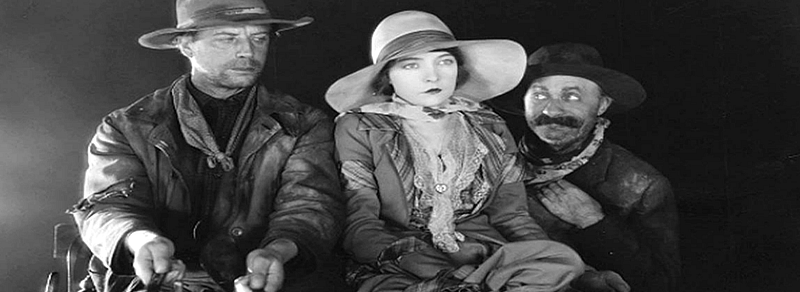
Still image of Lars Hanson, Lillian Gish and William Orlamond (right) in “The Wind”.

As you can tell by the critical reactions, the film garnered a mixed reception with criticism from various pundits being that it was laborious and harmed with a coerced mirthful conclusion but many critics perceive it as one of, if not, certainly the best silent film — that’s been revived in recent years by producer/director Kevin Brownlow with a Carl Davis score. Sjöström’s approach was probably the first “Western” that tried for truth as well as dramatic poetry, treating it with considerable realism and detail, that dealt with human suffering but one of its masterstrokes was led by its cast of performers in Hanson and most remarkably, Gish given much leeway as possible to develop her turn which delves into the hallucination of terror in this cyclone of a subtle, dramatic, boisterous and a thrillingly hallucinative tour de force of silent cinema. But I’ll let you decide…

So, to get a better look at the film, here’s a link to the movie trailer of Victor Seastrom’s “The Wind”:

(NOTE: The trailer has no audio of any kind since the feature is a silent film.)

Here I have provided 12 interesting and intriguing trivia facts (I wanted to keep it limited) about “The Wind”:

  • In the original novel, the heroine is driven mad when the wind uncovers the corpse of the man she has killed. She then wanders off into a windstorm to die. According to Lillian Gish and popular legend, the original ending intended for the film was the unhappy ending, but it was changed due to the studio’s powerful Eastern office decreeing that a more upbeat ending be shot. It is rumored that this tampering caused Seastrom to move back to Sweden. MGM executive Louis B. Mayer’s biographer rejects this on account that the “sad ending” is not known to exist in any form, written or filmed. Regardless of whether an unhappy ending was originally intended, in the resulting film the “happy” ending replaced the original ending against the wishes of both Gish and Seastrom.
  • In the 1920s, Victor Sjöström accepted an offer from Louis B. Mayer to work in the United States. In Sweden, he had acted in his own films as well as in those for others, but in Hollywood he devoted himself solely to directing and in 1924, used an anglicized name, Victor Seastrom, which is the name displayed in the credits in the film.
  • The wind in the film was created by the propellers of eight aircraft stationed on location in the Mojave Desert.
  • During filming, high temperatures made life miserable for both cast and crew. The intense heat caused the film stock to warp, and it had to be packed in ice to remain intact. Lillian Gish claimed that she touched an outside door handle, and was so severely burned that a small part of her palm’s flesh was scalded off.
  • Lillian Gish stated that the film’s happy ending was insisted upon by the studio after test audiences balked at the original ending, where the insane Letty wanders into the desert, certain to die. However, this is not borne out by the original shooting scripts, which contain only the happy ending.
  • The airplane propellers blowing hot air, sand and smoke were so dangerous that crew members were forced to wear long-sleeved clothing, eye goggles, bandannas around their necks and greasepaint on their faces whenever the machines were being run.
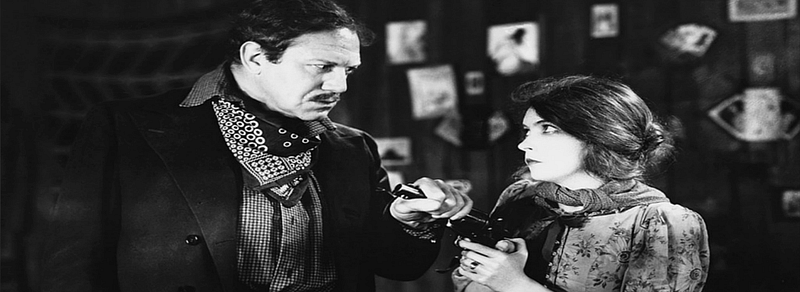
Still image of Montagu Love and Lillian Gish in “The Wind”.
  • While it is popularly believed that the film was made in over 120-degree temperatures, this is not true. The average temperature for the location and season where the movie was filmed is between 90–105 and the record highs are around 115 degrees Fahrenheit.
  • “The Wind,” is Lillian Gish’s favorite film of her MGM career.
  • Lillian Gish came up with the idea of making a film adaptation of the novel of the same name. Producer Irving Thalberg immediately gave her permission to do so. Gish recalled wanting Lars Hanson as her leading man after seeing him in a Swedish film with Greta Garbo. She also assigned Victor Sjöström as the director herself. Sjöström directed Gish before in the film “The Scarlet Letter” (1926).
  • The film was shot partially near Bakersfield and the Mojave Desert, California.
  • Although the film does not visually depict it, the original novel is explicit that Wirt Roddy (played by Montagu Love) raped Letty Mason (played by Lillian Gish).
  • Lillian Gish’s work was respected artistically more than ever after doing “The Wind,” and MGM pressed her with offers to appear in the new medium of sound pictures.
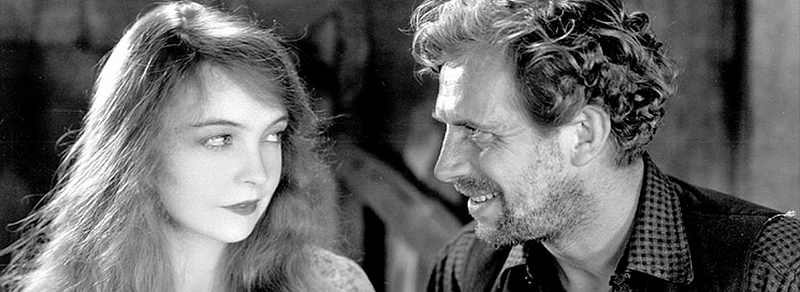
Still image of Lillian Gish and Lars Hanson in “The Wind”.

To conclude, Victor Sjöström’s “The Wind” is such an eloquent coda to it’s dying medium, its distillation of its art forms to the simplest, most elemental form: there are no frills. Victor Sjöström is at his best as a visual poet of natural forces impinging on the human dramatics of natural forces to convey drama and control human destiny, that’s driven by its stellar cast’s display from Lars Hanson and more specifically, Lillian Gish, who’s superficially fragile and innocent, could plumb the depths of her steely soul and find the will to prevail in this prowess endowment of a romantically dramatic, thrillingly adventuresome and a stirringly westward climactic confluence that offers a quintessential cinematic moment of the rarest and most transcendentally authentic artistry of a definitive silent masterpiece.

NOTE: The article contains sources from IMDb and Wikipedia.

Follow me and check out other articles of mine:

Movies
History
Trivia
Photos
Movie Trailer
Recommended from ReadMedium