
A FILM TO REMEMBER: “THE PRODUCERS” (1968)
Before I get into this, I want to make mention “A FILM TO REMEMBER” will be a series about films that have reached a milestone anniversary since their origin in being culturally, historically, or aesthetically significant. The articles will contain the film’s plot outline, director, cast, a compilation of trivialities, various photos, movie trailer, critical reception and more. So, let’s start:
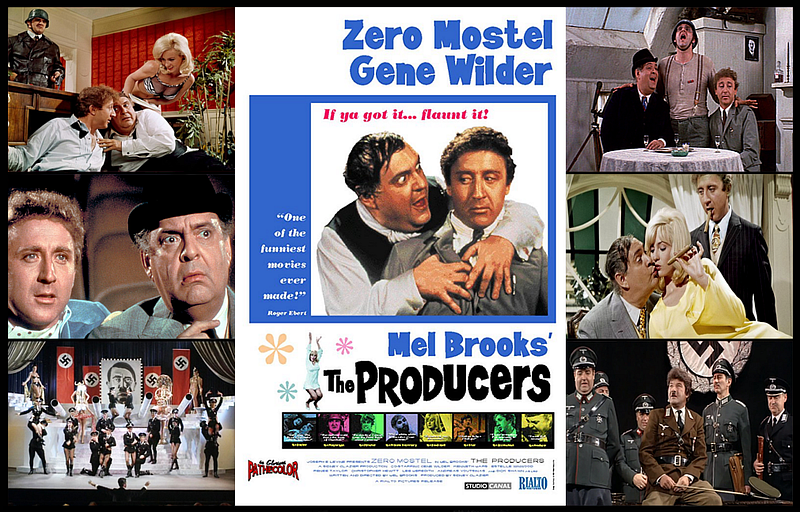
We are here to mark the celebration of the 50th Anniversary of Mel Brooks’ “The Producers”. Let’s take an inside look at the film:
PLOT OUTLINE:
A down-on-his-luck theatrical Broadway producer is forced to romance rich old ladies to finance his efforts but when a timid accountant reviews the producer’s accounting books, the two hit upon a way to make a fortune by producing a sure-fire flop.
STUDIO:
Embassy Pictures
DIRECTOR:
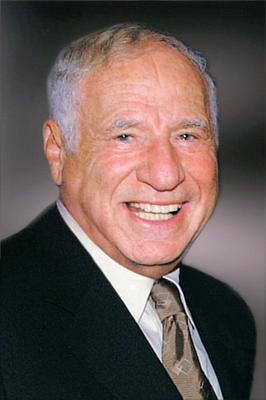
Mel Brooks
CAST:
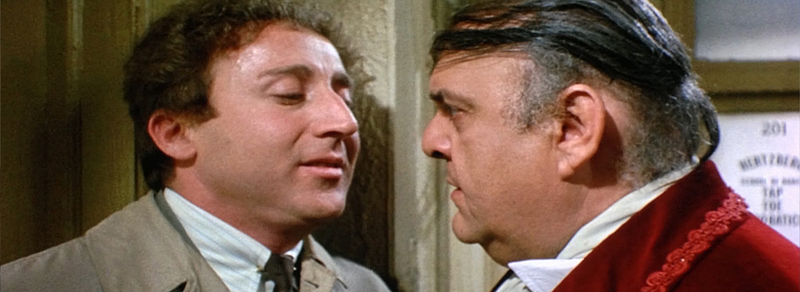
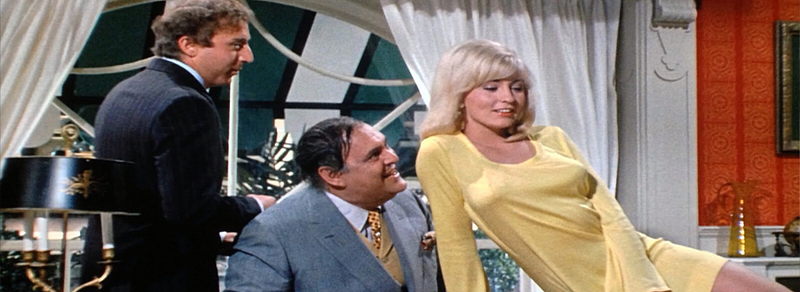
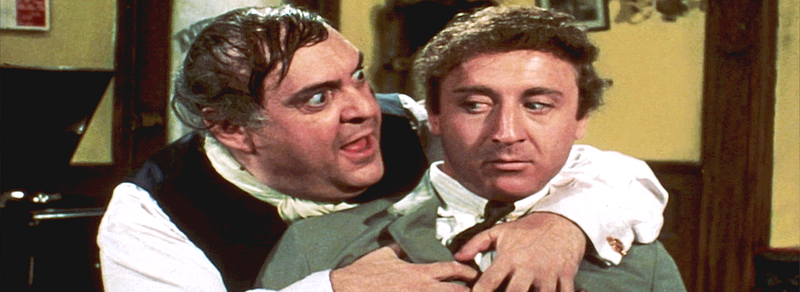
- Zero Mostel … Max Bialystock
- Gene Wilder … Leopold “Leo” Bloom
- Kenneth Mars … Franz Liebkind
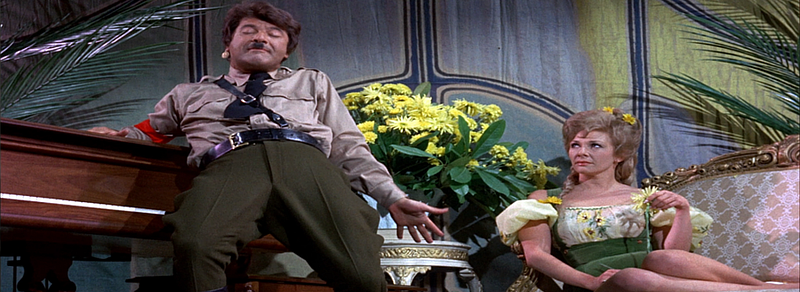
- Dick Shawn … L.S.D. — Lorenzo St. DuBois
- Lee Meredith … Ulla
- Estelle Winwood … “Hold Me! Touch Me!”
- Christopher Hewett … Roger De Bris
- Andreas Voutsinas … Carmen Ghia
- Renée Taylor … Eva Braun
- Barney Martin … Hermann Göring
- Madelyn Cates … Concierge
- David Patch … Goebbels
- William Hickey … The Drunk
- Shimen Ruskin … The Landlord
- Frank Campanella … The Bartender
- Josip Elic … Violinist
- John Zoller … Drama Critic
- Brutus Peck … Hot Dog Vendor
- Mel Brooks … Singer in “Springtime for Hitler” (voice) (uncredited)
GENRE(S):
Comedy
TAGLINE:
Hollywood Never Faced a Zanier Zero Hour!
The film is known for having gained in stature over the decades as a hilarious satire of the business side of Hollywood, in becoming one of director Mel Brooks’ finest, having turned a funny notion into a notably slapstick, ad-lib energy that explodes in a series of sight gags and punch lines, featuring standout cast with roaringly hoot performances by Gene Wilder, Zero Mostel and Dick Shawn. The film was an original idea of Mel Brooks who’s inspirations from a couple of people Brooks met during his early show business days, it received a mixed response that ranged from a rather harshly shoddy reception to favorably praised adoration but the film has since gone on to become a wacky, hilarious and shamelessly delightful comedic gem.
Here’s what some of the critical receptions have been for the film over the years:
Ty Burr from Boston Globe says: “The one aspect of the original Producers that still stuns is the roaring, over-the-top, in-your-face thereness of its two lead performances.”
Stanley Kauffmann from The New Republic says: “The star not only indulges himself gluttonously, but the director seems to be doubled up with laughter at how funny he is being through Mostel; and the film bloats into sogginess.”
Susan Stark from Detroit News says: “This shamelessly low-brow, fearlessly satirical Brooks movie may just be Hollywood’s ultimate satire, a furiously witty ‘reductio ad absurdum’ worthy of the great Augustans like Pope and Swift.”
Michael Atkinson from Village Voice says: “Brooks’s magnum opus is still a ferocious gale of bulldozing Jewish mockery, dominated by Zero Mostel’s comb-over juggernaut.”
Roger Ebert from Chicago Sun-Times says: “This is one of the funniest movies ever made.”
As you can tell by the critical reactions, the film’s reception has garnered more favorability over the course of time but consensually there is mixed results as some partly targeted at the directorial style and broad ethnic humor, while others considered it a great success as hilariously funny and a wildly fun joy ride. Brooks has produced the ultimate punchline, the killer gag, that a proto-novel that turned into a proto-play that ended up as a film about the worst musical in history, as it has the good fortune to be graced with the comic geniuses of Wilder, Mostel and Shawn in this comedy of unethical cheekiness, sheer audaciousness, puckish glee and the willingness to go any distance for a laugh testament. But I’ll let you decide…
So, to get a better look at the film, here’s a link to the movie trailer of Mel Brooks’ “The Producers”:
Here I have provided 12 interesting and intriguing trivia facts (I wanted to keep it limited) about “The Producers”:
- Gene Wilder said in an interview on TCM that at the first reading of the script, he excused himself to leave for a dentist appointment he could not miss, when in fact, he had to go to the unemployment office to collect a check for fifty-five dollars he desperately needed at the time.
- Mel Brooks cannot read music. “Springtime for Hitler” and “Prisoners of Love” (as were all the songs Brooks writes for his films) were hummed into a tape recorder and transcribed by an expert. When Brooks adapted the movie into a stage musical, he wrote the entire score by himself using the same method.
- When Mel Brooks was sixteen-years-old, he worked for a cash-strapped theatrical producer who’d raise funds by sleeping with his investors, most of whom were elderly women. “He pounced on little old ladies and would make love to them”, Brooks told The Guardian. “They gave him money for his plays, and they were so grateful for his attention.” In Manhattan, Brooks also knew a pair of showmen who had more or less failed their way into prosperity. “They were doing flop after flop and living like kings”, Brooks said. “A press agent told me, ‘God forbid they should ever get a hit, because they’d never be able to pay off the backers!’ I coupled the producer with these two crooks and, BANG!, there was my story.”
- Dustin Hoffman was set to play Franz Liebkind, but declined when he got the part of Benjamin in “The Graduate” (1967). Mel Brooks only allowed Hoffman the chance to go off to the audition for the film because his wife (Anne Bancroft) was in it, and Brooks was familiar enough with the role of Benjamin to know Hoffman was utterly wrong for it (as written), and would never be cast.
- In a Playboy Magazine interview (December 1974 issue), Mel Brooks recalled the filming: “I did dumb things. First day on the set, first scene, sound men are ready, cameras are rolling, the director’s supposed to say: ‘Action!’ Being a little nervous, I said: ‘Cut!’”
- Because of the “Springtime For Hitler” musical number, the film was intially banned in Germany, where laws against public display of Nazi symbolism had been in place since the end of World War II. It wasn’t screened there until it was included in a film festival featuring the works of Jewish filmmakers.
- According to Mel Brooks, after the film was completed, Embassy executives refused to release it as being in “bad taste.” The film’s premiere in Pittsburgh, Pennsylvania, on November 22, 1967, was a disaster and the studio considered shelving it. However, Peter Sellers saw the film privately and placed an advertisement in Variety in support of the film’s wider release. Sellers was familiar with the film because, according to Brooks, Sellers “had accepted the role of Bloom and then was never heard from again.”
- Roger Ebert recounted how he was in an elevator with Mel Brooks and Anne Bancroft in New York City after the film premiered. A woman got onto the elevator, recognized him and said, “I have to tell you, Mr. Brooks, that your movie is vulgar.” Brooks replied, “Lady”, he said, “it rose below vulgarity.”
- Mel Brooks says that producer Joseph E. Levine wanted to fire Gene Wilder after seeing some of the footage because he thought he “stunk”. He wanted to give Brooks $35,000 dollars more to find someone better, but Brooks convinced Levine that Wilder was fine, and would make the movie work.
- Zero Mostel’s character’s last name “Bialystock” is taken from the Polish city with the same name, from which Mel Brooks’ ancestors had come. Until the Holocaust, Bialystock had been a major Eastern European Jewish city.
- Although Mel Brooks always had Zero Mostel in mind to play Bialystock, they reportedly had clashes of ego on the set, and found it hard to get along. Indeed, they never worked together again.
- Zero Mostel took Gene Wilder under his wing and the two became friends. “You may have heard stories about how bombastic, aggressive, and dictatorial Zero might be,” said Wilder. “It didn’t happen with me. He always took care of me. I loved him. He looked after me as if I were a baby sparrow.”
To conclude, Mel Brooks’ “The Producers” is an American satirical comedy film about show business in making a Broadway musical as Mel Brooks brings anarchic reminder that laughter can be mightier than the sword with its conceptualization of a play-within-the-play, that pushes the film into a musical slapstick, so bad, it’s hilarious as “Springtime for Hitler,” with its Busby Berkeley meets Leni Riefenstahl choreography and creatively crude lyrics, ends up proving that bad taste can be irresistible. The film is childlike in its silliness, adult in its message of how utterly idiotic starting WWII was, all the while with a roaring, over-the-top, in-your-face, comical knee-slapping cast and performances from Gene Wilder, Zero Mostel and Dick Shawn in this scathingly hilarious, tasteless and jewishly ethnic charged, comicality classic.
NOTE: The article contains sources from IMDb and Wikipedia.
Follow me and check out other articles of mine: