
A FILM TO REMEMBER: “JURASSIC PARK” (1993)
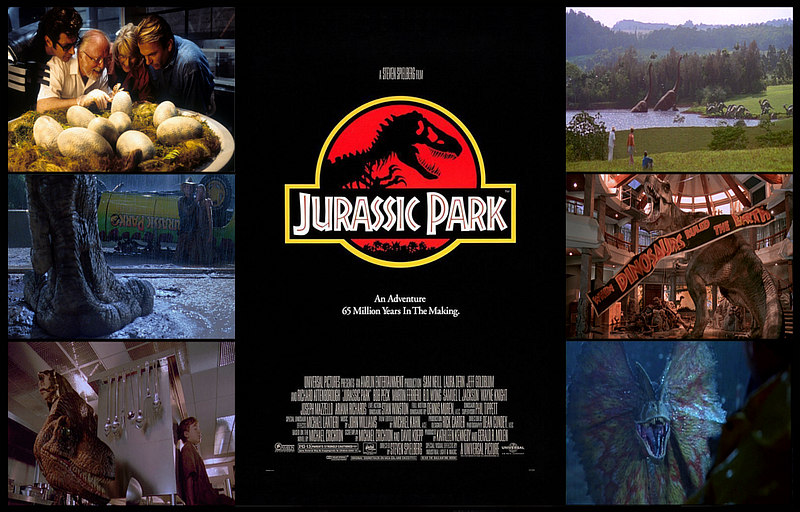
Before I get into this, I want to make mention “A FILM TO REMEMBER” will be a series about films that have reached a milestone anniversary since their origin in being culturally, historically, or aesthetically significant. The articles will contain the film’s plot outline, director, cast, a compilation of trivialities, various photos, movie trailer, critical reception and more. So, let’s start:
We are here to mark the celebration of the 25th Anniversary of Steven Spielberg’s “Jurassic Park”. Let’s take an inside look at the film:
PLOT OUTLINE:
During a preview tour, a theme park suffers a major power breakdown that allows its cloned dinosaur exhibits to run amok.
STUDIO:
Universal Pictures
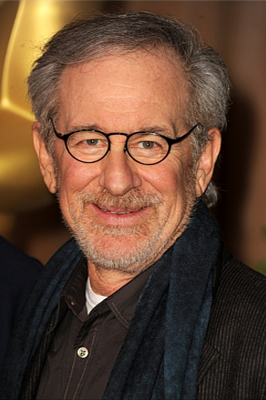
DIRECTOR:
Steven Spielberg
CAST:
- Sam Neill … Dr. Alan Grant
- Laura Dern … Dr. Ellie Sattler
- Jeff Goldblum … Dr. Ian Malcolm
- Richard Attenborough … John Hammond
- Bob Peck … Robert Muldoon
- Martin Ferrero … Donald Gennaro
- BD Wong … Dr. Henry Wu
- Joseph Mazzello … Tim Murphy
- Ariana Richards … Lex Murphy
- Samuel L. Jackson … Ray Arnold
- Wayne Knight … Dennis Nedry
- Jerry Molen … Dr. Harding
- Miguel Sandoval … Juanito Rostagno
GENRE(S):
Adventure | Sci-Fi | Thriller
TAGLINE:
An adventure 65 million years in the making.
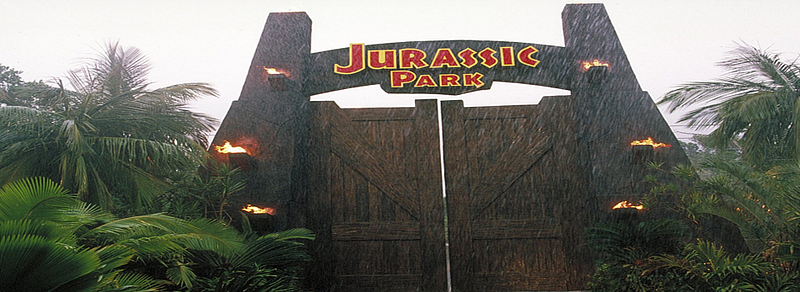
The film is known for director Steven Spielberg and crew profoundly transform cinema with an artistry, nuance and sophistication in turning in the development and rise of computer-generated imagery and animatronic visual effects that re-defined blockbuster cinema to groundbreaking new heights, in establishing one of the most captivating thrill ride adventure films ever made. The film is based from Michael Crichton’s novel of the same name, it garnered consensually high praise for the film’s visual effects, John Williams’ dubious musical composition and direction, although there was some criticism leveled at it, it still delivers as close as any of us is likely to get to witnessing life in prehistoric times, in this big-budget thriller of a heart-stopping, blood-curdling, limbs-numbing excitement of a touchstone and trailblazing, first-of-its-kind blockbuster classic in the annals of cinema.
Here’s what some of the critical receptions have been for the film over the years:
Rafer Guzman from Newsday says: “‘Jurassic Park’ remains an absolute thrill from a Spielberg in top form: Funny, scary, fast-moving and full of just-right details.”
Todd McCarthy from Variety says: “May be one-dimensional and even clunky in story and characterization, but definitely delivers where it counts, in excitement, suspense and the stupendous realization of giant reptiles.”
Peter Travers from Rolling Stone says: “You won’t believe your eyes.”
Nell Minow from Chicago Sun-Times says: “Spielberg has gone on to weightier and more prestigious projects, but this thrill ride is one of his best and a masterpiece of the genre.”
Peter Howell from Toronto Star says: “This movie doesn’t just stand the test of time, it transcends it.”
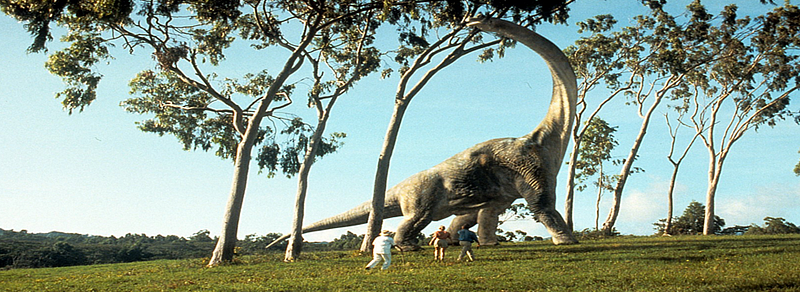
As you can tell by the critical reactions, the film was pretty much positively acclaimed with high praise to the film’s visual effects, Williams’ immortal musical score and Spielberg’s direction, although there was some criticism pointed at the lack of narrative, character developments and various departures from the source material. The film however, remains a masterful piece of genre-hopping, pop spectacle transcendence that made us believe and made us jump in this fascinating, suspenseful, frightening, skillfully calibrated self-reflexive blockbuster of an exciting adventure into the mesmerizing world of prehistoric dinosaurs and humanity’s godlike addiction to reviving the past in this roller coaster, larger-than-life, high-tech wizardry of a dino amok extravaganza classic. But I’ll let you decide…
So, to get a better look at the film, here’s a link to the movie trailer of Steven Spielberg’s “Jurassic Park”:
Here I have provided 12 interesting and intriguing trivia facts (I wanted to keep it limited) about “Jurassic Park”:
- The film and the book generated so much interest in dinosaurs, that the study of paleontology has had a record increase in students.
- Harrison Ford was offered and turned down the role of Dr. Alan Grant, as he felt that the part just wasn’t right for him. After seeing the film, he says that he had made the right decision.
- Steven Spielberg oversaw the post-production of this film via video link while in Poland filming “Schindler’s List” (1993). He later called it one of the hardest times in his life as a filmmaker: the filming of the Holocaust-themed “Schindler’s List” took such an emotional toll on him, that his enthusiasm for “Jurassic Park” had almost waned. He said that he needed an hour per day to get into the right frame of mind, and muster up the energy, and patience, to comment on digital dinosaurs, and answer trivial questions from the special effects crew.
- There are only 15 minutes of actual dinosaur footage in the film: 9 minutes are Stan Winston’s animatronics, 6 minutes of it is ILM’s CGI.
- ILM visual effects supervisor, Dennis Muren suggested most of the full size dinosaurs could be done on computer from head to toe, but he had to prove it first to Steven Spielberg, which he did with a skeletal Gallimimus herd running through a field. Spielberg was so blown away by the scene, especially when a fleshy T-Rex arrived on the scene; he and Phil Tippett looked at each other and Tippett said, “I think we’re extinct”. Spielberg liked the line and gave it to Jeff Goldblum to say to Sam Neill in the Visitor’s Centre.
- James Cameron has stated that he wanted to make the film, but the rights were bought “a few hours” before he could bid. Upon seeing Jurassic Park, Cameron realized that Spielberg was the better choice to direct it as his version would’ve been much more violent (“‘Aliens’ (1986) with dinosaurs”) which “wouldn’t have been fair” to children, who relate to dinosaurs. The special effects were directly influenced by James Cameron’s “Terminator 2: Judgment Day” (1991). James Cameron said in an interview he wanted to do the film with Arnold Schwarzenegger as Grant, Bill Paxton as Malcolm and Charlton Heston as Hammond.
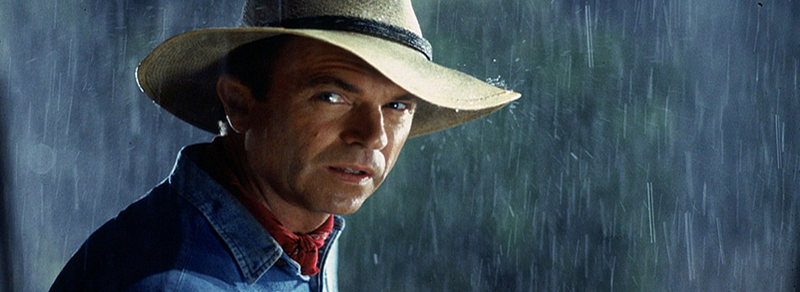
- The most difficult effect to pull off was the vibrating rings of water. Steven Spielberg wanted the T-Rex to announce its presence somehow before the audience saw it, and got the idea from watching the mirror in his car vibrate because of the sound effects. When special dinosaur effects, Michael Lantieri tried to replicate that with water, it was harder than any of the dinosaur effects; nobody knew how to do it but told Spielberg they could. The night before the shoot, Lantieri put a glass of water on a guitar and when he plucked the strings, that did it. So for the scene, they fed guitar strings under the dashboard to get the effect.
- The Tyrannosaurus’ roars were a combination of dog, penguin, tiger, alligator, and elephant sounds.
- Consultant and dinosaur supervisor, Phil Tippett became quite depressed when he learned that none of the stop-motion creatures he had been developing would be used in the film. However, shortly after that decision had been made, ILM animators discovered they did actually have a use for him. While none of his stop-motion models would be seen in the film, his techniques were determined to be quite useful in animating the computer-generated dinosaurs, especially given how much research he had put into animal movement. Rather than creating the dinosaur motion using key-frame animation, it was decided to build a stop-motion armature for each computer generated dinosaur and manipulate it as they would for a stop-motion film. These armatures were specially built with motion-sensors, and linked up to the animated dinosaurs being created on the computer. Thus, the motion of the stop-motion armature was directly translated into the computer-generated version that appears in the final film.
- The crew were caught in a very dangerous hurricane, Iniki, which hit the island of Kauai. The filmmakers managed to capture shots from the hurricane and use it in the movie. This incident was the subject of a 2009 episode of The Weather Channel series, Storm Stories (2003).
- Steven Spielberg wanted a predator as dangerous as the T-Rex so he included the Raptors but combined them with another species, Deinonychus. Spielberg liked the name Velociraptor, but is not very tall, whereas Deinonychus is the size of a human being, so Spielberg combined them, because they came from the same branch of the dinosaur tree. The Deinonychus has the retractable claw that’s as sharp as a box cutter, but has smaller teeth than a Raptor. Also, the Deinonychus eats you before it kills you — rather than the Raptor — and they hunt in packs and ambush their victims instead of the Raptor.
- According to Fandango, it would cost approximately $23,432,400,000 to build a real life Jurassic Park (in 2015 USD): $1.5 billion dollars — The cost for the park, itself. $10 billion dollars — To purchase an island off the coast of Costa Rica with 66 square miles of land (22 square miles for Isla Nublar and 44 square miles for Isla Sorna). $8 million dollars — Research and legal team. $9 million dollars — Harvesting dinosaur DNA. $8.5 million dollars — Overhead to clone dinosaurs from the DNA. $11 billion dollars a year (32 million dollars per day) — Employee payroll and operations budget. $200 million dollars a year — Dinosaur food budget. In total, the estimated yearly operating expenses for Jurassic Park add up to approximately $11.9 billion dollars.
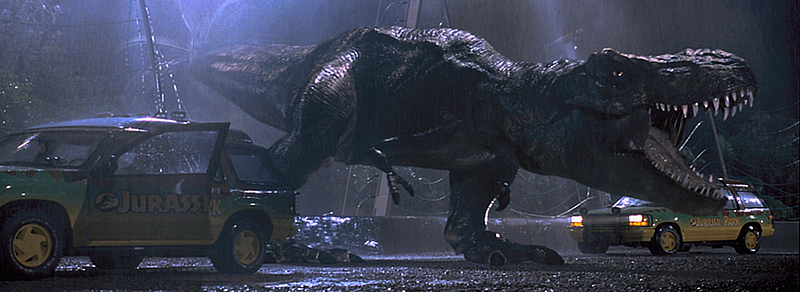
To conclude, Steven Spielberg’s “Jurassic Park” is an innovative, ingenious and true milestone of a science-fiction adventure, presenting an awe-and fear-inspiring sights never before seen on the screen. Steven Spielberg taps into the mother lode of human dreams and sense of wonder, with an auteurist vision in conjuring up a Mesozoic menagerie that creates the sensation that giant reptiles are breathing in your ear and with a well selected cast that is winningly sympathetic and entertainingly idiosyncratic. The film is a kick-out-the-jams amusement park romp with a spectacle of special effects and life-like animatronics, and with some of Spielberg’s best sequences of sustained dazzle and sheer terror of every last growl and rumble signaling the approach of danger in this out-of-the fence revolutionary and definitive, blockbuster cinematic landmark tour de force.
NOTE: The article contains sources from IMDb and Wikipedia.
Follow me and check out other articles of mine: