
A FILM TO REMEMBER: “HEAVEN CAN WAIT” (1943)
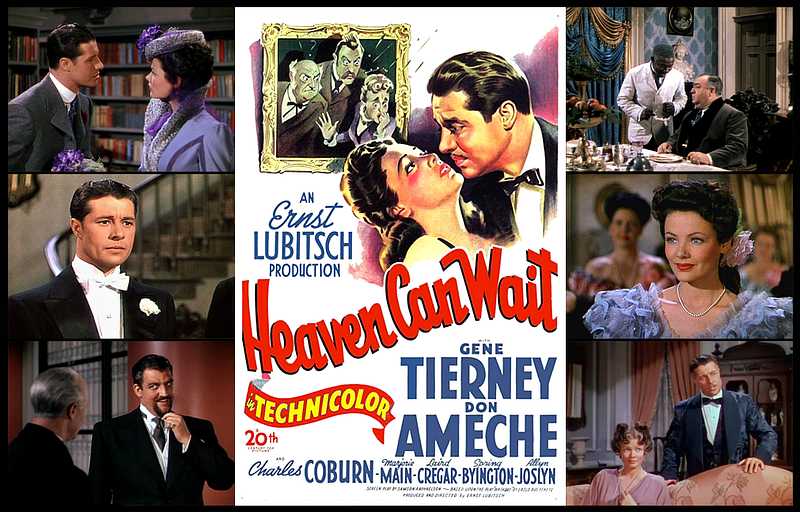
Before I get into this, I want to make mention “A FILM TO REMEMBER” will be a series about films that have reached a milestone anniversary since their origin in being culturally, historically, or aesthetically significant. The articles will contain the film’s plot outline, director, cast, a compilation of trivialities, various photos, movie trailer, critical reception and more. So, let’s start:
We are here to mark the celebration of the 75th Anniversary of Ernst Lubitsch’s “Heaven Can Wait”. Let’s take an inside look at the film:
PLOT OUTLINE:
An old roué arrives in Hades to review his life with Satan, who will rule on his eligibility to enter the Underworld.

STUDIO:
20th Century Fox Pictures
DIRECTOR:
Ernst Lubitsch
CAST:
- Gene Tierney … Martha Strabel-Van Cleve
- Don Ameche … Henry Van Cleve
- Charles Coburn … Hugo Van Cleve
- Marjorie Main … Mrs. Strable
- Laird Cregar … His Excellency
- Spring Byington … Bertha Van Cleve
- Allyn Joslyn … Albert Van Cleve
- Eugene Pallette … E.F. Strable
- Signe Hasso … Mademoiselle
- Louis Calhern … Randolph Van Cleve
- Helene Reynolds … Peggy Nash
- Aubrey Mather … James
- Tod Andrews … Jack Van Cleve (as Michael Ames)
- Scotty Beckett … Henry Van Cleve — Age 9 (uncredited)
- Dickie Moore … Henry Van Cleve — Age 15 (uncredited)
- Florence Bates … Mrs. Edna Craig (uncredited)
- Clara Blandick … Grandmother Van Cleve (uncredited)
- Clarence Muse … Jasper — Strable’s Butler (uncredited)
- Anita Sharp-Bolster … Mrs. Cooper-Cooper (uncredited)
- Doris Merrick … Nellie Brown — Registered Night Nurse (uncredited)
- Edwin Maxwell … Doctor (uncredited)
GENRE(S):
Comedy | Drama | Fantasy | Romance
TAGLINE:
He believed in Love…Honor…and Obey — That Impulse!
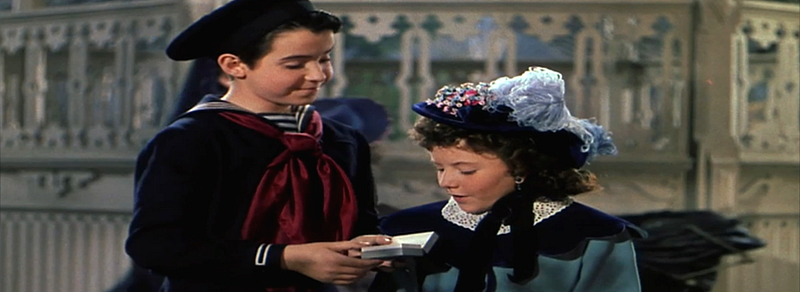
The film is known for being a colorful, charming, tongue-in-cheek comedy fantasy, period piece that has more depth in its cheerful depiction of death and breezy satire on society mores than what might be apparent. Director Ernst Lubitsch begins with a sprightly comedy that eventually turns into an affecting look at loneliness, ageism and mortality, all done with the infamous “The Lubitsch Touch” (like he did with all his films) which is a place of metaphor, benign grace, rueful wisdom and a world of delicate sang-froid, where a breach of sexual or social propriety and the appropriate response are ritualized, but in unexpected ways. The film is based from the play “Birthday” by Leslie Bush-Fekete, it garnered much admiration overall and has been claimed as being the last film made by Lubitsch with his distinctive “touch” in this elegant, suave and ironic satire gem.
Here’s what some of the critical receptions have been for the film over the years:
Emanuel Levy from EmanuelLevy.com says: “Scripted by Raphaelson, the helmer’s frequent collaborator, this light, suave comedy of manners (his first in color) displays what’s known as the Lubitsch touch and would have been more successful with a more charismatic actor than Don Ameche.”
Chuck Wilson from Village Voice says: “‘Heaven Can Wait’ is as tight as a drum — a perfect three-act structure, with jokes so sly as to seem subversive. This is a movie to listen to closely, but watch it just as intently. Lubitsch’s staging of the long stretches of dialogue seems straightforward enough, but the physical path from A to Z in a given scene turns out to be extraordinarily complex — once you start to notice — and so virtuosic you may want to applaud.”
Chris Barsanti from Filmcritic.com says: “Too little to make up for the emptiness that lies at the core of the film’s conceit.”
Jonathan Rosenbaum from Chicago Reader says: “Ernst Lubitsch’s only completed film in Technicolor, and the greatest of his late films…In many respects, this is Lubitsch’s testament, full of grace, wisdom, and romance.”
Leonard Maltin from TCM.com says: “Excellent comedy-fantasy told in flashback. Ameche, who believes he’s lived a life of sin, recalls his past as he requests admission to Hades. Witty Samson Raphaelson script helps make this a delight.”
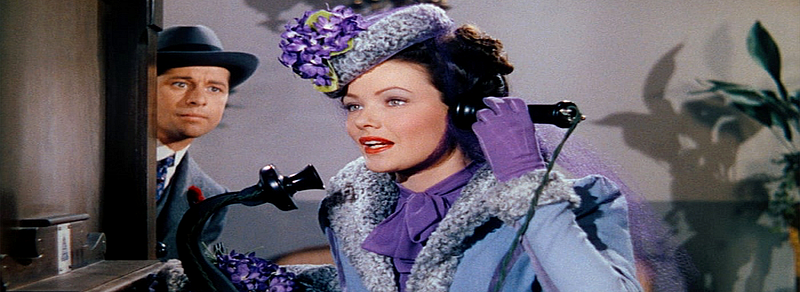
As you can tell by the critical reactions, the film had much adoration and with only little criticism from a few pundits claiming it didn’t have enough depth to make up for the film’s conceptional gist while the majority felt otherwise. Despite the negative quibbles from some, it’s a consensually sophisticated and witty fantasy comedy as the gap between image and sound, between vision and understanding, between the present moment of joy and the coming moment of bereavement: Lubitsch finds in the procession of life milestones one showcase after another for the graceful economy of his expression in this haunting study of a man’s ethicality of a Lubitsch’s textbook touch of a jaunty, poignant and corkscrew, externalizing tale. But I’ll let you decide…
So, to get a better look at the film, here’s a link to the movie trailer of Ernst Lubitsch’s “Heaven Can Wait”:
Here I have provided 12 interesting and intriguing trivia facts (I wanted to keep it limited) about “Heaven Can Wait”:
- The lead was written with Fredric March or Rex Harrison in mind. Director Ernst Lubitsch was most disappointed when 20th Century Fox boss Darryl F. Zanuck insisted on casting Don Ameche for commercial reasons. Lubitsch later recanted his opposition to Ameche, won over by the actor’s dedication and professionalism.
- Ernst Lubitsch’s habit of reining in Gene Tierney’s occasional tendency towards emotional excess initially caused friction between the two, though they later resolved their issues.
- Gene Tierney recalled that during production, “Lubitsch was a tyrant on the set, the most demanding of directors. After one scene, which took from noon until five to get, I was almost in tears from listening to Lubitsch shout at me. The next day I sought him out, looked him in the eye, and said, ‘Mr. Lubitsch, I’m willing to do my best but I just can’t go on working on this picture if you’re going to keep shouting at me.’ ‘I’m paid to shout at you’, he bellowed. ‘Yes’, I said, ‘and I’m paid to take it — but not enough.’ After a tense pause, Lubitsch broke out laughing. From then on we got along famously.” (From Gene Tierney’s autobiography ‘Self-Portrait.’)
- Gene Tierney discovered she was pregnant during the shooting of this film.
- This was Ernst Lubitsch’s only completed film in Technicolor.
- Ernst Lubitsch migrated to 20th Century Fox partly out of frustration at being unable to get his pet projects “A Self-Made Cinderella” and “Margin for Error’ made at his home for 20 years, Paramount. He and writing partner Samson Raphaelson hit upon the idea of adapting Leslie Bush-Fekete’s 1934 play “Birthdays” for the screen. It was a subject close to Lubitsch’s heart as he was undergoing a divorce at the time.
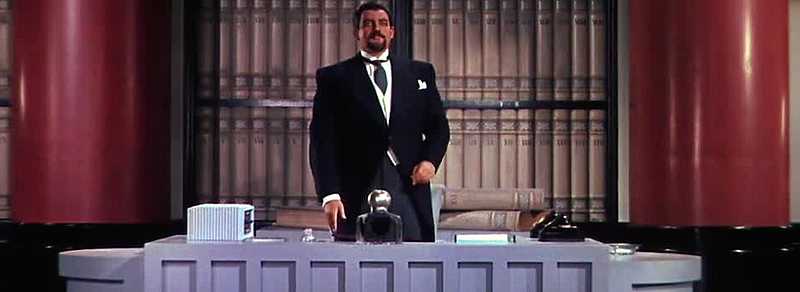
- In an early example of product placement, the principals meet in Brentano’s, a famous New York bookstore chain.
- Although Tod Andrews played Don Ameche and Gene Tierney’s son in the film, he was only six years younger than Ameche and six years older than Tierney.
- In his conversations with Billy Wilder, Cameron Crowe asked Wilder about Ernst Lubitsch’s touch. Wilder replied like this — “It was the elegant use of the Superjoke. You had a joke, and you felt satisfied, and then there was one more big joke on top of it. The joke you didn’t expect.” In this film, the audience sees Charles Coburn (Grandfather) giving a big pat on young Albert’s back. After that, Young Albert goes to downstairs and starts wearing his hand gloves. Grandfather (who is upstairs) takes the glass of water and pours the water on Young Albert’s head.
- As Henry Van Cleve passes away, he hears the “Merry Widow Waltz” by Franz Lehar. Director Ernst Lubitsch also directed the 1934 film version of “The Merry Widow” (1934), with Maurice Chevalier and Jeanette MacDonald.
- A 1978 film, also called “Heaven Can Wait,” is a remake of an entirely different film, “Here Comes Mr. Jordan,” (1941) which was based on a 1938 stage play originally titled “Heaven Can Wait.”
- In a 1983 interview, “A Conversation with Don Ameche,” Don Ameche said this movie was his favorite of all the films he worked on.
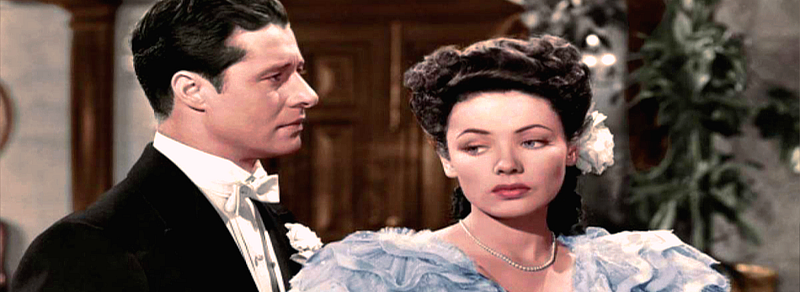
To conclude, Ernst Lubitsch’s “Heaven Can Wait” appears on the surface as an ordinary drama but yet, continuously injects comedy into the proceedings as they are predictably mitigated by Ernst Lubitsch’s effervescent knack. This is possibly Lubitsch’s most dark and downbeat film, albeit, being one of his warmest and most enchanting at the same time. The entire ethos of the film, if not a sizable portion of Lubitsch’s oeuvre hones in on small gestures that complicate interactions while consistently finding ways to alleviate serious moments of romantic longing and feelings of betrayal, as it maintains the exquisite balance between tragic and comic impulses, shifting views of a man as an individual and as an element of society in this Freudian touch of a sophisticatedly musing and comically charming, devil-of-a-job showpiece.
NOTE: The article contains sources from IMDb and Wikipedia.
Follow me and check out other articles of mine: