
A FILM TO REMEMBER: “CAT ON A HOT TIN ROOF” (1958)
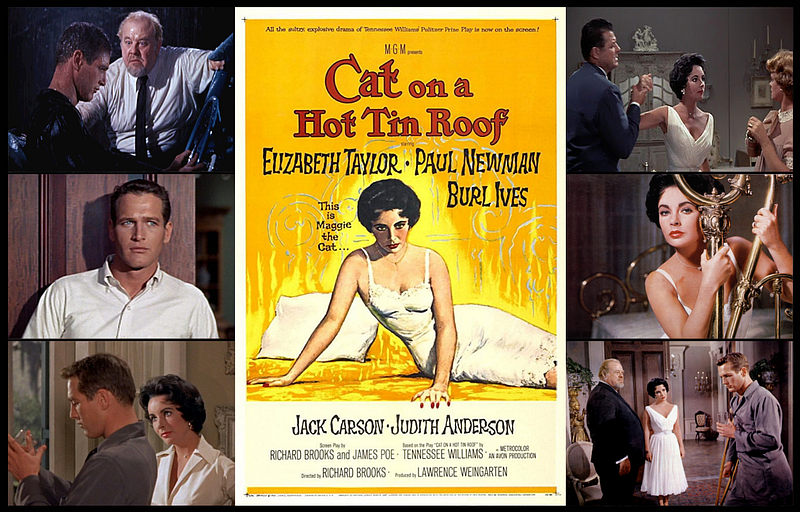
Before I get into this, I want to make mention “A FILM TO REMEMBER” will be a series about films that have reached a milestone anniversary since their origin in being culturally, historically, or aesthetically significant. The articles will contain the film’s plot outline, director, cast, a compilation of trivialities, various photos, movie trailer, critical reception and more. So, let’s start:
We are here to mark the celebration of the 60th Anniversary of Richard Brooks’ “Cat on a Hot Tin Roof”. Let’s take an inside look at the film:
PLOT OUTLINE:
An alcoholic ex-football player, drinks his days away and resists the affections of his wife. His reunion with his father, who is dying of cancer, jogs a host of memories and revelations for both father and son.
STUDIO:
Metro-Goldwyn-Mayor (MGM)
DIRECTOR:
Richard Brooks
CAST:
- Elizabeth Taylor … Maggie “the Cat” Pollitt
- Paul Newman … Brick Pollitt
- Burl Ives … Harvey “Big Daddy” Pollitt
- Judith Anderson … Ida “Big Mama” Pollitt
- Jack Carson … Cooper “Gooper” Pollitt
- Madeleine Sherwood … Mae Flynn “Sister Woman” Pollitt
- Larry Gates … Dr. Baugh
- Vaughn Taylor … Deacon Davis
GENRE(S):
Drama
TAGLINE:
Every sultry moment of Tennessee Williams’ Pulitzer Prize Play is now on the screen!
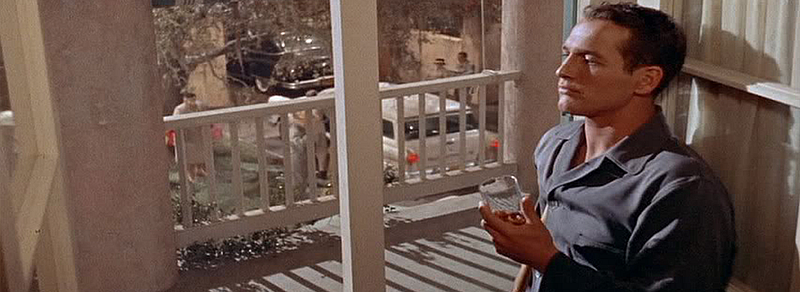
The film is known for being a mousetrap with teeth that grip and a musky atmosphere of frustrated sexuality and milky desperation that serves as poisoned bait as director Richard Brooks skillfully helms and elicits through its ensemble cast of career-imprinting deftly performances led by Elizabeth Taylor, Paul Newman and Burl Ives, who repeats his stage role like a force of nature in this summer sizzler of a sexual, energetic, intensified melodrama tour de force. The film is based from Tennessee Williams’ the Pulitzer Prize-winning play of the same name, it was consensually garnered with high acclaim but did receive some criticism for being compromised in its removal of the homosexuality themes from the play through its screen adaptation but despite that, the film remains a well-regarded classic and an important one at that.
Here’s what some of the critical receptions have been for the film over the years:
TIME Magazine Staff from TIME Magazine says: “A formaldehydes tabby that sits static while layer after layer of its skin is peeled off, life after life of its nine lives unsentimentally destroyed.”
John McCarten from The New Yorker says: “The filmmakers were unable to indicate more than fleetingly the real problem of the hero — homosexuality, which is, of course, a taboo subject in American movies.”
Geoff Andrew from Time Out says: “As so often with adaptations of Williams, it frequently errs on the side of overstatement and pretension, but still remains immensely enjoyable as a piece of cod-Freudian codswallop.”
Bosley Crowther from New York Times says: “A ferocious and fascinating show, Newman’s performance is an ingratiating picture of a tortured and tested young man and Taylor is terrific.”
Variety Staff from Variety says: “A powerful, well-seasoned film produced within the bounds of good, if ‘adults only,’ taste…Newman again proves to be one of the finest actors in films, playing cynical underacting against highly developed action.”
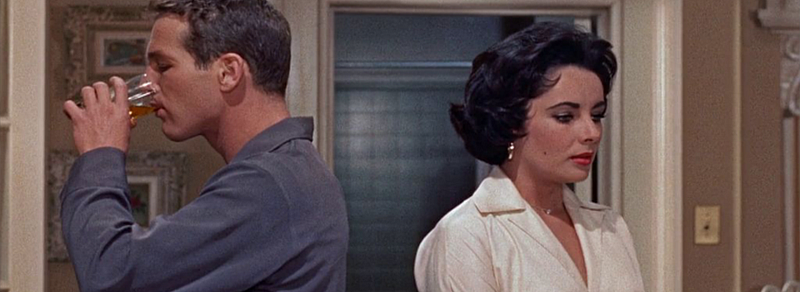
As you can tell by the critical reactions, the film got much critical acclaim though the original conception’s alterations in the screen adaptation especially of the censorship difficulties admittedly making it impossible to show the homosexuality aspects involved in the story but this is a distinguished precedent for good reason; it stands repeated viewing as the film has kept enough of the original source material’s energy and poetic Americana intact, that has been transposed to the screen with almost astonishing skill from Brooks in fleshing it up with production lavishness and a superb ensemble cast and performances notably by Elizabeth Taylor, Paul Newman and Burl Ives in this richly tested, sexually frustrated and medically troubled, adult dramatic showpiece. But I’ll let you decide…
So, to get a better look at the film, here’s a link to the movie trailer of Richard Brooks’ “Cat on a Hot Tin Roof”:
Here I have provided 12 interesting and intriguing trivia facts (I wanted to keep it limited) about “Cat on a Hot Tin Roof”:
- Tennessee Williams was reportedly unhappy with the screenplay, which removed almost all of the homosexual themes and revised the third act section to include a lengthy scene of reconciliation between Brick and Big Daddy. The Hays Code limited Newman’s character of Brick’s portrayal of sexual desire for Skipper, and diminished the original play’s critique of homophobia and sexism. Williams so disliked the altered film adaptation of his play so much that he told people in the queue, “This movie will set the industry back 50 years. Go home!”
- Filmmaker George Cukor turned down MGM’s offer to direct the film because the references in the original play to Brick’s homosexuality had been removed to comply with the Hollywood Production Code.
- Filmmaker Richard Brooks had wanted Tony Franciosa and Ava Gardner to top line the film.
- Marilyn Monroe, Lana Turner and Grace Kelly all sought for the part of Maggie “the Cat” Pollitt before the role went to Elizabeth Taylor.
- Before Paul Newman took the role of Brick Pollitt. Elvis Presley, Robert Mitchum, Don Murray, Ben Gazzara and Montgomery Clift all turned down the role. Interestingly enough, James Dean was considered for the role, but died in a car accident before production began.
- When Paul Newman agreed to play the role of Brick Pollitt, he was under the impression the film would simply be adaptation of the original script into a screenplay. When the screenplay deviated wildly from the stage text over Tennessee Williams’ objections, Newman expressed his disappointment as well to the script’s alterations.
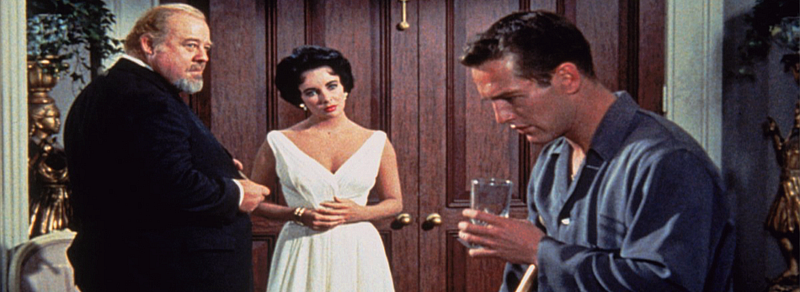
- The production came into some problems early in its start. Production began on March 12, 1958, and by March 19, Elizabeth Taylor had contracted a virus which kept her off the shoot. On March 21, she canceled plans to fly eventually with her husband Mike Todd to New York, where he was to be honored the following day by the New York Friars’ Club. However, Todd’s plane crashed, and all passengers, including Todd, were killed. Beset with grief, Taylor remained off the film until April 14, 1958, at which time she returned to the set in a much thinner and weaker condition as she even developed a severe stutter when speaking normally. However, when Taylor spoke on-screen in the southern accent of Maggie, it had, luckily, abated.
- This film was originally to be filmed in black-and-white, as was the standard practice with “artistic” films in the 1950s. (Virtually all film adaptations of the plays of Tennessee Williams had been in B&W up to that time.) However, once Paul Newman and Elizabeth Taylor were cast in the leads, director Richard Brooks insisted on shooting in color, in deference to the public’s well known enthusiasm for Taylor’s violet and Newman’s strikingly blue eyes.
- Due to a musicians union strike, the movie lacks a traditional musical score composed especially for the picture. Instead, a “canned” score, comprised of pre-recorded pieces from the MGM music library, is used. Most of this music, including the evocative main theme, was originally composed by André Previn for MGM’s “Tension” (1949).
- Tennessee Williams wrote the role of Big Daddy with Burl Ives in mind. Prior to the original stage production, Ives was known primarily as a folk singer, and many within the theatre community questioned Williams’ decision. Ives won rave reviews in the role on both stage and screen, and went on to a long and prestigious acting career.
- Although Elia Kazan directed “Cat on a Hot Tin Roof” on Broadway, he was not involved in the film, despite having two cinematic successes with Tennessee Williams’ work with a “A Streetcar Named Desire” (1951) and “Baby Doll” (1956). Kazan had trouble with Williams, demanding that he rewrite the third act of the play to bring Big Daddy back on stage. He also was tired of having critics call him a “co-author” of Williams work, which he knew he was not. Kazan would eventually direct one more Williams play on Broadway, “Sweet Bird of Youth” (1962), but that film also would be helmed by Richard Brooks and star Paul Newman.
- Paul Newman, Elizabeth Taylor and Burl Ives were the inspiration to comic book characters in the same universe: Newman was used as the visual inspiration for superhero Hal Jordan/Green Lantern, Taylor was Carol Ferris/Star Sapphire (Jordan’s love interest and occasionally enemy as her alter ego) and Ives was Hector Hammond, one of Jordan’s most important foes.
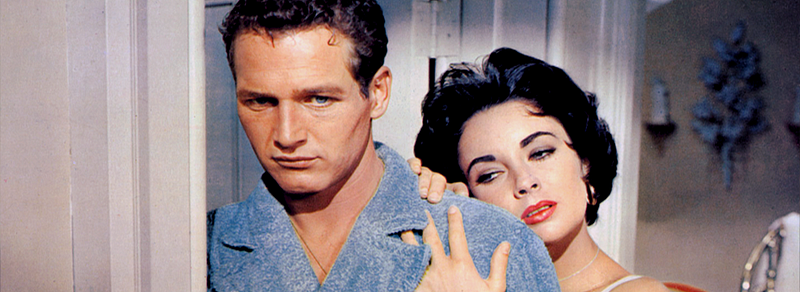
To conclude, Richard Brooks’ “Cat on a Hot Tin Roof” maybe toned-down in certain respects because of the Hays Code regulations on homosexuality and sexism themes but Richard Brooks has exacted — and extracted — stunningly real and powerful, highly charged, moving cinematic drama of a neurotic, dysfunctional Southern family that’s bolstered by its extraordinary cast and performances with two of cinema’s most iconic stars in top form in Elizabeth Taylor and Paul Newman and solidifying Burl Ives as more than just a folk singer in this intense, fervid, potent and absorbingly ripened melodrama as you may not like it (per se) but you won’t forget this readily sizzling, classic film.
NOTE: The article contains sources from IMDb and Wikipedia.
Follow me and check out other articles of mine:


