avatarScott Anthony

Free AI web copilot to create summaries, insights and extended knowledge, download it at here

4912

Abstract

direction which will raise howls of laughter from audiences, yet never descends on the screen to overdone mugging, pratfall and other heavy-handed devices normally employed.”</i></p><figure id="e03a"><img src="https://cdn-images-1.readmedium.com/v2/resize:fit:800/1*hQ08bKBmbdkUsrZBlLJ6CA.png"><figcaption>Still image of Paul Le Mat in “American Graffiti”.</figcaption></figure><p id="356b">As you can tell by the critical reactions, the film caught critical acclamation as it’s a hugely influential docu-drama cinematic landmark, that wonderfully evokes the feel and spirit of the placid pre-Vietnam America era. Lucas transports the viewer to 1962, to a moment in American history in which all you had to worry about was your car, your music and your friends — that’s fastened with a top-notch ensemble cast and performances from Ford, Howard, Dreyfuss, Smith and etc in this career launching manifest of a tribute to an era of optimism and competitiveness which was a bitchin' time when rock ‘n’ roll was young and hot rods were cool in this nostalgic, funny, tough and unsentimental hallmark quintessential. But I’ll let you decide…</p><p id="2384">So, to get a better look at the film, here’s a link to the movie trailer of George Lucas’ “American Graffiti”:</p> <figure id="2ec4"> <div> <div> <img class="ratio" src="http://placehold.it/16x9"> <iframe class="" src="https://cdn.embedly.com/widgets/media.html?src=https%3A%2F%2Fwww.youtube.com%2Fembed%2FHBI0p5OGlDw%3Ffeature%3Doembed&amp;url=http%3A%2F%2Fwww.youtube.com%2Fwatch%3Fv%3DHBI0p5OGlDw&amp;image=https%3A%2F%2Fi.ytimg.com%2Fvi%2FHBI0p5OGlDw%2Fhqdefault.jpg&amp;key=a19fcc184b9711e1b4764040d3dc5c07&amp;type=text%2Fhtml&amp;schema=youtube" allowfullscreen="" frameborder="0" height="480" width="854"> </div> </div> </figure></iframe></div></div></figure><p id="c99e">Here I have provided 12 interesting and intriguing trivia facts (<i>I wanted to keep it limited</i>) about “American Graffiti”:</p><ul><li>Due to the low budget, George Lucas was unable to pay all of the crew members. He offered to give many of them a screen credit in lieu of payment, and they accepted. Traditionally, only department heads received screen credit. Giving screen credit to so many crew members has now become a tradition, which is why closing credits last so long now.</li><li>When Charles Martin Smith pulls up on the Vespa in the beginning, his crash into the building wasn’t scripted. He genuinely lost control of the bike, and George Lucas kept the cameras rolling.</li><li>Harrison Ford was asked to cut his hair for the film. He refused, stating that his role was too short, and offered to wear a hat instead.</li><li>Universal Pictures thought so little of the film (not knowing how to market it, and certain that as it had no stars it would flop), that it sat on the shelf for six months before the studio finally decided to release it. To their great surprise, it became enormously financially successful becoming one of the most profitable films of all time. It was produced at a budget of 777,000 and since its initial release, it has garnered an estimated return of well over 200 million dollars in box office gross and home entertainment sales, not including merchandising.</li><li>One of the main reasons why so many studios initially turned down the script was because George Lucas wanted at least 40 songs on the soundtrack, which would obviously lead to a large bill over the rights to these songs. Universal finally agreed to fund the picture when Lucas’ friend, Francis Ford Coppola (fresh from the success of “The Godfather” (1972) the year before) came on board as producer.</li><li>Wolfman Jack, who played himself in the film, was specifically chosen by Lucas to play a role in the film because Lucas remembered listening to him on the radio when he was in high school.</li></ul><figure id="3956"><img src="https://cdn-images-1.readmedium.com/v2/resize:fit:800/1*jW7XPaLH3OVRnbFBFz6z-Q.png"><figcaption>Still image of Harrison Ford in “American Graffiti”.</figcaption></figure><ul><li>The film was shot in sequence, so as filming went on and the actors grew tired from the shooting schedule, the characters they played would also look more and more tired as the night went on.</li><li>Mel’s Drive-In was demolished after the movie was completed, but the owner’s son, Steve, decided to re-open other Mel’s restaurants in 1981 as a small chain. There are 2 in Hollywood, CA, themed after the film, and 1 in San Francisco where Lucas is known to eat occasionally.</li><li>Dissatisfied with the name “American Graffiti,” producer Francis Ford Coppola and Universal Pictures’ executive Ned Tanen suggested that Lucas retitle it “Another Slow Night in Modesto” or “Rock Around the Block”. Lucas of course, kept the film’s title in the end.</li

Options

<li>The film was previewed before an audience of young people in Northpoint Theater, San Francisco, on a Sunday morning, with Universal Pictures head Ned Tanen in attendance. In a story that is now legendary in Hollywood, Tanan was not impressed with the film, despite a good audience reaction, and called it “unreleasable”. Francis Ford Coppola, enraged at the comment, offered to buy the film from Universal (some stories claim he offered to write the check then and there) while the exhausted, burned-out and ill George Lucas watched in shock. A compromise was finally reached in which Universal could “suggest” modifications to the movie, a resolution Lucas was not happy with, as it took control of the film away from him.</li><li>There is a rumor that while George Lucas and a co-worker were editing the film, the co-worker asked Lucas for “reel two, dialogue two,” which abbreviated to R2-D2, a name which surfaced in Lucas’ later film, “Star Wars: Episode IV-A New Hope” (1977).</li><li>Rumor has it, that during the making of the film’s production, the cast got so frustrated with George Lucas’ lack of communication in his direction, that it created problems among the cast and even the crew. Lucas being known as a rather anti-social individual which hindered him as a director all throughout his career. It was getting so bad on set, that the cast and crew was losing complete faith in Lucas’ abilities as a director. Lucas started to realize the problem and made call to his best friend and filmmaker Steven Spielberg to come aboard to helm a sizable portion of the film and get things back under control. There are claims that say Spielberg actually directed nearly 75% of the film in the production’s 29 day shoot. Spielberg though took no credit for his involvement in the film as he didn’t want to take anything away from Lucas, being it was his film and that they were such close friends.</li></ul><figure id="0464"><img src="https://cdn-images-1.readmedium.com/v2/resize:fit:800/1*w4wgCzjv-4Iaz4ZJHH36Cg.png"><figcaption>Still image of Mels Drive-In in “American Graffiti”.</figcaption></figure><p id="1159">To conclude, George Lucas’ “American Graffiti” nearly a half-a-century later it still plays as a loose and vibrant testament to an often forgotten era. George Lucas evokes a bygone era in the most authentic, moving and aesthetically pleasing fashion with the film being a comic poem which celebrates the past that is so distinctly Americana and matched with a distinguished cast and elicit performances by Harrison Ford, Ron Howard, Richard Dreyfuss, Charles Martin Smith and so forth — as its become one of the most influential of all teen films, that’s a humorous, nostalgic, bittersweet and rock ‘n’ roll look at a group of recent high school grads’ last days of innocence in this trend setter, coming-of-age instant classic.</p><p id="ed22"><i>NOTE: The article contains sources from IMDb and Wikipedia.</i></p><p id="b5e5"><b>Follow me and check out other articles of mine:</b></p><div id="052c" class="link-block">
      <a href="https://readmedium.com/a-film-to-remember-if-i-were-king-1938-ab916edac239">
        <div>
          <div>
            <h2>A FILM TO REMEMBER: "IF I WERE KING" (1938)</h2>
            <div><h3>The 80th Anniversary of Frank Lloyd's "If I Were King".</h3></div>
            <div><p>medium.com</p></div>
          </div>
          <div>
            <div style="background-image: url(https://miro.readmedium.com/v2/resize:fit:320/1*_cVnqwM7z8Jc2-00QcO79w.png)"></div>
          </div>
        </div>
      </a>
    </div><div id="55fe" class="link-block">
      <a href="https://readmedium.com/https-medium-com-a-film-to-remember-saving-private-ryan-1998-c47ca645948e">
        <div>
          <div>
            <h2>A FILM TO REMEMBER: "SAVING PRIVATE RYAN" (1998)</h2>
            <div><h3>The 20th Anniversary of Steven Spielberg's "Saving Private Ryan".</h3></div>
            <div><p>medium.com</p></div>
          </div>
          <div>
            <div style="background-image: url(https://miro.readmedium.com/v2/resize:fit:320/1*jRR066fXgVjZ5gGBUklLHw.png)"></div>
          </div>
        </div>
      </a>
    </div><div id="e8f5" class="link-block">
      <a href="https://readmedium.com/a-film-to-remember-key-largo-1948-163dd031937">
        <div>
          <div>
            <h2>A FILM TO REMEMBER: "KEY LARGO" (1948)</h2>
            <div><h3>The 70th Anniversary of John Huston's "Key Largo".</h3></div>
            <div><p>medium.com</p></div>
          </div>
          <div>
            <div style="background-image: url(https://miro.readmedium.com/v2/resize:fit:320/1*FRnIAnBvBGtJKKJpSgcw_w.png)"></div>
          </div>
        </div>
      </a>
    </div></article></body>

A FILM TO REMEMBER: “AMERICAN GRAFFITI” (1973)
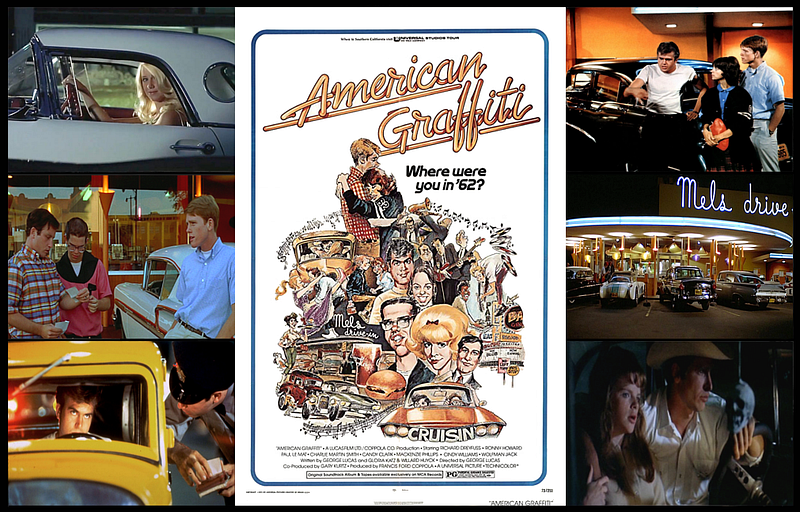
Photograph of film poster with a display of scene images from “American Graffiti”.

Before I get into this, I want to make mention “A FILM TO REMEMBER” will be a series about films that have reached a milestone anniversary since their origin in being culturally, historically, or aesthetically significant. The articles will contain the film’s plot outline, director, cast, a compilation of trivialities, various photos, movie trailer, critical reception and more. So, let’s start:

We are here to mark the celebration of the 45th Anniversary of George Lucas’ “American Graffiti”. Let’s take an inside look at the film:

PLOT OUTLINE:

It’s the proverbial end of the summer of 1962 in a small southern California town as four teenage high school graduates spend one final night cruising the strip with their buddies as they deal with their personal issues before they go off to college.
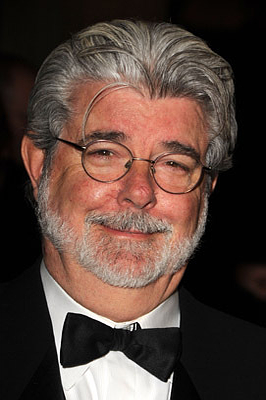
Still image of filmmaker George Lucas.

STUDIO:

Universal Pictures

DIRECTOR:

George Lucas

CAST:

  • Richard Dreyfuss … Curt Henderson
  • Ron Howard … Steve Bolander
  • Paul Le Mat … John Milner
  • Charles Martin Smith … Terry “The Toad” Fields
  • Cindy Williams … Laurie Henderson
  • Candy Clark … Debbie Dunham
  • Mackenzie Phillips … Carol Morrison
  • Wolfman Jack … Himself
  • Harrison Ford … Bob Falfa
  • Bo Hopkins … Joe Young
  • Manuel Padilla, Jr. … Carlos
  • Lynne Marie Stewart … Bobbie Tucker
  • Terry McGovern … Mr. Wolfe
  • Kathleen Quinlan … Peg
  • Scott Beach … Mr. Gordon
  • Susan Richardson … Judy
  • Kay Lenz … Jane
  • Joe Spano … Vic
  • Debralee Scott … Falfa’s Girl
  • Suzanne Somers … “The Blonde” in T-Bird

GENRE(S):

Comedy | Drama

TAGLINE:

Where were you in ‘62?
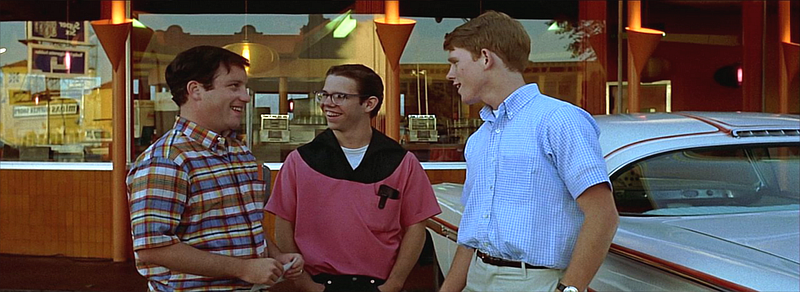
Still image of Richard Dreyfuss, Charles Martin Smith (middle) and Ron Howard in “American Graffiti”.

The film is known for it’s coming-of-age hallmark study of the cruising and rock ‘n’ roll cultures popular among the post–World War II baby boomer generation. Director George Lucas ordains with a skillful and assured touch— following several stories with wit and sensitivity — as it redefined nostalgia as a marketing tool, laying a new vignettes style narrative and produced in launching the careers of Harrison Ford, Ron Howard, Richard Dreyfuss, Charles Martin Smith and more. The film is semi-autobiographical connotations based from George Lucas’ teenage street racing, radio listening and his high school and junior college years, it received unanimous praise in becoming one of the most influential classic teen films of all-time.

Here’s what some of the critical receptions have been for the film over the years:

Roger Ebert from Chicago Sun-Times says: “‘American Graffiti’ acts almost as a milestone to show us how far (and in many cases how tragically) we have come.”

Alan R. Howard from Hollywood Reporter says: “The movie is a comic poem which celebrates the past but also catalogues its textures with telling precision. American Graffiti looks like no other movie, an achievement which is always the best measure of a truly gifted director.”

Jay Cocks from TIME Magazine says: “This superb and singular film catches not only the charm and tribal energy of the teen-age 1950s but also the listlessness and the resignation that underscored it all like an incessant bass line in one of the rock-’n’-roll songs of the period.”

Dave Kehr from Chicago Reader says: “A brilliant work of popular art, it redefined nostalgia as a marketable commodity and established a new narrative style, with locale replacing plot, that has since been imitated to the point of ineffectiveness.”

A.D. Murphy from Variety says: “There is brilliant interplaying and underplaying, of script, performers and direction which will raise howls of laughter from audiences, yet never descends on the screen to overdone mugging, pratfall and other heavy-handed devices normally employed.”
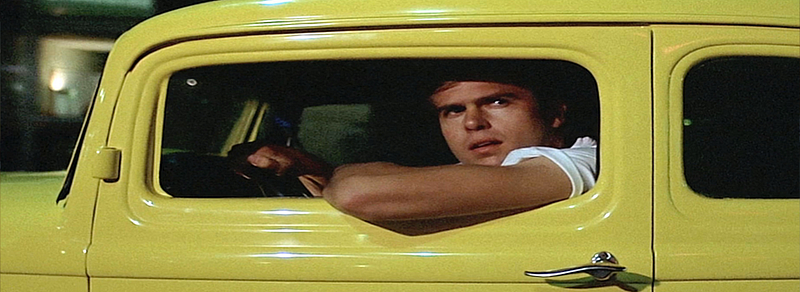
Still image of Paul Le Mat in “American Graffiti”.

As you can tell by the critical reactions, the film caught critical acclamation as it’s a hugely influential docu-drama cinematic landmark, that wonderfully evokes the feel and spirit of the placid pre-Vietnam America era. Lucas transports the viewer to 1962, to a moment in American history in which all you had to worry about was your car, your music and your friends — that’s fastened with a top-notch ensemble cast and performances from Ford, Howard, Dreyfuss, Smith and etc in this career launching manifest of a tribute to an era of optimism and competitiveness which was a bitchin' time when rock ‘n’ roll was young and hot rods were cool in this nostalgic, funny, tough and unsentimental hallmark quintessential. But I’ll let you decide…

So, to get a better look at the film, here’s a link to the movie trailer of George Lucas’ “American Graffiti”:

Here I have provided 12 interesting and intriguing trivia facts (I wanted to keep it limited) about “American Graffiti”:

  • Due to the low budget, George Lucas was unable to pay all of the crew members. He offered to give many of them a screen credit in lieu of payment, and they accepted. Traditionally, only department heads received screen credit. Giving screen credit to so many crew members has now become a tradition, which is why closing credits last so long now.
  • When Charles Martin Smith pulls up on the Vespa in the beginning, his crash into the building wasn’t scripted. He genuinely lost control of the bike, and George Lucas kept the cameras rolling.
  • Harrison Ford was asked to cut his hair for the film. He refused, stating that his role was too short, and offered to wear a hat instead.
  • Universal Pictures thought so little of the film (not knowing how to market it, and certain that as it had no stars it would flop), that it sat on the shelf for six months before the studio finally decided to release it. To their great surprise, it became enormously financially successful becoming one of the most profitable films of all time. It was produced at a budget of $777,000 and since its initial release, it has garnered an estimated return of well over $200 million dollars in box office gross and home entertainment sales, not including merchandising.
  • One of the main reasons why so many studios initially turned down the script was because George Lucas wanted at least 40 songs on the soundtrack, which would obviously lead to a large bill over the rights to these songs. Universal finally agreed to fund the picture when Lucas’ friend, Francis Ford Coppola (fresh from the success of “The Godfather” (1972) the year before) came on board as producer.
  • Wolfman Jack, who played himself in the film, was specifically chosen by Lucas to play a role in the film because Lucas remembered listening to him on the radio when he was in high school.
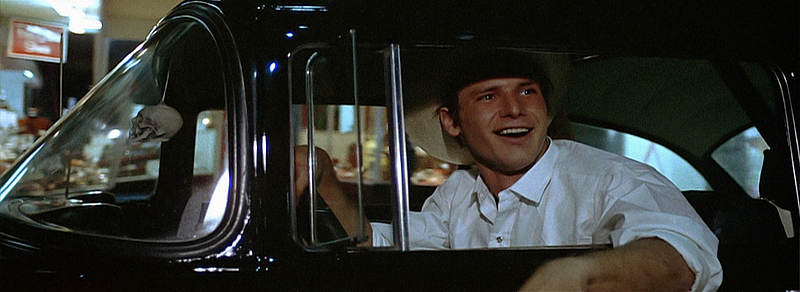
Still image of Harrison Ford in “American Graffiti”.
  • The film was shot in sequence, so as filming went on and the actors grew tired from the shooting schedule, the characters they played would also look more and more tired as the night went on.
  • Mel’s Drive-In was demolished after the movie was completed, but the owner’s son, Steve, decided to re-open other Mel’s restaurants in 1981 as a small chain. There are 2 in Hollywood, CA, themed after the film, and 1 in San Francisco where Lucas is known to eat occasionally.
  • Dissatisfied with the name “American Graffiti,” producer Francis Ford Coppola and Universal Pictures’ executive Ned Tanen suggested that Lucas retitle it “Another Slow Night in Modesto” or “Rock Around the Block”. Lucas of course, kept the film’s title in the end.
  • The film was previewed before an audience of young people in Northpoint Theater, San Francisco, on a Sunday morning, with Universal Pictures head Ned Tanen in attendance. In a story that is now legendary in Hollywood, Tanan was not impressed with the film, despite a good audience reaction, and called it “unreleasable”. Francis Ford Coppola, enraged at the comment, offered to buy the film from Universal (some stories claim he offered to write the check then and there) while the exhausted, burned-out and ill George Lucas watched in shock. A compromise was finally reached in which Universal could “suggest” modifications to the movie, a resolution Lucas was not happy with, as it took control of the film away from him.
  • There is a rumor that while George Lucas and a co-worker were editing the film, the co-worker asked Lucas for “reel two, dialogue two,” which abbreviated to R2-D2, a name which surfaced in Lucas’ later film, “Star Wars: Episode IV-A New Hope” (1977).
  • Rumor has it, that during the making of the film’s production, the cast got so frustrated with George Lucas’ lack of communication in his direction, that it created problems among the cast and even the crew. Lucas being known as a rather anti-social individual which hindered him as a director all throughout his career. It was getting so bad on set, that the cast and crew was losing complete faith in Lucas’ abilities as a director. Lucas started to realize the problem and made call to his best friend and filmmaker Steven Spielberg to come aboard to helm a sizable portion of the film and get things back under control. There are claims that say Spielberg actually directed nearly 75% of the film in the production’s 29 day shoot. Spielberg though took no credit for his involvement in the film as he didn’t want to take anything away from Lucas, being it was his film and that they were such close friends.
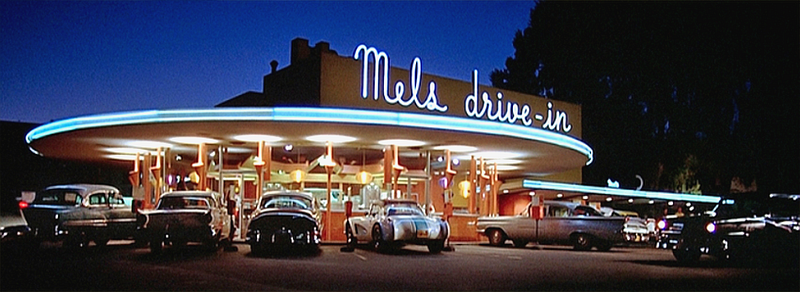
Still image of Mels Drive-In in “American Graffiti”.

To conclude, George Lucas’ “American Graffiti” nearly a half-a-century later it still plays as a loose and vibrant testament to an often forgotten era. George Lucas evokes a bygone era in the most authentic, moving and aesthetically pleasing fashion with the film being a comic poem which celebrates the past that is so distinctly Americana and matched with a distinguished cast and elicit performances by Harrison Ford, Ron Howard, Richard Dreyfuss, Charles Martin Smith and so forth — as its become one of the most influential of all teen films, that’s a humorous, nostalgic, bittersweet and rock ‘n’ roll look at a group of recent high school grads’ last days of innocence in this trend setter, coming-of-age instant classic.

NOTE: The article contains sources from IMDb and Wikipedia.

Follow me and check out other articles of mine:

Movies
History
Trivia
Photos
Movie Trailer
Recommended from ReadMedium