
FICTION — SHORT STORY
A Failed Writer’s Holiday
OR: How I Learned to Stop Worrying and Love the New Year
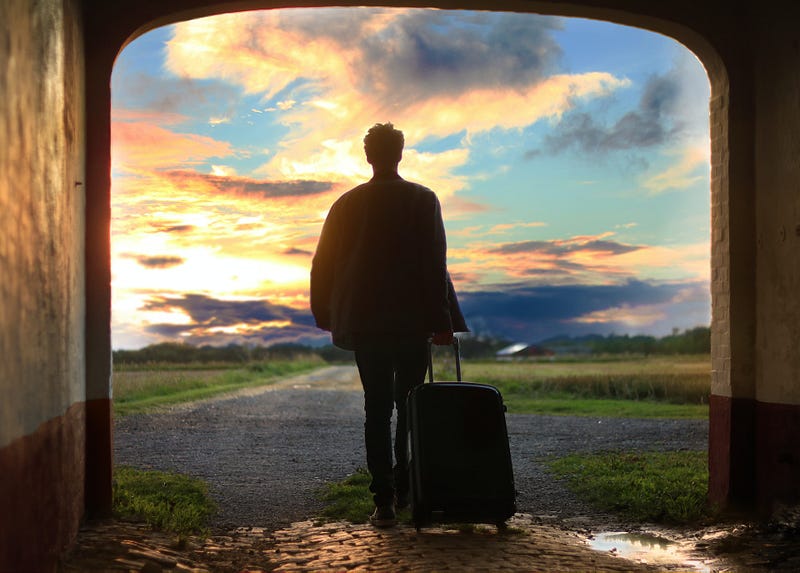
It was the Christmas before the storm. I will always remember it as exactly that: the long eve of the arctic blast that covered the state in ice. Even without knowing what was coming, the entire holiday season felt somehow like a prelude to the blizzard that followed, full of slow days and unsettling quietude. And for me, it was nearing the end of a long wait for the realization of a dream.
After decades of time spent alone with my fingers on the keyboard, I received an email message that a manuscript I submitted to a popular small press in New York had been accepted into the final round of considerations.
“Only 10 percent of submitted manuscripts make it to the final round,” the message read. Of course, news like that could be two-sided. The initial feeling is positive, almost to the point of being exciting, but it soon gives way to rising doubt that eats into your hopes like a hungry cancer.
“This is the break I’ve been waiting for,” I initially told myself, but almost immediately following that thought were other, less optimistic considerations. I began to imagine the manuscript’s potential failings in the eyes of the press employees. I didn’t actually look at the manuscript or read it — I didn’t dare do that — but just the same, I could see its faults. And I could see its demise.
“They’ll decide against it,” I finally admitted to myself. “It’s just not good enough.”
Within days of receiving the news, I wished it had never arrived. Without that message, I never would have raised my hopes. My nerves would not have stirred the way they did thereafter, and daydreams wouldn’t have interrupted my work. Most importantly, though, I never would have made that phone call to my mother, hoping for once that her pride in her adult son would be legitimized.
The Decision
The follow-up message arrived just before the holidays.
Thank you very much for submitting your manuscript to our press. While we have ultimately decided not to publish your submission at this time, we want you to know that we read it with interest. And we hope you will keep us in mind when submitting future work.
I sobbed. This was not easy to admit, but as an honest writer with nothing more to lose, here it is again. I sobbed. I sobbed because there was nothing in my life but gradual debilitation at this time, and I just wanted this one good thing to somehow make it all better in the end.
I should have known that life is never written the way a story is, and more importantly, what appear to be endings in life are only brief easings of the continuum. I also should have known that the message the publisher sent me was one of many dispatched to writers all over the world who had paid a submission fee, all with the same hopes, the same dreams, and the same eventual collapse.
The Holiday
Anyone who has failed consistently for years knows the bite of holiday reminders. And Christmas, along with the year’s end, is the mother of all reminders. It is a bright landmark on an otherwise barren strip of routine living, and it arrives like an omen with its bells jangling in the cold winter air.
I knew my family loved holidays, and my parents, especially, would be expecting their children and their children’s children to share their space and take pleasure in the customs that gave reason to all the work we did in the days between. But I also knew they — and especially my mother — would be thinking about my manuscript and the press. I could even imagine my mother praying for a positive outcome, as if divine intervention was truly what it would take for me to succeed.
“Help yourselves,” my mother said as the guests — my brothers and I — made our way to the sandwich table to fill a plate and open a bottle. The festivities were rather subdued compared to past years. In fact, they’d been getting calmer every year as we aged. Long Bingo games and late hours of singing off-key had given way to quiet talks in the living room as gifts were passed out one by one.
I was there for three days, and at the end of day three, I packed up my gifts and prepared for the trip home. After repeated visits from friends and neighbors and plenty of conversations about work and family life, I had almost forgotten about the message from the publisher in New York. Almost. But even that close to the end of my visit, I somehow knew the question would come.
“Did you hear anything about your book?”
I was just about to carry my things to the car when she asked. And after a brief pause in front of the door with the bags in my hand, I responded.
“Nothing good,” I said.
In an attempt to put a positive spin on bad news, she asked another question.
“You mean they haven’t decided?”
“No Ma,” I said. “They decided. They decided not to publish it.”
My father, sitting in his chair nearby and watching game highlights, spoke up when he heard our conversation.
“Maybe now that it’s out there,” he said. “It’ll find its way around.”
“That’s not really how it works,” I told him. “But I can always send it somewhere else.”
“Yes you can,” my mother said with assurance. “And if it came that close already, maybe next time it can make it all the way.”
Again with the positive spin, she gave me two thoughts at once: a genuine appreciation for her support and a strong suspicion of her unspoken discontent. My mother kept a lot of her worrying to herself, but if you knew the signs, it was unmistakable. It was in her voice, a subtle but sustained tone of disappointment that persisted through her words of encouragement.
“I think my time’s up,” I said, still holding the bags at the door. For a moment, my mother seemed to think I was still talking about my writing, but when I looked at the clock, she sighed and opened her arms for a hug goodbye.
“You do too much,” I told her. “You should let us do the cooking next time.”
“You know it’s nothing,” she said. “Don’t forget to say bye to your father.”
“How could I possibly forget that?” I joked, hugging him as well. My father, as he always did during our goodbyes, told me to take care of myself. And though it was a normal thing to say at such times, it gave me the impression that he was worried about me, just as my mother was. Somehow, they both knew how much that manuscript meant to me and though neither of them had read a single line from its pages, I suspected it meant even more to them.
The Storm
They had reason to worry. The older I got, the more I obsessed with my writing and neglected nearly everything else, including family. I worked as a tutor at night to keep my days open, and during the long hours of the morning and late afternoon, I did only one thing. I tapped frantically at my keys until I had more words on more documents and nothing to show for them but lost time.
When the New Year came at the end of the week, I stayed home and alone. I was invited to a party, but I had no car to get there and no time left after writing through the night. I could hear the explosions above the river, and I could hear children yelling and adults laughing, and I stood in my bedroom thinking about new story ideas until I grew tired of liking none of them.
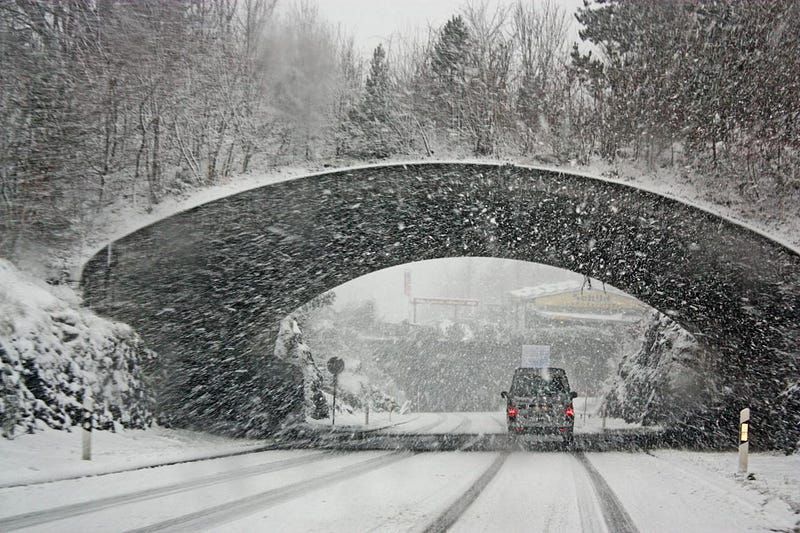
In the peaceful quiet of New Year’s Day, I walked outside and saw crows gathering and cawing under the sun. It was cold and still, and something different was on the horizon. Less than two weeks later, the blast arrived. Starting with a snow blizzard and continuing with sheets of ice and chilling winds for over a week, the storm broke records in local shelters and gave me one more reason to stay home, all the while blessing the power that remained on my laptop computer.
For days I heard the needles of ice striking the windows as I sat with a blanket over my shoulders and stared at my screen. But all I could think about was the last manuscript’s failure. With the schools closed, I had less work as a tutor and very little money for bills, so the heat knob stayed in its place in the off position while I wore layers and saw my breath in the kitchen.
I wanted only one thing to warm my thoughts. I wanted recognition. But as winds of dry air and frost rattled the glass behind me, I failed to make my mark with a new idea. I thought about how much work went into the last manuscript, and I came closer to giving up than I ever have. I no longer wanted to write. But after so many years of living for the words and ignoring so much else, I had nothing else to do.
The Resolution
Before it settled, the storm got worse. The entire city was layered with sheets of ice and a danger to anyone outside of their homes. There were deaths in the cold. People lost their power, and as my own lights flickered from time to time, I crossed my fingers and returned once again to the keyboard.
For several days I did nothing but write, and slowly, painfully, a new manuscript began to take shape. It wasn’t a novel, but it was something. And it helped me to keep the faith. When the world finally began to thaw after a week and a half of cold winds and icicles, I was finally weary enough to want something more than a dream to bide my time.
I met a friend for nightcaps at a local pub, and the first thing she asked me was where I’d been.
“I’ve been failing,” I told her. And without another word of explanation, she raised her glass.
“To another year of failing,” she said. “Unless it isn’t.”
As I joined her in the toast, I thought of my family and how much I took for granted during my three-day vacation back home. A friend’s company, like that of my family’s, was a warmth I had nearly forgotten in my self-absorbed pursuit of a very confined sense of fame. And that, I decided, was the real failure.
“Unless it isn’t,” I said, repeating her words. And after touching glasses, we drank.
Thank you for reading and supporting The Scriber’s Nook. We publish five days a week — Monday to Friday inclusively 🖋️🌟📚


