World Radio Day- 13th February
A Dive Into the World of Radios
Understanding the origin, history and technology of radios
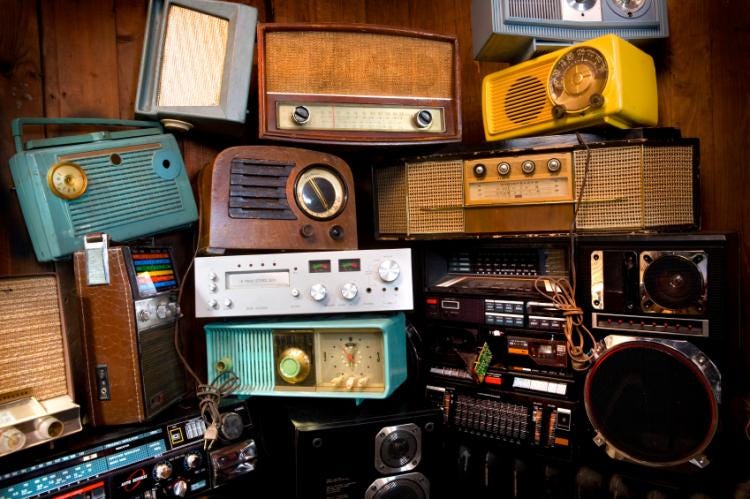
Radio, as we know, is a popularly used device to hear music, news, and many other entertainment shows. Even though radio as a device is vanishing, but the concept of radio and as well the technology is still in use. Radio today stands much more than simple device as such. Being part of one of the oldest set of inventions has paved way for much bigger and better inventions in the category of Wireless Communication like TVs, mobile phones, etc. Even now, people prefer radio over TV as it is cheap, portable and easy to use.
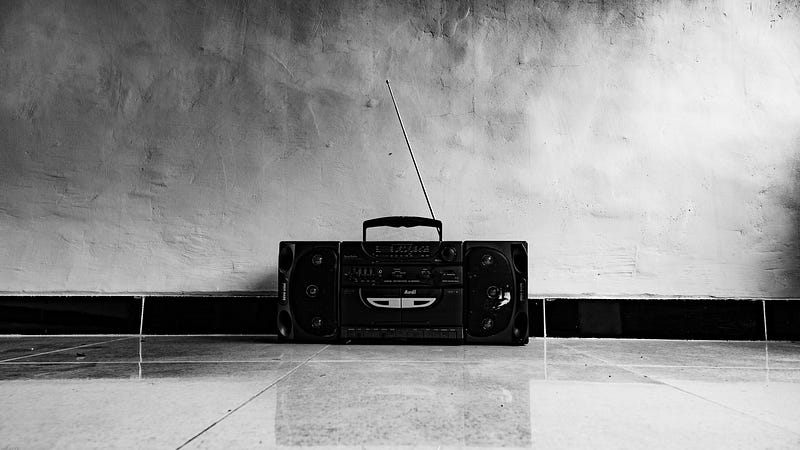
History of the Invention of Radio
Radio was invented so as to replicate the functions of the telegraph with a wireless touch called ‘wireless telegraphy’. The electromagnetic wave theories were slowly flourishing and new applications were being developed. After the discovery of radio waves based on Maxwells and Hertzian theories, led to a conclusion that these showed a lot of similarities to light and might have the same properties as well. It was Sir William Crooks who believed that there was a possibility to use Wireless telegraphy for transmission of information.
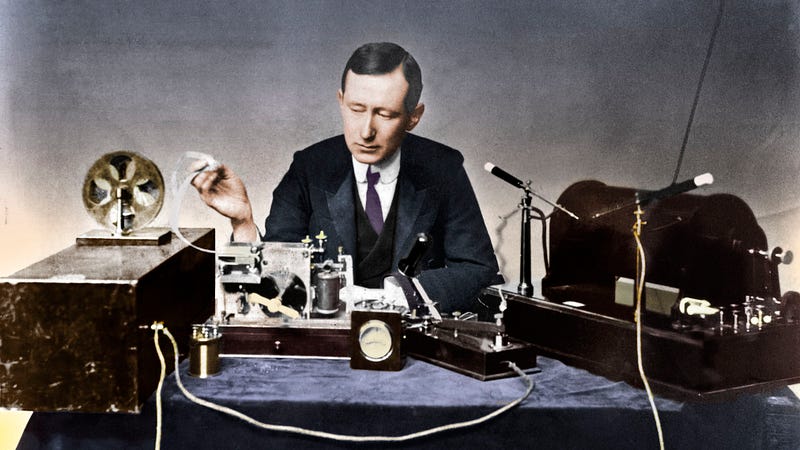
Italian Scientist Guglielmo Marconi was inspired by Hertz Theory of Invisible Waves. At a young age, he decided to pursue his dream of using these waves for communication. For that, he moved from Italy to London. For his experimentation, he used a simple oscillator for the radio transmitter. At first, he could only use the radio for transmitting it up to half a mile. He later used the monopole antenna and vertical polarizers to transmit the waves to a longer distance. By 1897, he was able to broadcast for 12 miles and in 1897, he broadcasted across the English channel. His radio wave successfully sent the first radio message across the Atlantic Ocean in December 1901 from England to Newfoundland. For his invention and contribution, Marconi is credited as the inventor of Radio.
The first human voice and music were broadcasted from Brant Rock which is a town south of Boston city in Massachusetts. It was Reginald Fessenden who was in charge of the test broadcast. The session went on for an hour. It was only in 1908 in San Jose, California where the audio programs were scheduled and broadcasted. In the next two decades, radio became a popular mode of communication across various countries. The programmes were mainly recorded on tapes and later played during the broadcast.
It was WW1 that popularised the use of radio. At that time there were no loudspeakers, instead only plug-in earphones were used. The military was the first beneficiary of radio in western countries. This often led to conflicts as both civilian and military radio waves used to clash with each other, since there was no particular government regulation.
General Electric and Radio Corporation of America entered the Radio market. At first most of the companies struggled to lift the business, but as time passed audience and popularity grew thus enabling more companies and publishing houses to pursue radio as a business.
The Golden age of radio
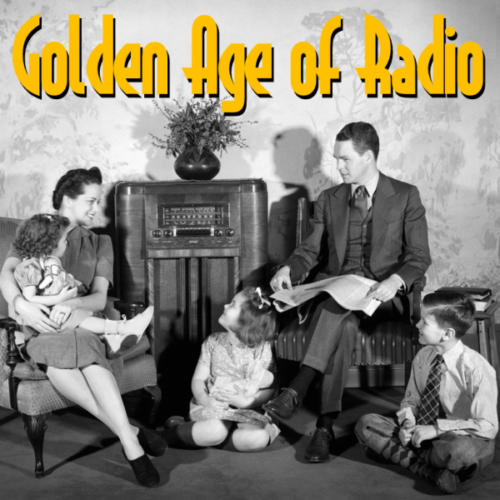
The period between 1930 and 1955 is known as the Golden Age of Radio as per Norman Corwin. Radio although faced constant competition from TV and other communication radio saw exponential growth with new programmes like quizzes, music, talk shows, live events, news etc.
BBC was the first public radio to be started in the UK in 1922. NBC Red was started in 1926 and NBC Blue was formed out of the Red in 1927. CBS later came into existence in 1928. It was AT&T that brought advertising to American Radio. In 1944, NBC sold its Blue Radio to Sandy Candy company, later to be called as ABC.
ABC, NBC and CBS together are known as the big three American Broadcasting Giants.
Radio Regulations
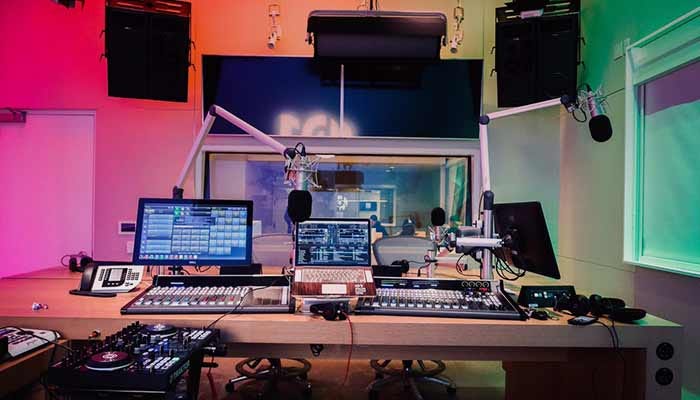
It was a major challenge for many of the countries to deal with the popularity of radio and also a lack of single frequency of radio across the country. The Radio Act was passed in 1927 which established the Federal Radio Commission in the US. It divided the AM radio into local, regional and clear. Licensing was started.
NPR, a public news radio broadcast came into existence in 1971 in Washington D. C. through the Public Broadcasting Act of 1967. It is a non-profit company.
Radio in India
The first radio station in India was established in 1923 in Chennai. Later Indian Broadcasting Company was set-up under the British Government. It was later renamed All India Radio(AIR) in 1936. AIR had five zones for broadcast. In 1957, AIR was renamed Akashwani and was brought under the Ministry of I&B. Radio was the primary mode of broadcast communication in the country for decades. Even now it still stands as an important and easy way for the government to reach out to the public.
Technology behind Radio
Radio technology consists of the transmission and detection of radio signals. The signals can travel in any medium like air, water, solid or even in a vacuum. Generally, radio waves are transmitted using satellites or reflection from the ionosphere of the atmosphere.
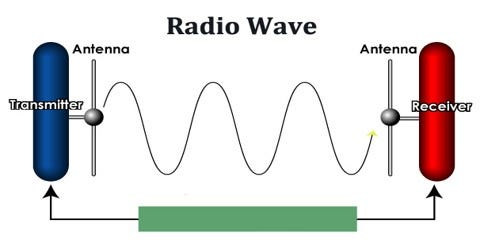
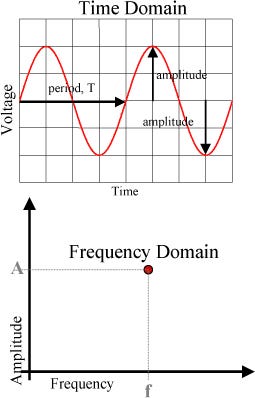
Each wave has the following properties-
- Amplitude
- Frequency
- Velocity
Radio waves are generally in the range of kHz, MHz and GHz.
Radio as a device
Radio in scientific terms refers to the EM wave, while in common man’s term we refer to the Radio receiver. It has the ability to receive radio signals and later process them to a human-understandable format ie. sound. A radio will typically consist of an antenna, PCB, coils, electronic devices, ICs and a speaker. Transistors have replaced vacuum tubes that were earlier used.
The antenna of the radio can absorb the radio signals in the air and converts them to electrical signals. The unwanted part is later filtered out using electronic filters and also demodulates to obtain the information which reaches us as sound waves via loudspeaker.
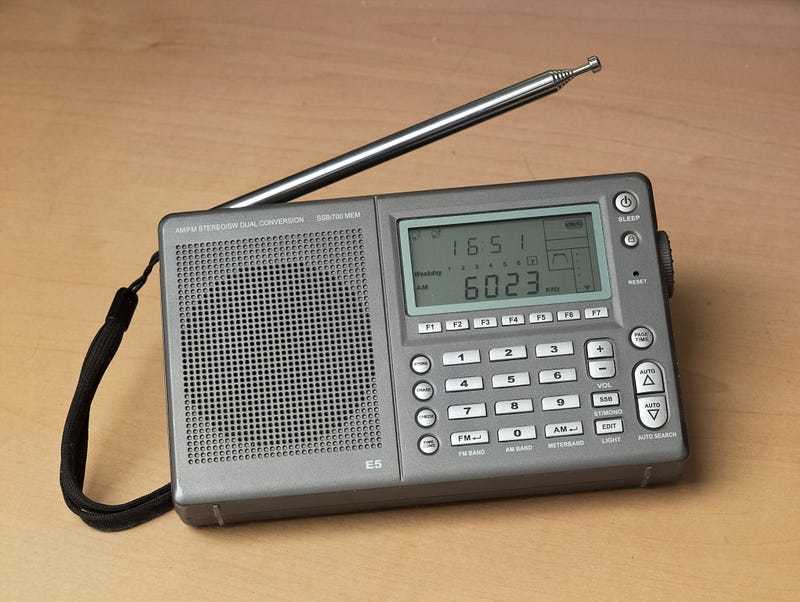
Radio broadcast
Modulation is the main technique by which, the information is added to the carrier wave signal. The ratio of the amplitude of both waves is called the modulation index. That value is kept less than one to reduce distortion. There are two types of broadcast modulation include- Amplitude modulation (AM) and Frequency Modulation (FM). Modulation enables broadcast coverage to be improved, avoid transmission loss and to reduce the length of the antenna. AM broadcasts in Longwave and Mediumwave while FM in Very High Frequency (VHF) ie 65–108 MHz. Modern radio devices are cable to detect both AM and FM signals.
Advantages of Radio compared to other modes of communication
- Ease of use- Even a person who is not so educated or technically oriented can use it.
- Cheap- Most radio device can be operated using a battery or using mains. It doesn’t require a high amount of power. The channels are free to use and you don’t have to pay for it.
- Helpful during a public emergency and natural disasters.
- Your attention will only be to the voice- You can multitask by listening to the radio.
- Improves your imagination power- You are provided with noise, you can picturise the event as per your imagination.
- No requirement for complex hardware, moving parts or cables.
- Portability
Types of radio
- Table radio
- Clock radio
- Home system
- Car stereo
- Portable radio
World Radio Day 2021
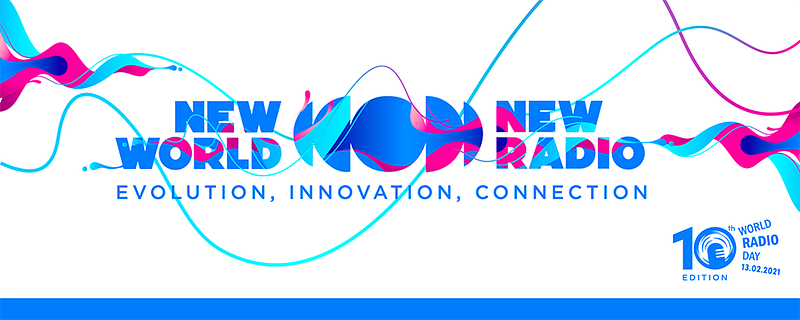
Every year on 13th February, UNESCO celebrates World Radio Day. This year it’s the 10th edition of World Radio Day to commemorate the 110 years of Radio. The theme for this year is Innovation, Evolution, Connection.
The celebration for World Radio Day was proclaimed in 2011 by UNESCO. It was later adopted by the UN General Assembly in 2012. Radio, for more than a century, has been a powerful medium to connect humanity. It is an important platform for global political and democratic discourse. Radio unites remote and vulnerable communities to bring them to the mainstream. It also has a wide range of applications, including emergency, entertainment, journalism and disaster relief.
Conclusion
Radio indeed has been a revolution in the communication industry across the globe. It has made the world smaller and compact into a global village. Despite the radio devices vanishing from our homes, the concept of radio lives throughout our lives, in the form of car stereo, phones, recorders and even podcasts which encourage the habit of listening. It is our duty to realise and appreciate the role of technology in our lives.
Happy Radio Day 2021!
Credits-
Britannica Encyclopedia, Wikipedia, UN, UNESCO, AIR, etc.
Also Read
I have started a Telegram Channel which will contain the record of all my articles. Follow my personal blog for behind the scenes and informative content.
**We also invite science and technology enthusiasts to write for us. If you think you have interesting stuff which the world should know about, send in your articles to us!**
Interested in writing for us? Fill out the form shared below and we will get right back to you!
Follow us for more amazing and the latest science and technology articles. We are also there on social media. Follow us on Instagram|LinkedIn to stay updated!


