
A Conversation with The Ballad of Buster Scruggs Pt. 5: “The Gal Who Got Rattled”
Spoilers, my friend. That’s what you’ll find in this detailed critique of the fifth chapter of The Ballad of Buster Scruggs, a newish Western anthology from the mighty Coen Brothers. My advice is that you go watch this movie — it’s on Netflix — and then return to this article and share in my obsession. There’s just so much going on with The Ballad of Buster Scruggs. So much, in fact, that I’ve already written four other articles about its first four chapters.
Here’s the first one, “The Ballad of Buster Scruggs,” the sadistic cartoon musical that serves as this film’s first chapter.
The second, “Near Algodones,” a delightful riff on spaghetti westerns and the core Coen Brothers theme of life’s unpredictability.
The third, “Meal Ticket,” which is god-damn dismal and brilliant, possibly the darkest thing those aforementioned brothers have put on screen.
The fourth, “All Gold Canyon,” which is an absolute hoot of a one-man show featuring the great Tom Waits, and also a stealthily tragic look at how Western virtue spells doom for the natural world.
And the sixth, “The Mortal Remains.” concerning five archetypal characters engaged in a deep conversation about human nature while racing through the fog in a stagecoach to Hell.
OK, here comes the article. Spoilers abound.
The Coen Brothers started off their career writing and directing a modern Western noir run through with a bible-black streak of humor. This was Blood Simple, and critics loved it. Next, they turned their attention toward a living Tex Avery cartoon, also something of a modern Western scored with banjo-picking and yodeling (based rather faithfully on Pete Seegers’s Goofing Off Suite), the hilarious white trash kidnapping caper Raising Arizona. Their work since then has see-sawed between these two extremes — living cartoons and dark comedy thrillers — often infused with elements of the movie Western. On the former extreme: O Brother Where Art Thou (a musical Western in the hillbilly or hobo vein), Hail Caesar! (which included a Scruggsian singing cowboy as an important character, with his own film within the film), and The Hudsucker Proxy (not a Western). On the latter: No Country for Old Men (another dark, yet perversely funny, modern Western), Fargo (a Midwestern?), and The Man Who Wasn’t There. Riding the line between: The Big Lebowski (narrated by Sam Elliot as a benevolent and out-of-place cowboy) and Burn After Reading. Only in recent years, with A Serious Man and Inside Llewyn Davis, have they put anything on screen that looked or behaved somewhat like the real world (despite the former’s strong implication that the lead character’s wife has been seduced by a demon in disguise). Their latest, a collection of short films made for Netflix called The Ballad of Buster Scruggs, starts with their most cartoonish offering yet, and stays in that realm of heightened reality and absurd situations through its first four chapters (even part 3, “Meal Ticket,” which manages to be perhaps the most bleak and heartless of their many bleak and heartless Works while remaining tied to a broad slapstick or screwball world in which a father would trade his son for a counting chicken). That counter switches abruptly to the right with “The Gal Who Got Rattled,” which despite its classic movie Western setting sticks to a naturalistic and intimately human tone that’s most reminiscent of the only other straight Western our Coens have made, True Grit.
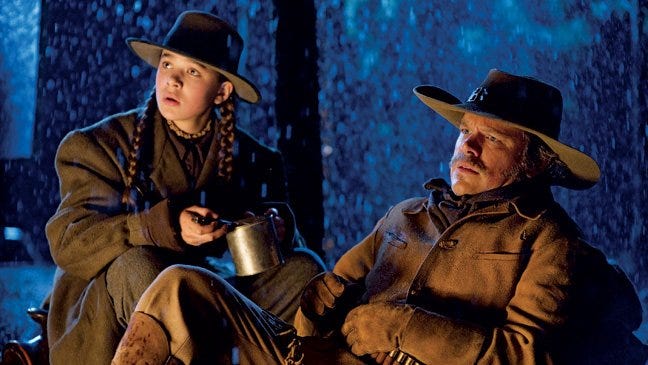
It’s really quite a bit like True Grit. The central plot concerns a prim young woman in trouble and her deepening relationship with a virtuous older man whom she enlists to aid her after the death of a family member. The language and behavior of its characters, from tenderfoot cosmopolitans to rough men of action, is formal and elaborate while maintaining the rhythm and expressiveness of everyday conversation. The cinematography, direction, and color palette are all in line with that earlier film. Mr. Arthur even has a Rooster Cogburn quality to him, just as Billy Knapp and Alice Longabaugh fit nicely into the Ranger LeBoeuf and Mattie Ross roles. I wonder if the Coens had this in mind when they decided to film this story? Instead of the spinster ending of True Grit, this offers a potential romantic resolution to a similar circumstance, but still ends in tragedy.
Like “All Gold Canyon,” this story is not original, based on “The Girl Who Got Rattled” by Stewart Edward White (and I can’t stop thinking about why the Coens changed the name in such a slight way) The film offers a more extensive and involved story, with much of the plot and characters developed by the Coens from whole cloth. The portrayal of Mr. Arthur, who is one of the two main characters of White’s short story under the name of Alfred, owes little to the bashful and small-statured original; while Billy Knapp in that story is just a name and a general reputation for sternness. The prim young woman is not named Alice Longabaugh, she’s on vacation rather than relocating to a new home, her brother does not die, there’s no prelude in the boarding house, and the woman has no transformative romantic relationship with Knapp or anyone else. There’s no dog, either. Only the namesake episode of the woman going astray from the wagon train and being rescued from Sioux attack by Alfred (only to commit suicide when she thinks the battle lost) is described in any detail. The major theme of White’s short story seems to be the difference between city folk of the East (boastful, talkative, insincere, and stupid) — vs people of the West (modest, reserved, straightforward, and capable). Alfred is the focus. His eccentric character and shyness around women make him an object of derision among the city slickers, but he’s known in the West as an emotionless and efficient killer and a master of the open wilderness. In a social interaction, the Easterners toy with a flustered Alfred who can’t keep up; but when the chips are down, Alfred keeps it cool and saves the day while the lady from the city’s stylish remove fatally crumbles. It deals directly with the movie’s central conversation on Western virtue. Onto this simple tale, the Coens have grafted a story of self-discovery and a very 19th-century sort of falling in love, with substantial screen time given to the revelatory conversations between Alice and Billy that fit into the film’s lesser theme: Conversation itself.
Let’s recap. Chapter 1, “The Ballad of Buster Scruggs,” started off with a portrayal of Western virtue and showed us how this system of right and wrong allows for behavior that’s murderous and even sadistic as long as one stays good-natured and plays by the rules. That same tale ended with the inevitable death of its verbose protagonist at the hands of a younger, faster, prettier model; a death which didn’t trouble Scruggs too much as he flew winged and haloed up to Heaven. It was also a genre exercise, a singing cowboy flick in the vein of Roy Rogers or Gene Autry. Chapter 2, “Near Algodones,” is an homage to Sergio Leone’s spaghetti Westerns; principally concerned with the whims of fate and the protagonist’s strong-but-silent acceptance of the bizarre twists and turns in his life path, from his defeat at the hands of a more prepared and experienced old duffer to his bemused death at his own second hanging. Chapter 3, “Meal Ticket,” examines virtue at its breaking point; as an elderly huckster travels into the frozen wilderness and betrays his only companion (a master of speech who is physically helpless) in a foolish gambit to survive the Winter. Chapter 4 shows us another model of Western virtue: the solitary and self-narrating prospector who grows wealthy by his relentless wits, his insatiable greed, and his knowledge of a pristine natural world that he despoils with his every move. This has been the conversation thus far. What is Western virtue, and how does it compare to modern virtue? What is virtue in the face of uncertainty, in the face of love, and in the ever-present face of Death? Our conversation has favored courage, hard work, patience, skill, a pleasant demeanor, the ability to kill, intelligence, knowledge of nature and the outdoors, playing fair, self-reliance, and a cheerful acceptance of life’s uncertainty. Knapp and Arthur, when they enter the tale, are the very essence of Western virtue. But first we must begin our tale with persons of the opposite disposition.
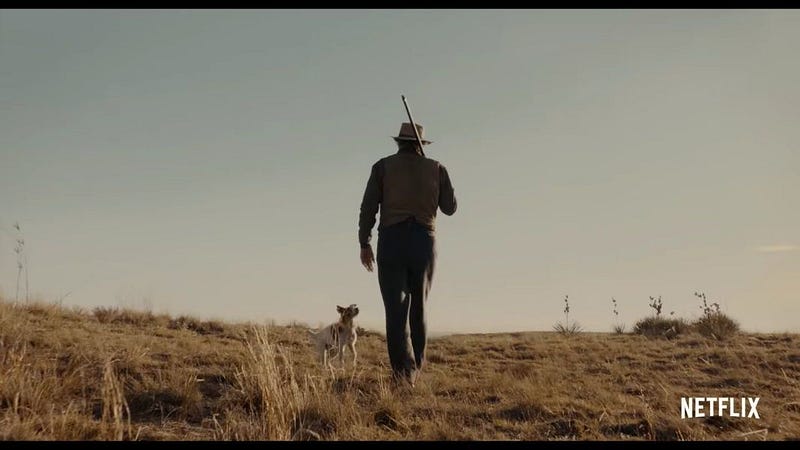
The illustrated plate for “The Gal Who Got Rattled” duplicates its final shot — Mr. Arthur is walking back toward the wagon train after Alice’s suicide, her brother’s yapping dog following behind. “Mr. Arthur had no idea what he would say to Billy Knapp.”
Every other chapter in The Ballad of Buster Scruggs opens with a panoramic outdoor shot of a solitary man and his horse at Hollywood’s fabled “magic hour.” This one starts instead with a claustrophobic close-up of a tiny dog underneath a chair, pulled up to a crowded table. This is President Pierce, whose barking will be a source of trouble throughout, and will lead indirectly to the death of our protagonist. The real President Franklin Pierce served only one term during the long build-up to the American Civil War, a Northern Democrat known for his anti-abolition and anti-secession stance. Though he claimed to oppose slavery personally, he was even more powerfully disinclined toward anything which threatened the Union, and therefore did his best to facilitate compromises meant to prevent war. This did not endear him to the growing abolitionist majority in the North, which organized into the Republican Party just a few years after he left office. In his own time, and in posterity, he has been thought of as a weak and cowardly man. Though residing in New Hampshire and officially allied with the Union, he maintained a friendship with Confederate president Jefferson Davis and made many public criticisms of Abraham Lincoln and the Civil War in general, and was even suspected of plotting with pro-Confederate factions to overthrow Lincoln and assume his place in the White House. Naming a yappy little dog “President Pierce” is like naming your stupid orange dog President Trump or your big horny dog President Clinton. Ah, but Alice does later affirm Billy Knapp’s intuition that her brother was a “doughface” - this piece of terminology can refer to any coward, but also referred to Northern people whose sympathies lay with the South, and was used specifically as an insult against supporters of Franklin Pierce.
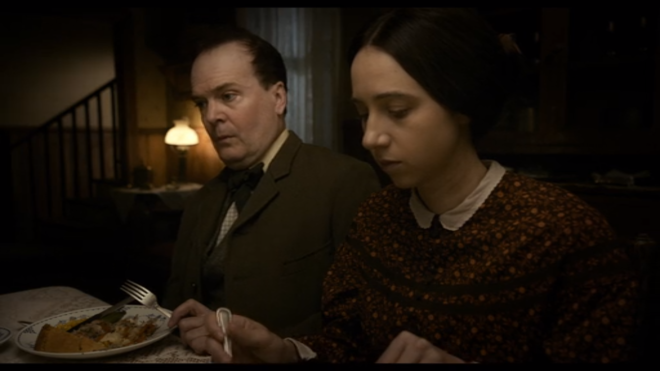
Like most presidents, the people in the opening scene are noticeably unpleasant and uncomfortable people to be around. One man who is arrogant and pompous (his conversation about the persistent cough of Mr. Kincaid presages the brother’s death), one old woman (in charge) who is shrewish and aggressive, another old woman who seems in a general sense not to like anyone and to be ill at ease in this company (a vision of Alice’s spinster future if things don’t work out), the comatose Grandma Turner, and Alice’s brother Gilbert who is a conniving and disrespectful wimp and has bet both their lives on a hail mary business scheme. She is to be wed to his new business partner, but we and Alice share their shock-haired interrogator’s impression that the whole thing is still up in the air. The demeanor and apparent values of the folks in this room denote origins in the cities, the schools, the merchant class — the bourgeoisie — but they’re all pretty dumb. They’re people who live indoors, as seen by people who live outdoors — petty, soft, and judgmental, prattling on endlessly about nothing. Alice shares this view of her company with the viewer, but she does her best to conceal her irritation and cleave to her own virtuous nature. In particular, by the Old Western code, she is an excellent prospect for a wife. She’s smart, strong, obedient, nurturing, honest, chaste, hard-working, and modest. This is our first look at the female experience in the Old West. Alone among lesser folk, she doesn’t speak against them or assert her own opinions. As long as her overbearing brother is alive, she defers to him. Her strength and her intellect wait behind a screen of passivity, for circumstance to reveal them.
There’s been little in the way of conversation in the film so far. Between his narrative addresses of the viewer, Buster himself does speak briefly with the men he’s about to kill or be killed by, and the exchanges in “Near Algodonoes” are equally terse and impersonal. “All Gold Canyon” is entirely narrated by a single character, and “Meal Ticket” is very nearly so. “The Gal Who Got Rattled,” on the other hand, features several characters who engage in normal day-to-day discourse, with little or no theatricality. This movie is about death and virtue primarily, but the subject of speaking is in question throughout. It’s the major unresolved trait in the Buster Scruggs taxonomy of Old Western virtue. Scruggs is a grandiloquent speaker traveling through a world of ill-mannered idiots and killing them. The Cowboy, as played by James Franco, is a taciturn enigma who says almost nothing as he travels through a world of talkative jerks. The Artist of “Meal Ticket” speaks for a living, while The Impresario is another stoic man of few words, and their story is almost entirely told through montages of stage oration separated by wordless scenes from their real life. Tom Waits roars his way through “All Gold Canyon” wihout hardly shutting up, speaking first to himself and then to an inanmiate deposit of gold he believes to be in the nearby ground, a man so lonely that his life is a perpetual conversation with nobody. The opening scene of “The Gal Who Got Rattled” treats conversation as something grotesque and grating on the nerves, and associates speech with class and with a paucity of Western virtue.
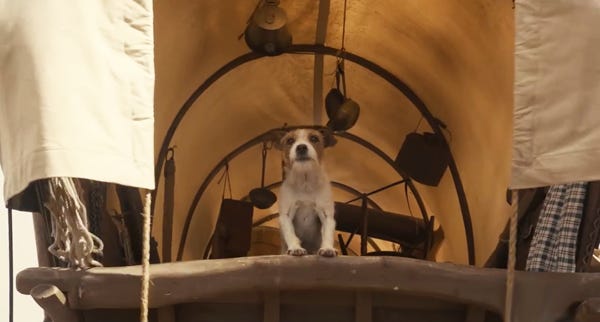
Tight compositions continue as the story progresses. Even when the action is outdoors, it’s framed by the edges of the wagon or by the wagon train itself. We get our John Ford establishing shots of the wide open Western spaces after Gilbert’s death, as if the sister is awakening into that world. Come to think of it, the first big sky establishing shot is of Gilbert coughing in the distance, as if he’s choking to death in the hostile environment of the outdoors. This cuts directly to another claustrophobic shot of Gilbert, lying dead in the wagon. For the rest of the film, these panoramic shots happen often, breaking up narrative segments. We’re with Alice as she awakens into the majesty, adventure, and forthrightness of the West; coinciding with her own awakening as an independent and self-determined person.
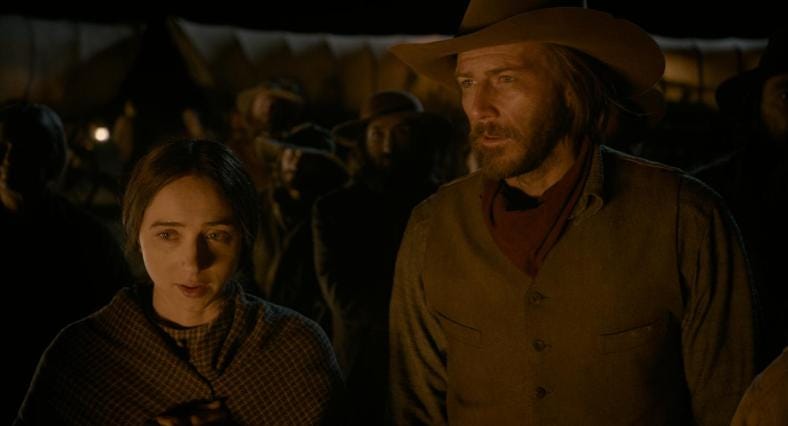
Mr. Arthur and Billy Knapp then appear for the first time. They have come along with the Great Outdoors. Mr. Arthur can barely talk, less the tongue-tied shyness of the original story and more of an overall uneducated indifference toward small talk. He seems to have about 30 words in his vocabulary. Billy steps in to take care of the talking, and his speech is formal and carefully-constructed. Alice seems utterly shell-shocked. Her brother lost everything, took them to the middle of nowhere, then dropped dead. What will she do?
“I don’t have people,” she explains. She is a woman alone in a world where women alone have few options: Prostitution of course, entering a convent, perhaps becoming a schoolteacher? There’s not much.
As early as the burial scene, we see Alice’s low opinion of Gilbert coming to the surface, and by that night she’s really coming into it. He “did very little” to drive their oxen or manage their trip, he was “not a good businessman” and squandered his money on a business in Iowa City as well as an earlier venture. Knapp puts it into words — “He was a failure.” The Old West has a name for men like Gilbert.
When Billy offers to put the dog down, it’s in a matter of fact and even friendly way. Alice doesn’t like President Pierce — he was Gilbert’s dog, she tells us — yet she isn’t accustomed to this sort of directness. Surely her brother, or the other people in the boarding house, would have caused an emotional scene over the dog dying. Alice is adapting well to life in the West, even finding that it suits her. Still, her courage falters at the last moment, covering her ears so she won’t hear the gunshot.
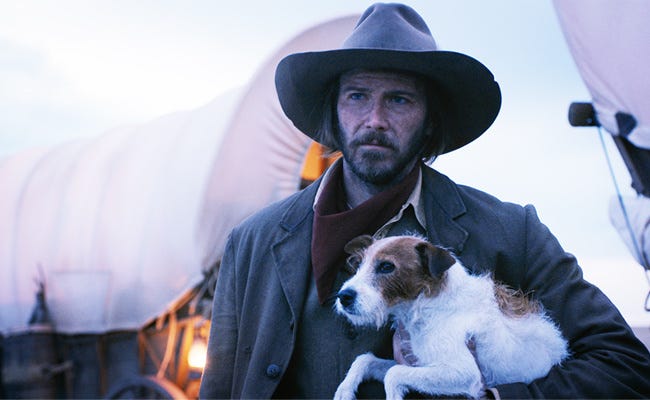
A friendly attraction has sprouted between our romantic leads, and in subsequent scenes other characters can sense that shift. Starting with the hired hand, and continuing with Mr Arthur during that night’s fireside visit, people stand up and leave when the two of them are talking. They can see that something is beginning between them, so they give them privacy so they can speak freely. Surprised by the man her brother hired and his extravagant request for pay, she asks Billy Knapp, “What is right?”
“What is right,” Knapp repeats. This, he thinks to himself, is the Big Question. He’s impressed that she cares about right and wrong, and that she can see the drover’s side of things. To help this woman in need must be the right thing to do, especially considering the fact that she’s a paying member of his wagon train. Like Rooster Cogburn when Maddie calls upon him to rescue her from LeBoeuf’s spanking, Billy Knapp is bound by the code of the West to assist her. The loss of her brother has left her in big trouble, and Knapp will do what he can to help her find a solution. We find later that he’s been thinking about retiring from the trail, settling down and starting a household. He holds Mr. Arthur in the highest regard, because he knows the wilderness so well and has such keen senses and abilities of observation, but he doesn’t want to wind up like Mr. Arthur. Knapp enjoys conversation, Arthur says as little as possible. Knapp is a deep thinker, Arthur is strictly a man of action. He’s likely kept this plan to himself, but in this scene he begins to see marriage as a solution for both of them. He doesn’t want to mention it until he’s talked to Mr. Arthur and given himself more time to think. When he talks to him, Mr Arthur has nothing to say, though losing Billy as a partner will change his life too. He’s a man of action.
Billy talks to Alice by another fire about his one remaining concern: That she doesn’t have a definite prospect of marriage in Oregon. As always, he must ascertain that he’s doing the right thing. He then pops the question, in a truly charming fashion. He tries to be formal and to speak properly, and he takes great care to show respect and to break the news to her slowly. Alice is shocked. Knapp becomes nervous and self-conscious when Alice is taken aback. He can’t think what to stay, and so he drops his air of formality and speaks to her in a more familiar voice for the first time, more like the way he might speak to Mr. Arthur. Once his point is made, he restores his formal carriage quickly, bashfully. Alice likes the way he speaks, and finds his bashfulness charming and unexpected, but she needs time to think about his offer. As their conversation draws to a close, they reveal their first names to one another. Imagine making an offer of marriage to someone before you know their first name. The Coens remind us that the Old West was such a world, where a life-altering decision like marriage (at a time when divorce was almost unheard of) was made not for emotional reasons but for utilitarian purposes.
The next day, Billy rides all the way out just to tell Alice that he’ll still help her find another solution, if she decides to say no. “Lest I seem too hard-nosed.” What a guy! But Alice says yes. She opens up about her feelings for her brother, her low regard for him and nervous feeling in his company. To speak ill of him, and to be honest about the emotions she’s held inside her whole life, is an immense relief. She sighs through this confession like she’s getting a massage. And that same speech is also all about talking. At length, Alice explains how she was nervous to speak around Gilbert, and terrified at the prospect of speaking to Mr. Vereen. And yet, she concludes, “You are so very easy to talk to.” This is her statement of love.
“Perhaps we will find comfort together. I have wished for that as well.”
“Yes, William.”
Cute!
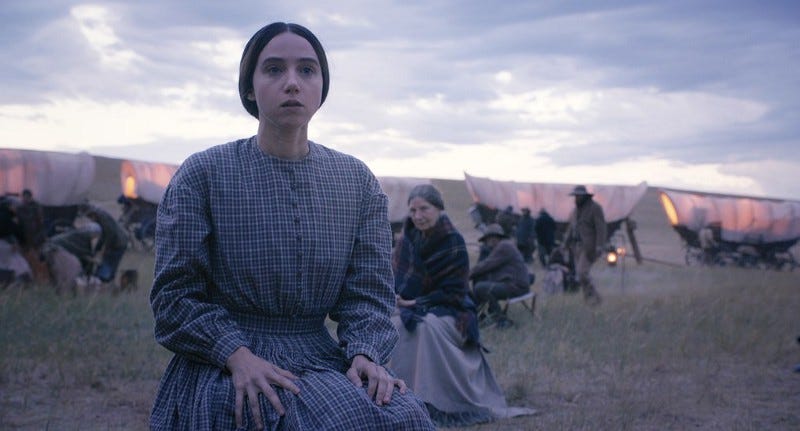
A love kindles into place quickly, from a gratitude and appreciation of one another’s kindness, honesty, and virtue. Still, this is not the romantic plot one might expect, wherein the girl falls madly in love and runs off with her new husband. Rather, she finds that her existing deal is in jeopardy, and works out a new one. Their mutual respect and admiration begins because of this arrangement, in fact, and the situation that leads up to it. Though the development of their nascent relationship through conversation is touching and true, they see this marriage first and foremost as fitting into their plans and solving their problems.
Uncertainty is a cardinal Coen Brothers theme, dealt with most directly in the father’s classroom speech on the Heisenberg Uncertainty Principal in A Serious Man. Uncertainty ran through that same film’s bewildering ending and overall narrative, as it does through all of their work. The Coenverse, though beautiful, is a harsh domain of capricious and lethal fate. In The Ballad of Buster Scruggs, “Near Algodones” has already addressed this same set of concepts by the same story- and character-based method. Here in “The Gal Who Got Rattled,” our leads discuss the subject directly on their first and only night as fiances.
“Uncertainty — that is approprate for matters of this world. Only regarding the next can we vouchsafe certainty. I believe certainty regarding that which we can see and touch, it is seldom justified, if ever. Down the ages, from our remote past, what certainties survive? Yet we hurry to fashion new ones, wanting their comfort. Certainty is the easy path, just as you said.”
“Straight is the gate.”
“And narrow the way. Indeed.”
This conversation is so meaningful to both of them, and also so unfamiliar; as if they each are voicing for the first time thoughts that have long gone unspoken; and finding that they not only see eye to eye but that their points of view enrich and expand each other. To Alice, it is an object of wonder — she’s never before been spoken to and listened to in a respectful, interested, and interesting way like this.
That quote is from the Book of Matthew, chapter 7 verse 14. It’s part of Christ’s Sermon on the Mount, immediately following (and sometimes appended to) what’s commonly known as “The Golden Rule.”
“13 Enter ye in at the strait gate: for wide is the gate, and broad is the way, that leadeth to destruction, and many there be which go in thereat:
14 Because strait is the gate, and narrow is the way, which leadeth unto life, and few there be that find it.”
Billy Knapp is surprised when Alice completes this quote, and she’s pleased and comforted that he brought it up. This, we sense, is a favorite passage for them both, as it reflects their shared concern for doing what’s right. Even as they share this insight, they are falling under the spell of their own hurried and comforting certainty. In this tender conversation by the fire, we and they see a happy future coming into focus for our lovers. But this movie is not about love — it’s about death, and death comes right on love’s heels.
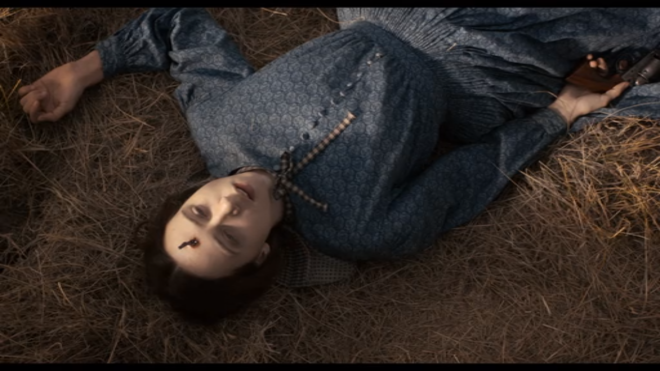
Alice is falling in love with The West, but she doesn’t understand its danger. She’s feeling so uncharacteristically at-ease, strong, optimistic, and smart; she forgets herself and runs off to find President Pierce. Thus we return to the plot of the original short story. When Alice finds her brother’s dog, she tarries too far from the wagon train, charmed by his barking at the prairie dogs (which she has never seen before).
Mr. Arthur goes looking for her. He’s hyper-competent, fearless, aware, skilled, deadly, calm, good-natured, commanding — a highly virtuous man, both by the standards of the West and the standards of today. The Sioux are not — they’re foolhardy, disorganized, tricky, cowardly, and easily beaten despite their superior numbers. As in “Near Algodones,” the portrayal of Native Americans in this movie is not great, thought it does suit the old-Hollywood style of the film. It would have been nice to see something better from the Coens. Anyway, Mr. Arthur is not unhappy about the prospect of fighting the Sioux. He looks forward to a good fight, unperturbed by killing or dying, and not even particularly concerned about the possible rape-torture-murder that he describes to Alice. This is the moral of the original story — Alfred may not seem like much to the city slickers, but in fact he’s the most hardcore cowboy around. The brother and sister of the short story are cool conversationalists, but Alfred is cool where it counts — in the real world of violence and uncertainty that he’s traveled through for so long with nothing and no one to protect him. It’s a story about nerve.
On the other hand is there something he could have said to keep Alice from killing herself unnecessarily, if he were more a man of words? Billy Knapp did his best to protect Alice — he warned her not to wander away from the wagon train lest she risk attack by a Sioux war party, he tried to get rid of the dog, and shooting herself rather than being raped and tortured to death was good advice if a bit harshly delivered. Perhaps if her fiancé had been there to calm her down, to find the right words or just offer an aura of well-being, their happy ending might have been saved. Instead it’s tragedy once again from the black-hearted filmmakers.
The abrupt offscreen death of a major character is a well-worn instrument in the Coen toolbox. Llewellyn Moss, Audrey Taylor, Jean Lundegard — the entire plot of the film seems to hinge on their survival, but their murders flop casually into our laps like an afterthought. Alice Longabaugh’s death means the same thing as the deaths of those three — that everything’s fucked. It seemed like everything might possibly turn out OK, but not anymore. Alice will not find a happier life as a pioneer, but will die having just tasted companionship. Billy Knapp will not settle down with his new bride and build a life on their land in Oregon. He’ll ride with the wagon train and grow old like Mr. Arthur. This chapter draws a line between virtues that are essential, and those that are just nice. Optimism is a fugazi, a red herring, a sham. Conversation is a trifle, a soporific luxury for city folks. What counts most in life is the ability to think fast, to recognize a dangerous situation at a glance, to single-handedly fight off an attack by multiple mounted opponents with nothing but your rifle. Survival is the game. Strait is the gate, and narrow is the way, which leadeth unto life, and few there be that find it.
Up next: My final Buster Scruggs article, concerning the allegorical gothic Western ghost story “The Moral Remains” and whatever closing thoughts click together in the telling of it. What next after that? We shall see, we shall see.