
A Candid Peek into the Personal and Professional Life of Lorwen Harris Nagle, PhD,
Dr Nagle is a clinical psychologist, artist, educator, and writer with a postdoctoral degree from Harvard University.
One of my leadership goals as a writer and editor is to introduce influential writers and leaders to my audience via interviews starting in 2019. Recently, I joined Medium Friendship, and when I asked the early adopters of the program, I found that these avid readers expect curated content and visibility of the work of influential writers.
To fulfill my objectives, I’ll persist in curating impactful and eloquent content, introducing its writers to my audience.
In this post, I’ll share an interview I enjoyed conducting with Lorwen Harris Nagle, PhD, a recent addition to Medium’s writing community but certainly not a newcomer to the writing world. Lorwen’s stories stand out due to their profound impact, rich information, and practical insights for art lovers.
Lorwen’s distinctive writing style captivates the reader, effortlessly conveying her implicit knowledge in a conversational tone. As a reader and curator of multiple publications, Lorwen's content stands out to me because she distills extensive artistic and scientific information, making it exceptionally accessible to readers.
This brief interview provides a glimpse into Lorwen’s interesting background, making it easier for you to connect with her on a personal and professional level. Please enjoy.
G’day Dr Nagle, could you provide some insight into your background, allowing readers to glimpse your life story?
I hail from southern Texas, born and raised in a farm and ranch family whose roots predate Texas’s statehood.
My family history brims with tales of the Comanche Indians and the harrowing struggles pioneers faced in the untamed frontiers. Ancestors in my lineage were physicians who journeyed to Texas to aid during the yellow fever epidemic.
From an early age, curiosity was my constant companion. I eschewed dolls and embraced my first chemistry set at the tender age of 7.
Nursing aspirations of becoming a doctor, I delved into every creature I encountered, nurturing a deep love for research.
At 6, I ambitiously endeavored to construct a biplane in our backyard, fervently hoping for flight. By the age of 8, I devoured the entire Encyclopedia Britannica — virtually the only books available at home.
Among its entries, Pompeii captivated me, compelling me to relentlessly implore my father for a visit. When, at 11, our travels led us to Europe, I was elated at the prospect.
However, upon reaching the gates of Pompeii, I faced disappointment — I was barred from entry due to my age, a moment that left my father equally dismayed after our extensive journey to witness the ruins.
When I was in the 3rd grade, I created a secret language, which I carefully placed in a small bound book. It involved symbols that stood for behaviors. I used hand gestures to act out my invented symbols. For example, a certain hand gesture meant “go to the bathroom,” and another stood for “look at me.” I still remember it well because I got in trouble. My teacher confiscated the book and at lunchtime, I “stole” it from her desk.
The point of this story is that inventive symbols are complex, meaningful, and innovative. Our ability to create and imagine as human beings is extraordinary.
Tell us about your psychology and art background.
I’m a trained clinical psychologist specializing in the visual arts. My niche can be described as the intersection of clinical psychology, neuroscience, and visual arts, focusing on artists finding their inner creative voice.
To find one’s artistic voice, one must undergo a transformational journey that is deeply psychological. This discovery alters one’s productivity and shifts one’s identity.
I’ve integrated my clinical training and neuroscientific expertise with my love for painting. True art doesn’t culminate with Pablo Picasso, James Joyce, or Thomas Mann. Genuine art stems from psychological transformation, akin to Joseph Campbell’s hero’s journey, and is nothing short of extraordinary.
For content creators and visual artists, turning their passion into a livelihood is akin to uncovering pure gold. In guiding artists through Campbell’s hero’s journey, I facilitate two pivotal shifts: 1. My clients attain tangible successes, such as heightened productivity, and 2. They undergo an internal metamorphosis, embracing a new identity. Both elements synergize to foster profound empowerment.
The journey requires an authentic quest, demanding courage to confront one’s shadow side. It’s a blend of courage, intellect, and heart — much like Dorothy’s companions in ‘The Wizard of Oz’ symbolizing various human aspects [the lion, the scarecrow, and the Tin Man].
Engaging in a psychological process while creating content is akin to kindling a fire by rubbing two sticks together; transformation unfolds, reshaping you entirely.
I often describe myself as a ‘finding your voice’ coach — a trained analyst delving into your inner world while you craft visual or written content. Though I primarily coach artists, this quest for finding one’s voice extends to writers.
It’s a structured approach that harnesses the power of imagination, allowing clients to unlock their creative potential and thrive in their artistic pursuits.
My expertise resides in bridging the chasm between the science of the mind and the realm of art, offering a holistic, evidence-backed route to creative transformation.
As a guide, I help artists navigate toward their ‘aha’ moment, that epiphany where internal introspection and external creative expression, like painting, align seamlessly.
Clients commit to a structured, productive schedule, engaging in coaching sessions that delve deep into their psyche. Through this dialectical process, their genuine self surfaces.
I often say, ‘Once your style finds you, your voice will follow suit.’ Each of us possesses a unique artistic style. However, what I perceive as a drawback in painting is that enthusiastic painters continue taking workshops even after acquiring substantial painting skills.
Enrolling in courses to grasp the intricacies of painting isn’t amiss. Yet, constantly flitting from one teacher to another proves futile. Workshops, typically led by accomplished artists, offer fundamentals in painting and composition. Unfortunately, most students end up mimicking the instructor’s style.
My approach diverges from this pattern. While I share my painting skills and experiences, I don’t aim for my clients to replicate my artistic style. Instead, I guide them toward discovering their own. It often entails an ‘aha’ moment and an epiphany for the client. But this transformational journey doesn’t halt there. Once they cross this bridge, they can impart their insights to their own followers.
Tell us a bit about your educational and professional background.
I never planned to get a PhD. In fact, I dropped out of college when I was 19 and married my high school sweetheart. Unfortunately, our marriage was a disaster, and we divorced 17 months later. After our divorce, I returned to college and finished my BA.
My first job was at a VA hospital in San Antonio, TX, working with Hispanic alcoholics. At the time, I developed an acculturation rating scale for 1st and 2nd generation Hispanics immigrating to America. Although decades old, this psychological instrument is still very popular today and used in numerous hospitals and mental health facilities nationwide.
While working with Hispanics at the VA hospital, I obtained an MA in clinical psychology from Trinity University. During the first semester of my MA, I was accepted into a Ph.D. program at the University of Texas at Austin, TX.
I served as the research director for the Hogg Foundation for Mental Health, located on the University of Texas Austin campus. Additionally, I held a position as an associate professor at the LBJ School of Public Affairs, specializing in Mental Health Policy, as featured in the Annual Review of Psychology.
I wrote a number of published papers on community mental health centers, deinstitutionalization, and cognitive behavioral therapy. My post-doctoral degree was from Harvard University, Cambridge, MA, with a specialty in cognitive behavior science.
How do you empower your proteges and clients to find their true selves and artistic voices?
This is a pertinent query to my background. I’d like to delve into several key facets based on my extensive experience and distinctive approach.
I place a significant emphasis on the often-underestimated power of imagination. I elucidate the underlying neuroscientific processes behind imagination and the creative journey, enabling individuals to grasp their unique creative process and identify areas for enhancement.
I highlight the invaluable mental health benefits and a heightened sense of well-being stemming from the act of artistic creation. This encompasses the immersive states of flow and meditative focus that often accompany the creative process.
I accompany artists through every stage of their exploration, from experimenting with diverse artistic styles to uncovering the genuine style that resonates with them. I consistently advocate that ‘one’s style finds you.’ When this revelation occurs, a transformative gateway opens, allowing the artist’s authentic voice to emerge. My role is to continually support the artist as they gain confidence and nurture their distinctive artistic identity.
The refinement of their artistic voice hinges upon sustained productivity. I have developed a structured system that centers artists on consistent creative output, fostering the evolution of their artistic voice. The discovery and maturation of this voice are rooted in an internal transformational shift within their identity, anchoring their artistic expression.
I underscore the concept that art has the ability to infuse mundane experiences with a sense of extraordinariness. I delve into the historical, psychological, and anthropological origins of the artistic process, revealing the art of finding the extraordinary within the ordinary.
My artistic coaching represents a substantial investment in aiding artists in achieving their creative aspirations and connecting them with exhibition opportunities and galleries.
To reiterate emphatically, when artists seek coaching from me, my intent isn’t for them to emulate my style. My role as a coach is to facilitate their exploration in uncovering their distinct style. It’s an iterative process, one that they often revisit in their painting journey. Through this exploration, they gradually discern and experience elements integral to their artistic voice.
What are the top three books that affected your life?
The Demands of Art by Max Raphael, Bollingen Foundation: NY, NY, 1968, delineates art as an active dialogue between spirit and matter, presenting the art-making process as dialectical and profoundly spiritual.
The Master and His Emissary: The Divided Brain and the Making of the Western World (2019) by Ian McGilchrist elucidates the differences between the right and left hemispheres of the brain.
Play Anything by Ian Bogost (2016) remains a cherished favorite. Bogost emphasizes the concept of play as the operation of structures constrained by limitations. He asserts that play offers a way to navigate within constrained systems in a fulfilling manner.
What are your hobbies?
I’m a hot yoga fan. I love to sweat and love the discipline. When I’m not painting or writing, I love hanging out with our dog and my husband.
What motivates and inspires you in life?
I’m destined to teach creators how to find their voice and enable them to transform their identities. Both activities — discovering their artistic voice and transforming their identity — are the pillars of a successful artistic career.
What inspired you to join Medium, and why do you write here?
When I reflect back on the day I published my 1st blog — I’m not sure what was the catalyst and why that day. I remember talking with my husband, who suggested I write on substack or medium. I found Medium to be easier to navigate as a beginner than Substack.
I love the platform and find it super easy to navigate. Since my 1st publication, I’ve been on a steep learning curve since the writing style on Medium is very different from academic peer-reviewed writing. I prefer writing on medium to academic writing.
What are your values as a writer?
As a writer, my approach to problem-solving veers toward seeking psychological solutions rather than relying solely on logic. The landscape of logical solutions, particularly concerning creativity, often bears the scars of attempts that have been tried and failed.
In the present day, the emphasis lies on presenting psychological solutions, particularly those that artists encounter in gaining recognition for their creative endeavors.
I value truthfulness and authenticity. I like to speak in a conversational tone. For the last seven years, I co-taught oil painting courses through the Sight & Insight programs, which I cover in my stories.
I served as the lead writer for multiple programs, collaborating closely with my co-teacher, David Curtis, who possessed exceptional oil painting expertise and teaching abilities.
Our collaboration merged his proficiency in painting with my knowledge in psychology, perception, and cognition, resulting in the creation of the highly acclaimed Sight & Insight programs. Regrettably, David passed away in November 2021.
My values stem from authenticity, honesty, hard work, and collaboration. These principles guide my actions and decisions, shaping my approach in various endeavors.
How do you connect with your readers?
I actively engage with comments, giving careful attention to readers’ insights and questions. Additionally, I foster an ongoing dialogue with readers through email subscriptions, addressing their inquiries and thoughts.
Why did you join ILLUMINATION, and how did you find it so far?
In the early stages of my Medium writing journey, I received an inspiring email from you, inviting me to join Illumination to share my art and psychology content, recognizing their value.
At first, I wasn’t sure if it was genuine. Upon writing back to you, your confirmation thrilled me. Being invited to join such a popular online publication with a vast following was a delightful surprise.
I thoroughly enjoy contributing to the Illumination-integrated publications and submitting articles to most of them. The writers exhibit a collaborative spirit, the editors are consistently supportive, and the readers actively engage. It’s a vibrant community on Medium, and I haven’t encountered such an enthusiastic environment elsewhere on the platform.
Who are the top ten writers you follow on Medium?
I follow many writers, but apart from you, the other 10 are Ayodeji Awosika, Nir Eyal, Nick Wignall, Matthew Coast, James Michael Sama, A. M. Champion, Narc Free, Cassie Kozyrkov, Derek Hughes, Mike Broadly, DHSc, and Aiden (Illumination Gaming). I always gain new perspectives and learn something from the stories of these writers.
What are your top five stories that you want to share with your audience and why?
An Unpainted Mind: Overlooking the Connection Between Art and Psychology
These articles reveal my background in clinical psychology, neuroscience, and the visual arts. They also express my passion for painting and creativity. They support and enhance my niche as a “finding your voice” creative coach.
What are the success factors for you as a writer on Medium?
For me, the success factors on Medium revolve around heightened engagement with followers, receiving valuable comments, and having my stories boosted. Consistency in writing has notably contributed to increased earnings through the partner program.
What are your goals on this platform?
In the short term, I aim to expand my following and maintain a regular publishing schedule. In the long term, I aspire to be acknowledged as an authority in my domain and to be known for consistently delivering on my commitments.
What do you recommend to the new writers on ILLUMINATION?
The Illuminations Integrated publications encompass a fantastic array of topics, offering new writers the opportunity to explore diverse subjects until they discover their genuine interest.
Personally, I’ve found it beneficial to note that I can publish Medium-related pieces in Readers Hope or Synergy while opting for more academic articles on Illuminations or Illuminations-curated.
My recommendation is to write from the heart, structure your content to meet publication guidelines, engage with other writers meaningfully, and support your readers by offering them your best content.
Consistency is key. Begin by writing regularly and focusing on your content’s quality rather than its length. Over time, longer articles will naturally develop. Be concise, omit redundancies, and stay committed to your writing journey, never losing sight of your goals.
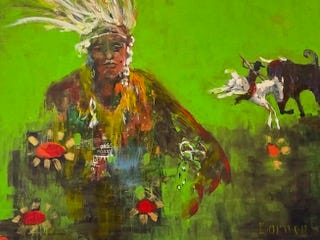
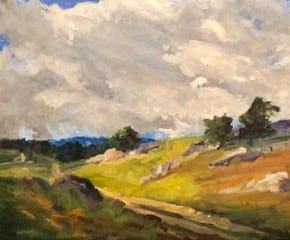
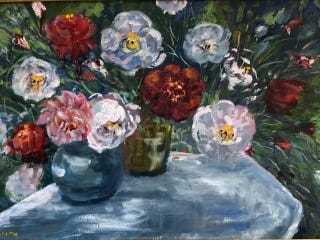
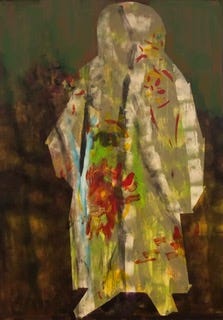
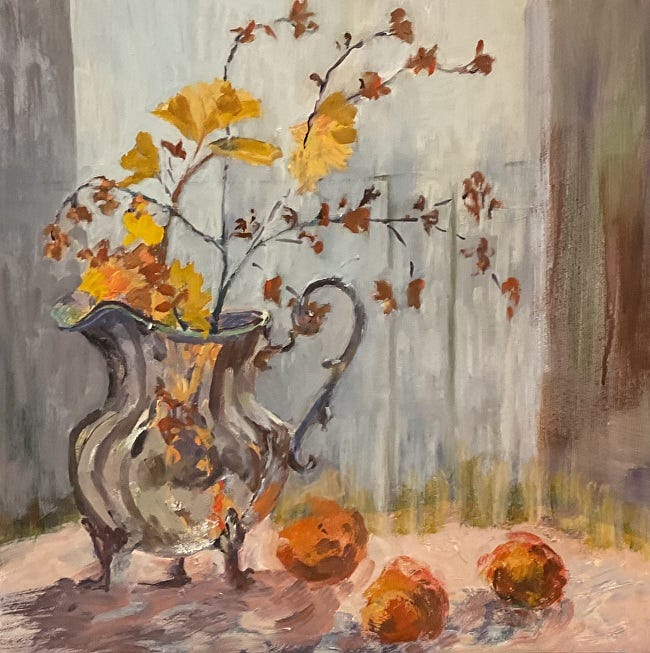
Can you show us a few of your paintings for our readers?
I’d be delighted to assist with that. While numerous samples are available on my website, here are a few that I believe your readers would find enjoyable.
And, finally, how can writers and readers can contact you?
My email is [email protected], or you can visit my website at www.lorwenpaintings.com. I’m on substack @lorwen, X as @LORWEN108, and LinkedIn.
Thank you for introducing yourself so eloquently, Dr Nagle. I wish you and your loved ones a Happy New Year.
I also introduced two other scientists recently. You may enjoy this introduction to Matt Williams-Spooner, Ph.D.
And an introduction to Pernoste & Dahl.
You can find more interviews from my collection.
If you are an aspiring leader, I researched leadership over the last four decades and summarized my findings in three articles that you may find helpful.
You may learn about my technology leadership curation plans for my publication, Technology Hits, on Medium.
To inform my new readers, I wrote numerous articles that might inform and inspire you. My topics include brain and cognitive function, significant health conditions, longevity, nutrition/food, valuable nutrients, ketogenic lifestyle, self-healing, weight management, writing/reading, and humor.
100+ Insightful Life Lessons from My Circles for the Last 50+ Years
I publish my health and wellness stories on EUPHORIA. My posts do not include professional or health advice. I only document my reviews, observations, experiences, and perspectives to provide information and create awareness. Be Your Own Therapist in 10 Steps.
If you are a writer, you are welcome to join my publications by sending a request via this link. I support 25K+ writers who contribute to my publications on this platform. I also have another profile to write and curate tech stories.