
A Beautiful Introduction to Indian Classical Dance
Life #15 features an interview with dancer, writer, and poet Divya Goswami, prompt responses to the Life month of June prompt, and other exciting updates
I have always been fascinated with various dance forms, particularly Indian classical dance. The footwork, grace, finesse, and most of all the facial expressions and eye movements of Indian classical dancers have enthralled audiences all over the world.
It gave me the inspiration to reach out to writer-poet and Kathak dancer Divya Goswami to learn more about Indian classical dance and her experiences as a Kathak exponent.
So without further ado, I present Divya!
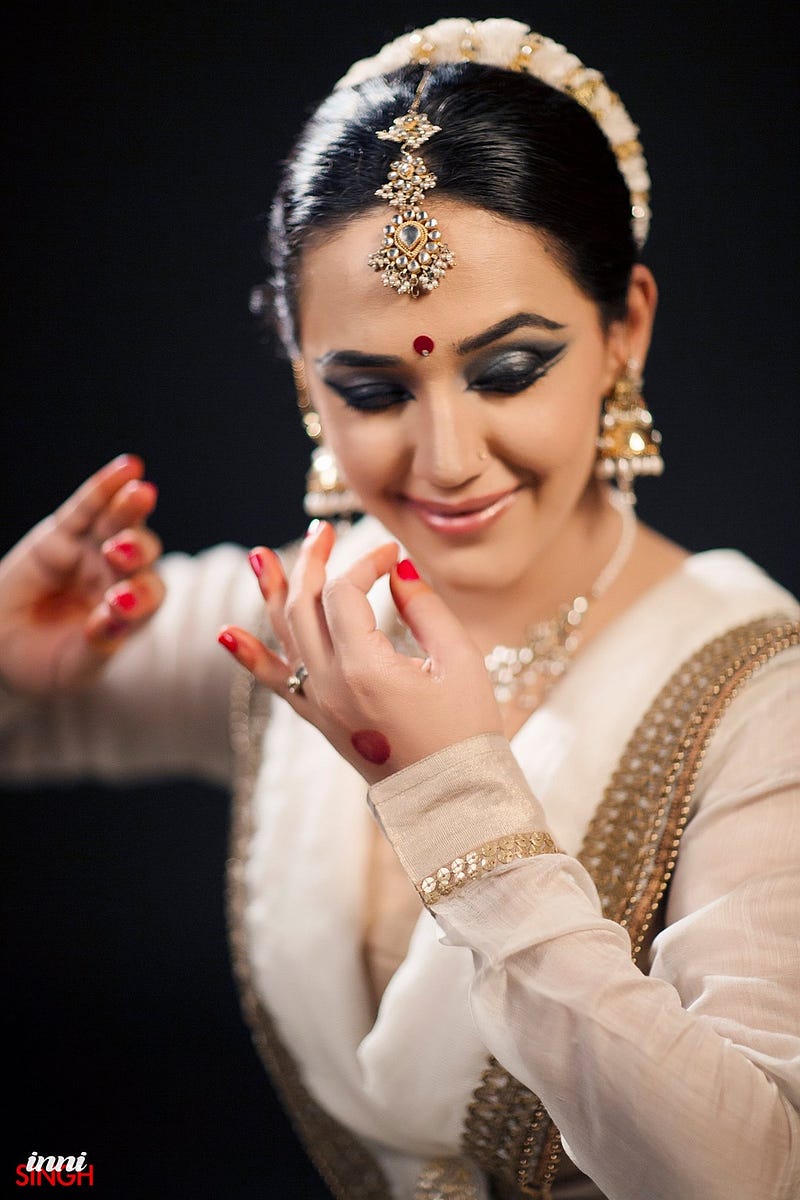
Me: Thank you for agreeing to be part of this interview. Tell us a little bit about yourself and Indian classical dance.
Divya: Dance is Me and I am Dance.
I have been dancing ever since I remember. Kathak was given to me by my family as a gift and a blessing from the age of 5. Hailing from the Northern part of India, and Kathak being the only North Indian Classical dance form, it was an easy choice.
Over 35 years of being a dancer, Kathak has become my life with not just my hard work, but a collective effort of my family, Gurus, mentors, and friends. My mother or father driving me, after work, halfway across town in Jammu and waiting patiently for hours. My school teachers working together to organize my first solo at age 9. My grandmother and partner being the pillars of strength and storehouse of ideas.
I moved to Pune in 1991 to live with my grandparents at age 11 since my father would be transferred often, being in the Indian Army. Here, I met my first Guru, Smt Yogini Gandhi at the Osho Commune International. And embarked upon a journey of serious training in the Guru Shishya Parampara style, for about 18 years. This age-old student-teacher tradition of learning in India is where the knowledge is passed on through an intellectual, spiritual, emotional bond of oral tradition, without a formal school system.
The seminal features of Kathak, its straight-line body, rigorous footwork, subtle movements of the minor limbs, flowing pirouettes, provided me with a balance of control and unrestrained flow of energy. It is in these early years, that I learned, taught, performed with Yogini Didi and was groomed to be more than just a dancer.
The most important turn came when I moved away to carve my own independent dialogue with dance. I immersed myself in the flowing tradition of Kathak, understanding its non-linear expansion over two thousand years. The movement in the performance spaces from the bards – temples — courts — patrons to the proscenium stage. The inclusivity of Kathak with the influence of Moghul and Hindu cultures. To me, dance and Kathak become a path of meditation.
Since 2014, I have received guidance from the great Guru (late) Shri Munna Shukla ji, who opened chapters of Kathak I didn’t know existed. This is where the fine-tuning of my body as an instrument and vessel started. The real hidden power of Kathak began to reveal itself to me. Moving from the meaning to abstraction, feeling the laya or pulse in every creation of existence, uncovering the universality of emotions beyond language. My training was further augmented by my mentors (late) Shri GS Chani, Smt Kamalini Dutt, who continued to expand my vision.
I am a student of Kathak and shall be so till my last breath, for the journey is continuous. Today, dance is not just my creative odyssey, a profession, a medium of meditation, or a path of awareness. It gives me methods, resilience, and energy to find quietude. Dance is the all-consuming embrace of love and peace, and all I do is be present to it as an artist and witness.
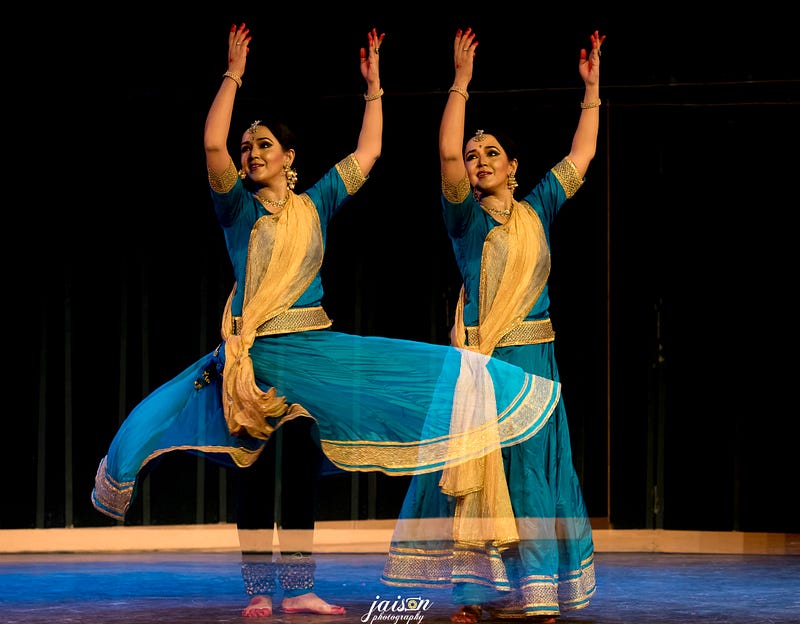
Me: I’m sure readers will be curious to know more about your training as an Indian classical dancer. Are you trained in many forms of Indian dance or one or a few?
Divya: I feel there is only one thing that you can do with totality in life. For each profession, hobby, interest requires time, effort, and constant learning. Each field has a lot of branches growing in and out of it, each needing our in-depth understanding, nourishing, and care. So in this life, it is only Kathak for me. Having said that, Indian classical dance forms are far more interlinked, integrated, and interacting. Hence to be a dancer, I have studied Indian Classical Music, Languages, History, Art, and Literature. I don’t just get up and practice as a routine but study ancient texts, poetry, sculpture, painting, music, language, culture, expression, etc.
For me, training in dance takes place at four levels, no matter which stage of your life as a dancer you are:
- The Physical Space — where the actual rigorous training takes place. Right from building stamina, body and foot movement, expression; repetition, corrective and analytical practice is followed.
- Intellectual space– where you read, draw parallels, observe, cross refer, hyperlink, find the connection between various art forms, research your art and thought.
- Creative space — where you imagine the possibilities of patterns, lines, thoughts, and applying the self. And find new meanings to the words and music, using metaphors, similes, and ideas.
- Emotional space — a moment no matter where you are, you feel the awareness of dance, and it begins to happen within, at all times. Dance to me is deeper than life and the self. Each beat, every note, all movement, strung together with the thoughts, creating an equilibrium with the breath within and the energy outside. “Dance is each moment lived to the optimum, with complete abandon and total surrender.”
Me: Can you describe which of your performance or performances stand out the most for you and why?
Divya: I can never pick just one moment or performance that I love more. Every performance is like seeing a bud bloom into a flower of immense beauty and feeling the bliss of its fragrance that spreads far and wide. Sometimes the most blissful moments are felt during my practice, or while creating and dialoguing with my Guru or companion. Simply getting up, tying my ghungroos (ankle bells), and doing my riyaaz (practice) is a performance to remember, learn, and grow; each time.
Simply getting up, tying my ghungroos (ankle bells), and doing my riyaaz (practice) is a performance to remember, learn, grow; each time.
I have had special moments on the stage. One most unforgettable performance was, choreographing a story from the life of Gautam Buddha, describing maternal love and frailty of life. Its spiritual expression, honesty, and pain felt in the tears rather than the claps of the audience and the King of Bhutan will always be etched in me.
One thing special for me though is moments of sharing with children and young minds. Giving them a feel of the power that lives in the Indian Classical Arts and absorbing their smiles filled with awe shining through their being. Dancing through all the odds, sweat, and blood, especially when it creates a space in the heart of my grandmother, parents, and partner is the most rewarding.
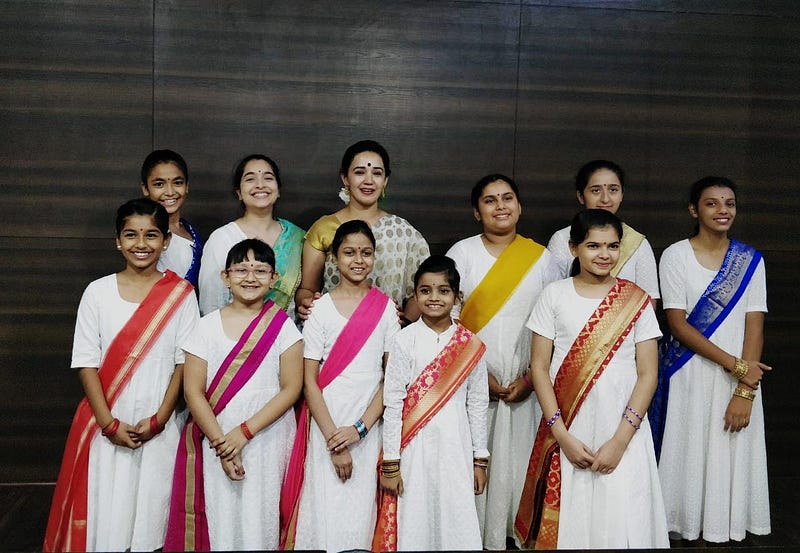
Me: I know you as a writer, poet, and dancer. Can you share some tips on how do you manage your time and create a work-life balance?
Divya: Balance is the key to life. A concept emphasized in the Indian philosophy through Yoga, meditation, and all art forms. The peace, stillness, awareness that dance brings to my being, is balance. A feeling of oneness with dance, the devotion to art, the let go in love.
Being a Kathak exponent has given me the space to not just perform, teach and choreograph for over two dozen years but also opened my creative energies toward writing, painting, and storytelling. Kathak is a path which gives me tools to find an inner alignment, create a harmony with my environment and find a rhythm with existence on a daily basis. I don’t like to call it ‘work-life balance’ for ‘I do what love and love what I do’. But apart from getting up and dancing every day, no matter the circumstance or the games of the mind, I hold close the concept of wholistic development.
Discipline, dedication, diligence — A commitment to a time, energy, and self, mentally, physically, and emotionally.
Patience, perseverance, passion — A focus and energy field of positivity to help steer through the ups and downs of this self-discovery.
Surrender, sensitivity, silence — Becoming a vessel to carry the art.
Each day being grateful, soaked in the devotion transcending us as humans, artists, and creations of existence in love. I seek an awakening of the mind, body, and soul through all forms of art. To experience being a vessel, a medium, to be the dancer, the dance, and the danced. To connect to the universal energy and be in a state of heightened awareness.
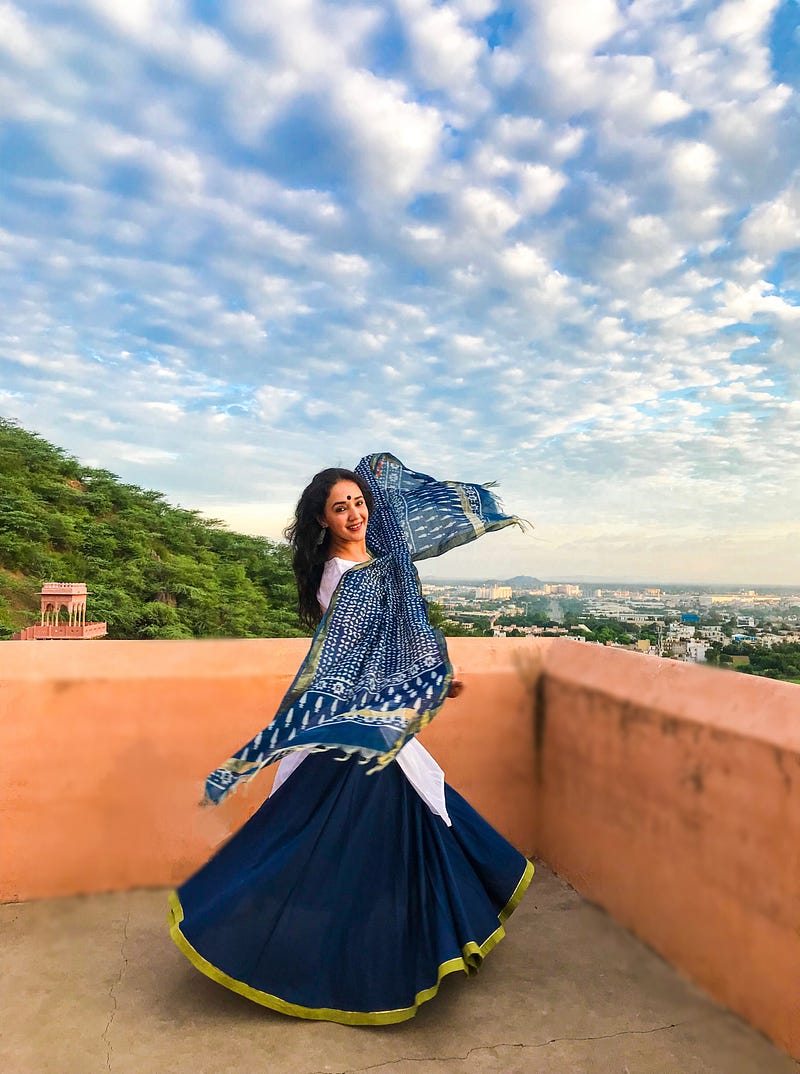
Me: Thank you for sharing your experience with us, Divya, wishing you the best in all your endeavors!
I invite you to check out Divya Goswami’s Medium page.
Updates
As you may know, pockett dessert kindly agreed to do the Life month of June guest collab prompt👇
The response to the prompt has been amazing and I would like to thank Pockett D and all the writers who have responded thus far:
Mahein Kazi — Learning From The Innate Wisdom of Nature
Marilyn Glover — With Park Swinging, I Become A Pendulum; Movement With Freedom
Vidya Sury, Collecting Smiles — Nature Nurtures My Spirit
B.R. Shenoy — Embrace the Magic of Nature
🌸 This week’s pick for Coffee Times Substack Life is by Carmelita — I Discovered Life Wants Me to Live in Happiness, Peace, and Abundance.
🌸 Want to be a writer for Coffee Times? Then sign up here