
A Bartender’s Technique to Motivate Your Kids Into Not Being Late
A simple technique that will let your children know that you mean it when you say that it is time to go.
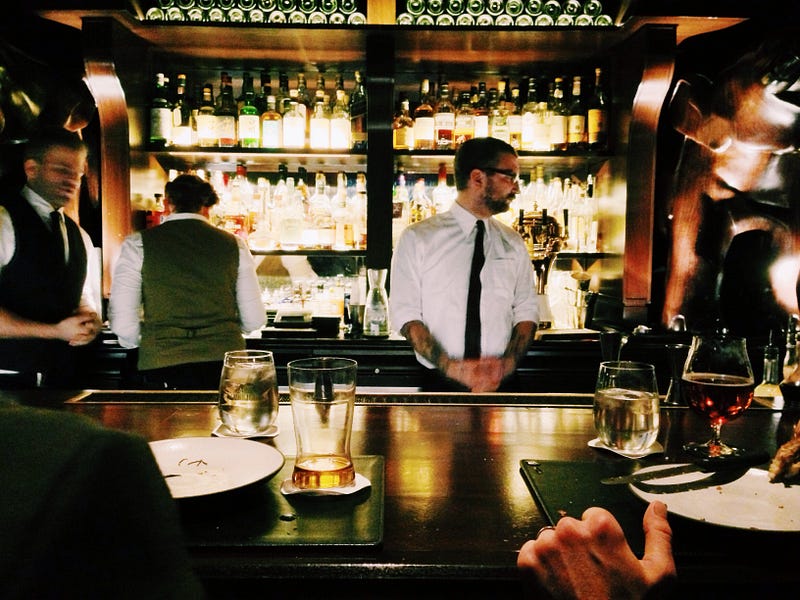
I first stumbled upon this technique when I was bartending in college.
Last call is a difficult time. In many places by law, you must get everyone out of the bar and their drinks picked up by 2 a.m. or the bar is often fined.
On the other hand, the people you are running out of the bar have been happy, paying customers all night who tipped well and spent a great deal of money in the establishment.
It can be a difficult tightrope to walk. You need the customers to leave, but you want the customers to leave happy.

At 1:40 a.m., we would shout last call, serve a round of drinks, and then at 1:50 a.m., try to get everyone to drink up.
I learned that one of the quickest ways to let the customers know it was time to leave was to change the environment.
People are not always paying attention to every detail at a bar at 2 a.m. after drinking all night long.
Over the years, I tried various techniques.
I learned if it was cold, I could prop the door open. The sudden rush of cold air would remind people that we were closing.
I would turn the music and the televisions off.
If a light was on, I would shut it off.
If a light was off, I would turn it on.

Anything to get the message out that we were closing without having to yell at individuals.
But, of course, this wasn’t always enough.
So, I would give them timed warnings.
I started by saying you have fifteen minutes to drink up. Then ten minutes. Then five minutes.
Many times, these requests went ignored.
It was then that I realized that when I said, “You have fifteen minutes to drink up”, the customer heard, “You will have to finish that drink sometime in the future.”
After thinking about this, I tried something new.
Instead, I said, “You have fourteen minutes to drink up.” Followed by nine minutes and four minutes.
Every time, the customer would look at his watch or phone to see the time.
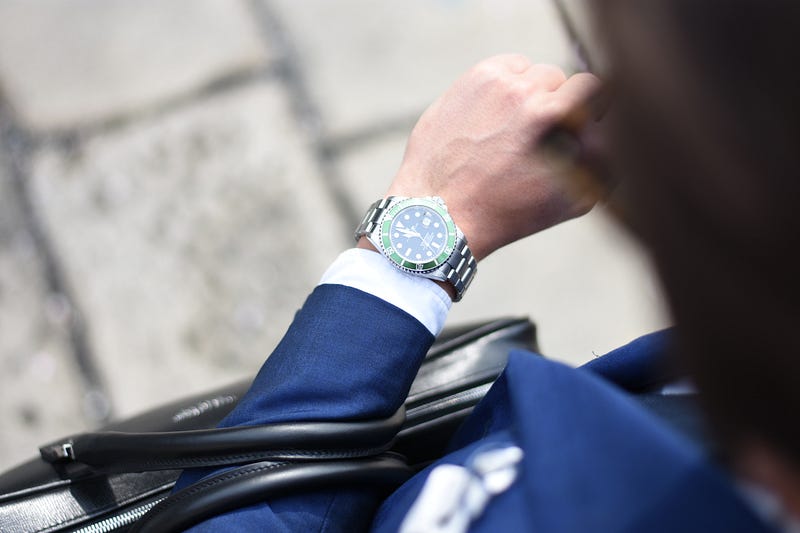
When the number fell on an incriminate divisible by five, the time was perceived as being arbitrary. When I was more specific, they seemed to take it more seriously. I must have said fourteen for a reason, they thought.
Suddenly, last call went smoother.

When I later became a high school math teacher, I used this technique with similar results. When I announced that they had seventeen minutes to finish an activity, without fail, the students would look at the clock and take it more seriously.
I have used this with my daughter at home.
When we are trying to leave the house, I will say, “We are leaving in four minutes.”
Not five minutes or ten minutes but specifically four minutes.
She has learned that when I say this, I mean it. It is not an idle threat.

I have always been amazed at how much crossover there is between the things I learned while bartending and the things I need to know as a teacher or parent.
I may not have learned everything I would need to know about life in kindergarten, but I did, indeed, seem to have completed the education behind the bar in college.
For another story on parenting and relationships by Curt:


