
Learning English from Irishmen while Bartending in Dublin
A story about an American’s struggle to learn the Irish’s take on the English language while working in Ireland.
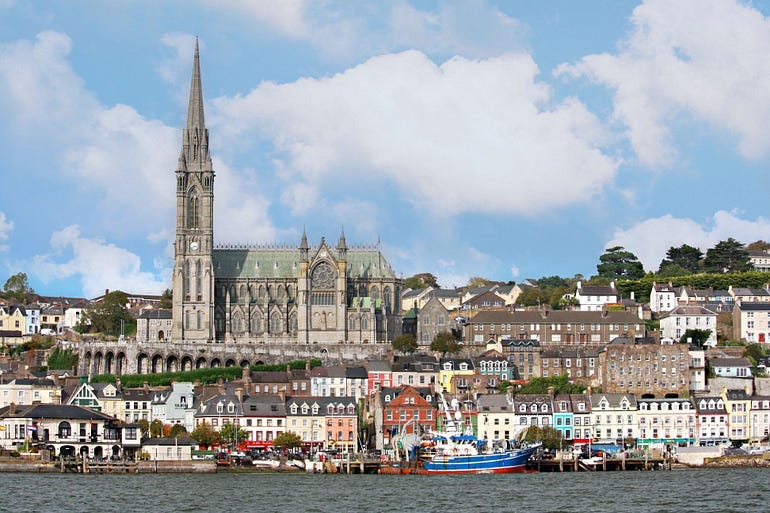
Dublin, Ireland
In 1989, I dropped out of college to see the world, or at least a small part of it. That fall, I found myself bartending in Dublin, Ireland.
I had decided on Ireland as a work-study because they spoke English and working in a country where I actually spoke the language would be easier, or so I thought.
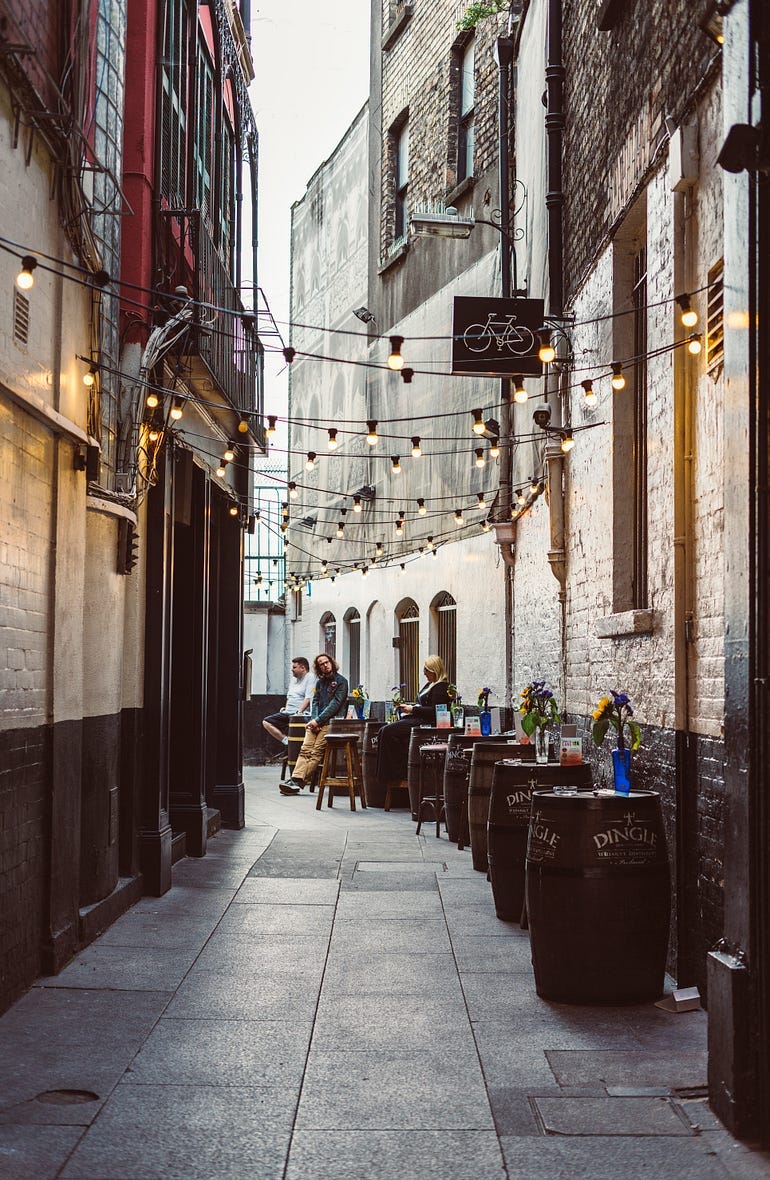
Learning a new language
I soon fell in love with the nuances of the Irish’s take on English. The accent is wonderful and their names for things are often descriptive and simple.
Trash bags were black sacks. Drink coasters were beer mats. 5:30 was half-five. I loved the simplicity.
The “h” in “th” words is mostly silent and the way they pronounced words like “thousand” simply rolled off the tongue.
There were words they used that I understood but were not as commonly used in the United States.
There are of course the famous ones: the boot and bonnet of a car, the loo, chips for fries, crisps for chips, and solicitor for a lawyer. Porridge was oatmeal. A torch was a flashlight and petrol was, of course, gasoline.

Clever phrases
Some of their uses of words and phrases I found especially clever.
They would describe a shady person or bad neighborhood as dodgy.
If you were at a party and trying to get to know someone of the opposite sex, you were “chatting them up”.
If you were making fun of something, you were slagging on it.
If you knocked someone up, you were not going to have a paternity suit but probably went by their place and knocked on their door.
Grand was a response if something was fine but also could mean something was great.
The phrase “for f**ks sake” was ubiquitous and used beautifully.
New to me
There were some words that I didn’t know before working there but were easy to figure out.
If you went the restroom, you, of course, went to the loo but it was also sometimes called the jacks.
If something had gone wrong, it went arseways.
The police were officially the Gardia and casually called the guards. If you were pissed, you weren’t necessarily angry but certainly were drunk.
I was once asked to attend a party where they assured me that I would find good crack. After my initial declaration of not being into crack, the person explained to me that crack was a slang for fun.
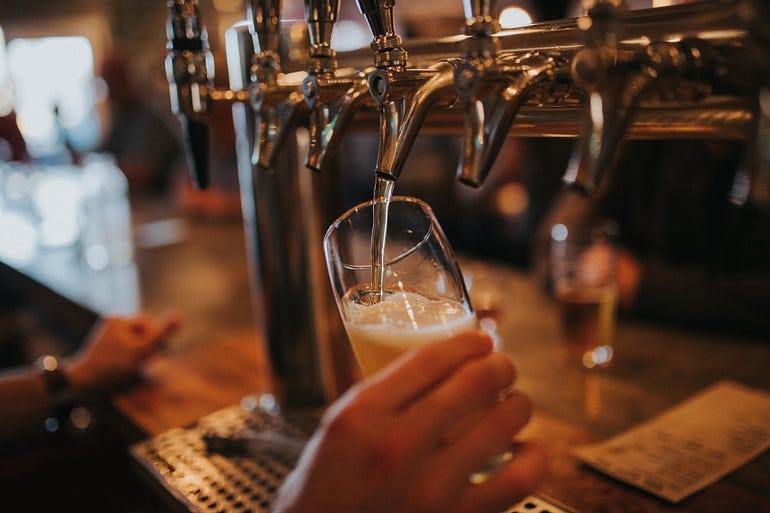
Language barriers
Working at a pub, I am sure most of the customers thought I was hard of hearing as I frequently had to ask them to repeat what they had said in their thick Dublin accents.
Of course, that worked both ways as I greeted them with a “Howdy, what can I get cha” in my midwestern drawl. Many would giggle, go get their friends and ask me to say it again.
They often made fun of how many things I described as “big ole” and, largely due to the popularity of Cheers at the time, called me Woody despite how many times I told them my real name.
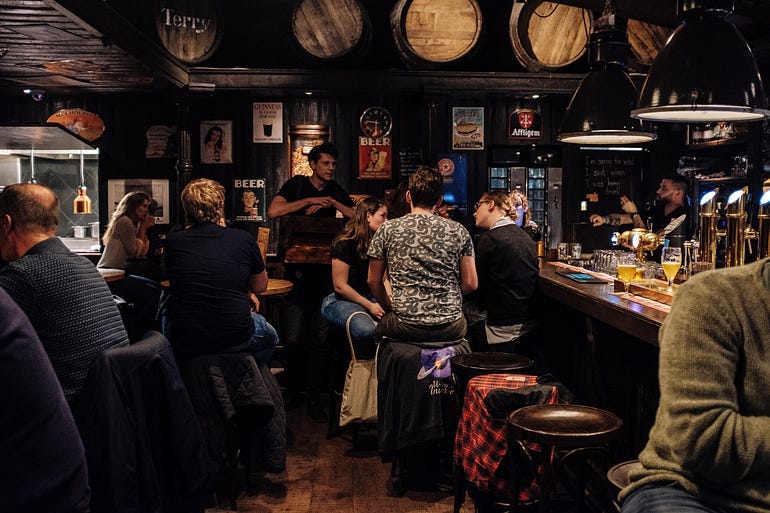
I had expected working in Ireland to be easy because I had erroneously thought we spoke the same language. How wrong I was.


