
There are Exactly Two Attachment Styles and Everyone has Both
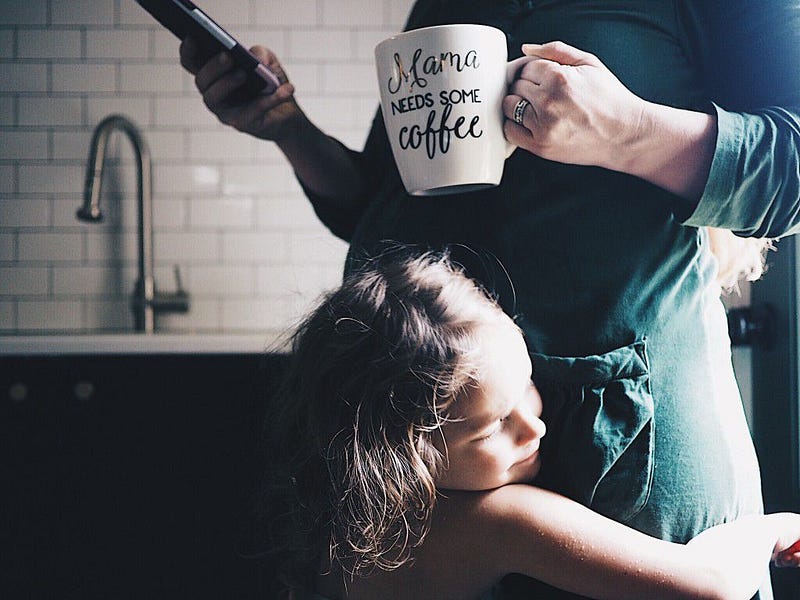
People with secure attachment are born into families that give the love they need, and not the abuse they don’t. They are reassured that when their parents go away, they will come back; that when happiness goes away, it will come back; that when they misbehave, love will stay.
The best way to become securely attached is to be raised by someone who is. Only by being exposed to a lack of love can we believe in it, become it, practice it. Our parents naturally treat us well — or would have. For hurt people hurt people, including and especially the ones they breed. Hence insecurely attached parents breed insecurely attached children. We convey love to others insofar as we embody it ourselves. All resistance to love is a learned behavior.
The prevailing theory of attachment style states that those who are able to enter and exit relationships without pushing the gas or riding the brake for the sake of doing so are securely attached. The insecurely attached generally fall into two categories: The anxiously attached gas-pushers, and the avoidant brake-riders.
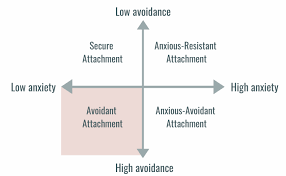
To be insecurely attached is to believe there is not enough love. The Anxious seeks out in others the love they refuse to find in themselves. They continuously ask their partner for validation, reassurance and affirmations. These behaviors are normal — if this means believing what you hear. But if your sack has a tear, you must continuously fill it, for you never believe what you always ask to be convinced of. You told me you loved me yesterday. But what about today? Do you love me today? A lot? How much is a lot? A lot a lot?
By contrast, the Avoidant believes there is not enough love, and then proves it by not giving it to others. Being the photonegative of the Anxious, the Avoidant pair-bonds with the one who exposes the need to walk away from what they deny themselves. The Avoidant has too little for themselves, hence they cannot give enough to others, particulary to those who cannot believe in ‘enough’.
Yet what they deny others, they pine for in themselves. Avoidants shut down and appear apathetic on the outside precisely because they are overwhelmed and vulnerable on the inside. Like healthy introverts, the unhealthy Avoidant recharges when alone — but not because it is their nature. Rather, they learned not to seek love, not to set off unstable parents, not to be a reason for unhappiness to happen. Hence whereas the Anxious goes without to redress the imbalance of love, the Avoidant retreats within — and the Anxious chases them! This can cause the Anxious to follow the Avoidant from room to room — whether of the home or of the psyche — causing the Avoidant to learn a silence as deafening as the Anxious’s yelling.
The Anxious and the Avoidant take opposite solutions to the same problem: not enough love. And they must find it in themselves, not their pursuit or avoidance of each other.
The problem with the prevailing theory of attachment is then that it treats attachment styles like diseases: the false binary of health and illness. Consider viral diseases such as HPV. Many people have it their whole lives without knowing because they are never symptomatic. Anxious attachments may similarly never present a classic symptom despite a lifelong pathology. For example, two codependent spouses who text every hour may not exhibit anxious attachment per se because they never have occasion to suffer their needs not being met. How anxious can one get at a separation they prevent from happening?
Similarly, many men who are expected for cultural reasons to be reserved, taciturn, and aloof camouflage their avoidant attachment. For them, insecure attachment does more to create an equilibrium in their relationship than would suddenly becoming securely attached. A man becoming a paradigm more emotionally available than his father disrupts his family system and his lineage in the name of turning to face love.
Hence we have two attachment style: the one we display when our needs are met, and the one that emerges when they aren’t. What is your attachment style under this rubric? If you text your partner, and you see they haven’t responded 15 minutes after reading the message, whatever your internal dialogue states — that’s your real attachment style.
When your partner fails to exist within your comfort zone, or if your concept of love fails to exist therein — there you will find your defenses against love. That’s your real attachment style, the one you bring to your partner once it becomes a real relationship, the one you bring your therapist after your relationship.
When needs go unmet, some partners change tactics and attempt the opposite attachment style. The Avoidant displays just enough love to keep the Anxious partner from leaving. This is an attempt to mollify the Anxious partner by becoming them: pretending they assimilated you long enough for them to feel you took them seriously. Look, I can feel, too!
It’s telling when we mimick our partners. I’ve stormed away from my wife a few times, but always hoping she would follow me. This is an Anxious wolf in an Avoidant sheep’s clothing. When a real Avoidant walks away and you follow them, they simply remind you that they walked away to get away from you.
Healthy love is less about using tactics and more about not needing them. Secure attachment is ultimately what love is meant to be — the path of least resistance: not because we are not trying, but because we are not resisting. Anxious partners resist love by going too fast. If you are serious about building a relationship, you let the glue dry before beginning the next level. Avoidant partners resist love by walking the wrong way on the moving sidewalk: you have to fight to go forward whereas withdrawing happens with ease.
Having an insecure attachment means dating one. Dating someone with an insecure attachment gives us the excuse that we have found the person who makes love hard. It’s far easier to tell our partners that they are sabotaging love than it is to see them defending themselves because they, like us, feel unsafe in love. When we blame others for our inner state, we enter the drama in which love is a commodity, safety is a zero-sum game and our empowerment exists to point out how much happier we would be if only our partner would resolve their issues — the ones we outsource to them.
We staunchly believe that when our partner changes, we will be happy. This implies that instead of choices to make, we have partners to control. This may have been how our parents saw us — as someone to control rather than to love. In the middle of this paragraph, my daughters woke up at night, crying. I tried to meet their needs, but also to just get them to sleep. Parenting marks an ongoing balance: validating emotions (it’s gonna be OK) while directing drives (go to sleep). As a therapist, I do the opposite: validating drives (it’s natural to want to sleep around) while directing emotions (confront your fear and ask it what it wants). In parenting or therapizing ourselves, we learn to acknowledge the pain while letting go the defenses it put between us and love.
Also read Attachment Style is Actually Detachment Style and Swimming Upstream for Love.
To follow me: https://medium.com/@myartman
To subscribe: https://medium.com/@myartman/membership


