
Curativity Theory: Table of Contents and Related Articles
Curativity: The Ecological Approach to General Curation Practice (Oliver Ding, 2019)
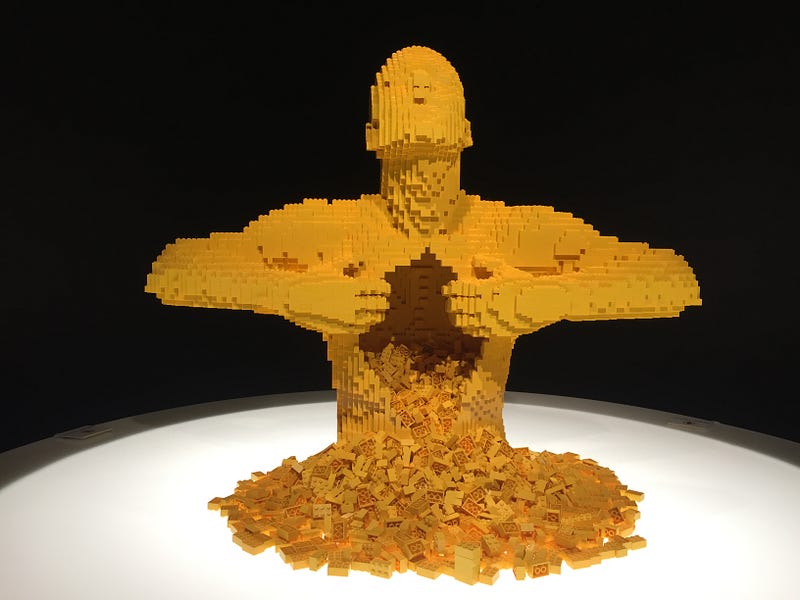
Some friends asked me to share more information about the book Curativity and the Knowledge Curation project. Curativity: The Ecological Approach to General Curation Practice was written from Oct 2018 to March 2019. It is a 615-page Google Doc file. Unfortunately, it was written in Chinese.
In the past years, I started directly writing books in English and directly applied Curativity Theory to some projects such as the Knowledge Curation Project.
This article aims to translate the Table of Contents of the Curativity book into English and offer more related information.
1. The Concept of “Curativity“
I have been working in the curation field for over ten years. I was the Chief Information Architect of BagTheWeb which was an early tool for content curation (We launched the site in 2010). This experience inspired me to make a long-term commitment to the Curation theme. After having 10 years of various curation-related practical work experience and theory learning, I coined a term called Curativity and developed Curativity Theory which became a book.
The new term Curativity refers to “curating pieces into a meaningful whole” which means general curatorial practice. The reason why I coined the term is that I was not satisfied with the specific view of curation such as “professional curation means art and museum.” I argued that there is a need to redefine “curatorial practice” as a general social activity and a universal experience. In other words, I was calling for an interdisciplinary view of curation or curatorial practice.
In order to avoid unnecessary debate on the concept of curation or curatorial practice, I coined the term Curativity to refer to my argument. Thus, Curativity is an ontological-level invention. It points to a new space for knowing and understanding.
In philosophy and mathematical logic, researchers use “mereology” to describe the study of parts and wholes. Though I am also talking about the relationship between the pieces and the whole, what I want to explore is not mereology. My objective is “curating pieces into a meaningful whole” which refers to action, experience, and value. In other words, I care about the practice and activity of curating, not the abstract thinking about parts and whole.
Curativity Theory — originally called Ecological Curativity Theory — is an epistemological-level tool for knowing and understanding Curativity.
Curativity Theory adopts James Gibson’s “Affordance”, George Lakoff’s “Container” and Donald Schön’s “Reflection” as epistemological tools. The diagram below shows the basic elements of Curativity: Pieces — Container — Whole. The basic assumption behind the diagram and the new term is: “In order to effectively curate pieces into a meaningful whole, we need containers to contain pieces and shape them.”
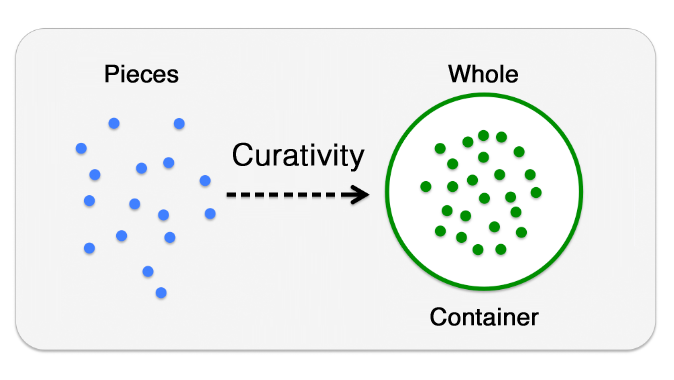
Pieces, Container, and Whole together form a triad which is the basic unit of analysis of Curativity Theory. Also, this unit of analysis establishes a new theoretical category at the ontological level. The concept of Curativity indicates three statuses of things:
- Things-in-Pieces
- Things-in-Container
- Things-in-Whole
Thus, Curativity Theory is all about understanding the structure and dynamics of these three statuses.
2. Table of Contents of the Curativity Book
The book Curativity: The Ecological Approach to General Curation Practice was written in Chinese from Oct 2018 to March 2019. It is a 615-page Google Doc file.
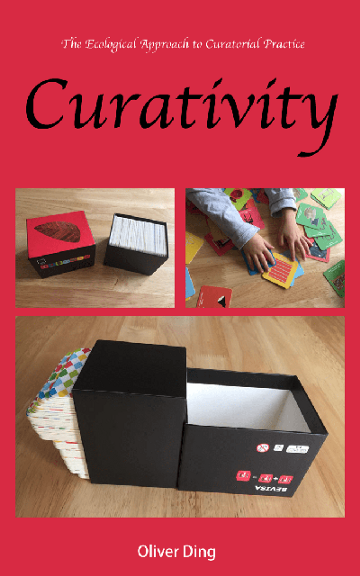
Though I don’t want to translate its full content into English, it is possible to translate its Table of Contents. Here we go:
- Preface: Once Upon A Curator
- Chapter 1: What’s Curation?
- Chapter 2: Turning Pieces into Meaningful Wholes
- Chapter 3: Ecological Curativity Theory
- Chapter 4: Curation as Practice
- Chapter 5: Practice as Curation
- Chapter 6: Principles of Curativity
- Chapter 7: Curativity Analysis
- Chapter 8: Curativity and Epistemology
- Postscript 1: The Information Architecture of Social Life
- Postscript 2: The Seed of the Ecological Practice Approach
- Appendix 1: A Typology of Affordances
- Appendix 2: A Typology of Ecological Information
The Preface reviews my own life experience through the perspective of curation and I found that the theme of curation is an important theme in my life themes. I also tell the story of writing the book and offer two guides for two types of readers.
Chapter 1 (What’s Curation?) is a rough literature review on the theme of Curation from both the perspective of theoretical research and the perspective of practical discussions. It is concluded that there are three types of views of Curation:
- Classical view (supported by Museum and Art professionals)
- Emergent view (supported by digital curation and content curation professionals)
- Radical view (detached from the perspective of career identity)
My view considers Curation as a general social practice and it belongs to the Radical view which emphasizes that every one a curator.
Chapter 2 (Turning Pieces into Meaningful Wholes) moves to define the concept of Curativity and uses it as a meta-perspective to consider Curation as a general social practice. The new term Curativity refers to “curating pieces into a meaningful whole” while Curation refers to a general social practice of Curativity. I also use the term “Curation as Practice” to name this view. These definitions lead to four dimensions: Structure, Agency, Ecology, and Complexity. They lead to four theoretical focuses for my theoretical development: Whole and Pieces, Themes and Intentions, Interactions and Environments, and Hierarchy/ Containment. These notions set a heuristic framework for my theoretical work. At the end of the chapter, I also roughly introduce the outcome of my theoretical work.
Chapter 3 (Ecological Curativity Theory) focuses on building the Ecological Curativity Theory which is formed by five concepts and each concept aims to answer one significant question.
- Curatorial Affordances: Why does Curation happen? Because everything is curable from the perspective of Affordance Theory.
- Containers: Where does Curation happen? It happens within various containers because containers set boundaries for forming meaningful wholes.
- Themes of Practice: Curation is both an individual action and a social practice. How do we coordinate individual experiences and collective culture? I coined a new term called “Themes of Practice” to develop a new solution. “Themes of Practice” refers to the transformation between individual life themes and collective cultural themes.
- Curatorial Configuration: How to understand the meaningful wholes? The answer is Situated Orders which are determined by both social practices and individual perception. I use the concept of Curatorial Configuration as an umbrella concept and it refers to various academic concepts such as Cognitive Schemas, Cultural Schemas, Activity Patterns, Behavior Settings, Social Episodes, Situated Types, etc.
- Curatorial Crafting: What’s the competence of Curation? The answer is about various cognitive skills of curatorial actions such as perceiving, selecting, reflecting, connecting, organizing, presenting, etc. Though I emphasize the principle of “Everyone A Curator”, I highlight different types of situations for curating: First-order Curating, Second-order Curating, and Third-order Curating. I also discuss several related issues such as Curation and Cognition, Curation and Reflection, Curation and Expression, and Curation and Sensemaking.
Chapter 4 (Curation as Practice) aims to establish a perspective called “Curation as Practice”. I roughly review the historical development of the Practice Turn in social science and the relationship between Ecological Psychology and the Practice Turn. Finally, I use a set of theoretical concepts (see the diagram below) to develop a theoretical framework. Originally, I called it the Gibson — Lakoff — Schön approach. Later, I realized it can be seen as a new approach to practice studies. Thus, I renamed it the Ecological Practice approach.
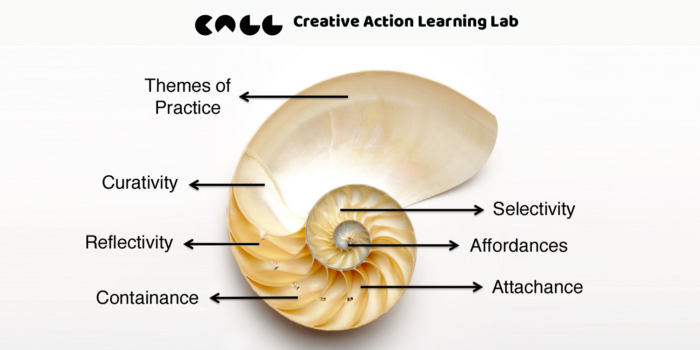
In a broad sense, the Ecological Practice approach has its philosophical roots in traditional Pragmatism and contemporary embodied cognitive science. Inspired by practice studies theorist Davide Nicolini (2013)’s “tool-kit approach” which curates various concepts from different theoretical accounts based on a family relationship, allowing a network of dissimilarities and similarities, I consider the Ecological Practice approach a toolkit.
Chapter 5 (Practice as Curation) challenges the traditional views of social practice and develops a new solution to practice studies and cultural studies. The solution is called “Practice as Curation” and it refers to using Curativity Theory to understand social practices and cultural life. My primary theoretical interest is the transformation between individual life experiences and collective social culture. This chapter is also named the Curativity of Culture.
Chapter 6 (Principles of Curativity) detaches from theoretical discussions and attaches to practical applications. Based on the concept of Container, I develop a basic model called the 3E model: Enter — Event — Exit and use it to generate five principles of Curativity from the following five dimensions: Things, Forms, Environments, Meanings, and Experiences. Each principle also leads to several operational rules. These principles and rules define a methodological framework for empirical studies.
Chapter 7 (Curativity Analysis) chooses four fields to test the above theoretical concepts and frameworks: Toy Design, Clothes Customization, Family Curation, and Knowledge Curation. These four cases can be considered as the prototype of Curativity Analysis.
Chapter 8 (Curativity and Epistemology) develops a new model of epistemology and uses it to evaluate Curativity Theory. I also discuss the development of my personal epistemology and the future of Curativity Theory as a new solution to epistemology.
Postscript 1 (The Information Architecture of Social Life) reflects on my career experience as an information architect and discusses the information architecture of social life from the perspective of Ecological Information and Curativity Theory in general. I wrote Postscript 1 on March 16, 2019.
From March 2019 to August 2019, I moved to develop the Ecological Practice Approach. On August 29, 2019, I wrote Postscript 2 (The Seed of the Ecological Practice Approach) and reviewed the historical development of the Ecological Practice Approach.
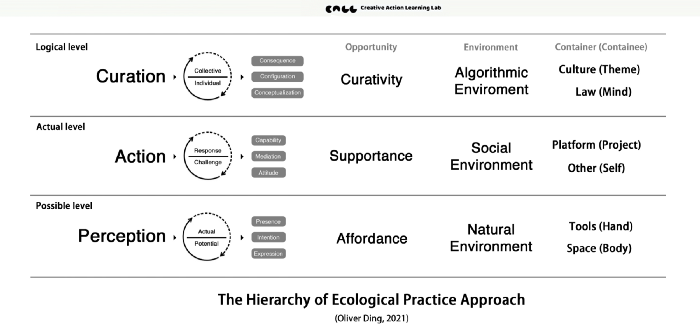
The above diagram is the final version of the Ecological Practice Approach in 2019. The last thing of the version is the notion of “Possible Practice” which defines the mission of the knowledge enterprise.
The Ecological Practice Approach is a by-product of Curativity. Now the concept of Curativity is part of the approach. On April 26, 2021, I used the following diagram to visualize the third version of the approach. You can find more details in The Development of Ecological Practice Approach.
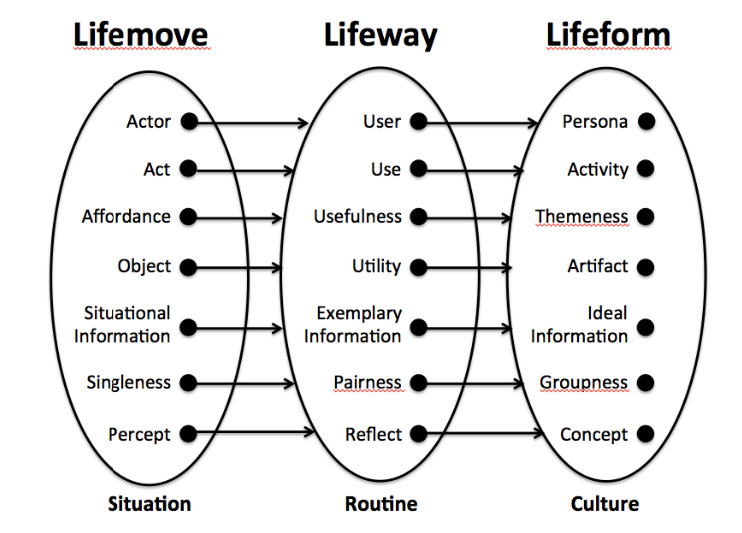
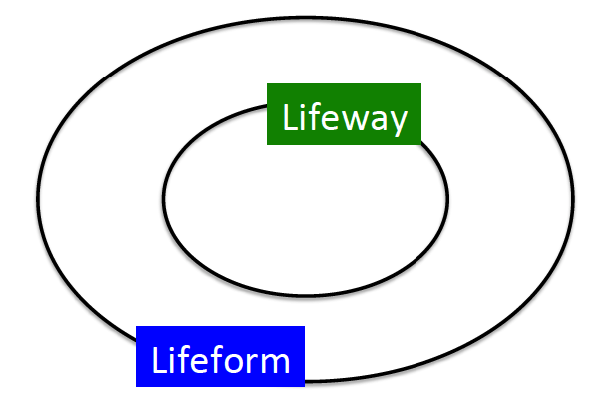
Now the notion of “Lifemove — Lifeway — Lifeform” is part of the Lifesystem framework. You can find more details in Lifesystem: Modeling Ice Skating and Other Social Practices.
Appendix 1 (A Typology of Affordances) is a heuristic tool for discussing the concept of Affordance. In order to develop the concept of “Curatorial Affordances”, I roughly conduct a literature review on the development of Affordance Theory and develop a new typology for my work.
Appendix 2 (A Typology of Ecological Information) is a heuristic tool for discussing the loop of “Affordance - Ecological Information - Perception-Action”.
The foundation of Curativity Theory and the Ecological Practice Approach is Ecological Psychology and its core idea Affordance Theory. Appendix 1 and Appendix 2 indicate my learning outcome of appreciating Ecological Psychology.
3. A Practical Framework
Why do I use the term General Curation? Museum curators and Art curators tend to use Curatorial Practice to refer to their professional activities. I consider Curatorial Practice as a subcategory of General Curation. From the perspective of Curativity Theory, the following social practices are considered part of the family of General Curation.
- Educational activities
- Event organizing and curating
- Web content curation
- Knowledge Curation
- Publishing and editing a catalog or a magazine.
- Toy Curation
- Grocery shopping and other types of shopping
- etc.
Thus, General Curation is about social practices which require selecting, collecting, organizing, presenting, and reflecting. It goes beyond the scope of traditional professional Curatorial Practice.
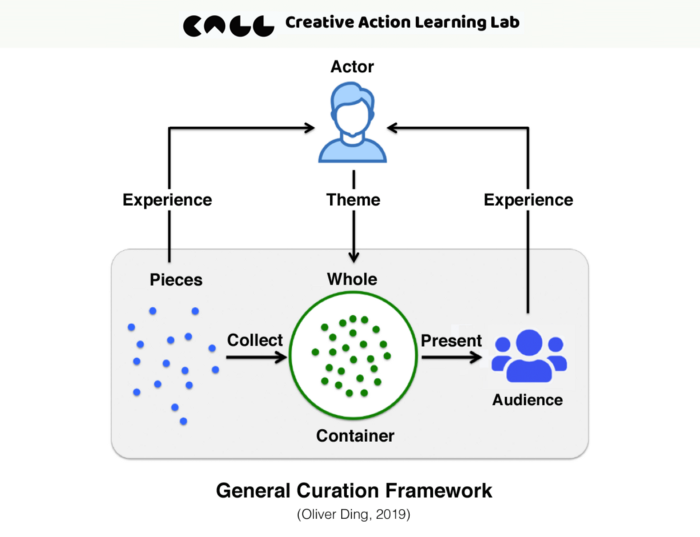
The above diagram is the basic model of the General Curation Framework. You can find more details in Part 3 of Curativity Theory: The Ecological Approach to General Curation Practice.
4. Life Curation (2019)
In Dec 2019, I had a discussion with a friend about her career development. In order to share my insights from the perspective of the Ecological Practice approach and Curativity Theory, I made a file titled Life Curation.
The Life Curation framework was based on the Ecological Practice approach and Curativity Theory. The diagram below is a model of the early version of the Ecological Practice approach.
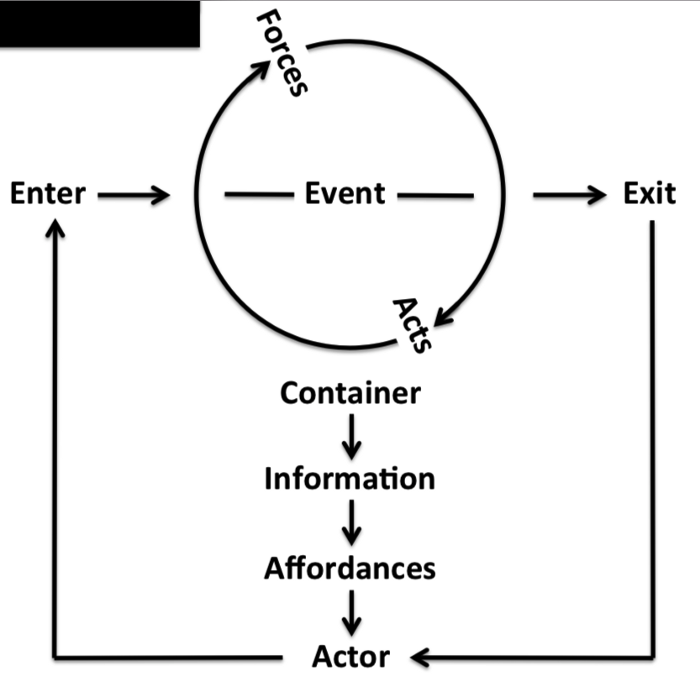
In order to apply the above model to discuss Life Development or Career Development, I translated the above theoretical concepts into operational concepts:
- Container > Social Container
- Forces > Challenges
- Acts > Responses
- Enter > Resources
- Exit > Results
- Events > Social Events
- Information > Information
- Affordances > Opportunities
- Actor > Actor
The new framework has four modules:
- Double R Analysis: the “Resources — Results” Analysis
- Social Event Analysis: the “Challenge-Response” Analysis
- Social Attachance Analysis: the “Exit — Exit” Analysis
- Opportunity Analysis: the “Information — Opportunities — Action” Analysis
I used normal words such as “Resources”, “Results”, “Challenge”, “Responses”, and “Opportunities” as operational concepts. However, I also offered some new perspectives for understanding these words in order to make more creative spaces for life development.
The most important value of the Ecological Practice approach is its perspective indicates the ecological meaning of objects and environments. It is very useful for rethinking Resources and Opportunities.
You can also find a story about the “Challenge-Response” Analysis here.
Why did I name the framework Life Curation? There are two reasons:
- Its core is Social Container and this is the core of Curativity Theory. Social Containers create many boundaries in our life. These boundaries cut our life into pieces. The Life Curation Curation aims to turn these pieces into a meaningful whole.
- The “Resources — Results” Analysis can be applied to different time-scale analyses. The framework suggests that a person could build his or her own creative containers in order to curate pieces of resources into meaningful results.
The essential theme behind the Life Curation framework is the “Pieces — Whole” relationship.
5. Platform Curativity (2020)
In 2020, I used the diagram below to build the framework for discussing information architecture and personal development. This project was inspired by a discussion about note-taking, content curation, information overload, and personal development.
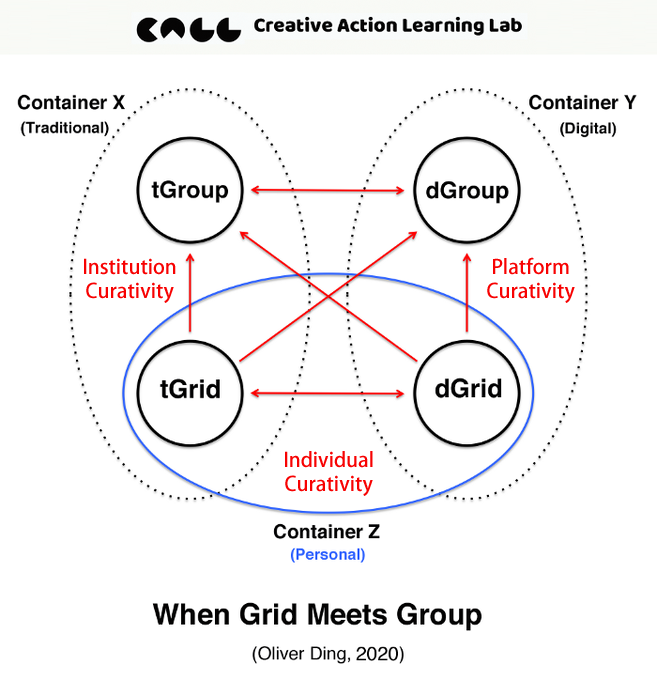
The above diagram is also called Double Gird-Group Framework which was inspired by British anthropologist Mary Douglas’s Gird-Group cultural theory. The term “Curativity” was adopted from my 2019 book Curativity which focuses on turning pieces into a meaningful whole.
There are three types of Curativity in the context of information architecture and personal development: Platform Curativity, Institution Curativity, and Individual Curativity. There are different agencies, motivations, and goals behind these Curativity and sometimes they contradict each other.
In order to understand the mechanism of contradiction and coordination of multi-curativity, I adopted Mary Douglas’s Gird-Group model and expanded it to the Double Gird-Group Framework.
Douglas’s original model considered two dimensions: Group (the boundary of a community) and Gird (the structure of regulation). The Group dimension measures how much of people’s lives are controlled by the group they live in. The Gird dimension describes how different people are in the group and how they take on different roles.
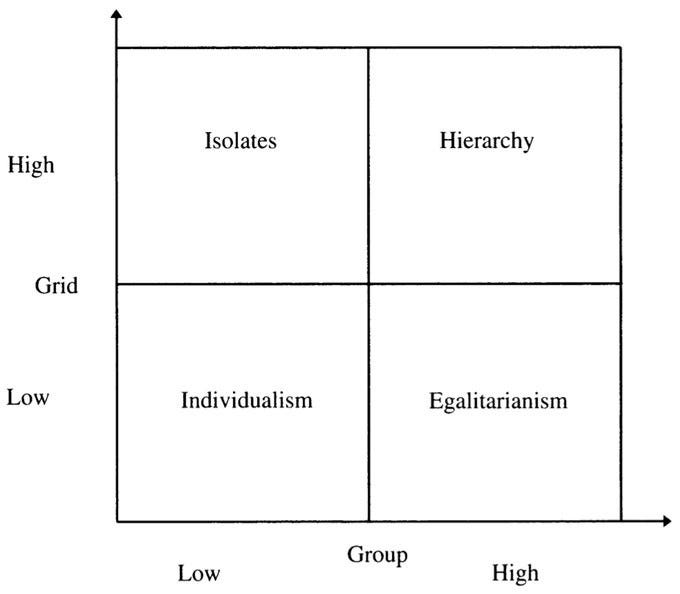
There is an important distinction between offline environments and online environments. So, I doubled Douglas’ Gird-Group model, and the Traditional type of Group and Grid is considered to be distinguished from the Digital type of Group and Grid.
The final Double Gird-group framework uses four special signs: tGroup, dGroup, tGird, and dGird. The “t” stands for “traditional” and the “d” stands for “digital”.
For example, Institution Curativity refers to traditional Group (tGroup) and Platform Curativity refers to digital Group (dGroup). Following this logic, Individual Curativity within Institution refers to traditional Gird (tGird) and the Indivisual Curavitiy within Platform refers to digital Grid (dGrid).
Later, I expanded this model to discuss digital transformation. You can find more details here. If you want to find more ideas about “Platform”, you can check out my “Platform” thematic space.
6. Knowledge Curation (2020–2022)
After March 2019, I continuously worked on revising Curativity and developing the Ecological Practice Approach as a new project. For the direction of Curativity Theory, I am looking for practical applications, for example:
- Knowledge Curation
- Action Curation
- Life Curation
- Platform Curation
I have written a chapter discussing knowledge curation in the book Curativity. For academic knowledge curation, I mentioned Dean Keith Simonton’s chance-configuration theory, Victor Kaptelinin, and Bonnie A. Nardi’s scientific curation case study “curation at Ajaxe”, and qualitative research. For practical knowledge curation, I focus on Cognitive Container since Container is a core concept of Curativity Theory.
Books and courses are typical cognitive containers, however, there are more types of cognitive containers. I highlighted five types of Cognitive Containers:
- Knowledge Card
- Knowledge Framework
- Knowledge Diagram and Chart
- Knowledge Workshop
- Knowledge Sprint
It is not an accurate classification, but a rough recommendation. Also, I suggested that we not only adopt existing types of cognitive containers but also create new types of cognitive containers. Actually, this is the essential point of the Curation Theory. We are shaped by containers and we can make containers too.
The core idea of Curativity Theory is turning pieces into a meaningful whole. For abstract things such as Knowledge, we need to build two types of containers, one is an abstract container while the other is a concrete container. This notion is the starting point of building a solution to close the gap between Theory and Practice.
In 2020, I worked on the Activity U project which is a concrete container while the HERO U framework is an abstract container.
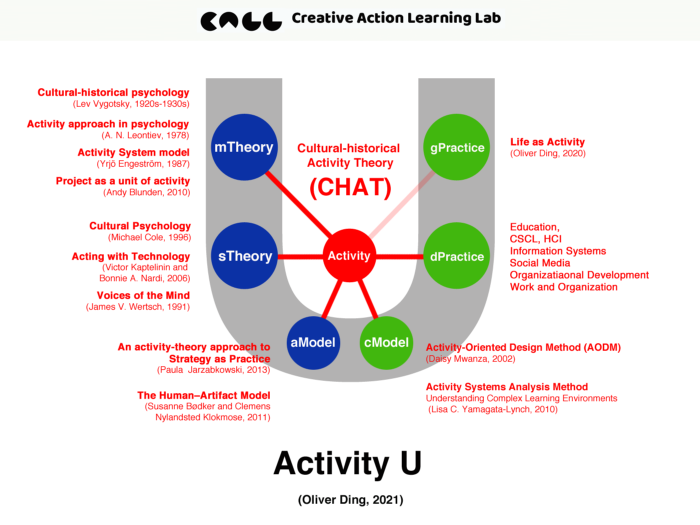
In 2021, I worked on the D as Diagramming project which is a concrete container while the Model of Knowledge Curation is an abstract container.
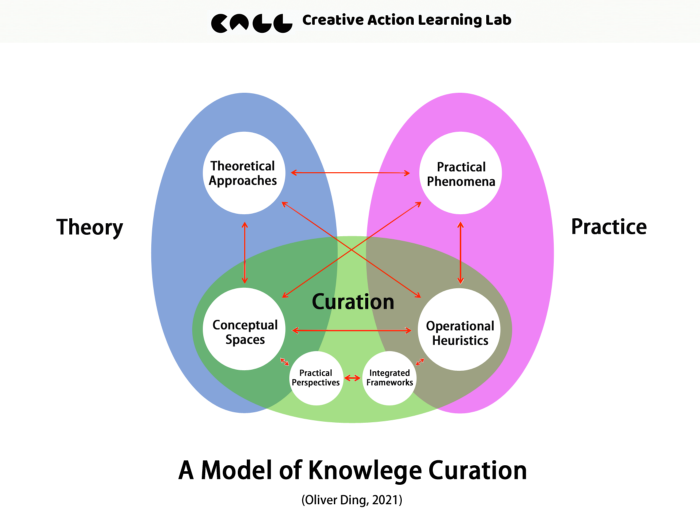
The HERO U framework is about curating one theory while the Model of Knowledge Curation is about curating many theories. Both two frameworks are about Individual Knowledge Curation. You can find more details here.
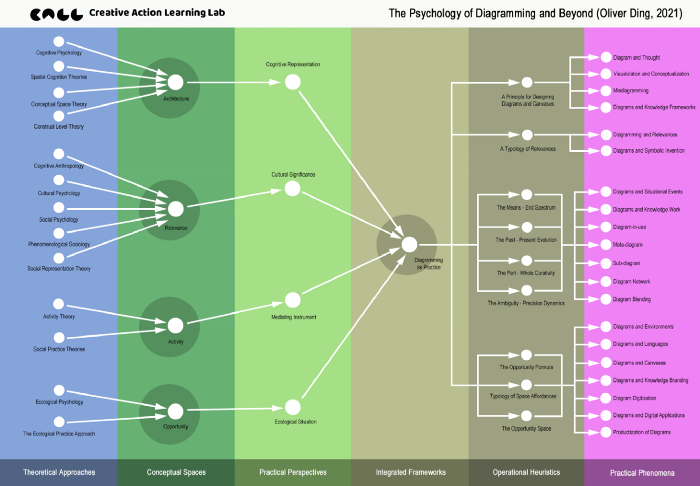
In 2022, I’d like to explore Collective Knowledge Curation with you. Now we have the canvas of Knowledge Curation which is an abstract container, I’d like to invite you to join the journey.
The Theory-Practice Gap is an important issue in a wide range of disciplines including education, organization learning, and development, community building, academic development, enterprise R&D, professional service firms (PSFs), etc.
If we can find a good solution to close the Theory-Practice Gap, then we can improve existing social systems of knowledge production, knowledge application, and knowledge management at the individual level and the collective level.
7. The Curated Mind (2022)
The notion of “Curated Mind” is also inspired by an empirical research project about an adult development program. I found that the host of the program needs to curate various knowledge resources and her marketing research insights together. This insight encourages me to reflect on the Objective — Subjective Knowledge Curation.
Life is a real practice. How do we apply various theoretical knowledge to such a practice?
This question leads to a significant gap between Theory and Practice. Knowledge heroes create various theories, frameworks, models, etc. Their creativity drives them to make unique and general ideas. Eventually, they build a highly fragmented knowledge ecology that is not accessible to ordinary people.
From the perspective of Curativity Theory, ordinary people need to add “Curation” to develop their minds.
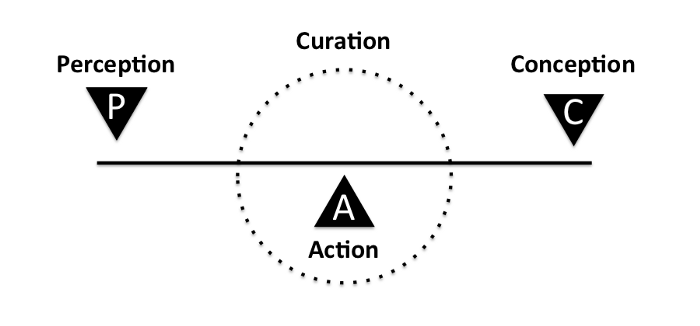
Traditionally, researchers tend to use “perception, conception, and action” as three keywords to discuss mind-related topics. From the perspective of Curativity Theory which is about turning pieces into a meaningful whole, I want to expand the foundation of mind-related topics from three keywords to four keywords.
The Epistemology of Curation refers to considering pieces of perceiving experience, pieces of concepts, and pieces of actions at a level and moving to a higher level to curate these pieces into a meaningful whole.
On March 15, 2022, I published an article about the notion of “Curated Mind” which can be considered the newest development of Curativity Theory.
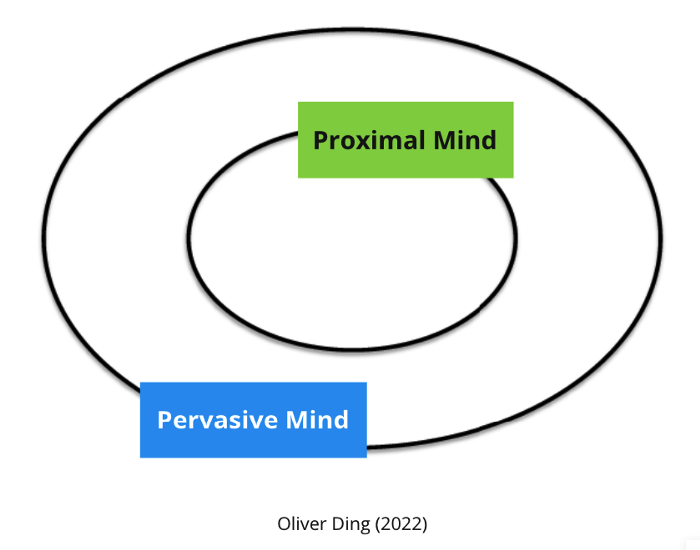
The above diagram is the basic model of the Curated Mind. This model adopts the ecological approach to reflect on the Mind. While Proximal Mind corresponds to Proximal Contexts, Pervasive Mind corresponds to Pervasive Mind.
- Proximal Contexts (Proximal Mind)
- Pervasive Contexts (Pervasive Mind)
These two parts form a whole system which is called Curated Mind. On March 21, I developed an expanded model with eight operational concepts. See the diagram below.
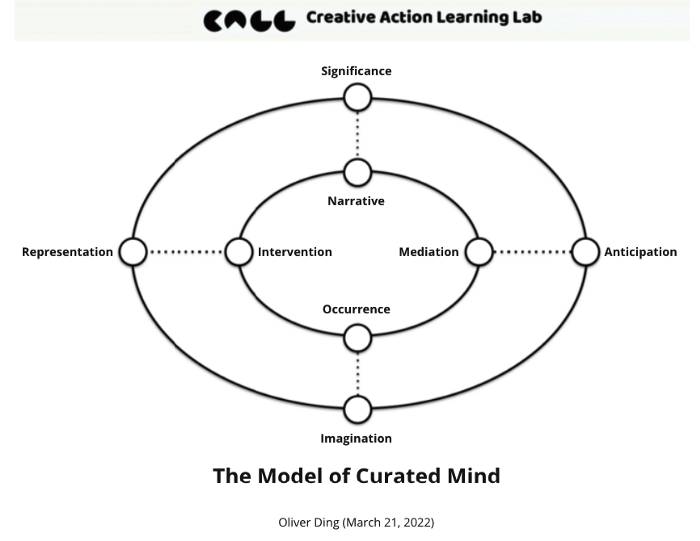
This notion is not part of the 2019 book. It means a new starting point for a new journey.
8. Creative Life Curation (2022)
In Oct 2023, I closed the Knowledge Curation Project and started the Creative Life Curation project.
In Nov 2023, I edited a possible book (draft) titled Creative Life Curation: Turning Experiences into Meaningful Achievements.
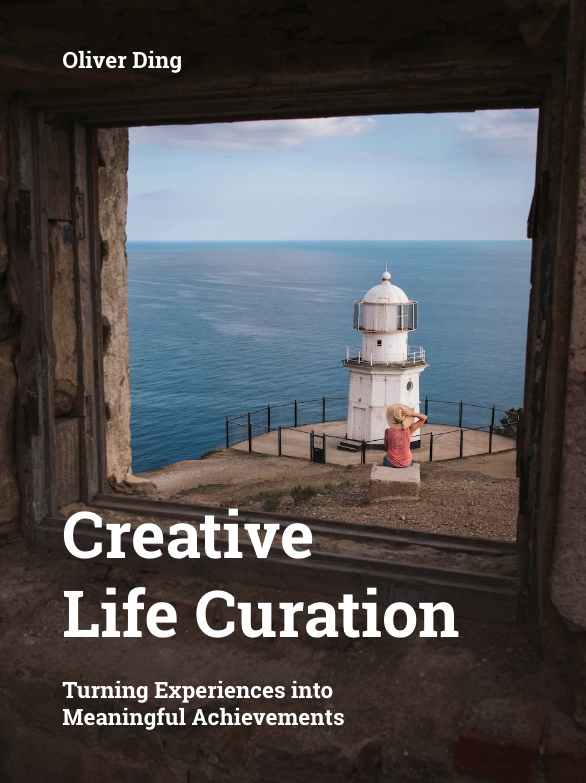
The book introduced five units of analysis for the Creative Life Curation framework.

The Creative Life Curation project is about turning Individual Life Experiences into Collective Culture. It refers to both personal innovation and cultural innovation.
I also introduced a framework called “Life as Sandglass” for understanding the journey of creative work.
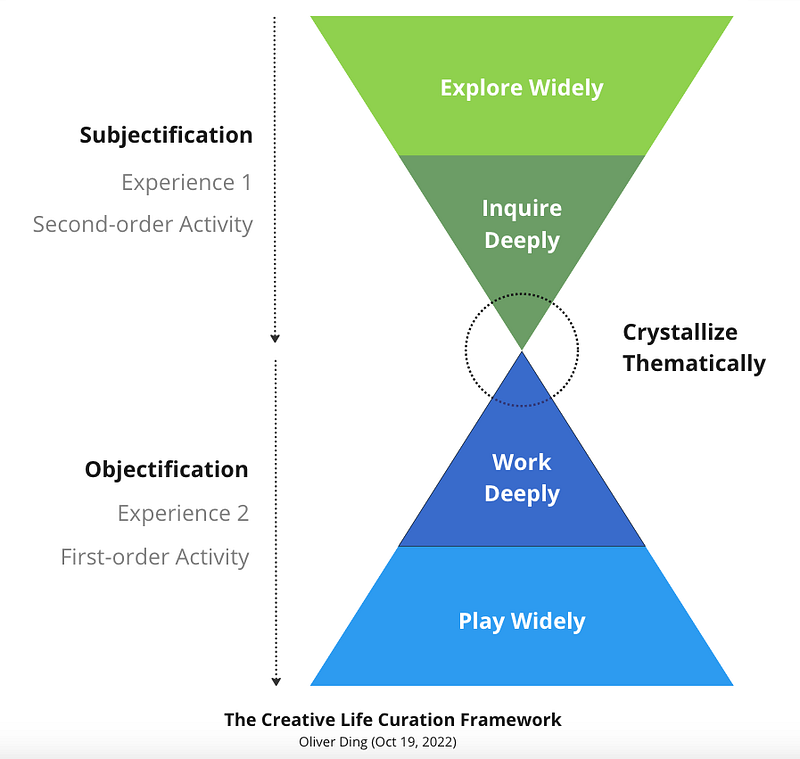
I used the Knowledge Curation project (2020–2022) as an example to develop the about framework.
I roughly used five movements to model my journey of the Knowledge Curation project. These five movements form a basic model for understanding Creative Life Curation. I also used First-wave, Second-wave, and Third-wave to describe the dynamics of the model.
Late, I used the model to guide several case studies.
- Slow Cognition: The Creative Life Curation Framework
- A Semiotic System Diagram for Creative Life Curation
- Creative Life Curation: Turning Experiences into Meaningful Achievements (book, v1)
- Case Study: The Activity U Project and Creative Life Curation
- Case Study: The Development of “Project Engagement”
- Case Study: The Development of Creative Life Theory (2020–2023, Part 1, Part 2, Part 3)
9. Related Articles
Though I didn’t translate the full content of the Curativity book into English, I wrote several articles about Curativity Theory and its core ideas in English.
- April 1, 2020 — Curativity Theory: The Ecological Approach to General Curation Practice
- October 19, 2020 — The Ecological Practice Approach Toolkit
- April 26, 2021 — The Development of Ecological Practice Approach
- September 30, 2021 — Lifesystem: Modeling Ice Skating and Other Social Practices
- Feb 18, 2022 — Mapping Thematic Space #6: The “Life” thematic space
- Feb 25, 2022 — Life Discovery: The “Experience — Theme” Ladder and Meaning
- Feb 25, 2022 — Mapping Thematic Space #7: The Center of the “Ecological Interaction” Thematic Space
You can find all articles about Curativity Center in its publication on Medium.
You are most welcome to connect via the following social platforms:
Linkedin: https://www.linkedin.com/in/oliverding Twitter: https://twitter.com/oliverding Polywork: https://www.polywork.com/oliverding Boardle: https://www.boardle.io/users/oliver-ding


