
CALL: The Development of Creative Life Theory (2020–2023, Part 3)
From Creative Action to Creative Course
This is part of a series of articles about my journey of developing Creative Life Theory from 2020 to 2023.
- Part 1: First-wave Development
- Part 2: Second-wave Development
- Part 3: Third-wave Development
- Part 4: Three Themes of a Journey of Theory Building
- Part 5: Creative Dialogue and Mental Moves
- Part 6: Four Perspectives and Creative Identities
- Part 7: The World of Works and Five Possible Books
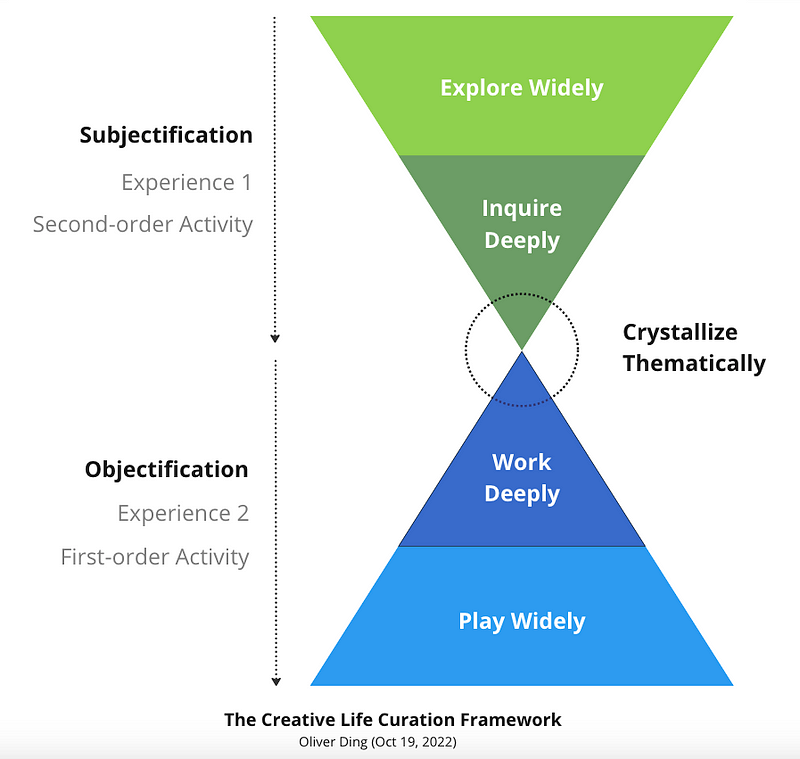
The Development of Creative Life Theory (2020–2023) aims to use the Creative Life Curation framework to reflect on my journey of building the Creative Life Theory.
You can find the following sections in Part I:
- A Brief of “Creative Life Theory” Knowledge Journey
- What’s the Creative Life Theory?
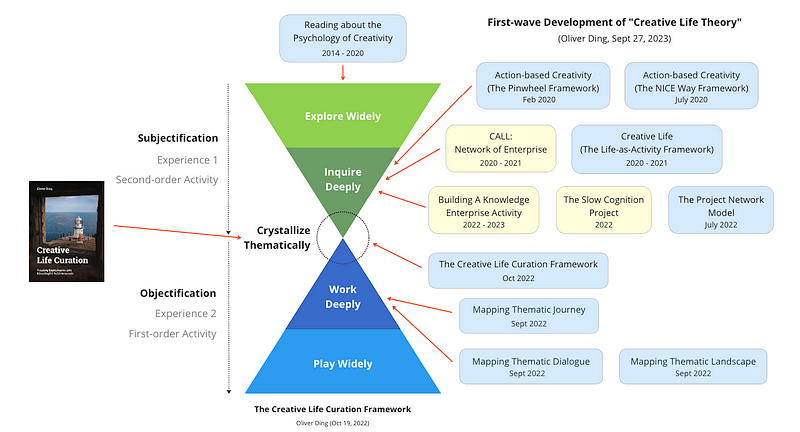
- First-wave Development of “Creative Life Theory”
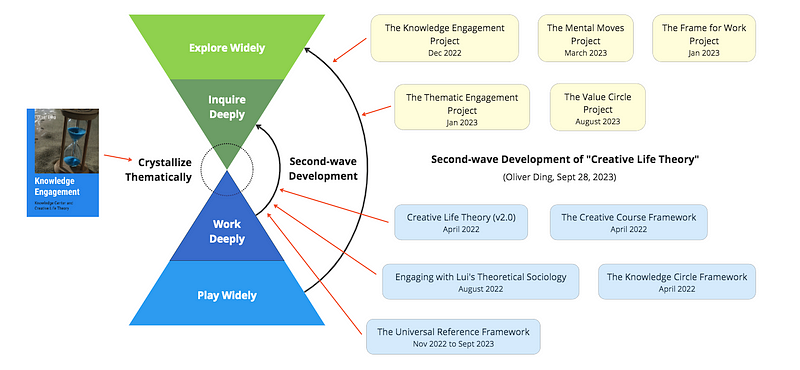
Part 2 shares stories behind the Second-wave development. The most amazing idea in the Second-wave development is the Universal Reference framework.
Part 3 will share stories behind the Third-wave development.
Third-wave Development of “Creative Life Theory”
Third-wave Development considers the dynamics of a project network and the creative thematic dialogue. You can see an example in Slow Cognition: The Echoes of A Thematic Dialogue.
In the past several months, I worked on several projects. On Sept 28, 2023, I realized that I moved to a creative thematic dialogue between two themes:
- Theme (Concept)
- Platform (Project)
So I framed it as the third-wave development of “Creative Life Theory”. See the diagram below.
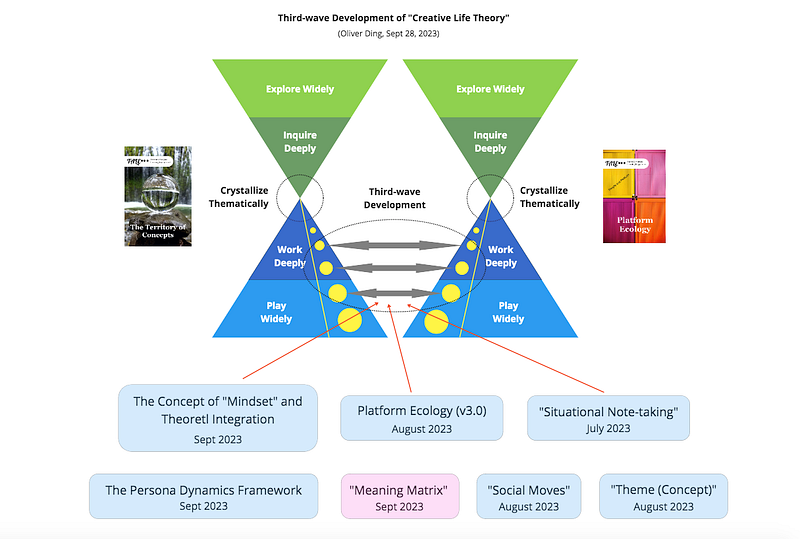
This is the newest development of third-wave development. It just started in July 2023. It may be too early to frame these projects as the third-wave development of Creative Life Theory.
But, this is the value of using the Creative Life Curation framework to reflect on the journey.
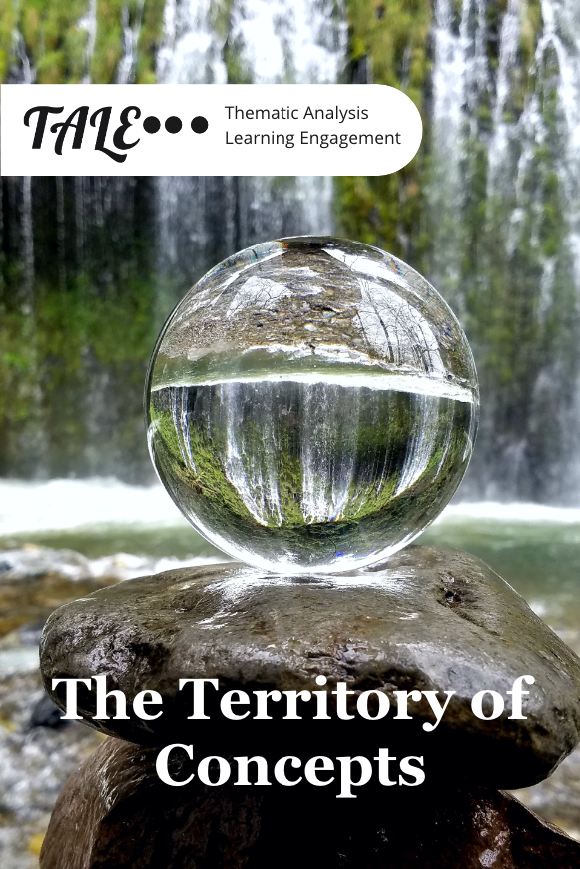
The above picture represents a theme called “The Territory of Concepts” which was introduced in Themes in the Field: Self, Agency, and Activity (Part III) on June 6, 2023.
This article reviews this theme and adopts the following three theoretical approaches to support it.
- Ping-keung Lui’s term “Social Territory” and his Subjectivist Structuralism
- Andy Blunden’s approach to Activity Theory: Activity as Formation of Concept (2010, 2012, 2014)
- My approach: the Themes of Practice approach
Finally, I adopted the Infoniche framework and its application the Optimal Context Canvas to support the theme of “The Territory of Concepts”.
It inspired me to write several new articles about Concept and Theme. Finally, I made the diagram below on Sept 21, 2023. It was based on the “Universal Reference” framework.
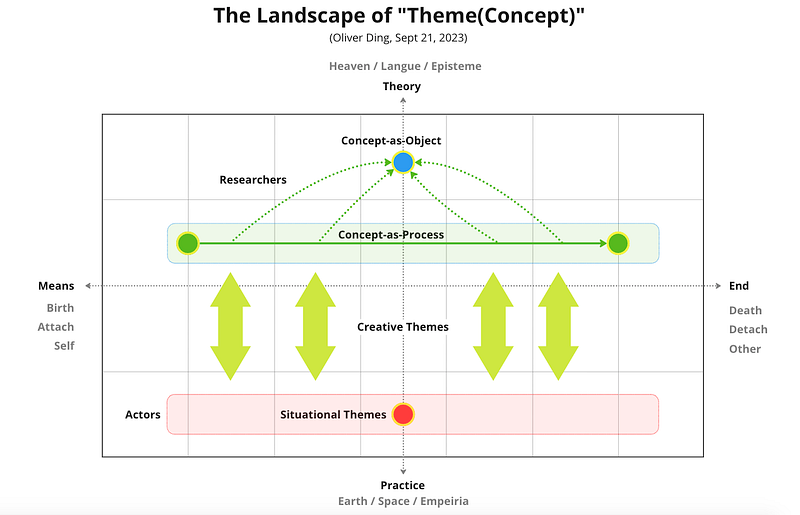
You can find more related articles below:
- TALE: The Territory of Concepts
- Themes of Practice: Concept, Activity, and Cognition
- Knowledge Engagement: The Concept of “Activity”
- Knowledge Engagement: The Concept of Mindset and Theoretical Integration
- TALE: A Possible Theme called “Theme (Concept)”
- TALE: A Journey of Engaging with the Theme of “Themes” (2017–2023)
- TALE: A Possible Theme called “Life (Self)”
- TALE: A Possible Theme called “Context (Mind)”
- TALE: A Possible Theme called “Spontaneous Concept System”
- TALE: A Possible Theme called “Concept Choices”
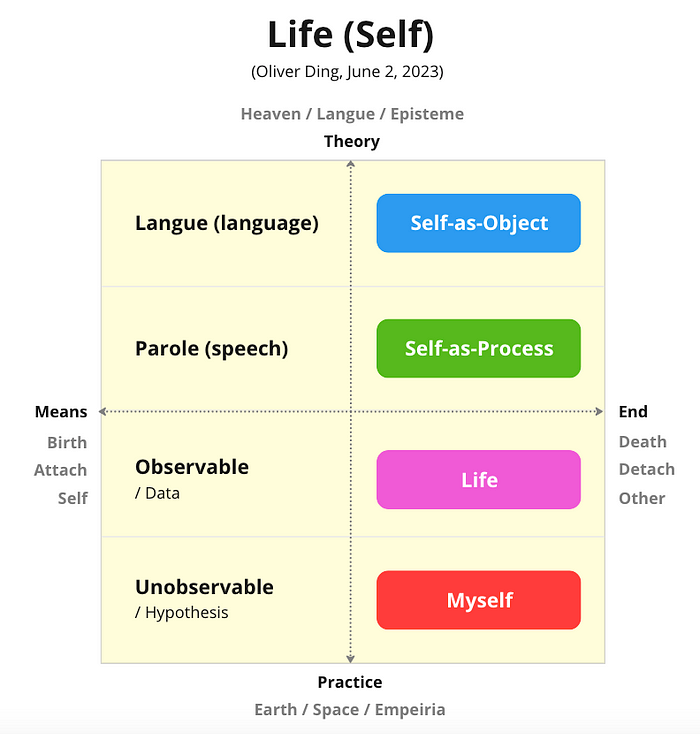
I continuously used the Univeral Reference framework to develop some new ideas. For example, the theme of “Life (Self)”:
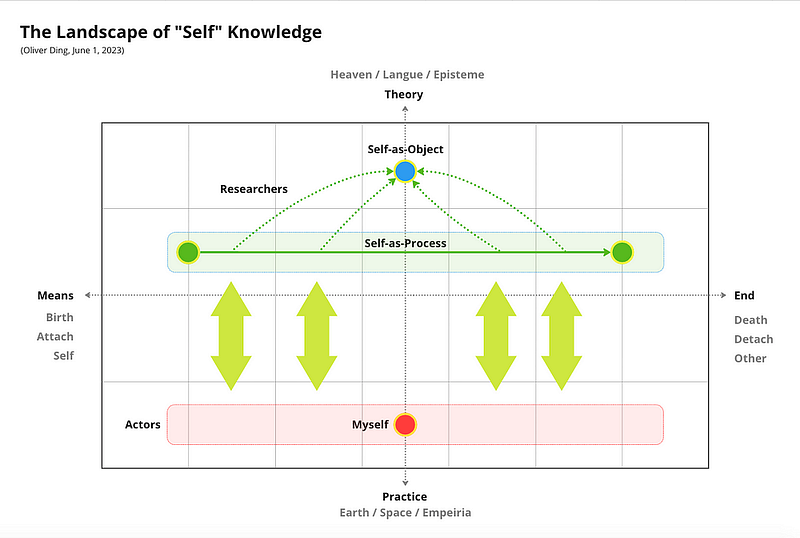
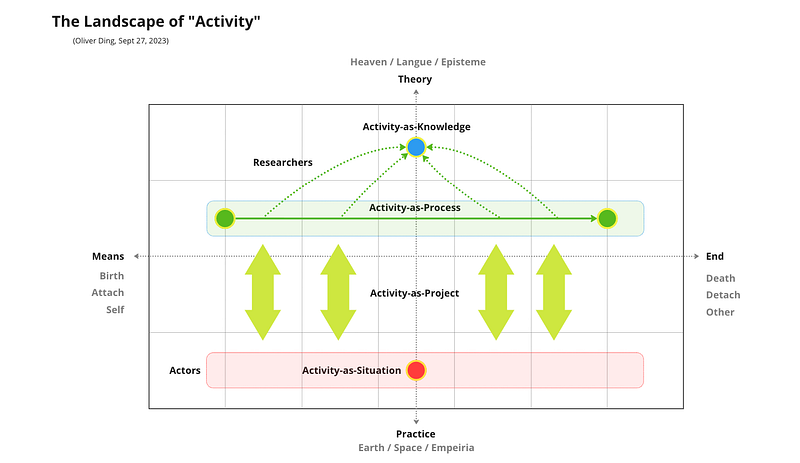
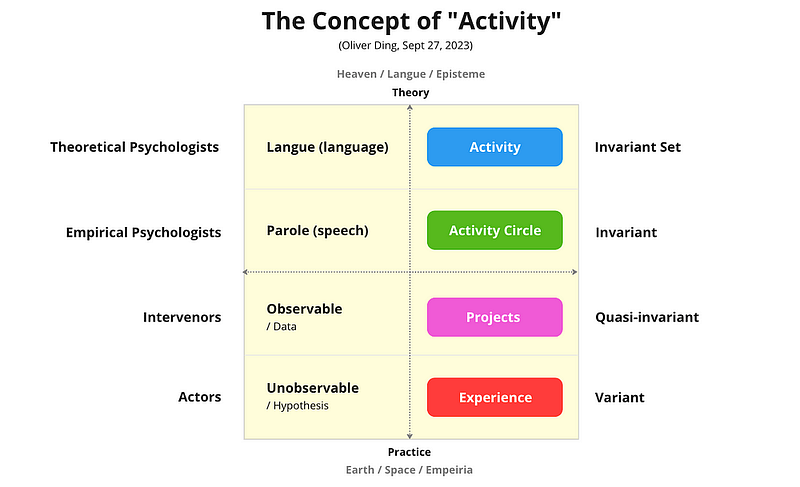
The concept of “Activity”:
On September 9, 2023, I also wrote an article titled Knowledge Engagement: The Concept of Mindset and Theoretical Integration.
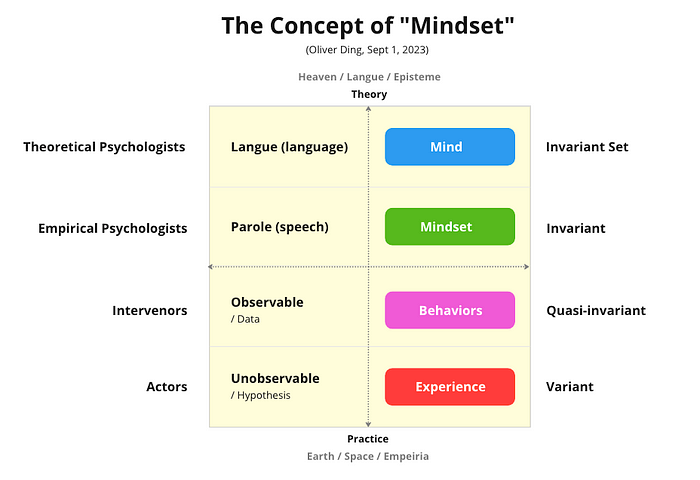
The above diagram uses the “Universal Reference” diagram, the “Kinds of Actors” framework, and a sub-framework of “Ecological Formism” to explore a thematic network around “Mindset” and build a Configurational Theory of “Mindset”.
This diagram goes beyond the original “Universal Reference” diagram and offers us a new creative space for discussing the Concept — Theory Transformation which is part of “the Territory of Concepts”.
The article focused on Theoretical Psychologists and made a demo of theoretical integration by curating Carol S. Dweck’s version of Mindset theory and Peter Gollwitzer’s version of Mindset theory together.
Am I a Theoretical Psychologist?
I just did an exercise of playing with some techniques of theoretical integration.
I learned these techniques from theoretical sociologists and applied them to a project about curating psychological theories.
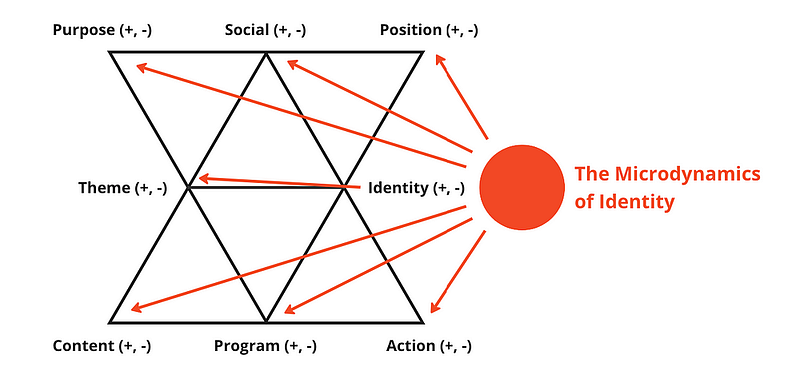
This experience inspired me to write an article about the microdynamics of identity and the Persona Dynamics framework.
On April 23, 2023, I made the attached diagram and used it to frame a creative space for “Creative Life Theory”.
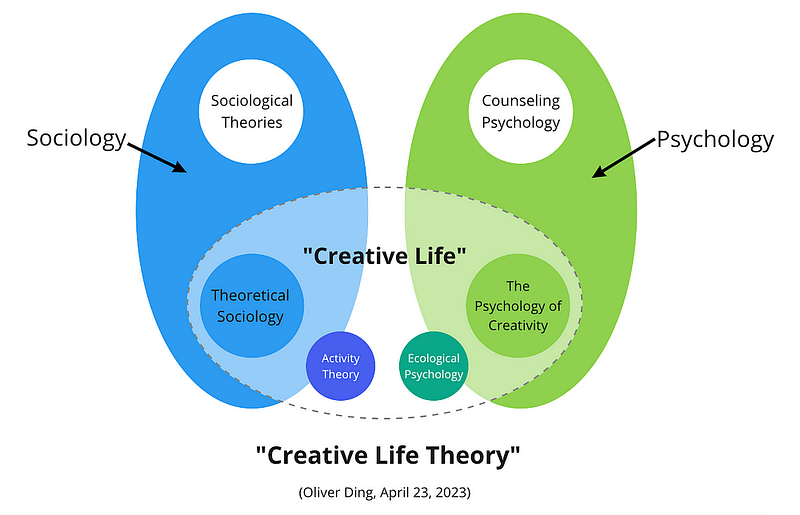
In the past years, I worked on projects about the following four things:
1. The Psychology of Creativity 2. Ecological Psychology 3. Activity Theory 4. Theoretical Sociology
I consider the “Creative Life” thematic space as a creative space for connecting Sociology and Psychology.
I’d like to claim the uniqueness of “Creative Life” approach is its view on “Life” which refers to both individual life and social life.
In other words, there is no boundary between sociology and psychology in the creative space of “Creative Life”.
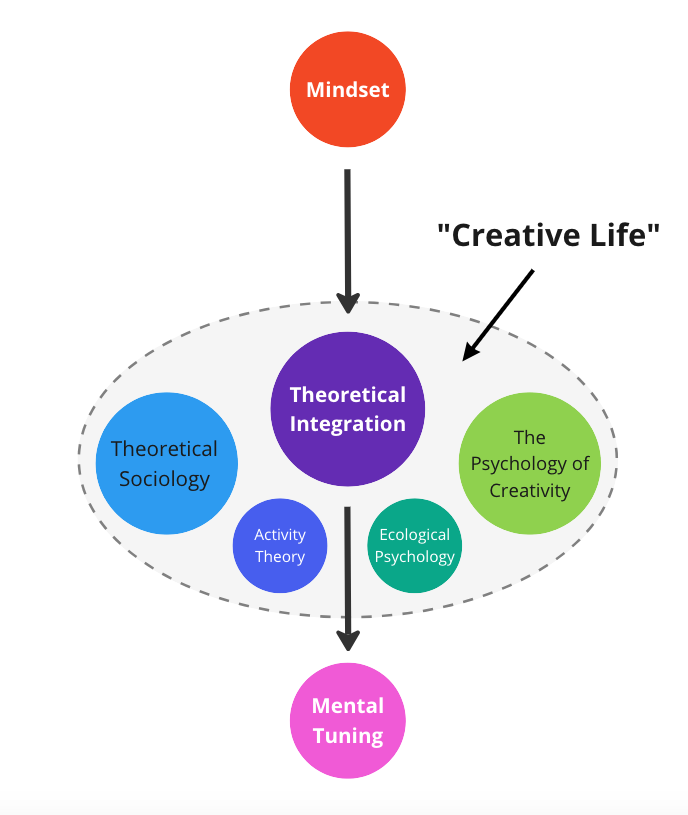
For the Mindset project, I used the “Creative Life” Container Z as the creative space. See the diagram below.
A simple technique is what theoretical sociologist Thomas J. Fararo and his student John Skvoretz called “a hierarchical meaning control system”.
According to Fararo and Skvoretz, “Calling this a meaning control hierarchy is intended to emphasize that higher levels constitute commitments that ‘inform’ — enable and constrain — the lower level activities or discoveries.”
Different theorists have different models of their “hierarchical meaning control system” with different terms. For example, Fararo and Skvoretz suggested four levels:
- General presuppositions
- Representation principles
- Theoretical Models
- Invariants
I use different terms for four levels in the above discussion:
- Philosophical Orienting Views
- Theoretical Traditions
- Formal Theories
- Theoretical Approaches
Basically, we can use “Meta-theory” and “Theory” to describe the “hierarchical meaning control system”.
A theoretical psychologist could use the same technique to do the same job. In order to test this idea, I made a demo of theoretical integration by curating Carol S. Dweck’s version of Mindset theory and Peter Gollwitzer’s version of Mindset theory together.
The second theme in the third-wave development is the Platform(Project) theme.
The Platform (Project) theme is about the Platform Ecology project.
I started the Platform Ecology project in 2019. The major outcome of the project is a book (draft) titled Platform for Development: The Ecology of Adult Development in the 21st Century (2021).
In 2022, I developed the Platform Genidentity Framework and moved to test a related concept called “Knowledge Center”.
In the past several months, I worked on a strategic design research project about a web 3.0 platform. A by-product of the project is the idea of “Spontaneous Concept System”.
On July 18, 2023, I used the “Ontology — Realism — Hermeneutics” schema to curate these frameworks. The outcome is the v3.1 meta-framework for the Platform Ecology Project.
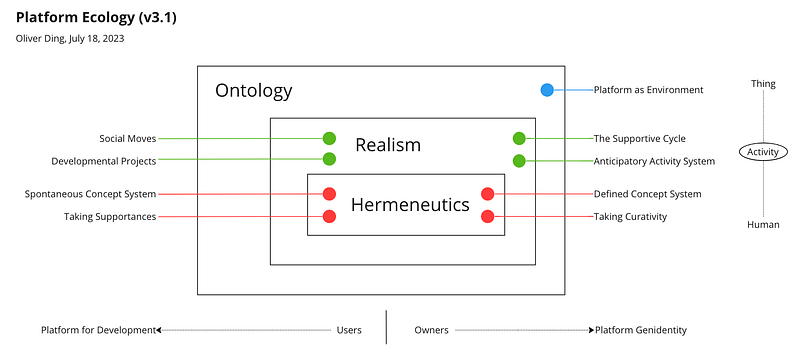
Why did I consider it as part of the third-wave development of Creative Life Theory?
There are several reasons.
First, I continuously adopted ideas from Lui’s theoretical sociology to develop my ideas. The Platform Ecology (v3.1) used the “Ontology — Realism — Hermeneutics” schema as a meta-framework. This is an example of the Utilization of Theoretical Resources.
Second, I used the “Developmental Platform” as the primary concept for the Platform Ecology project. I also defined five types of Developmental Platforms. Theory is one of these five types.
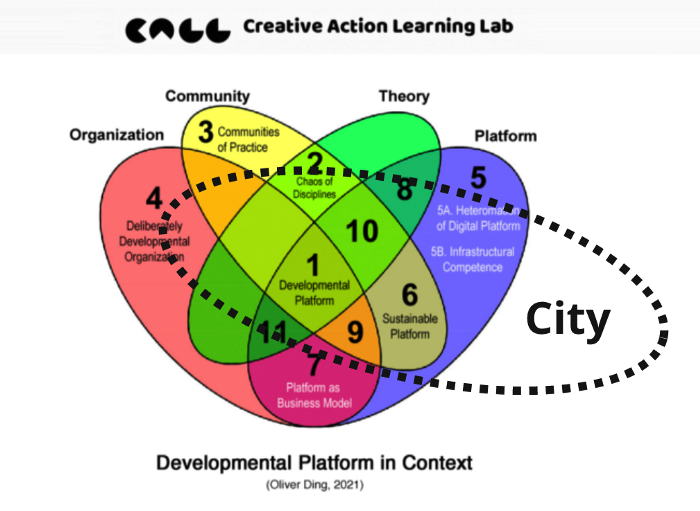
This is why I worked on the project about “Mindset” and “Theoretical Integration”. In other words, I am working on a sub-project about “Theoretical Platform”.
Lui’s theoretical sociology is a “Theoretical Platform”.
Third, there is a theme called “Social Moves” within the Platform Ecology (v3.1) meta-framework.
The theme of Social Moves was inspired by the theme of Mental Moves. While the Mental Moves project is more about knowledge creators’ creative cognition, the Social Moves project is more about startup founders’ creative social action.
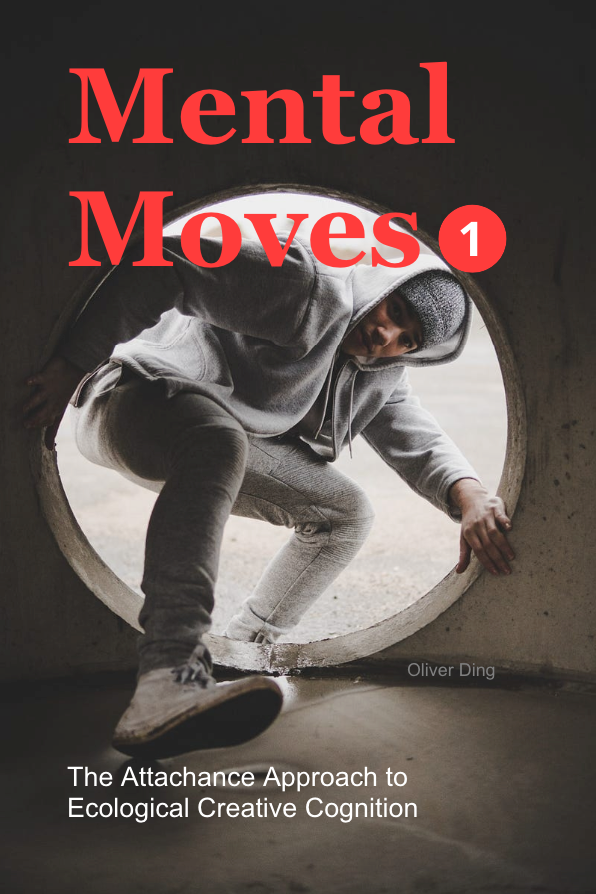
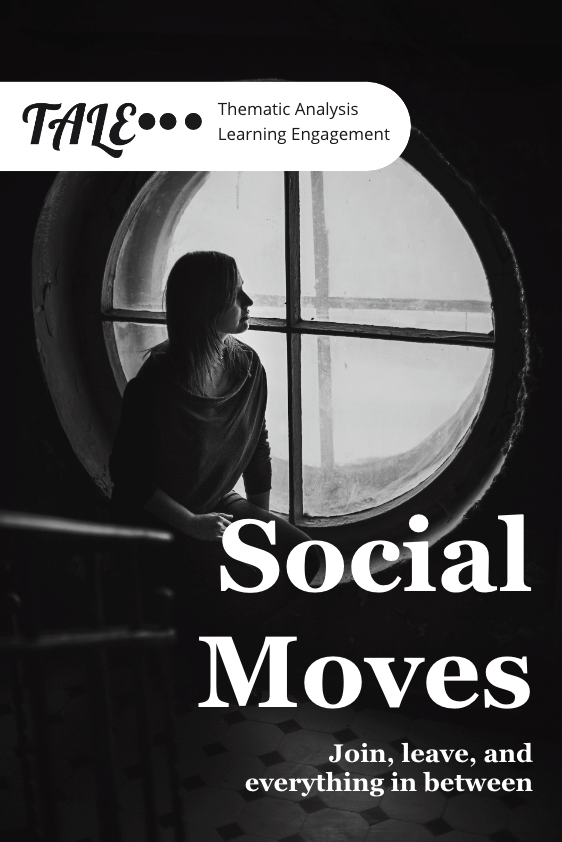
For the Mental Moves project, I used “Thematic Space” and “Knowledge Center” to discuss creative cognition. For the Social Moves project, I used “Social Territory” as the primary concept.
The term “Social Territory” is adopted from Ping-keung Lui’s Subjectivist Structuralism which is part of his theoretical sociology.
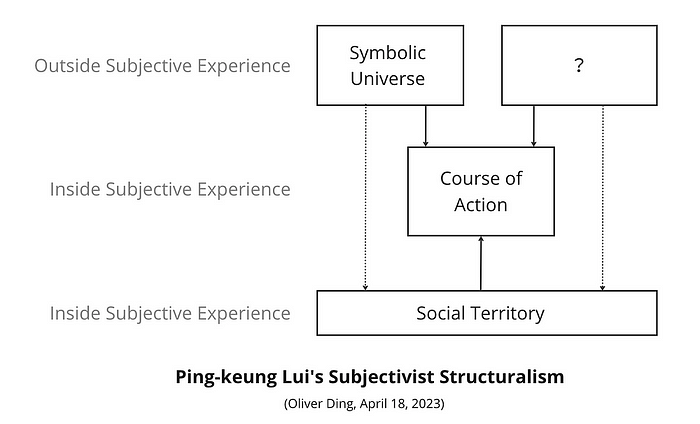
Lui considers the following four realities for the grand theory:
- The Weberian course of action
- The Giddensian course of action
- Social Territory
- Symbolic Universe
I have recently working on the Knowledge Engagement project which adopts Lui’s Subjectivist Structuralism as a meta-framework. I developed the Creative Course Framework for understanding knowledge creators’s life course.
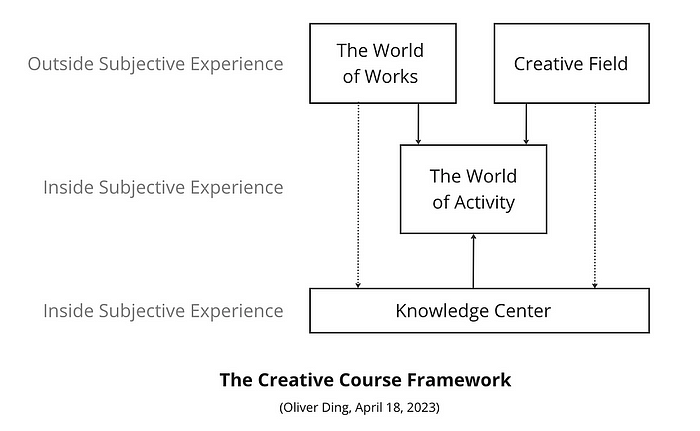
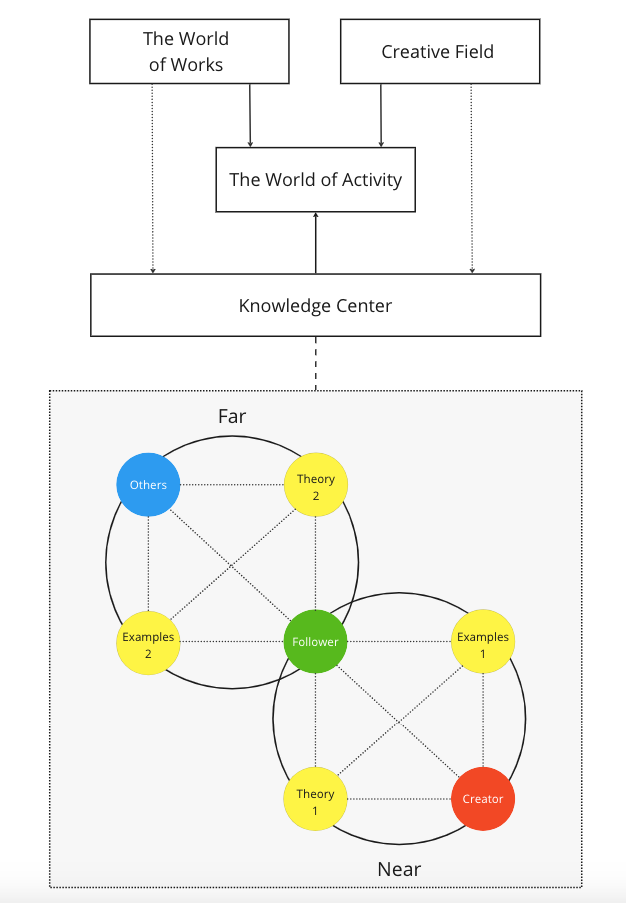
For the Creative Course Framework, I consider the concept of “Knowledge Center” as a concrete example of “Social Territory”.
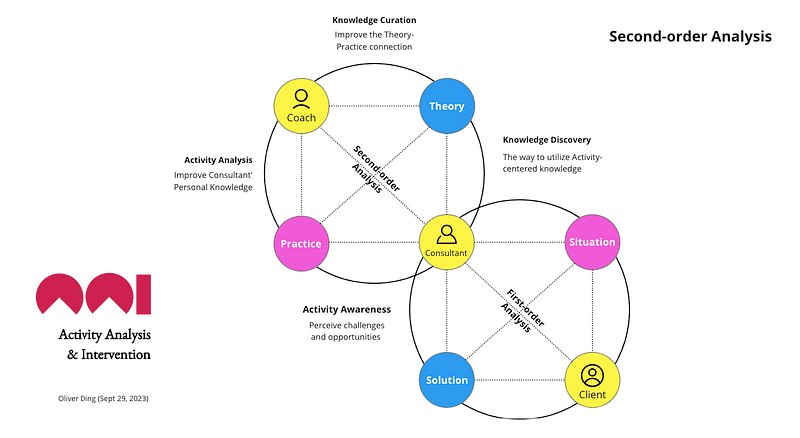
In a case study about Lui’s knowledge center, I used the Activity Circle model to develop the Knowledge Circle framework to discuss the routine practice of a knowledge center. See the diagram below.
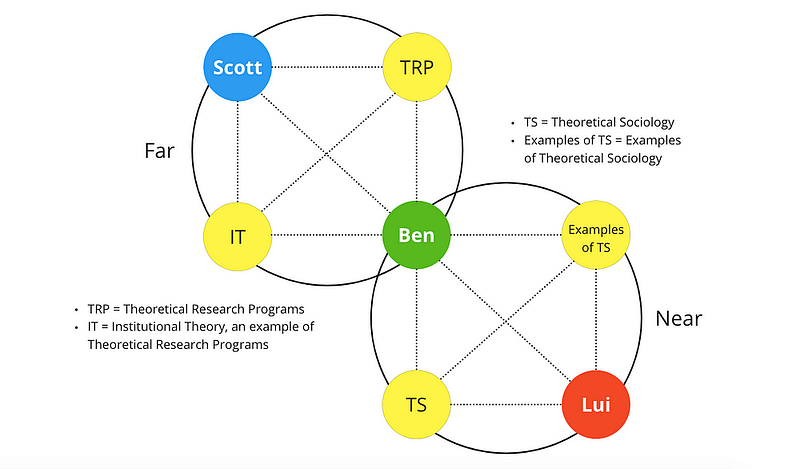
After publishing Gaze, Actions, and the Social World in 2007, Lui continuously developed his account of Theoretical Sociology. We can roughly see his activities about Building Theoretical Sociology as a Knowledge Center.
From 2012 to 2017, Lui used email and WeChat to host a small academic group to discuss his Theoretical Sociology. After reading the archive of their discussions, I used double activity circles to represent a typical pattern of the discussions.
On Sept 29, 2023, I used the same model to design the Activity Analysis & Intervention (AAI) project for the Activity Analysis Center.
On Sept 30, 2023, I made the following draft visual note and sent it to a friend of mine.
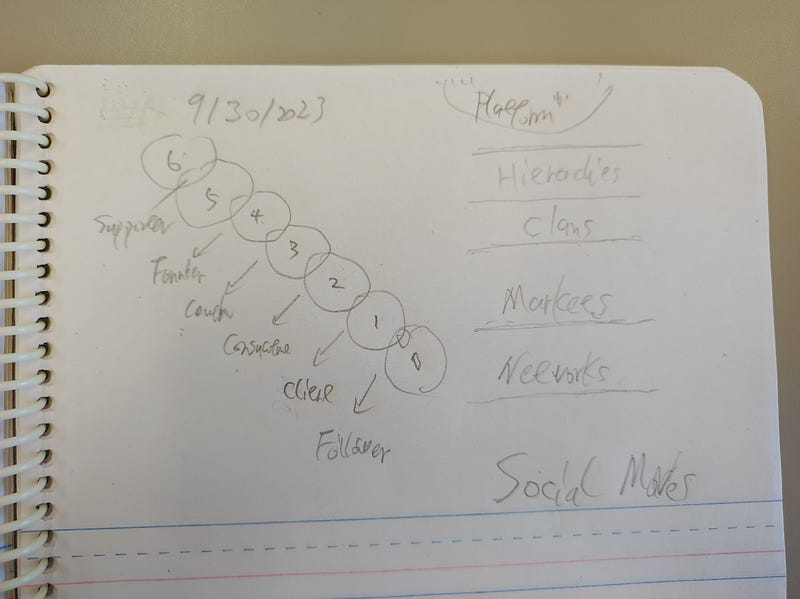
I just now realized that the AAI model can be used to understand “social moves”.
See the attached visual note.
I added more circles to expand the original AAI model. Now it has 6 types of roles.
Supporters such as investors Founders Coaches Consultants Clients Followers
Each circle is located in a “social zone” such as Markets, Clans, etc.
Moreover, each circle can be understood as an “AAS” (Anticipatory Activity System).
Now we have a rough theory of “social moves”.
People’s social life can be understood as moving between different types of “Activity Circles” and “Anticipatory activity system”.
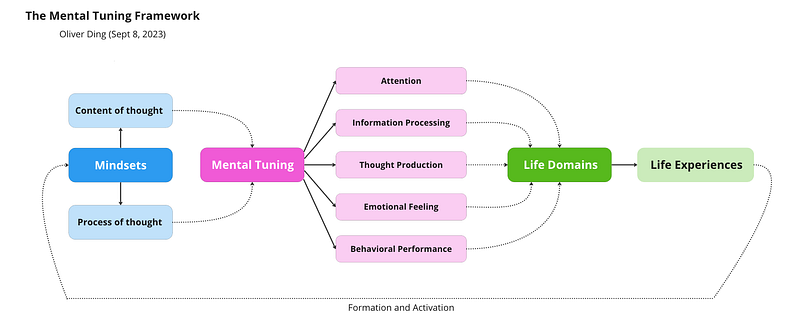
Good mindsets could guide people to moving on the path to his ideal life, and bring positive Life experience, activate positive emotions.
Bad mindsets could lead to unsuccessful moves which cause negative Life experiences and negative emotions.
The “Social Moves” theme was born from my recent projects.
One important insight about the “Social Moves” theme is a case study about a web3.0 platform which is founded by a friend of mine.
I see the multiple circle structure in the web3 platform.
The multiple circle structure is also inspired by Ecological Psychologist Roger Barker’s Behavior Settings Theory.
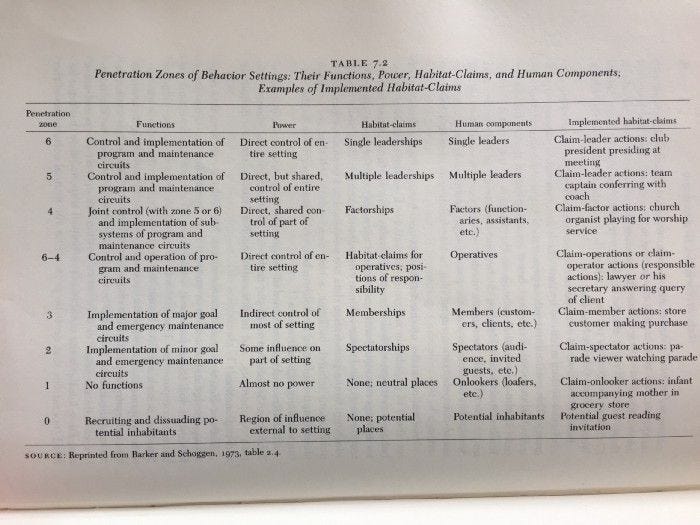
I mentioned Barker’s Behavior Settings Theory in my email. Barker developed a systematic analysis method for the Behavior Settings theory. One module of his method is “Zone of Penetration” which refers to the penetration dimension of Behavior Settings. He identified seven Zones of Penetration(1989, p.127–128).
- Zone 6: Single leader
- Zone 5: Joined Leaders
- Zone 4: Active functionary
- Zone 6, 5, and 4: Operative or performers
- Zone 3: Member or customer
- Zone 2: Audience or invited guest
- Zone 1: Onlookers
- Zone 0: Potential inhabitants
This is not a final solution to building a theoretical framework for understanding “Social Moves” and “Social Territory”.
Finally, I’d like to mention a new idea called “Meaning Matrix”. On Sept 16, 2023, I made a note about a rough idea for a brand new Theoretical Psychology. See the diagram in the upper right corner of the picture below.

In the left side of the above picture, I used the “Ontology — Realism — Hermeneutics” schema to analyze a brand new psychological theory about human nature. A friend of mine in China developed the theory and sent me a summary of his new book (draft) about the theory.
I made the diagram on July 16, 2023. The outcome is amazing! It encouraged me to apply the “Ontology — Realism — Hermeneutics” schema to develop the Platform Ecology (v3.1) meta-framework.
The diagram in the top right corner of the above picture is about the concept of “Mindset”. I made the diagram on Sept 1, 2023, and wrote a long article titled The Concept of Mindset and Theoretical Integration on Sept 10, 2023.
The outcome of the article is the Mental Tuning framework. See the diagram below.
On Sept 16, 2023, I reflected on these diagrams and used the “Ontology — Realism — Hermeneutics” schema to generate a new idea:
- Ontology: Human — Meaning Matrix
- Realism: Actor — World of Activity
- Hermeneutics: Mindset — Life Domains
The Realism part is inspired by the Creative Life Theory while the Hermeneutics part refers to the Mental Tuning framework.
The new idea is the “Meaning Matrix” which echoes the “World of Activity”.
As discussed above, I used the “Universal Reference” framework to create several diagrams. I realized it became a significant part of the Creative Life Theory.
Based on the “Ontology — Realism — Hermeneutics” schema, I made a distinction between “Universal Reference” and “World of Activity”. In order to open a new creative space for further discovery, I used a new term called “Meaning Matrix”.
In fact, the term “Meaning Maxtix” was inspired by what theoretical sociologist Thomas J. Fararo and his student John Skvoretz called “a hierarchical meaning control system” in an article titled Methods and Problems of Theoretical Integration and the Principle of Adaptively Rational Action (1993).
According to Fararo and Skvoretz, “Calling this a meaning control hierarchy is intended to emphasize that higher levels constitute commitments that ‘inform’ — enable and constrain — the lower level activities or discoveries.”
On Sept 21, 2023, I started using the term “Meaning Matrix” to name the diagram below.
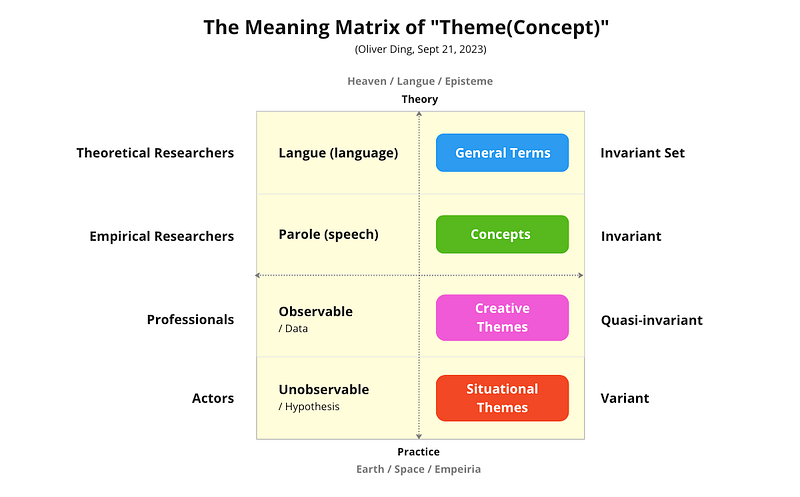
The above diagram is not a simple “Universal Reference” diagram because I incorporate the “Kinds of Actors” framework and a sub-framework of “Ecological Formism” to discuss the concept of “Theme(Concept)”.
This is a fantastic theoretical insight because it could offer me a solution to curate my work on Curativity Theory, Activity Theory, and Mindset together!
We are entering a new creative space for building a new theoretical psychology!


