avatarChristianlauer

Free AI web copilot to create summaries, insights and extended knowledge, download it at here

1318

Abstract

es <a href="https://cloud.google.com/products/#product-launch-stages">preview</a> availability of <a href="https://cloud.google.com/bigquery/docs/output-name-mapping">SQL object name mapping</a> and <a href="https://cloud.google.com/bigquery/docs/generate-metadata">metadata extraction</a> tools that you can use to increase the accuracy of your batch translation jobs. — Google [1]</i></p><p id="ca30">To use the feature you have to enable the service via the console or the user interface.</p><figure id="c01b"><img src="https://cdn-images-1.readmedium.com/v2/resize:fit:800/1*BaDyX6KVm0GELHOTelTJmg.png"><figcaption>Activating SQL translation — Image by Author</figcaption></figure><p id="60f3">After you enable the service, you are already good to go. In the figure below, you can see an example translating Teradata (left) into BigQuery SQL (right).</p><figure id="6033"><img src="https://cdn-images-1.readmedium.com/v2/resize:fit:800/1*uZ0IL0abKsCgGXAzQTNzWw.png"><figcaption></figcaption></figure><p id="9790">In addition to the possibilities with BigQuery via Onmi and/or BigLake (<a href="https://readmedium.com/google-launches-new-data-lakehouse-engine-big-lake-4648d6be458e">read more here</a>) to evaluate other databases in other cloud systems with BigQuery SQL and thus offer companies the chance to run

Options

cross cloud data analysis, Google now also provides a service to migrate databases and Data Warehouses relatively easily into BigQuery once via the Migration Assistant and now also with this useful feature.</p><p id="fbc1">For example, if you know the hassle and error possibilities of translating SQL scripts, you should be very happy about this feature. Especially in the current phase, many companies tend to migrate their classic Data Warehouses into new SaaS based Data Warehouses. If you want to dive deeper into these topics, this article might be interesting for you: <a href="https://towardsdatascience.com/how-to-build-an-efficient-and-modern-data-platform-7e0e7630ef70">How to build an efficient and modern Data Platform</a>.</p><h2 id="1997">Other lately new Features in BigQuery:</h2><ul><li><a href="https://readmedium.com/f415a4c27bf1">Improved Storage Read API Quotas in Google BigQuery</a></li><li><a href="https://readmedium.com/195a90cc5b85">Google improves Data Security in BigQuery</a></li><li><a href="https://readmedium.com/e68da6c1bc71">Good News: More Power for Google BigQuery Analytics</a></li></ul><h2 id="427c">Sources and Further Readings</h2><p id="8a28">[1] Google, <a href="https://cloud.google.com/bigquery/docs/release-notes#June_08_2022">Release Notes</a> (2022)</p></article></body>

Using SQL Translation in BigQuery for easy Data Warehouse Migration

Google’s Data Warehouse now supports most major SQL Dialects

Photo by Fran on Unsplash

Migrating a Data Warehouse to the cloud or from another cloud provider can cost quite a bit of effort. Also, different SQL dialects can lead to problems or increase the effort, since you have to adapt your entire logic. This is where Google comes in with it’s new translation feature:

Batch and interactive translation services are now generally available (GA), and include support for most major SQL dialects. This release also includes preview availability of SQL object name mapping and metadata extraction tools that you can use to increase the accuracy of your batch translation jobs. — Google [1]

To use the feature you have to enable the service via the console or the user interface.
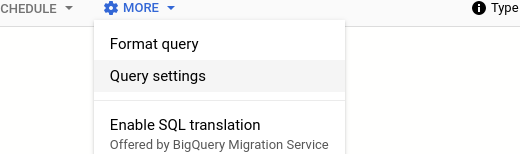
Activating SQL translation — Image by Author

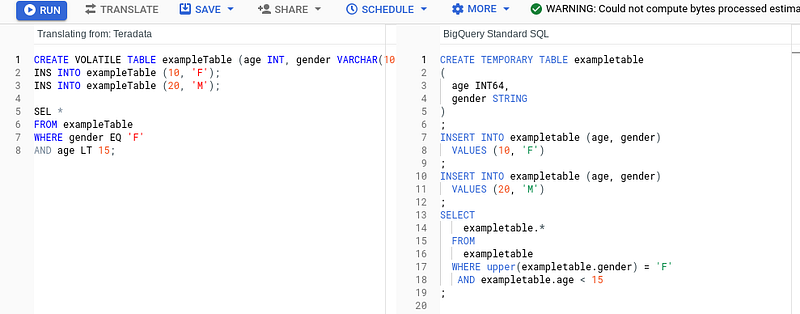
After you enable the service, you are already good to go. In the figure below, you can see an example translating Teradata (left) into BigQuery SQL (right).
In addition to the possibilities with BigQuery via Onmi and/or BigLake (read more here) to evaluate other databases in other cloud systems with BigQuery SQL and thus offer companies the chance to run cross cloud data analysis, Google now also provides a service to migrate databases and Data Warehouses relatively easily into BigQuery once via the Migration Assistant and now also with this useful feature.

For example, if you know the hassle and error possibilities of translating SQL scripts, you should be very happy about this feature. Especially in the current phase, many companies tend to migrate their classic Data Warehouses into new SaaS based Data Warehouses. If you want to dive deeper into these topics, this article might be interesting for you: How to build an efficient and modern Data Platform.

Other lately new Features in BigQuery:

Sources and Further Readings

[1] Google, Release Notes (2022)

Data Science
Google
Bigquery
Sql
Programming
Recommended from ReadMedium