
The Origins of Narcissism
It’s 50,000 BC. What traits would you seek in your leader? Someone who did well in power structures, did not worry about upsetting others, was charismatic, made bountiful promises of deliverance, was capable of impressive displays of rage, and read others well enough to know how to navigate tribal power dynamics. You wouldn’t seek out someone with empathy, tenderness or shame. This is the personality profile of a narcissist.
I do not believe that NPD conveys the personality of actual leaders from the generations during which we primarily evolved as hunter-gatherers. It’s not as if sending Trump back to 50,000 BC would cause him to rise to the apex of a tribe of early humans in sub-Saharan Africa. It’s gonna be the biggest mammoth ever. Huge. Huge. Make Hunting Great Again.

We may have evolved the genetic tendencies we now call narcissism. The traits in whose extreme we see narcissism may have held invaluable function in more proportional a form. That personality disorders in general and Narcissistic Personality Disorder in particular appear to show correlative genetic tendencies within families begs the question — is narcissism what our genes evolved to do, or a genetic mishap that became a liability, like asthma?
A species of narcissists would do poorly given our need for cooperation and tribal cohesiveness. Narcissists need non-narcissists to narcissize. About 1% of humans have NPD. The math works as one or two people per tribe of 100–200 might have been our leaders. This may furthermore explain why most narcissists are men.
Personality and intellectual types may have evolved in diverse groupings for the tribe’s division of labor. For example, Temple Grandin argued in one of her TED talks that autism was not a disability but rather a human cognition evolved to solve problems. A tribe with no autistics, according to Grandin, would not have discovered the use of fire. This makes me wonder about an entire species of humans in which being ‘neurotypical’ would mean, autistic.
If what we now call narcissism evolved, it did so as a part of a whole. Specialization of function means, for example, that some of us at baseline are aggressive at the expense of being tender, as well as the converse. Hence a species with complementary personality traits distributed across a tribe allows for a collective division of labor combining breadth and depth.
So how would the pathology of NPD emerge from the functionality of leadership in a different era? Abuse. Every narcissist I ever treated told me of intensive psychological abuse, usually amounting to a form of abandonment. When empathy and love are not given to a child, they are simultaneously not modeled for that child. Loving your child teaches them to give and receive love just as failing to do so models that dearth as its own normality.
I believe the pathology we call NPD may be a combination of nature and nurture: the interface of a genetically based personality for early human leadership coupled with an abusive childhood. Function and dysfunction. Ancient and personal history.
Charlie Chaplin told his daughter that, after having filmed The Great Dictator, had he and Hitler been switched at birth, they might have had each others’ careers. The qualities that allow one to be a good actor may also allow one to be a good leader: oratory, presence, charisma. Similar strengths carrying opposing meanings in different contexts. This is akin to how heroes and villains have similar physical abilities but opposed forms of consciousness, usually due to the villain’s lack of love.
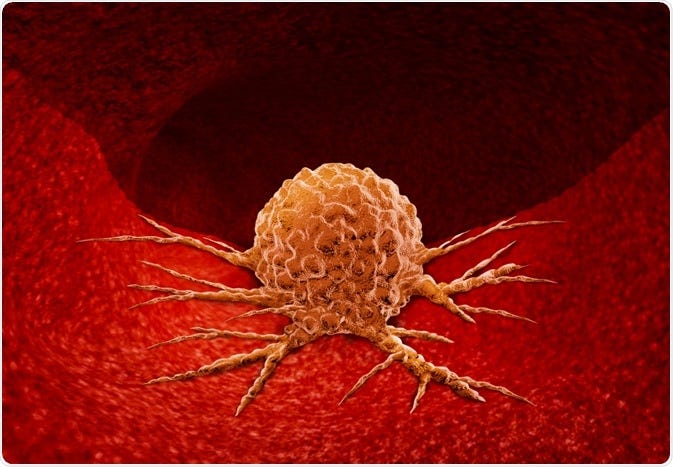
When you couple capability with abuse, you pathologize it. This makes the function a dysfunction by decoupling it from its purpose, and so, its proportion. Many ‘dysfunctions’ of today are extreme versions of a function that, when proportional, is helpful or even necessary for survival. We see this in biology. For example, cancer may be understood as uncontrolled cell division that does not contain itself through apoptosis (programmed cell death). Paradoxically, on the cellular level, cancer results from not enough death.
Aristotle argued in Nicomachean Ethics that all qualities were based on a golden mean such that too much or too little of any virtue became a a vice. Too much aggression causes us to charge a bear, and we call it, recklessness. Too little aggression causes us to to passively watch while our children are attacked, and we call it, cowardice. The right amount of aggression we call, courage.
Similarly, Kernberg has argued that narcissism and empathy exist on a spectrum in which the extremes may be personality disorders, suggesting a future diagnosis of empathetic personality disorder. I wonder if too little narcissism we call, low self-esteem, just as too much we call, narcissism. The right amount, in a different epoch, we may have called, leadership.
Also read How Borderlines See Love, How Narcissists See Love, When You Should be a Borderline, and When Being a Narcissist Makes Sense.
To follow me: https://medium.com/@myartman
To subscribe: https://medium.com/@myartman/membership