
7 Rules to Write Clean Code in PHP
Are you having difficulty reading/developing the codes you’ve written in the past? Or, like me, you are looking for an answer to the question of how to write better code.
If you are not a member, you can access to full text here.
Writing clean code is essential for maintaining and scaling your PHP applications. Clean code is easier to read, understand, and modify, which in turn reduces bugs and enhances collaboration.
To upgrade your skill set there are lots of tricks. Don’t worry, I’m going to tell some of them.
Every developer need new things about coding. Environment is developing day by day. In PHP development, I learn lot of things every day such as functions, algos and etc.
At this article we are going to talk about clean code concept in PHP.
Let’s find out some of them.
1. Follow PSR Standards
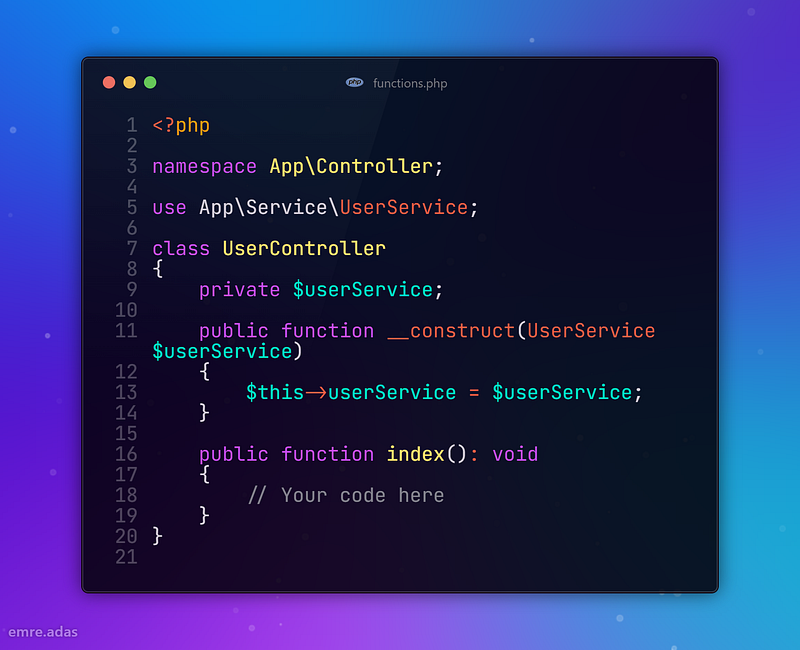
PHP-FIG (Framework Interoperability Group) has developed several PHP Standard Recommendations (PSR) to improve coding style consistency.
Adhering to these standards can significantly increase the readability and maintainability of your code.
2. Avoid Deep Nesting
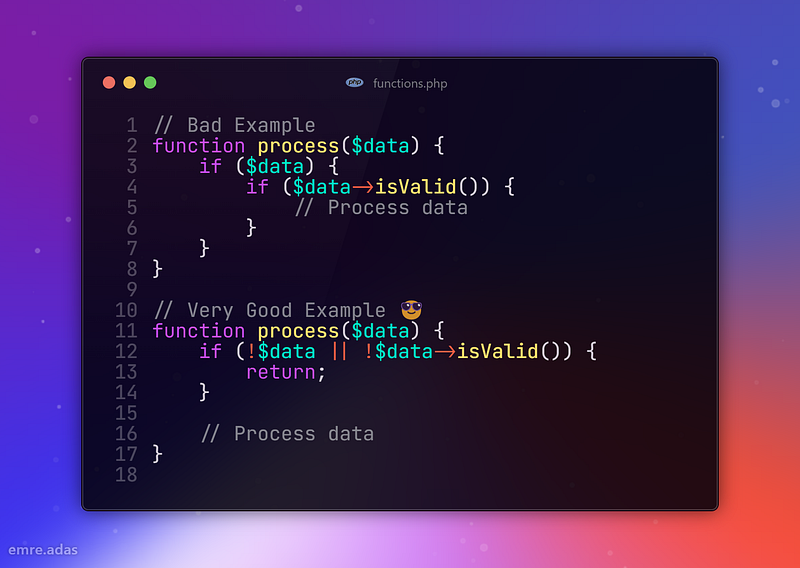
Deeply nested code is hard to read and understand. Use early returns and guard clauses to reduce nesting levels.
I always push myself to code minimum line. This rockets me to moon 🚀
3. Write Small Functions As You Can
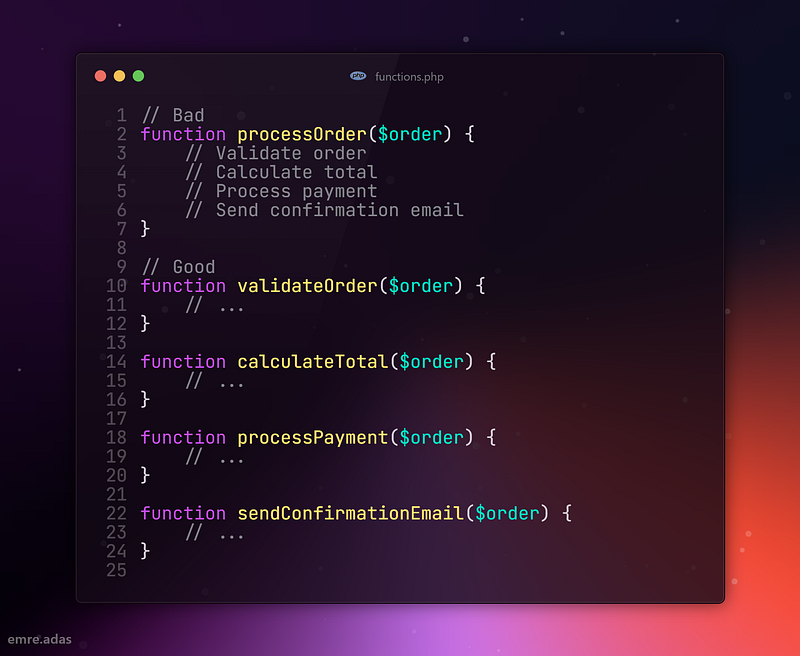
💡 Functions should do one thing and do it well.
If a function is too long, it becomes harder to understand and maintain. Break down large functions into smaller, more manageable ones.
You should break down code block to smaller pieces.
4. Don’t Use Complicated Variable and Function Names
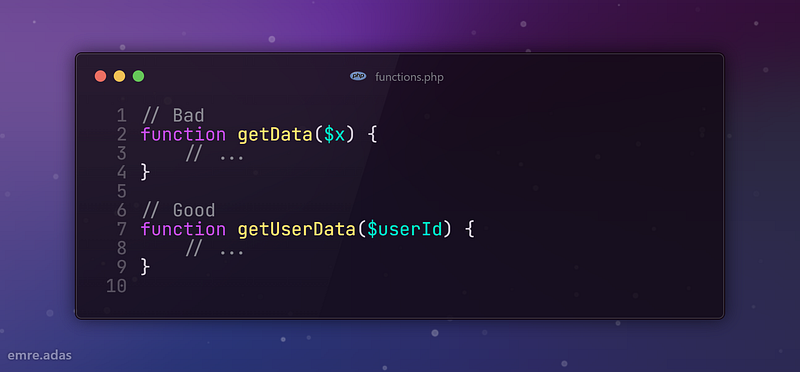
Names should clearly describe the purpose of the variable or function. Avoid using abbreviations or vague names that do not convey the intent.
5. Use Object-Oriented Programming (OOP)
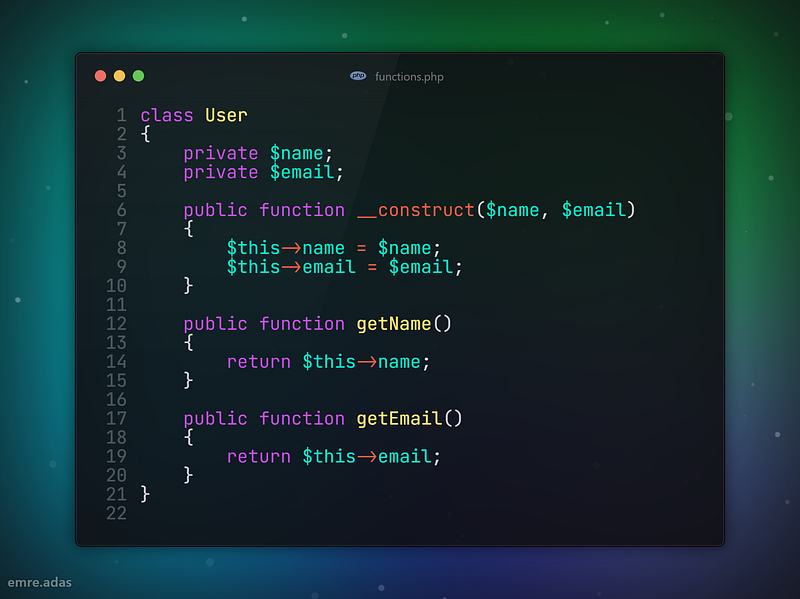
OOP allows for better organization and modularization of code by using classes and objects. This promotes code reuse and easier maintenance.
6. Write Unit Tests
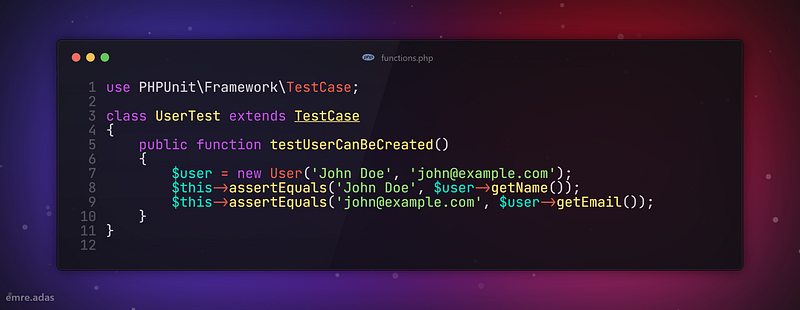
Unit tests help ensure that your code works as expected and make it easier to refactor code without fear of breaking existing functionality. Use testing frameworks like PHPUnit to write and run your tests.
To learn about PHPUnit:
7. Document Your Code
/**
 * Class User
 *
 * Represents a user in the system.
 */
class User
{
    /**
     * @var string The user's name
     */
    private $name;

    /**
     * @var string The user's email
     */
    private $email;

    /**
     * User constructor.
     *
     * @param string $name The user's name
     * @param string $email The user's email
     */
    public function __construct($name, $email)
    {
        $this->name = $name;
        $this->email = $email;
    }

    /**
     * Get the user's name.
     *
     * @return string
     */
    public function getName()
    {
        return $this->name;
    }

    /**
     * Get the user's email.
     *
     * @return string
     */
    public function getEmail()
    {
        return $this->email;
    }
}
Comments and documentation are crucial for understanding the code, especially for others who may work on the project in the future. Use PHPDoc to document your functions and classes.
This is especially needed when new teams join the project. I remember a teammate of mine didn’t comment. After a while, he couldn’t even read his codes himself.
Conclusion
There are many approches to learn in PHP. I can say that these are the principles I use most frequently. I hope you find it helpful. If there is anything you are confused about, feel free to ask in the comments.
Have a wonderful day! Stay connected, stay online.
Thanks for coming this far 🎉
- 👏 Could you please clap the story to help spread the article? (50 applause).
- 📩 Also if you want to my newsletter: https://yunus-emre-adas.ck.page/c090914848
You can reach me from the links below:
To access my other articles:


