
What I Liked About “Lovecraft Country”
And what I didn’t
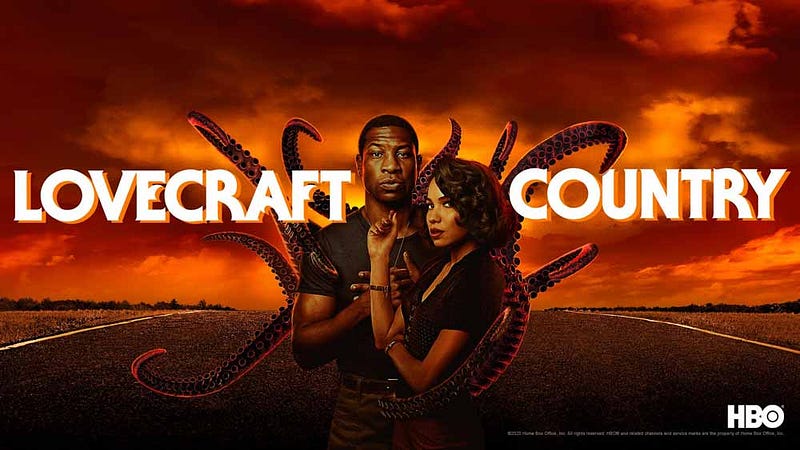
1. The (Almost) All Black Cast
Watching a fantasy series that is (almost) entirely populated by Black actors is unique. It’s true we had Empire. But that wasn’t fantasy. It was “blacksploitation.” Right? I mean all the characters were gangsters. Rich ones. But still. It had the vibe of Shaft from back in the day: Black people doing “black” things. I never watched The Wire; it didn’t have that strong female lead I require. (Reading that Cookie Lyon was the strongest female character on TV is what put me on to Empire.) But same. Same. Same. We’ve seen black criminals before. Enough already! But in Lovecraft Country, the characters are various and sundry — a bookworm, a serviceman, an adventurer, an artist — without a gangster in sight (if you don’t count the white sheriff). Frankly, it’s a huge relief. Because after decades of TV viewing, I’m well and truly tired of having the same old stereotypes shoved down my throat. Hollywood: please stop.
2. Jussie Smollett’s Sister
Speaking of Empire, remember Jamal? That one sweet brother who disappeared in the last season? That was due to the strange legal troubles of actor Jussie Smollett, which I won’t go into here. But turns out the ingenue in Lovecraft Country is his little sister, Jurnee Smollett. I get a kick out of acting families — like the Barrymores, or the Phoenixes — especially acting families with alliterative names. So now I can add the Smolletts to my pantheon. I’m not sure why acting families are appealing, but they are. And Jurnee is appealing in her own right, too, even if she seems a little too modern for the ’50s setting. Something about her power stride…
3. The 1950’s Setting
Speaking of the setting, it’s cool. People just dressed better back in the day. I love the clothing; the hairdos; the big, vintage cars; and the romantic sepia-tone lighting. I was born in the ’50s and honestly, they weren’t that great in real life. But they look good on camera. Also, the time period gives the antagonist —overt racism — a chance to really shine.
4. The Protagonist
When the lead character came on screen, I felt sure I’d seen him before. Sure enough, Jonathan Majors played a big role in The Last Black Man in San Francisco, which was a tender and moving film. I reviewed it over here:
5. Black Wall Street
This was the second recent series that referenced the horrific destruction of Black Wall Street — a prosperous area of Tulsa, Oklahoma — by jealous and violent whites in 1921. Watchman, another great series (much greater, TBH, due to a better-crafted plot) also references the event which I’d never heard of before this year, thanks to the kind of “patriotic” education that President Trump wants to further entrench in U.S. schools — the kind that leaves out women and people of color. In fact, Lovecraft Country presents many opportunities for learning, and HBO offers a podcast and other resources to help curious watchers learn more about the references made.
6. Female Showrunner
Misha Green made it happen. Enough said.
7. The Ironic Name
I’d heard of writer H.P. Lovecraft before. It’s hard to forget that cool name. All I really knew about him was that he wrote science fiction that included some imaginative monsters. For many years the most prestigious awards for fantasy writers came in the form of a bust of Lovecraft in trophies given out annually by the World Fantasy Organization. But that practice changed after 2015, when a new trophy was designed. Why? Because it turns out that Lovecraft was a virulent racist, even writing a deeply offensive poem extolling his hatred for Blacks. So it’s a wonderful irony that this vehicle for Black actors, a Black female showrunner, a Black co-producer (Jordan Peele) and many Black support staff bears his not-so-illustrious name.
So what didn’t I like?
There are some really gory scenes which I could definitely do without. And some of the best characters were killed off. Plus there are a variety of more nuanced problems which more insightful reviewers have written about here and here.
But overall, the series was enjoyable viewing. Here’s hoping audience enthusiasm will work its magic and a second season appear.
For more of the good stuff, follow Fourth Wave, where we’re changing the world for the better, one story at a time. Got one of your own? Submit to the Wave!
For more by this author, try: