
“The Last Black Man in San Francisco,” LitQuake, and Me
This gorgeous movie will turn you inside out
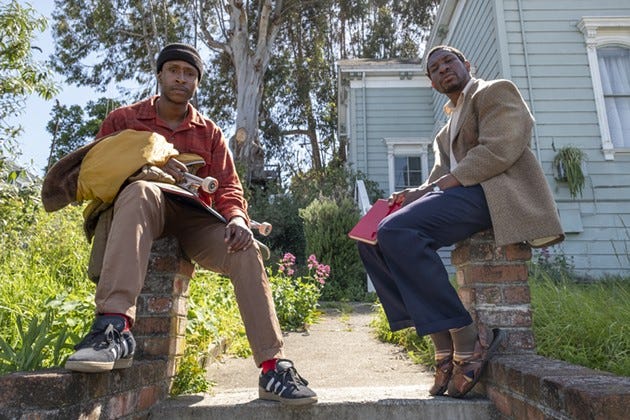
I wasn’t going to see The Last Black Man in San Francisco. My husband thought the title sounded depressing, and it left theaters in the City before I gave it much thought.
Then I was reminded of it at LitQuake, a quirky literary festival that lights up San Francisco venues in October of every year. Like most years, I poured over the schedule and identified a thousand things I wanted to hear and see. (Persion Poetry at Hotel Emblem! Tales of the Cacophony Society at City Lights Books! Pun Off at the Swedish American Hall!) And like most years, I managed to actually show up for two.
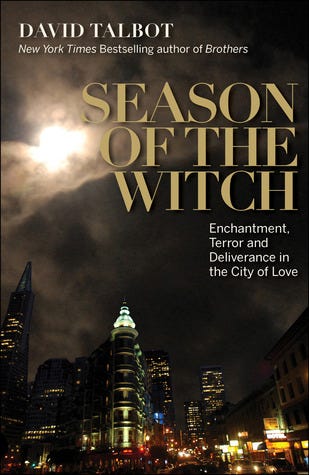
One of them was a talk by David Talbot, who wrote Season of the Witch, an insider’s history of San Francisco in the ’60s and ’70s. I chose that event because I loved that book, which gave me a better understanding of an era I lived through; and because I wanted to take a look at the neighborhood — Glen Park — whose BART station the Chronicle urban design critic John King called one of his favorite buildings for its “brutalist” style; and to check out the venue, Bird and Beckett Books and Records, which I’d heard of but never visited. All good. And sure enough, the BART station was brutal, the neighborhood charming, and the book store jam packed.
I got there about 1 minute before start time and already there was a sign on a music stand in the doorway announcing that they were full. I could just see the speakers through shadowy heads and profiles if I squeezed up into the crowd spilling out the front door.
I saw the moderator take the small stage, then Talbot, who was going to talk about his upcoming book, Between Heaven And Hell: The Story of My Stroke. Then I heard him say he was immensely proud of his son, who had directed The Last Black Man in San Francisco.
Wait…what?!?
He said his son had gone to the Ruth Asawa School Of The Arts (SOTA) high school in San Francisco, where he learned how to make and appreciate films. But after he graduated, he didn’t go to college. He stayed home watching movies on television. All his friends went off to college, but he stayed on the couch. His parents thought he was having some kind of extended nervous breakdown — that all the TV viewing was a form of therapy. The next thing David Talbot knew, his son was filming The Last Black Man in San Francisco and taking it to Sundance, where he won the coveted Best Director prize.
Wow. I loved that story!
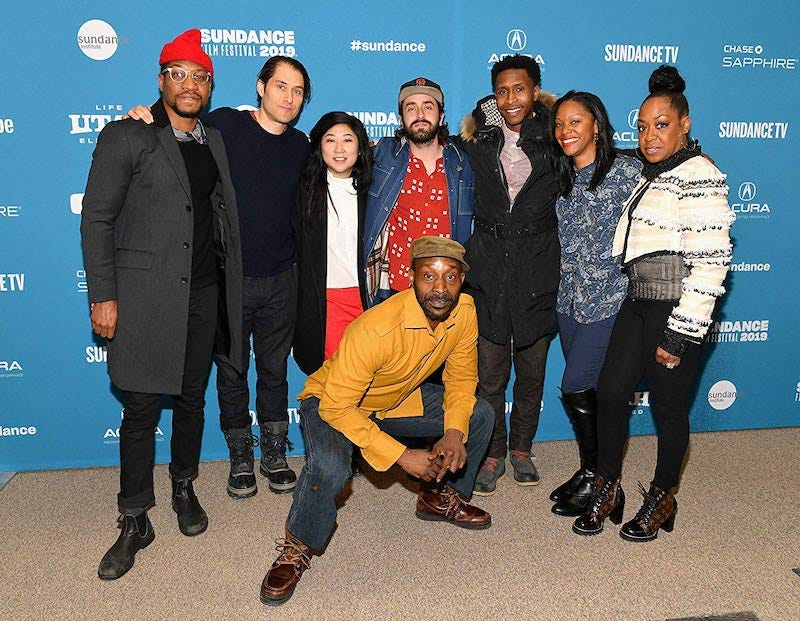
And I loved hearing that director John Talbot and protagonist Jimmie Fails were good friends who had been talking about making a movie like this one since high school, that the story was loosely based on Jimmie Fails’ life, and that a Kickstarter campaign provided some of the funding. Then I saw that Manhola Dargis of the New York Times had named The Last Black Man in San Francisco one of their favorite movies of 2019. That clinched it. It wasn’t playing in theaters any longer, so I gave (the evil but so convenient) Amazon $5.99 to stream the movie for 48 hours and watched it twice in a row. Now I’m going to have to buy it, so I can watch it again.
Here are just a few of the things I love about the movie.
The opening scene of a little girl peering up into the camera with a curious look. The sun falls on her face. You notice her pigtails, her missing baby teeth. Then you see a man in a hazmat suit staring down at her. You can hear him breathing inside it. Her mother calls her off screen. “Jasmine, we’re going to be late!” and she skips away in a pink coat as the angle pulls back to show big container ships on the Bay down by Bayview Hunter’s Point.
The preacher, setting down his milk crate to stand on. The timber and tone and cadence of his voice as he warns of what’s coming to the neighborhood. The pause he takes in his sonorous ranting to wave and smile at a driver passing by.
The two stars — what a beautiful friendship they have! The pair of them traveling through town on one skateboard, their legs pumping together like synchronized swimmers. They make such an appealing sight that a crazy man chases after them calling Where are you going? Take me with you! Take me with you!!! as he tears off his clothes and throws them down on the ground.
The house! The magnificent Victorian that protagonist Jimmie Fails is obsessed with, with it’s gingerbread scales and pointed steeple and carved wooden staircase and painted ceilings and built-in organ and stained glass windows and overgrown foliage and cracked cement wall separating it from the pedestrians on the sidewalk and all the other details that make the house gorgeous and dilapidated and forgotten and grand.
The tender way Mont narrates the action in movies on the television to his blind grandpa (Danny Glover).
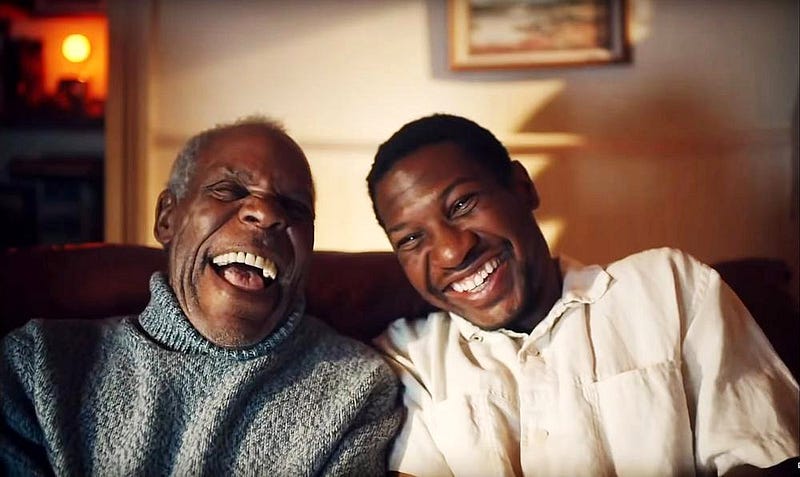
The character of Mont, so different than the typical black man we see in mass media— intellectual and quirky and gentle and profound. Prolifically creative: a writer and an artist and an actor and a friend. I love the way he interferes with the small group of men posturing in front of his house, who bully and berate each other as some kind of masculinity test. And I love what he says when Jimmie objects to him writing a play about one of the bullies. “He’s mean to me so I can’t appreciate him? That’s just silly.”
The naked guy in the Castro, who puts down a towel before sitting at the bus stop, as required by the Board of Supes for naked Castro men.
The scene when Jimmie runs into his mother on the bus. The way she looks like a madonna, eyes glowing, sunlight behind her head making a halo — her ineffable beauty. The love they feel for each other is practically palpable, but fragile, ephemeral — there, but not there, lost in the brutal infrastructure of life’s rough tests.
The way the camera loves and caresses and cherishes San Francisco in Every Single Shot.
I was struck by a few of the lines in the movie, including when Kofi said “I wish I had a grandpa to leave me nice things like this house.” And when Jimmie said he thought that him having the house made the difference between being alive and shot dead.
That made me think about the leg up my parents gave me by providing money for college, money for a down payment on a house, and the leg up I’m giving to my own children by doing the same. It made me think of the help director John Talbot got from his parents, who had enough resources to let him ruminate at home for weeks or months…or was it years? And how much harder it would be to navigate through this world if you didn’t have any of those supports and resources— if you didn’t even have a mom.
But after he graduated, he didn’t go to college. He stayed home watching movies on television. All his friends went off to college, and his parents thought he was having some kind of extended nervous breakdown
I didn’t read the reviews before writing this. I didn’t want to have my impressions influenced by other people’s ideas. But I saw a headline that claimed the movie was not a love letter to San Francisco, but an indictment of the way it has failed its black population.
To that I say what Jimmie Fails said to the two women complaining on the bus.
You don’t get to hate San Francisco. Do you love San Francisco? You don’t get to hate San Francisco unless you love it.
And also, what he said about his friend Kofi (imperfectly summarized here).
He’s both bad and good. He’s not just one thing.
So yes, San Francisco failed its black population when it decimated the Fillmore district in the 1970s through “redevelopment.” And yes, it continues to fail it (and everyone else!) today when it gentrifies Bayview Hunters Point — and every other neighborhood in town. But it’s also a beautiful, soulful, multifaceted city which deserves our love and careful consideration. It’s not just one thing.
The Last Black Man in San Francisco is beautifully written, filmed, acted, scored. It’s moving and meaningful and raises important questions that apply to big cities across the land. So if you love San Francisco — and even if you don’t — do yourself a favor: see this movie.
Now I’m going to go watch it again.
For more by Patsy Fergusson, follow Fourth Wave.