
What to Binge Watch if You’re Anxious
“Unorthodox” and “Caliphate” are compelling distractions

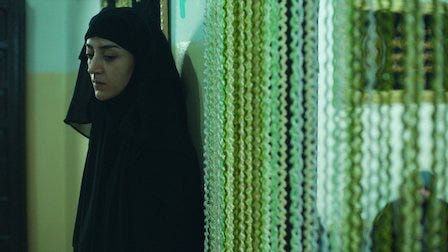
These are anxious times. And though I know the best way to address negative emotions is usually head on, sometimes I’m too distraught for healthy processing and must have a distraction. That’s what I was looking for over the past few days, and I found it on Netflix, in two series focused on beleaguered but extremely brave women: Unorthodox and Caliphate.
Of the two, Unorthodox is the gentler and more uplifting. Caliphate isn’t for everyone. But both series gave me something I found compelling, though I can’t say I fully understand what. Why is a feminist like me fascinated by seeing women in subjugation?
CALIPHATE
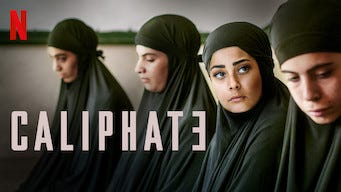
Let’s start with Caliphate, since I just finished it last night. I hadn’t seen it on any “must watch” lists. But the promotional picture on Netflix of four women in hijabs caught my attention, so I searched for a review. The one I found in Variety discouraged me from watching by describing an opening scene where a man’s forearm gets cut off in a public square. I don’t like watching violence. But the review also said the series was put up for awards in Sweden, where it was made, so I decided to cover my eyes during the first gruesome scene and see if the rest had value. It did.
Caliphate has not one but three strong women characters: Pervin, who grew up in Sweden but now is married to a terrorist and living in Raqqa, Syria; Fatima, an agent for the Swedish Intelligence Agency who offers to help Pervin escape in exchange for information about her husband’s terror plots; and Sulle, a teenage Muslim in Sweden who is angry about bigotry and being radicalized by a charismatic man.
This is an extremely tense series that had me on the edge of my seat (or gripping the covers) for 90 percent of the time. The tension comes mostly from fear for Pervin, who constantly puts herself in danger while pursuing information that could be her ticket home. But Fatima also faces danger when she has to go into hiding after instigating an internal affairs investigation at her agency and being fired in retaliation — and then set up. And we even get tense around Sulle’s domestic arguments as her well-meaning parents try and fail to quash her growing radicalization.
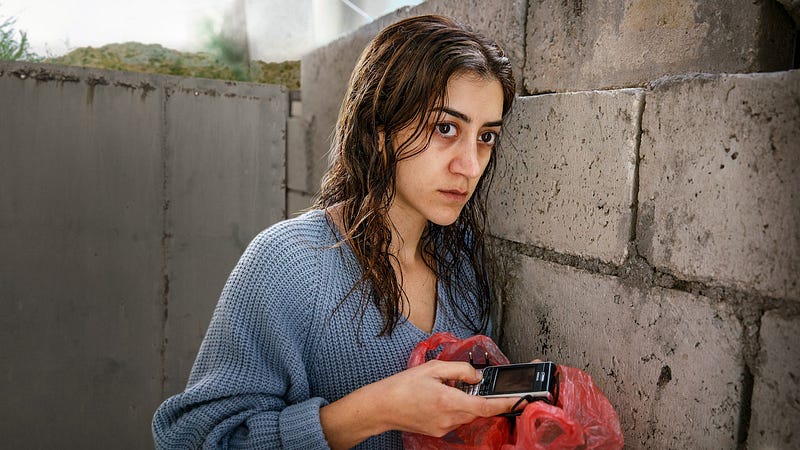
Caliphate was perfect for me in terms of distraction, keeping me fully engaged for the eight 46-minute episodes, which I binge watched nonstop.
Asked about his inspiration for the series, co-creator Wilhelm Behrman told Variety that “In 2015 Northern Europe experienced a huge refugee crisis and at the same time a couple of hundred citizens of the Nordic countries joined Isis. Furthermore, terrorism became a reality by that time with deadly attacks in both Sweden, Norway and Denmark. And now, a couple of years later, we see the artistic result in the form of TV series.”
He and his co-creator Nikolas Rockström want to write a romcom next, he said.
I don’t think I approve.
UNORTHODOX
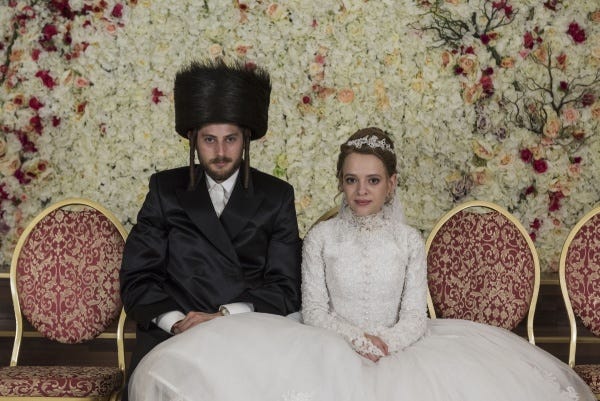
Unorthodox is based on the true story of Deborah Feldman — or at least the first half of it is. The author of the 2012 memoir Unorthodox: The Scandalous Rejection of My Hasidic Roots grew up in the ultra-orthodox Satmar Jewish community in Williamsburg, Brooklyn, New York.
One thing I like about both Unorthodox and Caliphate is the perspective they give on cultures not my own. I’m a white (formerly Catholic) woman who’s spent most of her life in the San Francisco Bay Area, so both series provided new information to me.
But Caliphate was written by Swedish men about Muslim women, so I had to wonder if they got it right. Not so with Unorthodox. I knew I could trust the depiction of Satmar Jewish culture since Feldman grew up in it. And the fact that creators Anna Winger and Alexa Karolinski, and director Maria Shrader, are all women added credibility to their 19-year-old woman protagonist’s point of view.
Plus Eli Rosen, who plays the rabbi, was hired as a Yiddish Consultant to make sure the language and cultural details rang true. I’m willing to bet that no Yiddish Consultant has ever before been hired in the history of Hollywood, particularly since modern Jews living in Israel speak Hebrew.
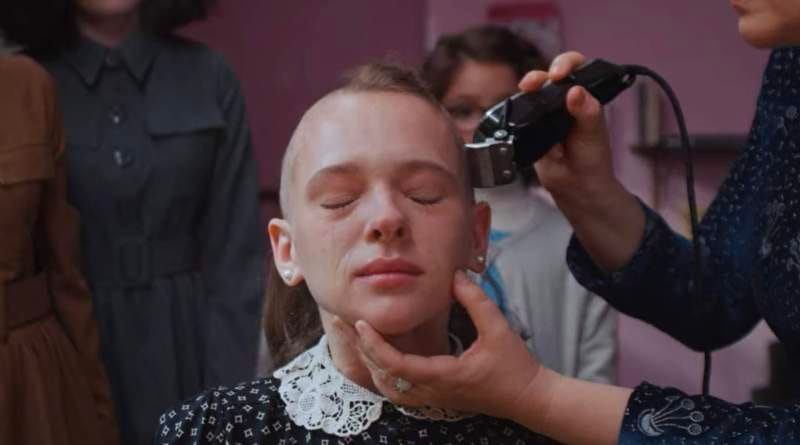
This is a gentle story about well meaning people. There are no villains here. Still, women are expected to be “modest,” which includes not singing or performing in public, agreeing to arranged marriages, deferring to men, and shaving their hair after marriage so no one will see it, covering up their baldness with wigs.
Esty (Esther) tries to fit in, but finds her voice stifled in this rule-bound community. Women’s primary role here is to raise children. And when she can’t conceive or even comfortably have sex a full year after marriage, her basic worth is questioned, inspiring her to flee to Berlin where her estranged mother has lived for most of Esty’s life.
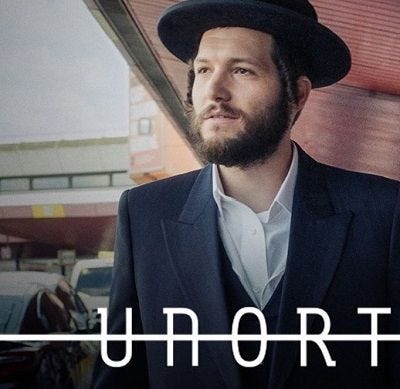
Soon her naive husband Yanky and his disreputable cousin Moishe, played as a rakish scallywag by Jeff Wilbusch, are sent by the rabbi to find Esty and bring her back, giving rise to some funny and poignant moments of culture clash and awakening in Berlin.
Rather than the tension and fear inspired by Caliphate, this series brought out tenderness and hope in me. My only complaints were that talented actress Shira Haas looks about 12 years old, which can be disconcerting, and the series is only four episodes long. Luckily, there’s a Making Unorthodox short to extend the experience. Next, I’ll have to read the book.
So that leaves the question. Why is a feminist like me fascinated by series like these? Not because the women protagonists are subjected in the first place, but because they find the grace and courage to scramble up and out.
For more stories about women and other disempowered groups, follow Fourth Wave.
For more by this author, try:


