
7 Dark Historical Truths Schools Refuse To Teach
Why schools won’t teach you these 7 ugly historical facts?

History can be a fascinating subject to explore, but there are certain dark parts of our past that many schools refuse to teach.
It’s understandable; many of these events are gruesome, heartbreaking, and difficult to comprehend.
But it’s important to learn about the past in order to shape a better future, which is why we must face some of the darker aspects of history.
This article explores 7 of the darkest historical facts that many schools simply refuse to teach.
7- The Killing Of Vampires — Superstitions
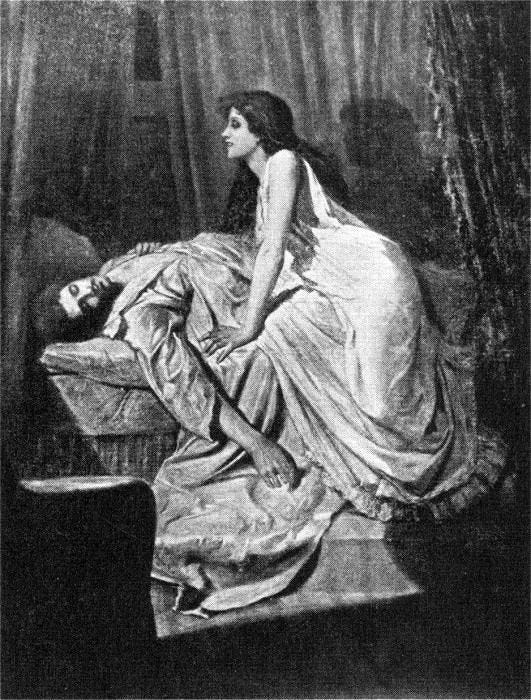
Vampires have been a part of folklore and literature for centuries, but there was a time when people actually thought they were real.
In the 16th century, people in Europe were convinced that vampires were a real threat, and began hunting them down. They believed that killing a vampire would rid their communities of the plague, which was believed to be caused by the undead.
To prevent vampires from rising from their graves, people would dig up suspected vampire graves and burn or decapitate their bodies.
Other methods of killing vampires included stuffing the mouth with garlic, driving a wooden stake through the heart, and covering the body with salt or sand.
These practices were eventually abandoned as superstitions, but it’s still chilling to think of the lengths people went to in order to protect themselves.
6- The War On Cats — Witchcraft

Throughout much of the Middle Ages, cats were seen as evil and associated with witchcraft.
This negative view of cats led to a period of time known as the “war on cats” in which millions of cats were killed in an effort to rid Europe of their supposed evil to war was particularly cruel and violent, with cats being burned alive, drowned, or hung from trees.
In some cases, cats were even buried alive or boiled alive in oil. These actions were justified by claims that cats were in league with the devil or that they posed a health hazard.
Unfortunately, these campaigns were largely successful and cats were almost wiped out in certain areas of Europe during this period.
This dark episode in history has been largely ignored by most schools and is rarely taught to students.
5- Animal Courts — Europe, 18TH century
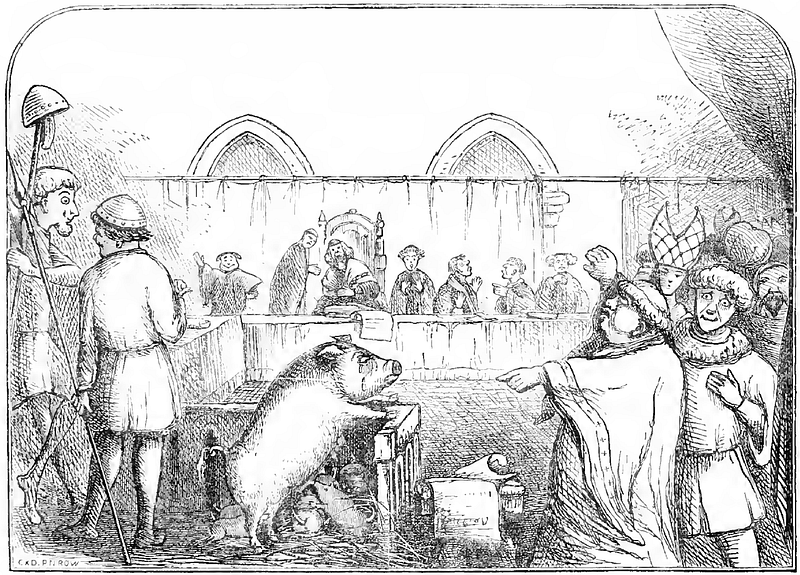
Animal courts were a form of legal practice that originated in the 18th century. These courts were created to handle matters concerning animals and their owners but eventually expanded to include other matters such as property disputes and criminal cases.
The courts, which were presided over by magistrates or justices of the peace, would hear evidence and testimony from both parties before rendering a decision.
Animal courts did not have the same rules of evidence and procedure as ordinary civil or criminal courts; rather, they relied on common sense, local customs, and community values to reach a decision.
In many parts of Europe, animal courts became extremely popular and could be found in almost every village and town. They were seen as a more accessible option for people who couldn’t afford to take their disputes to court.
Animal courts were also viewed as more merciful than their traditional counterparts, as they took into account the special circumstances of each case.
Although animal courts no longer exist today, some legal experts argue that they played an important role in providing justice to those who may not have been able to access it through other means.
Ultimately, animal courts allowed people to take their disputes to court without fear of costly fines or long delays.
4- Jurassic Park — Dinosaurs

One of the most incredible dark historical facts that schools refuse to teach is the existence of Jurassic Park. Jurassic Park was a secret government-run research facility located in the Nevada desert near Area 51.
It was established by the US military in the late 1950s to conduct experiments on dinosaurs, using DNA collected from fossils around the world.
The park contained genetically engineered dinosaurs, as well as other creatures such as mammoths, saber-toothed tigers, and even a few extinct birds.
It was not open to the public, and it was kept secret from the American people. Unfortunately, the park was eventually shut down after a catastrophic accident occurred in the mid-1980s.
The incident resulted in the deaths of many personnel and the destruction of some of the research facilities. The cause of the accident is still unknown, but some believe it was caused by human error or sabotage.
It is a dark chapter in history that schools refuse to teach about.
3- The Wave — Teacher’s experiment
The Wave is a dark historical fact from the early 20th century that many schools refuse to teach. This experiment was conducted by a high school history teacher named Ron Jones in Palo Alto, California in 1967.
He wanted to demonstrate how easily fascism can take hold in society. He created a movement within the classroom called “The Wave” and it quickly gained popularity amongst his students. The group adopted certain slogans, habits, and clothing.
They even developed an elaborate salute and adopted the swastika as their symbol. The Wave experiment went on for eight days until Jones eventually shut it down, showing the students how quickly they had adopted a fascist mindset.
While some saw the point of the experiment, others felt betrayed by their teacher and some even felt they had been exploited.
It is important to remember this historical event and the potential dangers of blindly following a leader.
The Wave experiment is a powerful example of how society can be so easily manipulated and how fascism can take hold in a matter of days. It’s one of many dark historical facts that schools, unfortunately, refuse to teach.
2- Project X — Military experiment
Project X is an infamous historical event that occurred in 1945. It was a secret military experiment conducted by the United States Navy on a small island in the Pacific Ocean.
The experiment involved detonating several bombs with a force of up to three megatons each and resulting in the destruction of the island.
The purpose of the experiment was to study the effects of nuclear warfare on a wide range of topics, such as the impact on the environment, the destruction of local populations, and the effects of long-term radiation.
Although the results of the experiment were not released publicly until much later, Project X was widely known as a major turning point in the development of nuclear weapons.
Project X is still a dark period in history, one which is rarely discussed in schools or educational programs. However, it serves as an important reminder of the destructive power of nuclear weapons and should not be forgotten.
1- Battle Of Zappolino — Spain And The Dutch Republic
The Battle of Zappolino was one of the more obscure yet significant battles in early modern history. It was fought on June 21, 1630, between the forces of Spain and the Dutch Republic in the southern part of the Netherlands.
The Spanish had been attempting to gain control over the area and thus were determined to win the battle.
The Dutch, on the other hand, were determined to keep their freedom and were keen to protect their lands from foreign invasion.
As a result, a great deal of strategic planning went into this battle, with both sides carefully preparing for what would become a decisive clash.
The Spanish forces were led by Ambrosio Spinola, an experienced military commander who had recently led a successful campaign in Italy. His troops consisted mainly of infantry with some cavalry support.
Meanwhile, the Dutch forces were led by the stadtholder, Frederik Hendrik, and he had the support of two infantry brigades and three cavalry regiments.
The battle began with the Spanish troops marching towards Zappolino while the Dutch were positioned in defensive lines near the town.
After some skirmishes, a fierce battle erupted, with both sides sustaining heavy losses. In the end, the Spanish troops were victorious and Spinola’s forces seized control of the town.
In hindsight, the Battle of Zappolino was an important milestone in early modern European history.
It was one of the first major victories for Spain in its struggle against the Dutch Republic and it would help to cement their control over much of the southern part of the Netherlands.
Even today, the battle is remembered as a symbol of courage and resilience by both sides involved.
Concluding Remarks
There are some dark moments in history that schools have chosen to omit from their curriculum.
From the war on cats, to animal courts, and even to experiments like Jurassic Park and Project X, these stories are often overlooked. But they provide valuable insights into the consequences of our actions and the importance of protecting all forms of life.
Learning about these historical facts can help us make informed decisions and create a better future.
We must remember that our past can teach us valuable lessons if we allow ourselves to look into it with open eyes and an open heart.
More from the author:


