avatarNoorain Ali

Free AI web copilot to create summaries, insights and extended knowledge, download it at here

3920

Abstract

we waste our time.</p><p id="b9a9">If that scares you, <b>think of all your time overthinking or possibly overcaring for someone.</b></p><p id="034a">Wasting time has two types:</p><ul><li>When you walk, meditate and sit in silence</li><li>The other is when you waste overthinking, saying “yes” to everyone, and making bad decisions.</li></ul><p id="923d">With the number (1), likely, you will not waste time but enjoy it.</p><p id="e535">But the second one is deadly.</p><p id="0f76">If you don’t love to enjoy your life, don’t make it harder than it is. Stop thinking about problems that are not yours to tackle in the first place. Take a break!</p><p id="3b89">Take all the time in the world you want, but never spend a minute overthinking, throwing away your gut feelings, making yourself sad, or <a href="https://readmedium.com/hippocrates-6-powerful-insights-on-life-that-will-change-you-for-the-better-d7ccb29a1326">making the wrong decisions</a>.</p><p id="b63e"><b>Use the power</b> of intuition to help you make decisions.</p><p id="f4cf">If we use our powers, we will have fewer problems in life, and our life will seem pretty painless.</p><p id="d6c4">As Seneca said:</p><blockquote id="04d6"><p>“Life, if well lived, is long enough.”</p></blockquote><h2 id="efb3">3. Fly in your neighborhood</h2><p id="2d46">Seneca hardly traveled.</p><p id="4ee2">Mostly because <b>his life was utterly exciting.</b></p><p id="7296">Seneca was the person who chose to stay and solve things rather than go on a vacation, hoping the problems would solve on their own.</p><p id="3156">He believed:</p><blockquote id="b78d"><p>“When a person spends all his time in foreign travel, he ends by having many acquaintances, but no friends.”</p></blockquote><p id="6f98">The meaning of foreign travel is to excite you. Refresh you.</p><p id="2cdd">But it doesn’t matter if all you do after returning is <b>brag about it</b> and make <b>yourself look rich.</b></p><p id="4bd3">The sole purpose of travel should be:</p><ul><li>To learn</li><li>Give yourself space</li><li>Bring gifts of knowledge</li></ul><p id="f7c1">As it said, <a href="https://baos.pub/4-simple-principles-from-how-to-win-friends-and-influence-people-5fbe7aa6f571">you’ve wasted your education</a> if you don’t know how to talk to your friends about everything you have.</p><p id="fc47">Learn the <a href="https://readmedium.com/4-strong-habits-of-people-with-magnetic-personality-how-to-master-them-7c7c17815d86">art of making</a> friends.</p><p id="b0f9">Friends that will <b>wait for you </b>and <b>miss you</b> until you come back.</p><p id="42f2">True mates like Burrus!</p><h2 id="5cae">4. Confidence endeavors</h2><p id="73a5">The Roman Philosopher “Seneca” <a href="https://fs.blog/intellectual-giants/seneca/">faced exile in 41 AD</a>.</p><p id="1634">He was to live in Corsica, <b>a mountainous Mediterranean island.</b></p><p id="90e8">Though he could have cried and revolted, as he was a famous writer and a thinker, he chose otherwise. Seneca continued his work of philosophy and thinking in exile. He wrote three <a href="https://plato.stanford.edu/entries/seneca/">treatises</a>, one of which is named Consolation to <a href="https://iep.utm.edu/seneca/">Helvia</a>.</p><p id="eeba">After 8 years, in 49 AD, he was invited to Rome again with open arms. To that point, Seneca recalled:</p><blockquote id="9ed9"><p>“The difficulty comes from our lack of confidence.”</p></blockquote><p id="8f3b">Although he had struggles in his life, from Rome to Egypt to Corsica to Rome, all was justified when he became a tutor to the future emperor, <a href="https://www.newyorker.com/magazine/2015/02/02/stoic-2#:~:text=Seneca%20had%20been%20Nero's%20tutor,Senate%20explaining%20what%20had%20happened.">Nero</a>. Seneca knew that confidence was the root of success.</p><p id="29a1">Those who <b>shiver have already lost the battle.</b></p><p id="39dd">When you s

Options

ay life is unfair, it is not. Only you seem to make it difficult with your lack of confidence.</p><h2 id="1bfe">5. Evaporate the anger</h2><p id="293f">Seneca had breathing difficulty issues: asthma.</p><p id="2440">At some point in his mid-20s, Seneca realized the disease had the best of him. He then found out he had <a href="https://en.wikipedia.org/wiki/Seneca_the_Younger#:~:text=Seneca%20often%20had%20breathing%20difficulties,been%20struck%20down%20with%20tuberculosis.">Tuberculosis</a>.</p><p id="0f09">Facing life in denial, he often hid his illness.</p><p id="0b4c">He opted for one sentence that helped him cope with the state’s oppression, exile, and problems.</p><p id="7dd5">He wrote:</p><blockquote id="99be"><p>“The greatest remedy for anger is delay.”</p></blockquote><p id="d95c">The anger is already evaporated when we pause to answer an opposing party. If only we could wait a little while to tell people or make them look fools, we would save a lot of effort.</p><p id="2f9a">Not to mention that <b>our loose mouths</b> will refrain from <b>saying</b> something we <b>regret.</b></p><p id="5e97">Seneca’s life proved his worth when he married a rich lady Pompeia Paulina in his 50s and eventually became a tutor to Zeno.</p><p id="0fbd">It’s always worth it.</p><h2 id="60ff">6. Read once, but read good</h2><p id="e566">Quality matters more than quality ever will.</p><p id="84c2">This reminds me of Seneca’s quote:</p><blockquote id="f0d8"><p>“It does not matter how many books you have, but how good are the books which you have.”</p></blockquote><p id="7a26">In other words, it doesn’t matter how <a href="https://baos.pub/4-simple-principles-from-how-to-win-friends-and-influence-people-5fbe7aa6f571">many friends</a> you have if you don’t have good ones.</p><p id="b025">The same applies to work, happiness, etc.</p><p id="8bca">Ryan Holiday is a fan of Seneca. To follow in his footsteps, <a href="https://ryanholiday.net/13-reading-strategies/">Ryan only reads timeless books.</a></p><p id="46f3">This gives him an edge to learn the correct information. Reading time less books allows learning from direct sources, not secondary.</p><p id="5234">Although the manuscripts and memories are sometimes hard, even reading <a href="https://baos.pub/wendy-wood-6-easy-proven-ways-to-build-good-habits-and-break-bad-ones-7966151847b7">articles</a> about philosophers makes things easy to understand.</p><p id="c6a6"><a href="https://ryanholiday.net/">Ryan Holiday</a> reads from primary sources like:</p><ul><li>Letters from a Stoic</li><li>Meditation by Marcus Aurelius</li></ul><p id="0943">Another way to contemplate his idea is to read <b>easy explanations like articles and podcasts.</b></p><h2 id="c85d">Final thoughts:</h2><p id="398a">Seneca mostly wrote his letters at the end of his life: <b>63 AD to 65 AD.</b></p><p id="caf2">For most people, the end of life is an alarming situation. For Seneca, the clock was ticking backward.</p><p id="0f96">Seneca chose to try.</p><p id="9e91">As he believed, you must work hard, even in exile.</p><p id="ce54"><b><i>Join 1,100+ writers and get your next writing inspiration <a href="https://noorainali.ck.page/2123325ad5">right now</a>.</i></b></p><p id="2372"><b><i>Or, join Medium with my <a href="https://noorainali.medium.com/membership">referral link</a>.</i></b></p><div id="6fde" class="link-block"> <a href="https://noorainali.medium.com/list/aaca743159b9"> <div> <div> <h2>Confidence and Growth</h2> <div><h3> </h3></div> <div><p>and Growth noorainali.medium.com</p></div> </div> <div> <div style="background-image: url(https://miro.readmedium.com/v2/resize:fit:320/0*f0e224db780cb77c88b9ce2e71a8d5b43e28eef1.jpeg)"></div> </div> </div> </a> </div></article></body>

6 Tips From Seneca To Shift From Negative to Positive Thinking

Those who shiver have already lost the battle.
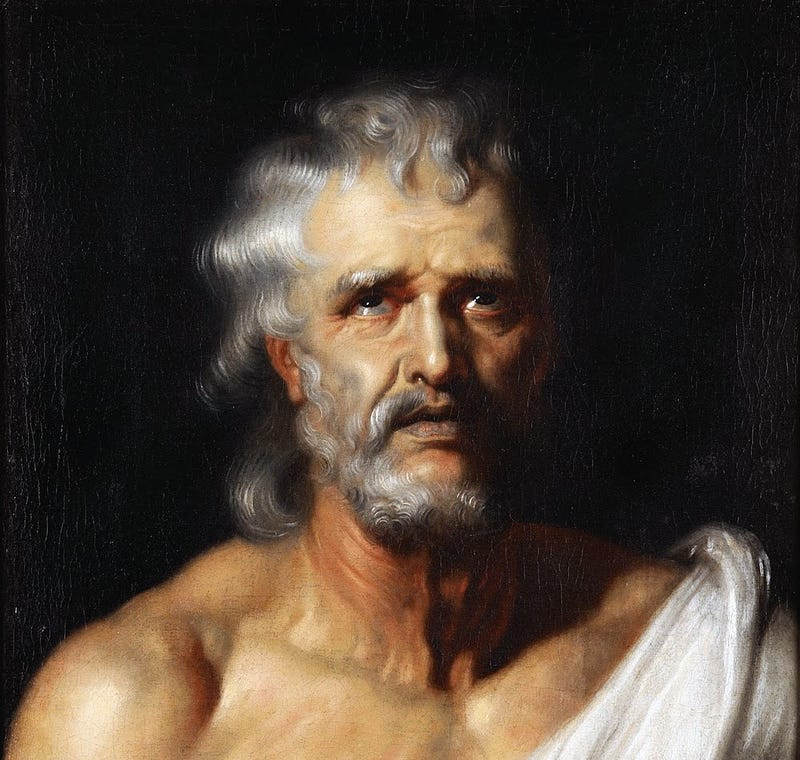
Peter Paul Rubens, Public domain, via Wikimedia Commons

Seneca and his father shared the same name.

They were divided into:

  • Younger Seneca
  • Older Seneca

Seneca came from a wealthy family.

His mother was educated, his father was a teacher, and his brother was the father of the poet “Lucan.” He lived a peaceful life in his hometown: Cordova. One day, his aunt took him to Egypt.

The young boy was flabbergasted. Seneca, in Egypt, received a quality education in Stoicism and Philosophy.

Hence, after seeing the struggles of life, Seneca thought he was all ready to return to Rome.

But he never knew his struggles had just started.

We have little control over our lives.

  • Positive things happen.
  • Bad things happen too.

As Timothy Ferris reminds me:

“The universe doesn’t conspire against you, but it doesn’t go out of its way to line up the pins either.”

Life is not a mortal being having a grudge against you. It’s a swing that moves back and forth.

Unhappy Seneca was upheaved to the top after Emperor Claudius was murdered. Claudius, who despised Seneca, was the reason Seneca became famous in the first place.

My friend, if you are glum with the problems, maybe you don’t have the correct knowledge to solve them.

Below are 6 pearls of wisdom from Seneca to shift from negative thinking to positive ones.

1. Many a moon

Until Seneca’s best friend Burrus died, Seneca had no hope of even writing a word.

Only then did Seneca withdraw from his public life and write some mind-blowing philosophical works, one of which is: The Apocolocyntosis Divi Claudii.

Seneca faced many ups and downs in his life.

He gave himself a few things to cope with failure, death, exile, and banishment:

  • Time
  • Space

In one of his quotes, Seneca wrote:

“Only time can heal what reason cannot.”

Some things happen in life without reason.

We, humans, are creatures of emotions and not logic. Whatever happens, only an emotional outlook is attached to the decisions.

So, give yourself time and space to heal from life’s best and worst climaxes.

2. Value and treasure

Seneca wrote in a letter to Paulinus, phrased as:

“It is not that we have a short space of time, but that we waste much of it.”

We ultimately take our life for granted. With each passing minute, we waste our time.

If that scares you, think of all your time overthinking or possibly overcaring for someone.

Wasting time has two types:

  • When you walk, meditate and sit in silence
  • The other is when you waste overthinking, saying “yes” to everyone, and making bad decisions.

With the number (1), likely, you will not waste time but enjoy it.

But the second one is deadly.

If you don’t love to enjoy your life, don’t make it harder than it is. Stop thinking about problems that are not yours to tackle in the first place. Take a break!

Take all the time in the world you want, but never spend a minute overthinking, throwing away your gut feelings, making yourself sad, or making the wrong decisions.

Use the power of intuition to help you make decisions.

If we use our powers, we will have fewer problems in life, and our life will seem pretty painless.

As Seneca said:

“Life, if well lived, is long enough.”

3. Fly in your neighborhood

Seneca hardly traveled.

Mostly because his life was utterly exciting.

Seneca was the person who chose to stay and solve things rather than go on a vacation, hoping the problems would solve on their own.

He believed:

“When a person spends all his time in foreign travel, he ends by having many acquaintances, but no friends.”

The meaning of foreign travel is to excite you. Refresh you.

But it doesn’t matter if all you do after returning is brag about it and make yourself look rich.

The sole purpose of travel should be:

  • To learn
  • Give yourself space
  • Bring gifts of knowledge

As it said, you’ve wasted your education if you don’t know how to talk to your friends about everything you have.

Learn the art of making friends.

Friends that will wait for you and miss you until you come back.

True mates like Burrus!

4. Confidence endeavors

The Roman Philosopher “Seneca” faced exile in 41 AD.

He was to live in Corsica, a mountainous Mediterranean island.

Though he could have cried and revolted, as he was a famous writer and a thinker, he chose otherwise. Seneca continued his work of philosophy and thinking in exile. He wrote three treatises, one of which is named Consolation to Helvia.

After 8 years, in 49 AD, he was invited to Rome again with open arms. To that point, Seneca recalled:

“The difficulty comes from our lack of confidence.”

Although he had struggles in his life, from Rome to Egypt to Corsica to Rome, all was justified when he became a tutor to the future emperor, Nero. Seneca knew that confidence was the root of success.

Those who shiver have already lost the battle.

When you say life is unfair, it is not. Only you seem to make it difficult with your lack of confidence.

5. Evaporate the anger

Seneca had breathing difficulty issues: asthma.

At some point in his mid-20s, Seneca realized the disease had the best of him. He then found out he had Tuberculosis.

Facing life in denial, he often hid his illness.

He opted for one sentence that helped him cope with the state’s oppression, exile, and problems.

He wrote:

“The greatest remedy for anger is delay.”

The anger is already evaporated when we pause to answer an opposing party. If only we could wait a little while to tell people or make them look fools, we would save a lot of effort.

Not to mention that our loose mouths will refrain from saying something we regret.

Seneca’s life proved his worth when he married a rich lady Pompeia Paulina in his 50s and eventually became a tutor to Zeno.

It’s always worth it.

6. Read once, but read good

Quality matters more than quality ever will.

This reminds me of Seneca’s quote:

“It does not matter how many books you have, but how good are the books which you have.”

In other words, it doesn’t matter how many friends you have if you don’t have good ones.

The same applies to work, happiness, etc.

Ryan Holiday is a fan of Seneca. To follow in his footsteps, Ryan only reads timeless books.

This gives him an edge to learn the correct information. Reading time less books allows learning from direct sources, not secondary.

Although the manuscripts and memories are sometimes hard, even reading articles about philosophers makes things easy to understand.

Ryan Holiday reads from primary sources like:

  • Letters from a Stoic
  • Meditation by Marcus Aurelius

Another way to contemplate his idea is to read easy explanations like articles and podcasts.

Final thoughts:

Seneca mostly wrote his letters at the end of his life: 63 AD to 65 AD.

For most people, the end of life is an alarming situation. For Seneca, the clock was ticking backward.

Seneca chose to try.

As he believed, you must work hard, even in exile.

Join 1,100+ writers and get your next writing inspiration right now.

Or, join Medium with my referral link.

Self Improvement
Psychology
Mental Health
Life Lessons
Mindfulness
Recommended from ReadMedium