
6 Reasons Why You Should Become A Blockchain Engineer
We explore the reasons why blockchain engineering is such a mind-blowing reality. We go through 6 reasons why people should become blockchain engineers, the problems it solves, and how to get started.
Preface
Being a blockchain engineer is one of the most fun and rewarding experiences and career paths today. You’ll easily slip through the looking glass of smart contracts and become enamored with planet altering tech.
And I personally, flippin' love it.
Replace
flippin'with your “sentence enhancer” of choice.
Every day I wake up AMPED. I have two titles, CEO of my own blockchain company and Developer Advocate for Chainlink Labs, which is a fancy way of saying I’m a blockchain engineer who also writes.
It was only one year ago I took the plunge into cryptocurrencies and blockchain, not expecting much. Now I see that it’s the future of almost EVERY platform and industry. And it’s not just me:
Every colleague of mine who’s been introduced to the scene has fallen in love with the technology as well
If you’re not familiar, blockchain solves a LOT of problems. Intense problems. And as blockchain engineers, we get to solve them. It’s because blockchain has SO many applications that the list of solutions is massive, and can often obscure new engineers to the scene from what is really important. It’s because of this that I do want to focus on a specific type of blockchain engineer:
The Smart Contract Engineer
Also known as Dapp Developer
Now “Smart Contract” might not sound sexy at first glance, but trust me, it is. A Smart Contract Engineer builds trustless decentralized auto-executing applications. If that leaves you confused, don’t worry, you don’t need to know too much about blockchain to continue reading. Here you can learn more about blockchain, smart contracts, and blockchain oracles.
Smart Contracts are a subset of what blockchain can do, but they are a huge, arguably most important subset. In section 2 we will talk more about what smart contracts do, but a quick refresher:
A smart contract is a self-executing contract with the terms of the agreement between buyer and seller being directly written into lines of code. The code and the agreements contained therein exist across a distributed, decentralized blockchain network. The code controls the execution, and transactions are trackable and irreversible.
- Jake Frankenfield from Investopedia
Ok time to get to the good stuff. Here are the main reasons why you should become a blockchain (smart contract) engineer.
- Bleeding Edge Technology
- Worldwide Life-Altering Solutions
- Phenomenal Vibrant Budding Community
- The Hackathons and Events
- Career and Salary
- The Innovative Wild West
Let’s dive into each of these.
1. Bleeding edge technology
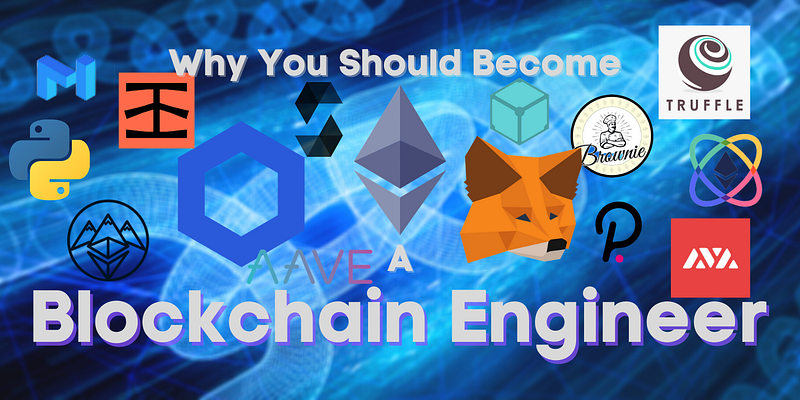
“What a gorgeous image.”
— Everyone
(ok not everyone but, WOW LOOK AT THOSE TECHNOLOGIES)
Every “hot” technology of today is being used in tangent with blockchain technologies.
- Kubernetes? Check Chainlinks docker setups.
- ReactJS and front end development? Almost every blockchain UI is using a cutting-edge front end.
- CI/CD pipelines? The open-source community THRIVES off these.
- Serverless architecture and Cloud Computing? Check Chainlink external adapters.
- Artificial Intelligence? Oh you bet.
And Blockchain & Smart Contracts themselves are cutting edge, and coming out with new discoveries every week. You’ll see this phrase used a lot:
One week in crypto is one year in other Industries
And it's true for just about every aspect of the industry. If you thought Bitcoin was the pinnacle of technology, you thought wrong.
- Polkadot is scaling blockchains
- Chainlink is creating provable random numbers and definitive historical truth
- Traditional financial institutions are becoming decentralized (defi)
- Assets are being tokenized
Blockchains are getting faster, stronger, and more efficient. The most popular and powerful ETH 2.0 (phase 0) launched this month with a radical improvement to scalability and efficiency. Not your cup of tea? Try some of these:
And so much more.
More and more tooling is being developed to make developer experience easier like Brownie, Truffle, Hardhat, Remix, with these platforms expanding to include some of the most popular languages like javascript and python. Blockchain services like Infura, Alchemy, make life easier to get started.
You have this buffet of technology you can play with, learn about, and choose from. The ones I mentioned above, are all tools that I’ve personally used and enjoyed working with in the past. And there are a TON of tutorials and how-tos that will make life easier. The Chainlink team is doing a fantastic job of constantly pumping out quality technical content to show engineers how to build new projects. Dapp University has a ton of free videos and content to learn. Ivan on Tech has a blockchain academy. Cryptozombies. Tutorials Point. There are so many learning resources.
If you’re feeling overwhelmed, I’m going to give you some advice that you should never give your significant other when they are overwhelmed.
Don’t. Don’t feel overwhelmed. Just jump in and have fun. Everyone is learning. Everyone is growing. There is a space for you. This space is for you.
Jump to the community section to learn more about inclusion.
Whew, I got a little caught up. Working with blockchain technology is as fascinating as it is rewarding.
2. Worldwide Life-Altering Solutions

Smart contracts are not just cool, they are effective, efficient, and powerful. There is a reason that they are cool in the first place because they help make the world a better place. That’s what all technology should do in the first place right? Make the world a better place. Smart Contracts solve problems like trust, governance & policy, intellectual properties, crowdfunding, security, and so much more. To understand this, you just need to understand a little about how they work, here is my abridged version of a smart contract.
Smart Contracts are just like regular contracts with two key differences. 1. They automatically execute based on the code.
2. You don’t have to trust the other party is going to do the right thing.
A third key difference that Chainlink is enabling for all blockchain platforms is:
3. Information can come from decentralized sources, eliminating FUD, fake news, and false data, perfecting smart contract inputs.
We use agreements every day. Do you have rent? That’s an agreement with your landlord. Do you have a bank account? That’s an agreement with your bank. Insurance? That’s an agreement with your insurance provider.
With these two key differences, we see increased speed, trust, and effectiveness in your everyday agreements and contracts.
Doing the right thing is infrastructural with Smart Contracts.
The other thing that’s amazing about smart contracts, is we get to see blockchain used for it’s ultimate purpose, and not just people trying to pump and dump prices. As smart contract engineers, we care about what technology can do to help improve the world. The hype is fun for a little bit, but as engineers, we check that crap at the door. In the community, we can have fun and be excited about coin prices, but when we are working, we are looking to solve real-world problems. So we make sure to leave the clickbait behind.
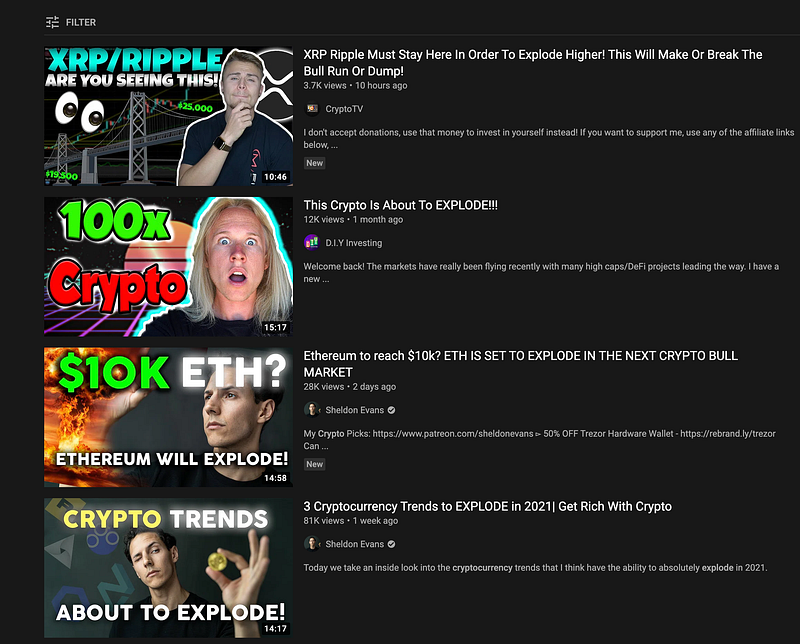
Let’s look at some examples so we don’t have to go into the “cryptographic magic” of how this works.
Insurance Example
You have an insurance agreement. You pay insurance $200 a month, and when something bad happens to you, they bail you out and cover the event. Here is the issue with this, you have to trust the insurance company is going to do the right thing and accept your claim.
Wouldn’t you sleep better at night if you knew they didn’t even have a choice if they could accept your claim or not? Maybe an insurance provider has denied you, or maybe you were even just nervous they might deny you. You have enough crap in my life you have to worry about, you don’t want to also have to deal with worrying about the company that I’m paying to do what they say they are going to do!
Banking Example
Remember the financial crisis of 2008? You know, the one that sparked the Great Recession, the worst economic event since the Great Depression? Yeah, that one. I’m not going to go all “The Big Short” here explaining all the financial terminologies that went down, long story short banks were being the 2008 equivalent of altcoin shillers but with their garbage mortgage products. There are a ton of examples where blockchain could have helped, including:
- A Decentralized Rating Agency
Rating agencies were lying about how good a financial product was because of their tight relationships and closed sourced algorithms. Smart Contracts are transparent and would allow for the people to dictate what a good product looks like and accurately rate them.
2. Transparent policy
This leads into the second major improvement. Smart contracts allow you to create entire decentralized governance and automated organizations, which take transparency to the next level. We would have been able to see all of the shady actions the banks were doing right away and stopped it. We’ve seen examples already where people are able to spot security flaws and fix them before anything bad happened, but that was only possible due to the nature of blockchain.
3. Speed of transactions
This one just goes for all of banking in general. Why does it take 3–5 days for a set of some of the most sophisticated computer architecture on the planet to add 20 to my other bank account and subtract 20 from my initial bank account when I want to make a transfer? Computers are supposed to be faster than humans, but I can FOR SURE add and subtract 20 faster than all of these banking APIs.
The reason for this is to prevent fraud, which is great, but if I know I just want to send $20 to an account now, I don’t want to have to be forced to wait. The same thing can be said for settlement periods for traditional stock trades. After trading a stock or security it can take days before the trade actually goes through. Blockchain makes these transactions happen MUCH faster. I honestly see the entire financial industry being “blockchainified” in our lifetime. To help with all the corruption, speed, and issues fraught with our current system.
Homelessness example
There are projects you’d never even think about popping up. In the homeless world, there is a huge issue with getting them jobs since they don’t have proper identification anymore. With blockchain and smart contracts, creating identification to generate payments is easy. You can create a new wallet for someone, they get a unique ID, and boom, they can now process payments and take home some money. This was the idea behind the WolfPack project in the ETH Denver of 2019.
The list goes on, and on, and on. If you want to learn more, check out this list of 77 use cases for Chainlink enabled smart contracts. Having definitive decentralized data is just as important as having decentralized logic, which is why Chainlink is so paramount to all of this.
3. Phenomenal Vibrant Budding Community
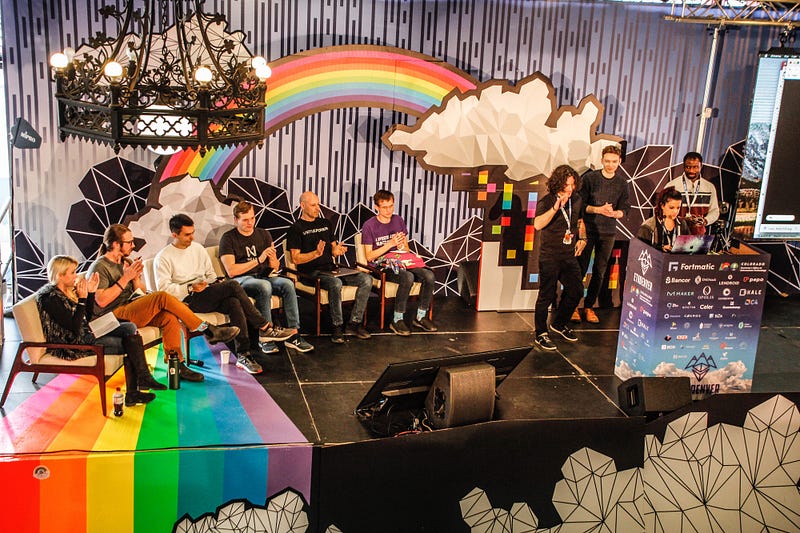
When was the last time you saw a stuffed shirt attend a conference like this? Be so inclusive as to have a “rainbow stage”. This is an image from ETH Denver, one of the biggest hackathons platforms on the planet. Back when we could all hang out, this was the vibe we had in person. It’s inclusive, exciting, fun, driven, energetic, kind, helpful, and so much more. Blockchain and smart contracts are a new era of agreements dominated by the young. Modern technology became apart of not the boomer's generation, but of the millennials and younger.
The internet is built into the core of people born today, and these industries reflect it. Blockchain is “the internet of money” and the demographic represents that. This isn’t to say that the older generation is excluded from the advancements made here, far from that. It’s to show that the people involved with this technology are budding and maturing along with the technology, and many of the older generation are getting wiser to it and learning more about it, and realizing the potential. Now that we are all virtual, we can still make these connections on platforms that we are used to. I remember being told that emojis are not professional once, and for the most part I don’t use them, but when I get to know a colleague in my space I’m able to connect and just be myself so easily since the community is so inclusive.
As an engineer, I love being able to hop onto a discord channel and start chatting with other engineers who are running into similar problems as myself. We can use stackoverflow. We can jump on slack. We have all these platforms to talk with people.
And we get to connect with people from across the globe. Due to how small the blockchain community is in relation to other industries, we all get to sync up online and connect. We speak with people in China, India, the UK, Australia, Nigeria, everywhere, and we get to connect and share ideas. Unfortunately at the moment, the world is still male-dominated (and tech in general ), but from the women I’ve spoken with, I’ve learnt that the blockchain community is easily one of the most welcoming of the tech worlds out there. Not to mention, many of the women in this space are absolute TITANS.
I also mean “budding” as in “emerging”. However, I also mean “budding” as in “I have so many buds in this space now”.
4. The Hackathons and Events
As a blockchain engineer, you get to be hailed as one of the few, and projects are always looking for people to come and build with their platforms. I’ve written about why everyone should join a blockchain hackathon at length previously, so if you want a more in-depth look read that article.
Blockchain hackathons are your chance to work with the best in the business and try out whatever you want and then win money. These are the perfect stomping ground of innovation and ideas, and engineers, business professionals, designers, and more all get together and come up with something amazing. These are the networking events for your big ideas, and the catalyst for going from a speculative engineer -> a fully-fledged project. People will PAY you to tinker with something fun, and even if you don’t win, the relationships and knowledge you gain are worth their weight in ETH (see what I did there? I swapped “gold” our for “ETH).
That ETH Denver hackathon you saw above, that’s where I first learned solidity. That’s where I met the Chainlink team in person. And that’s when I knew I wanted to enter the wonderland of smart contracts and blockchain. I won nothing from that hackathon. I barely made half a project, but I gained way more from the relationships and fun I had. Today, if you join a hackathon (like the MarketMake hackathon coming up in January, if you haven’t signed up, now is your chance!), you’ll be able to find me helping engineers find the same joy, fun, and excitement with building that I have found.
Oh, and did I mention many of the top projects we know and love today came from hackathons? Like 1inch.exchange, PoolTogether, xDai, and so many more.
5. Career and Salary
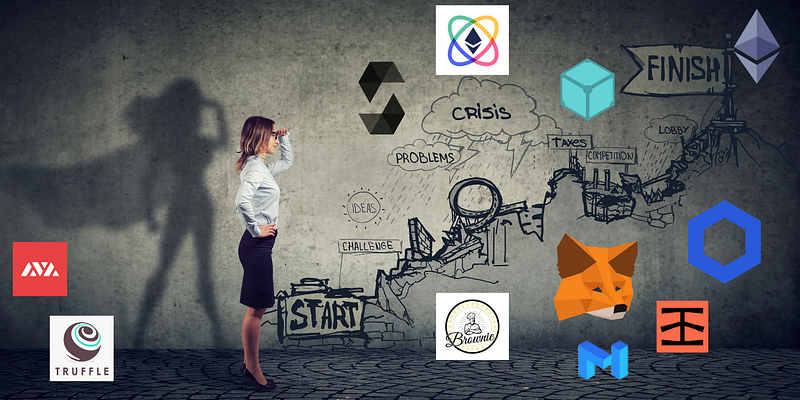
Becoming a strong engineer is a path of ups and downs leading into this career, along with any engineering position. As you learn and grow, opportunities will quickly make themselves apparent to you, and you’ll quickly realize the types of protocols you want to work on. Projects are ALWAYS looking for solid solidity engineers (the most popular smart contract language).
One of the hardest parts of going from “Young college graduate engineer looking for work” -> “Software engineer of a company” is finding enough good experience to prove you’re good. In the blockchain world, this is easy with hackathons, many of the engineers that I know have attended a blockchain hackathon, made something awesome, and then every project there wanted to hire them. So getting experience is clear and easy in the blockchain world. Once a company picks you up, you can make money in terms of: Salary:
- The average base salary for a Solidity developer in Asia is $125,000 per year, with a low base salary of $100,000 and a high base salary of $150,000.
- The average base salary for a remote Solidity developer is $145,000 per year, with a low base salary of $100,000 and a high base salary of $200,000.
- The average base salary for a Solidity developer in the U.S. is $127,500 per year, with a low base salary of $80,000 and a high base salary of $180,000.
Information from Cryptocurrencyjobs.co
And, many projects that ICO offers cryptocurrencies as a bonus as well. Dapp University made an awesome video about a new engineer in the space being apart of a billion-dollar ICO just months after joining!
And in the short term, salaries for blockchain engineers and demand is only going up. If you have any inclination about engineering here is why you should head over to the nearest solidity education platform (solidity is the most popular blockchain/smart contract language) and join in.
6. The Innovative Wild West

Blockchain and the smart contract world is a lot like the wild west, right now there is a lot that is unknown. There is a sort of “gold rush” in a technological sense, and some of this is daunting and terrifying.
But at the same time, it’s thrilling, inspiring, and gives me the chills on a day to day.
The thought of not knowing what amazing project can pop up tomorrow excites me. The thought of being able to try out new projects every day that NO one has ever built is what gets us up in the morning. There is so much to unearth, and once we do, projects go from idea -> reality faster than any other space on the planet. Here is an image from Defipulse.
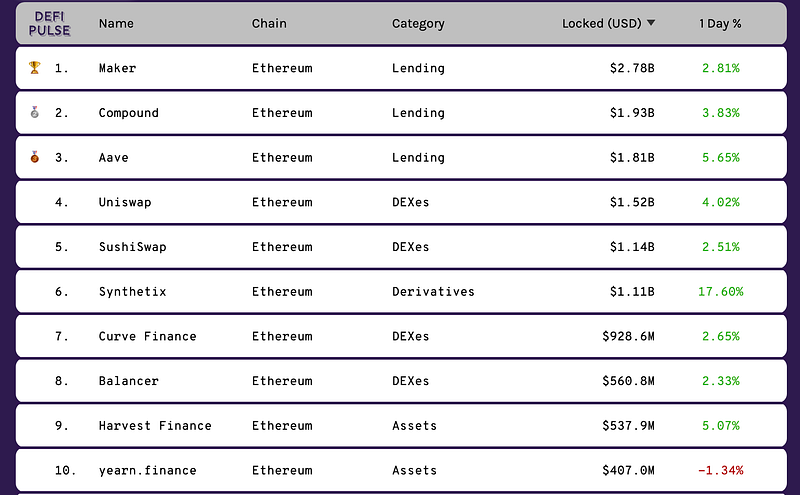
- Harvest.finance is 4 months old
- Yearn.finance started less than 10 months ago, and has half a billion locked in value.
- Aave launched this year.
- Synthetix is less than 2 years old.
- NONE of these projects were around more than 4 years ago. And now they have a combined ~$15 billion locked in value.
Your little “side project” becomes a full-fledged protocol or company faster than any other industry I’ve ever seen.
Conclusion
We are doing something that matters. We are pioneers of history. We are born in a time where we will be in the history books for the protocols we make. Yes, you were born too late to explore the earth, and too early to explore the galaxy, but you were born just in time to explore the digital galaxy of blockchain. To experiment and tinker with the protocols that will govern us as we explore the galaxies.
Becoming a blockchain engineer is a ride. Buckle in, and let’s make history.
Join Coinmonks Telegram group and learn about crypto trading and investing
Also, Read
- Learn Ethereum and Web3 development
- The Best Crypto Trading Bot
- 3Commas Review
- Pionex Review
- AAX Exchange Review | Referral Code, Trading Fee, Pros and Cons
- Deribit Review | Options, Fees, APIs and Testnet
- FTX Crypto Exchange Review
- NGRAVE ZERO review
- Bybit Exchange Review
- 3Commas vs Cryptohopper
- The Best Bitcoin Hardware wallet
- Crypto Copy Trading Platforms
- Best monero wallet
- ledger nano s vs x
- Bitsgap vs 3Commas vs Quadency
- The Best Crypto Tax Software
- Best Crypto Trading Platforms
- Best Crypto Lending Platforms
- Ledger Nano S vs Trezor one vs Trezor T vs Ledger Nano X
- BlockFi vs Celsius vs Hodlnaut
- Bitsgap review — A Crypto Trading Bot That Makes Easy Money
- Quadency Review- A Crypto Trading Bot Made For Professionals
- CoinTracking Review
- YouHodler Review
- Ellipal Titan Review
- SecuX Stone Review
- BlockFi Review | Earn up to 8.6% interests on your Crypto
- Coinrule review
- Best Blockchain Analysis Tools
- Crypto arbitrage guide: How to make money as a beginner
- Best Crypto Charting Tool
- What are the best books to learn about Bitcoin?
Get Best Software Deals Directly In Your Inbox


