
ChatGPT in healthcare: diagnosis of mental issues like stress, burnout, procrastination and depression
I’m losing the motivation to study at uni, especially in the past few months. It’s a vicious cycle that lacking motivation leads to procrastination, and procrastination causes more unsolved problems and anxiety. I know I have to study, but I just can’t start working on the problem…I thought I was depressed, so I asked ChatGPT. People in a similar situation don’t have the extra energy to make appointments with GP/consultant and wait. I have the experince that they spent the whole year diagnosing my acid reflux while ChatGPT gave the diagnosis right away(I mentioned in this post).
- Diagnosis of my symptoms and explanation of different symptoms
- Suggestions on how to deal with those symptoms
- Focusing on how to overcome procrastination
1. Diagnosis of my symptoms
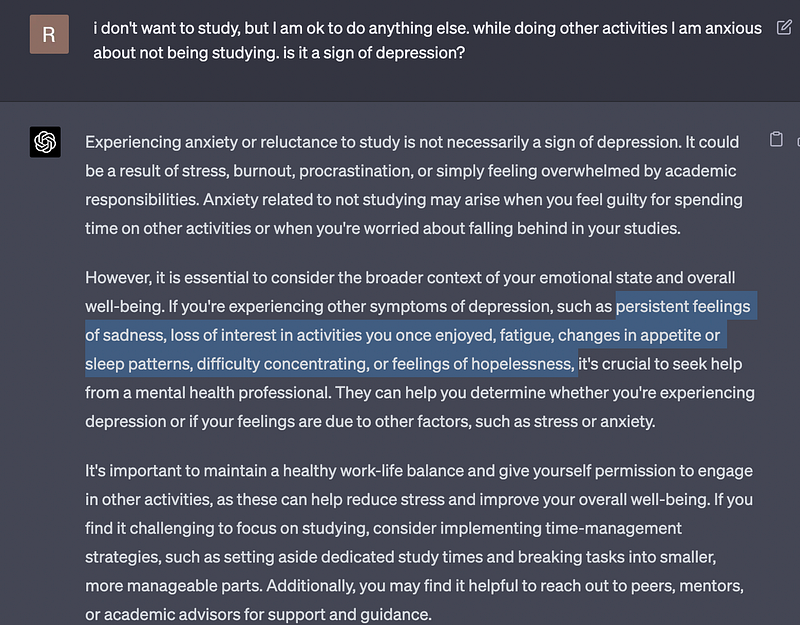
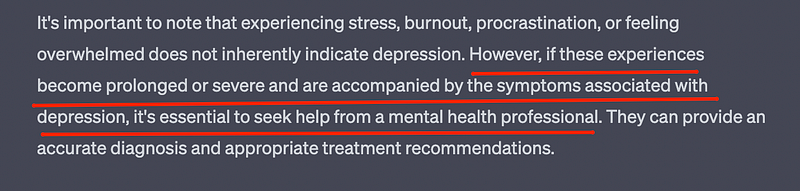
Thankfully, based on my symptoms, that’s not depression. Merely reluctance to study is more of “ a result of stress, burnout, procrastination or overwhelmed by academic responsibilities.” I thought those were depression symptoms…
I don’t have any of these yet (only difficulty concentrating on the study)
- persistent feelings of sadness
- loss of interest in activities you once enjoyed
- fatigue, changes in appetite or sleep patterns
- difficulty concentrating
- feelings of hopelessness
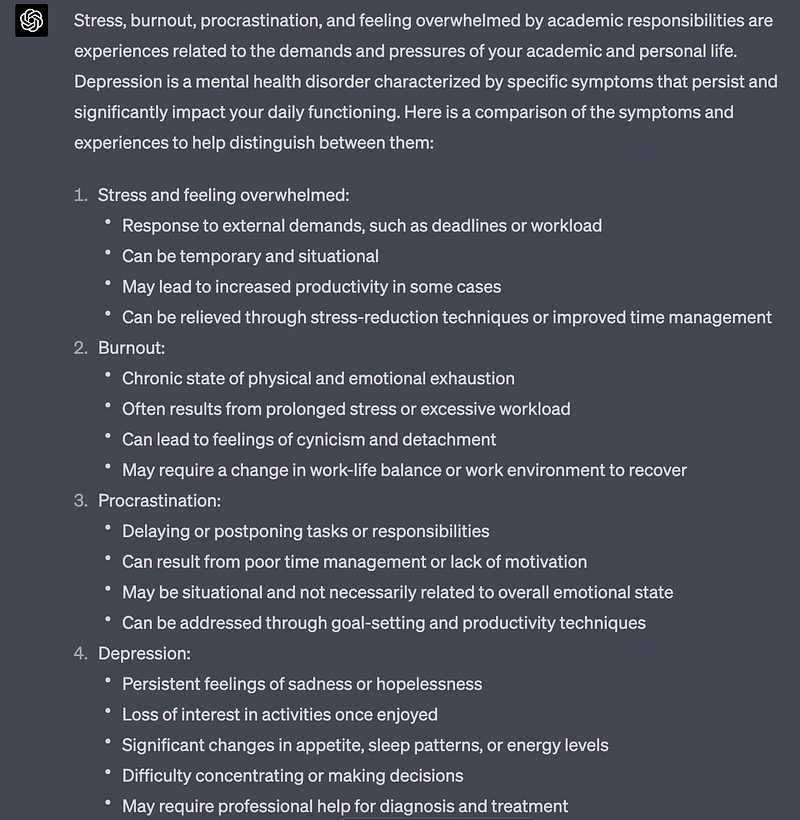
Here are the apparent differences among them. In short, depression is a mental health disorder which is more severe.
2. Suggestions on how to deal with stress and procrastination
However, I must relieve those stress, burnout or overwhelmed feeling before they develop into depression.
Here are four major perspectives that I can work on:
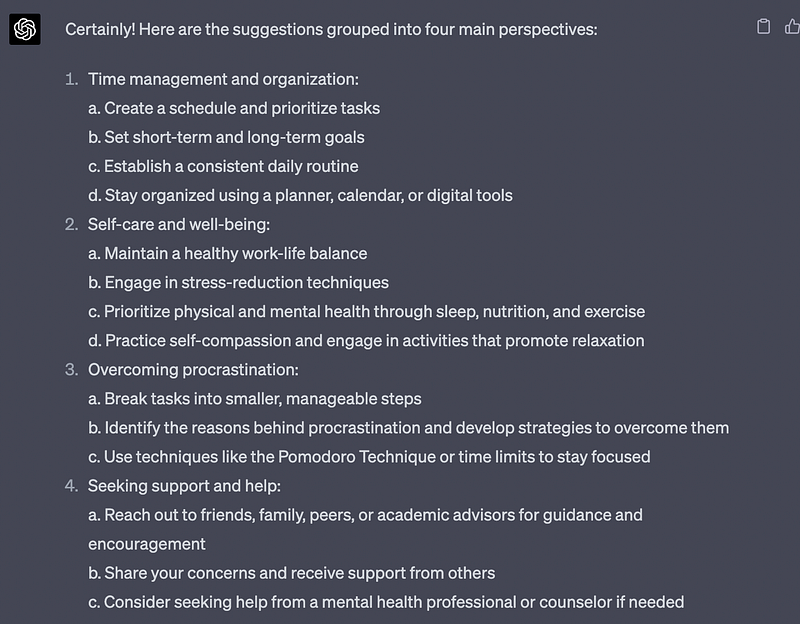
In summary, leading a normal life first like enough sleep and exercise, then organising time to overcome procrastination.
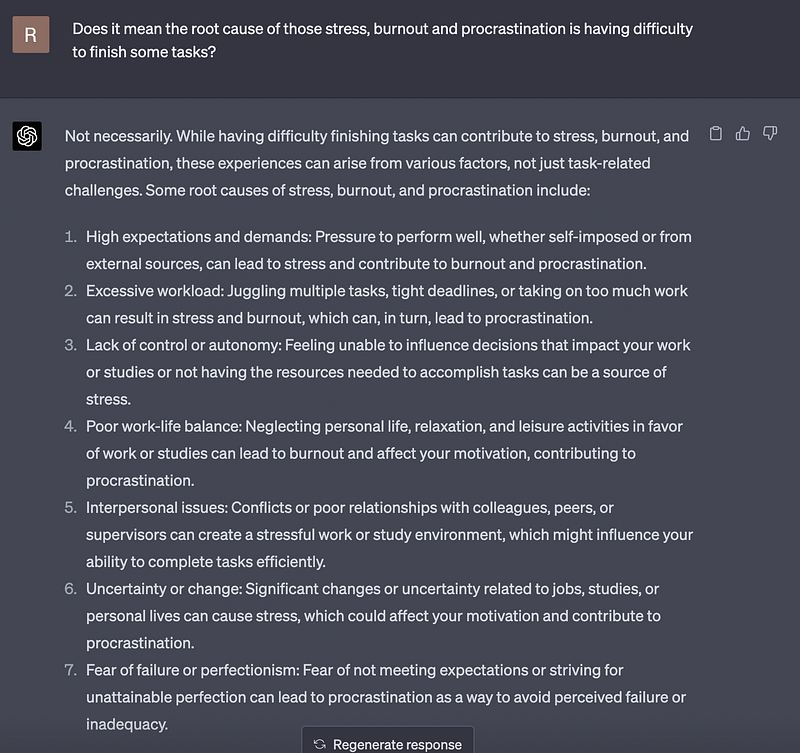
When I asked GPT if finishing the tasks relieves stress, the answer was no. That’s just my situation; the answers might differ for everyone; try to interact with ChatGPT to understand your situation.
For example, stress is caused by high expectations; I was like that when I was younger, which I think might be more common among teenagers.
3. How to overcome procrastination
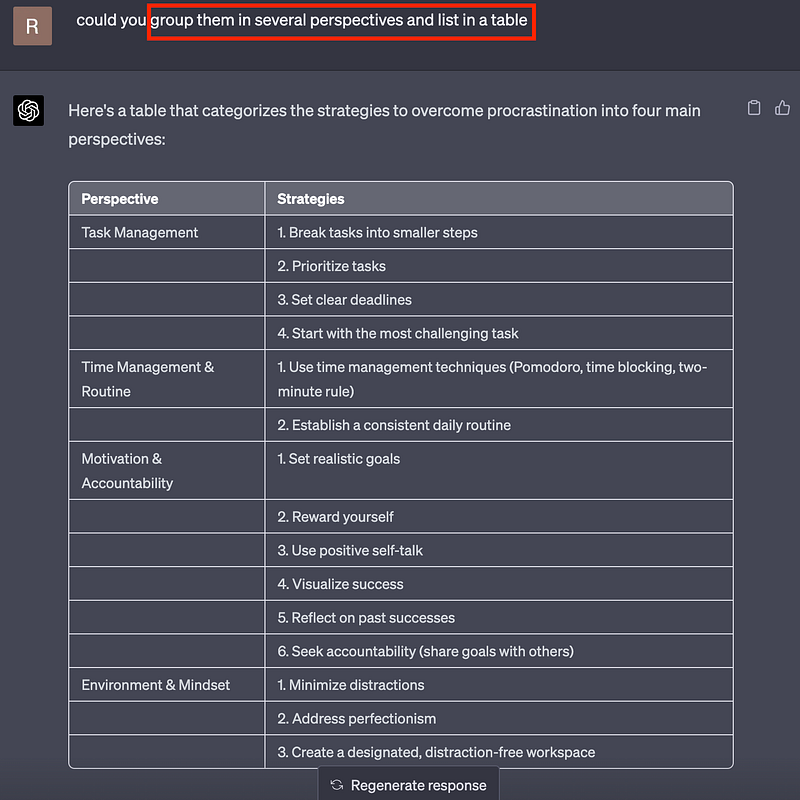
I found GPT tend to list many things without order; it’s helpful to ask it to “group them in several pespectives in a table.”
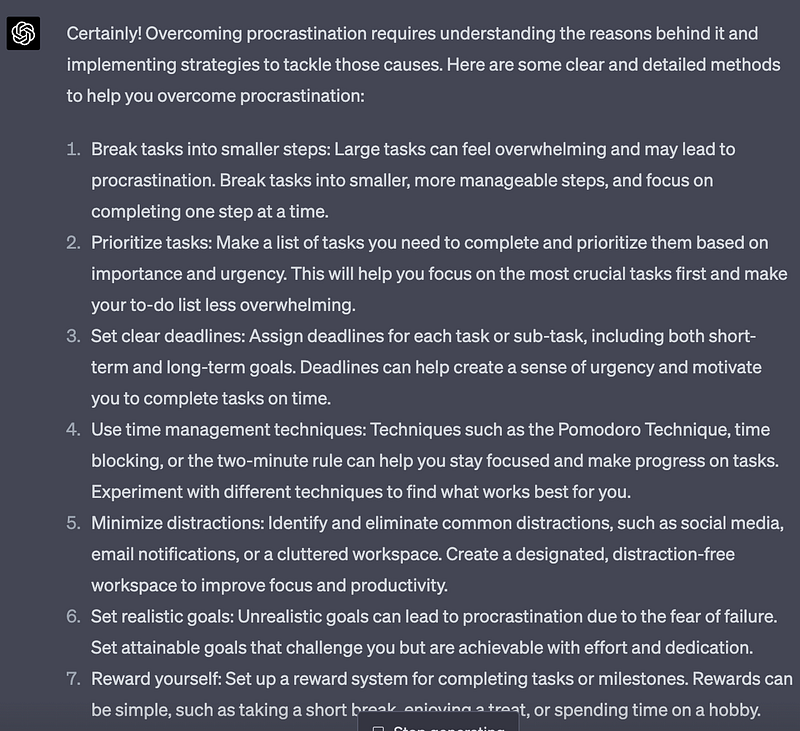
These are the initial overwhelming items:
Asking GPT to organize them in a table:
The time management techniques listed:
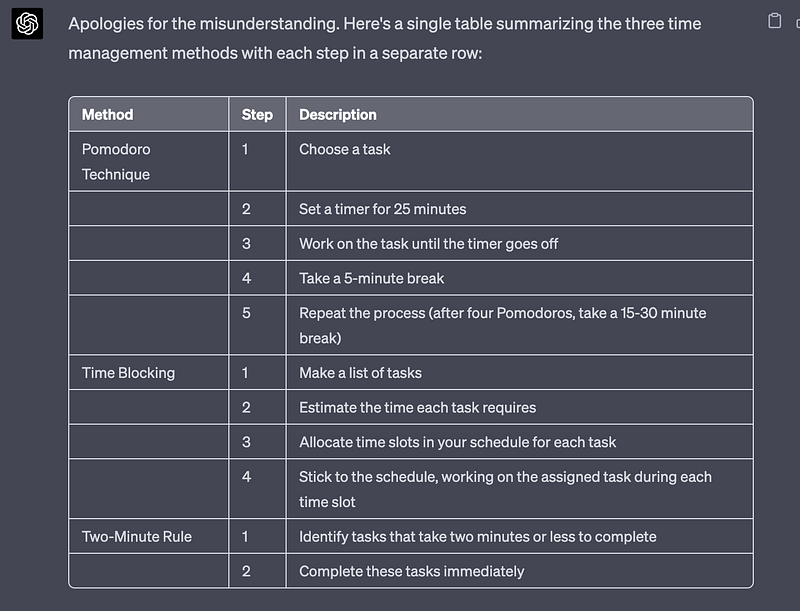
I am going to list my small sub-tasks to finish my tasks now. I hope all the students suffering from stress and procrastination could benefit from those suggestions, and more people could use ChatGPT wisely to help and share their experiences and tips on giving clear instructions.
The other related posts on exploring how to use AI tools:
- Three Ways to Upload PDF to ChatGPT to Analyze or Summarize
- How to Use ChatGPT to Accelerate Literature Review
- The Ultimate Midjourney Prompt Guide 2023
- What is Prompt Engineering? Will it Last Long? Do We Need to Learn It?
- ChatGPT in Healthcare
If you liked posts like this, you might also like a Medium membership. It’s only $5 a month, but it will give you unlimited access to articles while supporting your favourite writers. If you sign up using this link, I’ll earn a small commission. Thanks!