
SUSTAINABLE FUTURE
Fashion Can Color Our Future World
We just have to radically change the materials and processes
What might have been the most enlightening realization in my environmental studies is the fact that fashion can be possible. In our future world, we can satisfy the desire for personal expression. For change with the seasons. For wearing beautiful clothes that bring out the best in us. So, how can we do that without ruining Gaia?
The fashion industry is a terribly polluting industry. Business Insider reports that the fashion industry produces 10% of all humanity’s carbon emissions. It is the second-largest consumer of the world’s water supply and pollutes the ocean with millions of microplastics every year.
I thought it could never be repaired! So I changed my ways to second-hand clothes and leasing jeans. At least the fibers would be used again for new jeans. And because I know that with the washing of synthetics micro-fibers, the rivers are being polluted, I use a Guppyfriend.
For me, the sacrifice isn’t too big. I’ve never been a real fashion-addict. But I do wonder how I can ever inspire Kim Kardashian and her millions of followers to change their ways too.
Until I had my aha-moment. Gaia explains it clearly. It can be done.
Abundant Materials
Our industrial way of producing fashion has put us in patterns of pollution. We have stopped being creative and thinking about ways to do it differently. Materials are a big part of that wrong choice. In a report by the Laudes Foundation in 2020, a breakdown of the 60 million tonnes used in home textiles and fashion is shown.
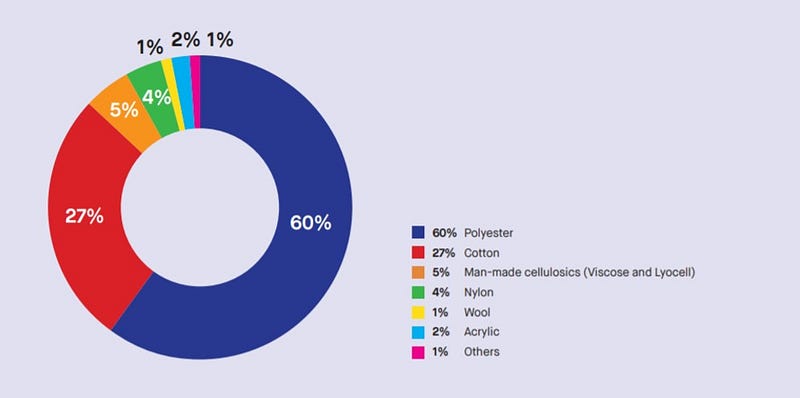
In the report, they focus mainly on circular ways to retrieve back the fibers and the chemicals used in the processes. Well, in my opinion, that’s not ambitious enough. Our oceans are heavily polluted by microplastics. This scientific study from 2019 shows the burden Gaia has to bear because of our clothes washing.
“Results showed that microfibres released during washing range from 124 to 308 mg for kg of washed fabric.” —Nature.com
How many kg do you wash? 5 kg per week? A small calculation: 7.8 billion people x 5 kg x 52 weeks = 2,000 billion kg of washing.
On average, say, 200 mg microfibers per kg = 400 million kg of microfibers every year wash into our oceans.
Hmm… in our future world of care and responsibility, that’s something the fashion industry is responsible for. And should FEEL responsible for. They should invest heavily in innovation programs to solve it all.
The good news is, the road to nature-based solutions is ready for pilgrimage.
Our sustainable future is a local one. We will be producing everything for basic needs locally. No need for shipping long distances. No need for exploiting other cultures. Just creating with what the soil and sea give us in our local environment.
I use the term nature-based solutions often. We are creating solutions that benefit humans (basic needs and vibrant economic activity) and local ecosystems.
So, what would that mean for fashion? The fibers we need for clothes can be found in cotton. But that material needs a lot of water and is hard to produce without chemicals. So what other bio-based material has appropriate fibers?
Well, please meet the local, abundantly available materials. Examples are bamboo, industrial hemp, fungi, stingy nettles, seaweed such as kelp, several kinds of grasses (they grow fast), and whatever the inventors busy to transform the world can come up with.
Okay, the first problem solved.
Production Processes
The production processes for fashion are really terrible. We use bucket loads of chemicals to prepare the textile fibers, to prepare leather, to dye everything in an attractive color. In short: we use harmful chemicals to do everything in our industrial world. If we want to have any drinking water left in our future world, this needs to change.
The chemicals used in textile processing can be viewed according to their function:
- Some are intended to stay on the finished product at point of sale, such as dyes, softeners, coatings and performance finishes;
- Some are referred to as process chemicals — they are intended to serve a purpose by being present on a substrate temporarily (e.g. weaving size) or in a processing bath (e.g. a fabric lubricant, to avoid creasing and abrasion marks). After they have served their purpose they are removed and typically discharged to the environment in effluent.
Work to do! We can mechanically prepare fibers. We can innovate away from harmful chemicals like biochemical expert Novamont is doing with its fully biodegradable materials that will dissolve in soil, freshwater, saltwater, and even air.
It’s a matter of realizing what road we’re on and being wonderfully ambitious on achieving change. We are supposed to be the most clever species on this planet. Well, let’s prove exactly that!
Color Methods
The most amazing realization in my studies came when I realized that color doesn’t need any chemical dye. Nature is producing color in a completely different way!
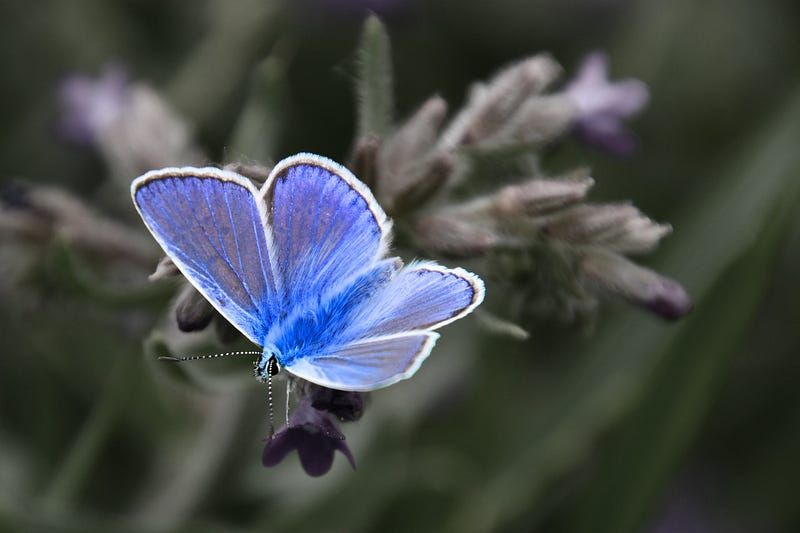
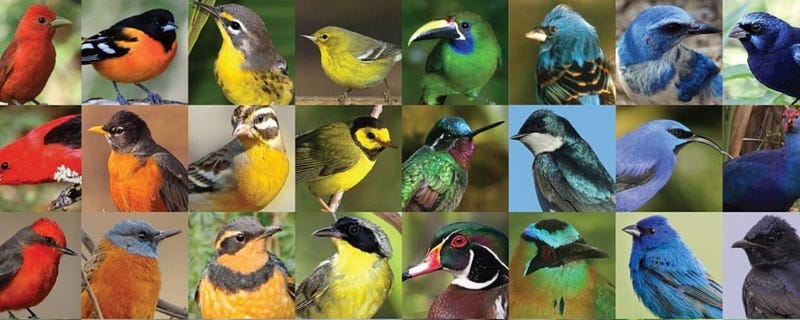
Have a look at the butterfly at the top of this story. She’s a beautiful blue. And it’s all produced with light reflection. As are the wings of birds. And the white color of an Asian beetle.
Innovation, innovation, innovation.
We can transform the fashion industry with principles like biomimicry and nature-based solutions. And the beautiful thing is that when I would have access to these beautiful garments, I would only want 8 different pieces. For every season 2 so I could wash them. And I would wear them with joy and pride!
Great Transition
We are going towards The Great Transition, the Radical Future. And the end result will be as I described above. However, we’re not there yet. So until then, I’ll stick to my second-hand clothes, my girlfriend-clothes-swap parties, and my Guppyfriend to wash my clothes without polluting the ocean.
But my dream is to create a wave of change in the fashion industry. With lots of designers, brands, innovators, technology-enthusiasts, and regenerative farmers of soil and ocean. So we can make the new world happen.
I already suggested the connection between Patagonia and Novamont. And many designers are already inspired by biomimicry. Let’s join forces.
And sisters, let’s tell the world we want such clothes! We want to be beautiful, we want to shine! We want to wrap our beautiful-I-am-enough-selves in stunning, functional, and ethical garments. Is that too much to ask?
If we’re so d*mn smart as a human species, let’s do it!
Trista Selma Elisabeth Amy Michele Keno Rebecca Rebecca Dennett Zelam Dew Tree Agnes Agnes Jenine Adelia Kaia Yael Maria CR Annelise Nicole Caroline Melissa Charlotte Gurpreet Lanu Aurora Annick Neha Noma Sherry iCanay Cigdem Julia Primavera Patricia
If you want to connect, you can find me somewhere on our beautiful planet connecting to butterflies, beetles, and birds. Or we can connect via Linktree.
© Désirée Driesenaar


