SUSTAINABLE FUTURE
2 Big-Scale Solutions That Are Surprising and Real
Thistle plastics and insects will change the world
Within the Blue Economy network, founded by Gunter Pauli, we are supporting innovations that will change the world. We are combining scientists, artists, and entrepreneurs to find and realize nature-based solutions that will really make a difference.
The thinktank Zero Emissions Research Initiatives (ZERI) is the basis for our thoughts and actions. And the inspired entrepreneurs I mention here are working hard to make it happen.

Today, I would like to tell you about two companies in material innovation and food. They are fast-growing, very innovative companies. They are entrepreneurs for the common good, changing the world with thistle plastics and insect proteins.
They are using systemic design to build their solutions, provide value in their markets, and scale their growth in hubs. Big-scale solutions are definitely possible, but we need to look beyond what we know as ‘normal’ and start thinking like nature: Cascading molecules and cascading energy. And using our creative and compassionate human spirit to make it all possible.
Here is what our future could look like if all our companies, big and small, thought like nature and acted responsibly.
Externalities, Waste, and Pollution
Let’s do a short introduction to align our minds. What are we doing wrong in business, nowadays?
We have cultivated a reductionist mindset and companies refuse to take responsibility for their externalities such as toxic production processes, energy consumption, waste creation, and pollution.
We adopt linear business models that produce waste and pollution and throw it over the walls for society to solve. We do not calculate with true prices that embrace all costs of our actions.
“Let’s restore ecosystems and learn how to live within planetary boundaries” — Desiree Driesenaar
We create money with other money, instead of creating value for all species. This is embedded in local ecosystems and local cultures.
We think and act short term, instead of having a long term vision and making short term decisions in line with that vision.
We are partially blind because we don’t see the connections between everything on earth!
However, the good news is that change is happening. Even though a lot of people in our government and businesses do not understand it yet, we see the pioneer enterprises grow. And I applaud them! I know how many sleepless nights they had experimenting within their companies.
It took blood, sweat, and tears to make it happen in our current, only money-focused economies. But they are the brave ones. They do it!
Thistle Plastics
I probably don’t have to tell you that the world is drowning in plastics these days. But there’s more to it. Plastics are made of oil. And we all know that we need to get away from using fossil resources.
Bioplastics often try to solve things on the supply side: they are made of biobased materials instead of fossil materials. We can grow them locally instead of digging them up in environmentally fragile places. One win.
However, many of these bioplastics are still greenwashing because they tell us only about this one win. They don’t tell us that they are competing with growing food on our soil and that they are harder to recycle afterward because types of plastics are mixed.
Jenna Jambeck, from the University of Georgia, says it best I guess. She says in National Geographic:
“Bio-based plastics have benefits, but only when taking a host of factors into consideration. Where is it grown? How much land does it take up? How much water is needed? Whether bio-based plastics are ultimately better for the environment than oil-derived ones is a big question based on many ‘ifs’. In other words, there’s no clear answer at present.” — Jenna Jambeck quoted in National Geographic
Well, there are companies that understand the bigger picture. They know we need to grow our resources locally and not compete with food. They know we need to give food back to our soils to restore ecosystems. They know we need to tackle the problem of litter ending up in rivers and oceans. They know we have to be ambitious and bold to find real solutions.
Meet Novamont SpA.
Their story starts around 2014 in Sardinia, an Italian island. The company changes the world of oil-based chemistry to biochemistry fed by regenerative farming, unleashing the abundance of nature and producing products with it that give back to nature and feed the soil.
Green chemistry made with local, abundantly available resources are the only way forward, I strongly believe.
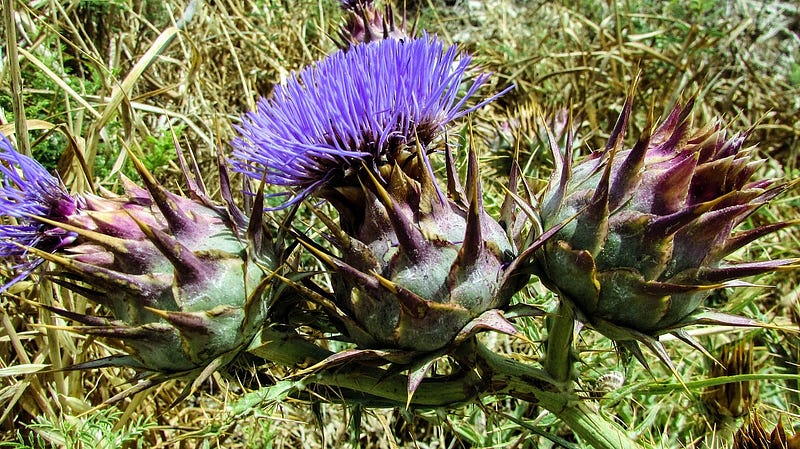
Novamont’s most sought-after products are made with cardoon thistles, an abundantly available local plant in Sardinia that now drives the local economy forward. Novamont creates bioplastics that are biodegradable in soil, in freshwater, in saltwater, and in air.
Wow, that’s ambitious and bold!
That’s being really regenerative for a new economy. Their industrial roots were developed in the Montedison School of Material Science (New Earth University), where over 30 years ago, some researchers started to develop an ambitious project to integrate chemistry, the environment, and agriculture.
Novamont embraces “Living Chemistry for Quality of Life”.
In the meantime, the Novamont Group has four production sites, two research centers, and sales offices in Germany, France, Belgium, and the United States. Their supplier network operates in 25 countries worldwide.
Innovation is their middle name. They are dedicated to making real solutions for our planetary problems grow wide and share lessons about this kind of chemistry thinking, about designing our new world with systemic approaches where everything is connected and a whole supply chain is working together to make it happen.
“Over the years we have developed 5 proprietary technologies first in the world and around 1,800 patents and patent applications. We invest 5% of our turnover in research activities and 22% of our people is dedicated to research, development and innovation.”- Novamont.
This is one of the directions that I advocate: green chemistry rooted in real-life agriculture that will leave the soil better than they found it. Entrepreneurial employees firmly rooted in holistic companies can innovate big time and make change happen.
Our products need to be sourced from abundantly available crops (bamboo, thistles, industrial hemp, seaweed) and produced with healthy production methods. Our waste must be designed carefully so it can become a resource for the next product.
Only fully biodegradable products will prevent waste in our oceans, our rivers, and our parks. And companies like this will set the basis for local, abundant economies in which real value is created for the basic needs of humans and other species.
Insect Farming
The second large scale solution I want to address here is insect farming. A solution for what, you ask?
Well, proteins are very important for human nutrition. But our current supply of proteins is locked in very unsustainable activities. Industrial meat farming is killing our soils and doesn’t have any respect for animal souls. Overfishing is a huge problem!
So, what if we can produce our proteins from organic waste materials?
I already wrote once about growing mushrooms (another protein source) on coffee waste, olive tree clippings, and straw. But I also want to tell you about insects. It’s another example of ecological intensification that can grow our economies without doing ecological harm.
Insects provide more protein than even meat and chicken eggs and can thus be a great way to change our diets.
And although I don’t see many Western people eating insects themselves, you can imagine that we can put them in healthy processed food. Not for vegans; insects are still living things. But for many others, it might be an alternative they consider.
And insects are not only for human food; they can add their nutrients to animal feed and natural fertilizer for soil health.
The company that I want to take as an example is Protix. The company was started from a longing to do something about overfishing.
“The black soldier fly (hermetia illucens) is a key player in bringing our vision to life: their larvae provide us with a unique source of protein for food and feed! With high-tech solutions, artificial intelligence, genetic improvement programs and robotics, Protix brings the food system back in balance with nature.” — Protix
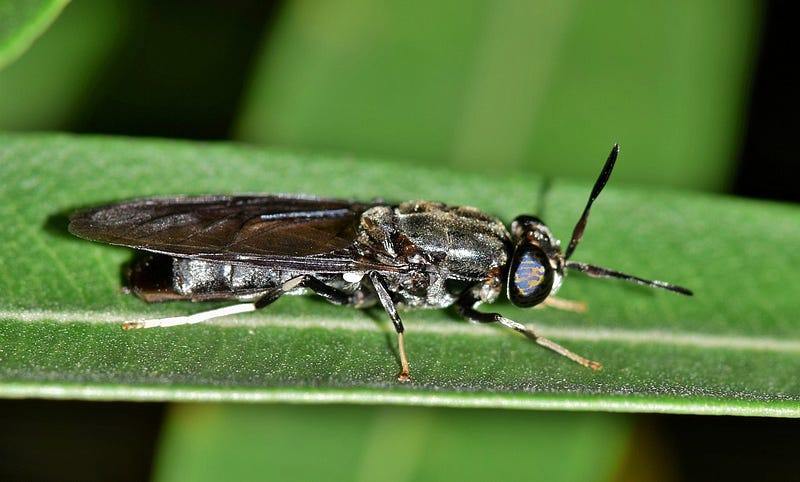
The founder of Protix is very inspired by the ocean and he wanted to build his business solving the problem of overfishing. Nowadays, Protix is contributing to many Sustainable Development Goals (aka SDGs) like no hunger, good health, and responsible consumption.
Conclusion
Green solutions are mostly not scalable without doing harm to the environment. Even Patagonia, the outdoor clothing company with truly sustainable ambitions, realizes that.
“We’re a billion-dollar company, over a billion, and I don’t want a billion-dollar company. The day they announced it to me, I hung my head and said, “Oh God, I knew it would come to this.” I’m trying to figure out how to make Patagonia act like a small company again.” — Yvon Chouinard, CEO of Patagonia.
Maybe Yvon can contact Novamont to make a huge impact on the biodegradability of materials together. And they can scale in fractals, in hubs, to have a positive impact on local ecosystems and economies.
Luckily, big-scale solutions are not the only way to go.
Many small scale actions can achieve even more, together. And in the meantime, I do applaud the big-scale entrepreneurs I mention here.
They have a big dream, jump in the river, and go with the flow.
Dreaming and taking the first step is all we need.
If you want to reach out, you can find me on LinkedIn, Facebook, Twitter, Instagram, Pinterest, ManyStories, Quora, Patreon, my website.
© Désirée Driesenaar 2020